Industrial Coveralls for Middle East Factories & Warehouses: A B2B Buyer's Guide to Sourcing from China
Middle East industrial buyers — factory owners, warehouse operators, and maintenance facility managers — need coveralls that balance durability, comfort, and cost. This guide covers fabric choices (cotton twill vs polyester-cotton blends), pocket configurations for real-world tool carry, sizing for diverse workforces, and what to expect when sourcing industrial coveralls from a Chinese manufacturer.
Buyer context
What procurement teams run into
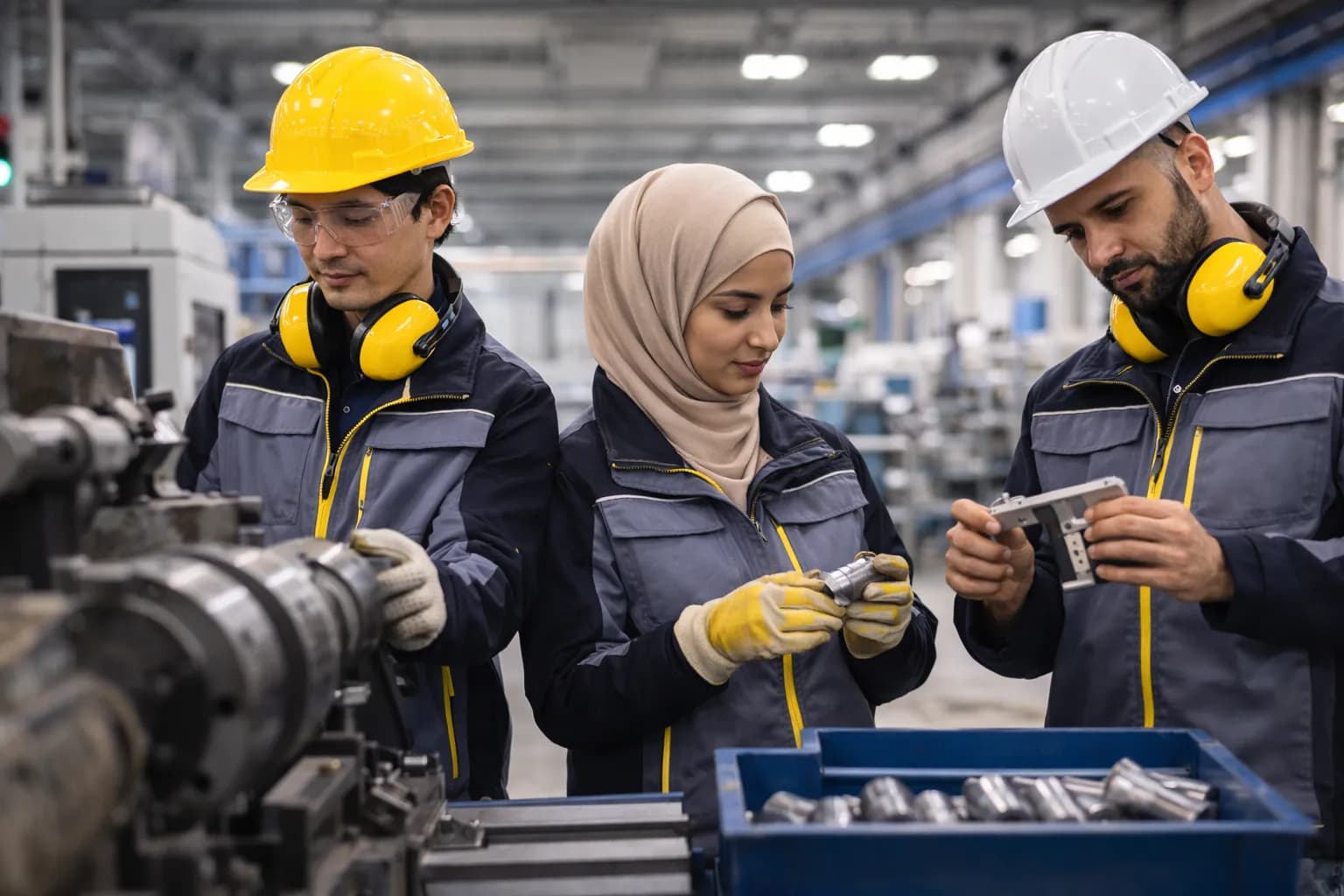
Middle East factories, warehouses, and industrial maintenance facilities face a specific workwear challenge that differs from construction sites or oil and gas operations: workers need full-body protection that holds up to daily abrasion, chemical spills, dust, and repeated industrial laundering — but without the heavy cost of FR-rated garments where flame resistance isn't required. A cement plant in Ras Al Khaimah, a food processing facility in Dammam, or a logistics warehouse in Jebel Ali each need coveralls that protect against dirt, grease, minor chemical splashes, and moving equipment hazards, while keeping workers cool enough to function in 35–45°C ambient temperatures inside non-air-conditioned facilities. The problem most Middle East industrial buyers encounter is that standard coveralls are either too heavy for Gulf climate use or too thin to last more than a few months. Many importers default to heavy cotton twill (300–350 gsm) because it offers durability, but workers reject them in summer months, leading to low compliance and uncovered workers on the floor. On the other end, lightweight poly-cotton blends around 180–200 gsm tear at seams within weeks of daily wear in abrasive industrial environments. Getting the fabric weight and blend right for both durability and wearer acceptance is the central challenge. A second major problem is sizing. Middle East workforces are often multinational — Pakistani, Indian, Bangladeshi, Filipino, Egyptian, and local national workers on the same floor — and body proportions vary significantly. Importing coveralls sized for Western or East Asian body types typically results in poor fit: too tight in the shoulders for broader frames, too long or too short in the inseam, or with sleeves that restrict movement. Without custom sizing patterns, compliance drops and safety is compromised as workers roll up sleeves or leave coveralls unzipped. Pocket configuration is another overlooked issue. Off-the-shelf coveralls often come with standard four-pocket layouts (two chest, two side) that don't match what industrial workers actually carry — utility knives, gloves, pens, small tools, notepads, and mobile devices for scan-and-pick operations. Workers end up stuffing tools into pockets designed for documents, tearing pockets or losing items. Finally, buyers struggle with minimum order quantities and sampling timelines. Small to mid-size industrial operations (200–800 workers) often need only 500–1,000 coveralls per order. Many manufacturers set MOQs of 2,000–3,000 per style per colour, forcing buyers to either over-order or pay significantly higher per-unit prices. Without a manufacturer that can flex on MOQs, the economics of OEM coveralls don't pencil out for mid-size industrial buyers.
Sourcing approach
How a factory partner can respond
The most effective approach for Middle East industrial buyers is to source industrial coveralls from a Chinese manufacturer that offers three things: the right fabric weight and blend for Gulf industrial conditions, custom sizing tables built for multinational workforces, and flexible MOQs for mid-volume orders. **Fabric technology for Gulf industrial use.** The sweet spot for all-season industrial coveralls in the Middle East is a 230–260 gsm polyester-cotton twill blend (typically 65/35 or 80/20 poly-cotton). This weight provides excellent abrasion resistance for daily industrial wear — lasting 8–12 months under regular use — while remaining breathable enough for 40°C+ workshop temperatures. The poly-cotton blend dries faster than pure cotton after laundering, resists wrinkling better (important for presentation in customer-facing industrial settings), and holds color through industrial washing cycles. For higher-risk zones near exposed machinery or welding areas, upgrade to a 280–300 gsm flame-retardant treated cotton (FR cotton) rather than full modacrylic, which keeps costs manageable while meeting basic hot-work safety requirements. **Custom sizing for diverse workforces.** A Chinese manufacturer with export experience to Middle East markets should be able to offer a sizing table adjusted for Gulf-region workforce proportions. The key changes from standard Asian sizing include: wider shoulder-to-shoulder measurements (2–3 cm added), shorter inseam relative to jacket length for shorter-statured workers, and extended size range from S through 5XL to accommodate all body types. Request a size-set sample (one sample per size) for fit approval before bulk production — this single step prevents the most common cause of acceptance delay at port of entry. Some manufacturers offer a free initial size-set after sample approval, eliminating upfront sampling costs for bulk orders. **Pocket configurations for real work.** Ditch the standard document-pocket layout and configure coveralls for what actually needs carrying. A functional industrial coverall pocket setup includes: two chest pockets with pen dividers and Velcro closures (not buttons — buttons catch on equipment), two side patch pockets with drain holes and reinforced bottom corners for tool carry, one rule pocket on the right leg (standard for tape measures and utility knives in warehousing), and one zippered document pocket on the left sleeve or chest. For food processing or clean-room environments, replace Velcro with zippers and eliminate external patch pockets to reduce contamination catch points. This configuration adds roughly $0.50–1.00 per unit to the garment cost but eliminates pocket failure within the first three months of use. **Flexible MOQs and economical order structures.** Look for a manufacturer that offers tiered MOQs: 500 units for a single colour and standard size run, 300 units for repeat orders within the same fabric and specification within 12 months, and a sample-based initial order path (50–100 units at a slightly higher per-unit price) for first-time buyers. Chinese manufacturers that maintain a stock fabric program for popular industrial colours — navy blue, royal blue, grey, khaki, and white — can reduce lead times from 60 days to 35–40 days because fabric procurement is already complete. Ask about open-roll fabric availability before placing your first order. If your required colour is a stock fabric colour, you can reduce both the MOQ and the lead time significantly. For quality assurance, request a pre-production sample (one coverall in the largest size ordered, fully constructed with final fabric, thread, zippers, and reflectives) before bulk production. Specify third-party inspection at 80% production completion (AQL 2.5, Level II) with inspection report shared before shipment. A Chinese manufacturer experienced with Middle East export will include this in the standard process — if they push back on third-party inspection, that is a warning sign. When the coverall order arrives, check three things immediately: zipper smoothness (a stuck zipper renders a coverall unusable), seam strength at stress points (crotch, shoulder, side seams), and colour fastness on the first industrial wash cycle. These three checks catch 90% of quality issues before they become workforce problems on the factory floor.
Recommended Products
Products that fit this use case

Industrial Workwear
Industrial Coverall Pro
Hard-wearing one-piece coverall for plant, maintenance, and heavy-duty operations.