Industrial Coveralls for Middle East Oil & Gas Operations — What Buyers Need from a Chinese Manufacturer
Oil and gas operators across Saudi Arabia, UAE, and Qatar need industrial coveralls that withstand extreme heat, flash fire exposure, and chemical contact while meeting international safety standards. This guide covers fabric specifications, certification requirements, and OEM customization for buyers sourcing from Chinese manufacturers.

Buyer context
What procurement teams run into
Procurement managers and HSE officers in Middle East oil & gas operations face distinct challenges when sourcing industrial coveralls for their workforce. The region's petrochemical facilities, refineries, drilling sites, and gas processing plants in Saudi Arabia, UAE, Qatar, and Oman require workwear that performs reliably under extreme conditions — sustained ambient temperatures above 50°C, occasional flash fire risks, chemical splash exposure, and abrasive contact with equipment and structures. Standard industrial coveralls designed for moderate-temperature industrial environments fail to meet these combined requirements. A major difficulty is navigating the certification landscape. Middle East oil & gas operators require coveralls that meet fire-resistant standards such as NFPA 2112, EN ISO 11612, or ASTM F1506, often combined with chemical protection requirements per EN 13034 or ASTM F739. Many Chinese manufacturers offer FR coveralls, but not all provide genuine test reports from accredited laboratories, valid certification documentation accepted by major oil & gas operators, and consistent quality across bulk production runs. Buyer teams report receiving sample garments that pass certification testing, only to find production batches with compromised flame resistance due to fabric substitution or improper sewing thread selection. The operating environment in Gulf oil & gas facilities also demands fabric technologies that balance thermal protection with heat stress management. Workers in refineries and drilling operations face long shifts in extreme heat while wearing multi-layer PPE. Coverall fabrics that prioritize flame resistance without considering breathability, moisture management, and garment weight can increase heat stress risk, reduce worker compliance, and create secondary safety hazards from heat-related fatigue. Standard FR cotton coveralls (typically 300-350 gsm) may provide adequate protection but become uncomfortable for 12-hour shifts in 45-50°C conditions, leading workers to modify garments or leave them unbuttoned — compromising the protection the garment was designed to provide.
Sourcing approach
How a factory partner can respond
For Middle East oil & gas applications, select industrial coveralls constructed from inherently flame-resistant fabrics such as modacrylic/cotton blends (typically 60/40 or 80/20 composition) at 240-280 gsm for appropriate thermal protection in hot environments. These fabrics provide self-extinguishing properties per NFPA 2112 or EN ISO 11612 standards, arc flash protection per ASTM F1506 or IEC 61482 where required, and better moisture-wicking performance than treated FR cotton — reducing heat stress for workers in high-temperature Gulf operations. For chemical exposure scenarios, specify coveralls with additional chemical-resistant treatments or laminated barrier layers, verified by permeation testing per EN 13034 or ASTM F739 for the specific chemicals present on site. Certification documentation is the critical differentiator in oil & gas procurement. When evaluating Chinese manufacturers, request certified test reports from ISO 17025 accredited laboratories for flame resistance (vertical flammability per ASTM D6413 or ISO 15025), thermal protective performance (TPP rating per ASTM F1930 or EN ISO 11612), and garment design features — including FR-compatible zippers, flame-resistant sewing thread, and closure systems that maintain protection integrity. Production lot traceability matters: ensure the manufacturer can provide mill certificates for fabric batches and in-process quality records. Third-party certification such as UL verification or SGS inspection adds credibility for major operator procurement teams. Customization for oil & gas branding and site requirements is straightforward with experienced Chinese OEM manufacturers. Industrial coveralls can be produced with corporate color schemes, embroidered company logos and employee names (using flame-resistant thread where the embroidery penetrates the fabric), reflective tape configurations for nighttime visibility on well-lit sites, and worker-specific features such as radio pockets, pen dividers, knee pad pockets, and tool loop attachments. Ensure any customization work — embroidery, printing, or tape application — is tested to confirm it does not compromise the fabric's flame-resistant properties, as certain thread types or adhesive processes can create melt-path vulnerabilities in otherwise compliant fabric.
Recommended Products
Products that fit this use case
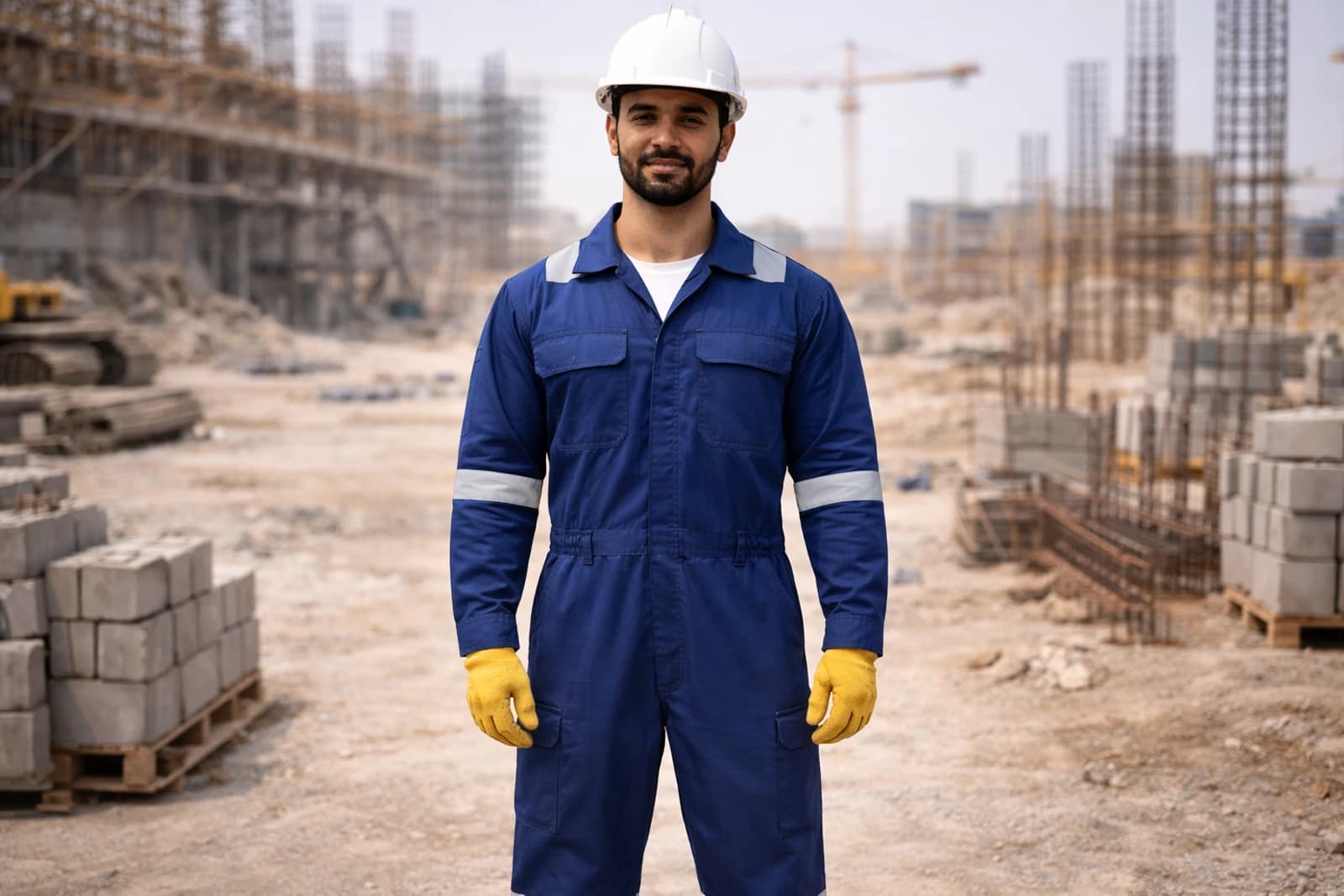
Industrial Workwear
Industrial Coverall Pro
Hard-wearing one-piece coverall for plant, maintenance, and heavy-duty operations.
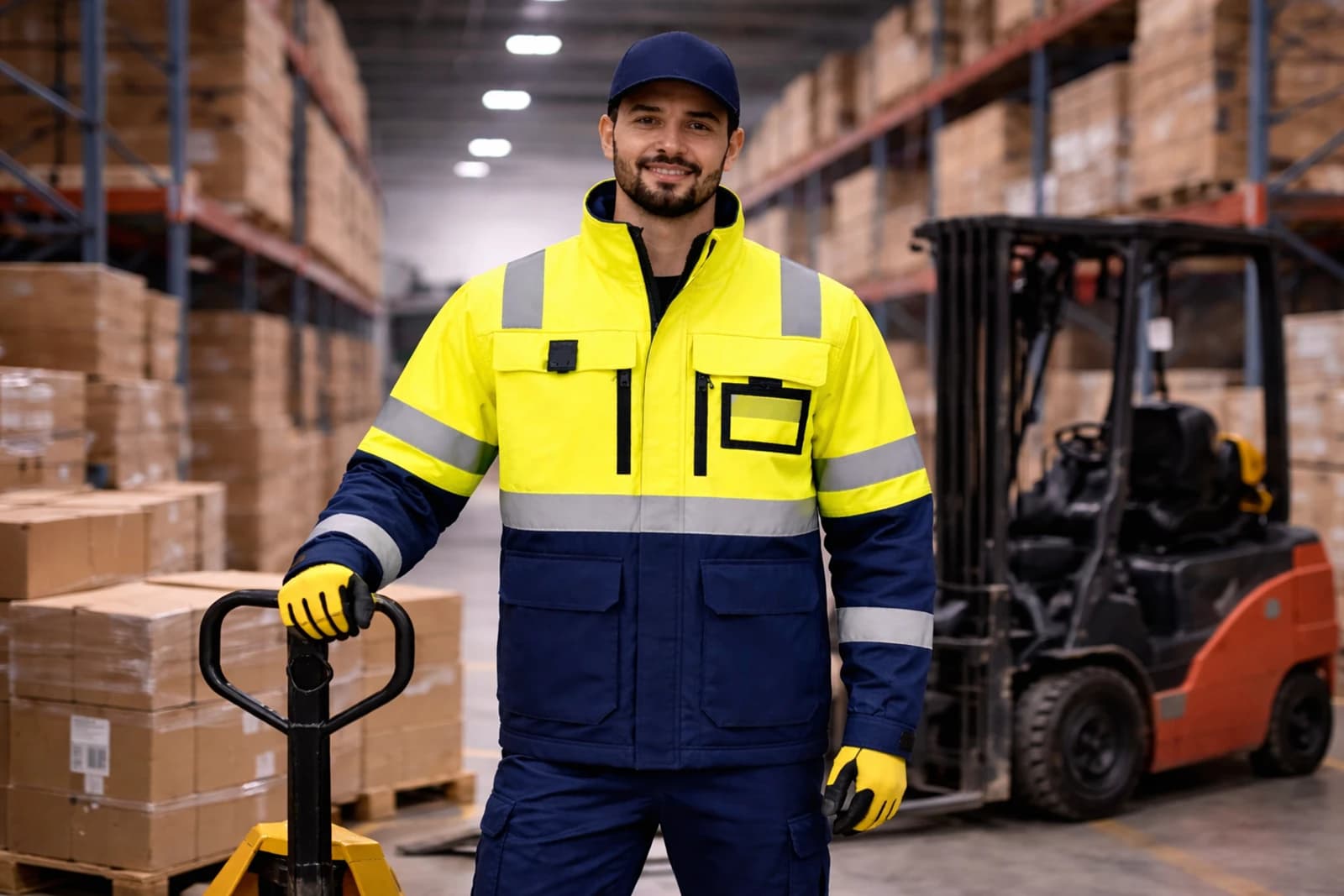
Safety Uniform
Hi-Vis Safety Jacket
Reflective safety jacket for high-visibility site operations and road work crews.