Industrial Coveralls for Oil, Gas & Petrochemical Sites: A Middle East B2B Sourcing Guide
The Gulf's oil, gas, petrochemical, and construction sectors run around the clock, and every shift depends on durable, compliant, and comfortable workwear. For B2B buyers sourcing on behalf of contractors, EPCM firms, maintenance crews, and industrial operators across Saudi Arabia, the UAE, Qatar, Kuwait, and Oman, the industrial coverall is the single most important garment in the PPE program. This sourcing guide covers coverall types, Gulf-appropriate fabrics, flame-resistant and anti-static options, sizing programs for multinational workforces, compliance with EN ISO and NFPA standards, custom branding and fleet identity, and volume procurement from a Chinese workwear manufacturer.

Buyer context
What procurement teams run into
Saudi Arabia, the UAE, Qatar, and Kuwait sit on some of the world's largest oil and gas reserves, and their industrial sectors are expanding faster than almost anywhere on earth. NEOM, the Saudi giga-projects, ADNOC's downstream expansion at Ruwais, QatarEnergy's LNG megatrains, petrochemical complexes in Jubail and Yanbu, and a wave of new construction across the region mean one constant: thousands of industrial workers on site every day, in coveralls. For B2B buyers responsible for supplying those crews, the industrial coverall is the backbone of the PPE program. It is worn for full shifts, in punishing conditions, and it often carries the only thing that separates a worker from serious injury — the right fabric, the right flame-resistant treatment, and the right construction details. Get it wrong, and you put workers at risk and your organization on the wrong side of the law. Get it right, and you build a safer, more professional site and a workwear line that lasts. The challenge for Middle East buyers is threefold. First, the climate: summer temperatures regularly exceed 45°C, with intense humidity on the coast and abrasive dust and wind-blown grit inland. A coverall that is heavy, non-breathable, or poorly constructed is unbearable by mid-morning. Second, the compliance landscape: industrial sites in the region increasingly demand internationally recognized standards — EN ISO 11612 for flame resistance, EN 1149-5 for anti-static, EN ISO 20471 for high visibility, and, for Gulf operators aligned with US practices, NFPA 2112 and NFPA 70E. Third, the workforce: crews on large Gulf projects are multinational — Saudi, Emirati, Indian, Pakistani, Filipino, Egyptian, and more — with widely varying body sizes and heat tolerance. A one-size-fits-all approach fails. This guide walks Middle East B2B buyers through the coverall specification, the standards that matter, the fabric and construction details that survive Gulf conditions, and how to source reliable volumes from a Chinese workwear manufacturer.
Sourcing approach
How a factory partner can respond
**1. Know your coverall categories before you buy** Not all coveralls are the same, and the biggest mistake buyers make is ordering a "standard" coverall for every site. Break your requirement into categories: - **General industrial coveralls.** For mechanics, technicians, maintenance crews, and general site labor where the main risks are abrasion, dirt, and minor burns. A heavy poly-cotton twill at 245-265gsm with reinforced knees and elbows is the workhorse. This is your high-volume, everyday garment. - **Flame-resistant (FR) coveralls.** For workers near open flame, welding, hot surfaces, electrical arcs, or hydrocarbon processing — think oil refineries, gas plants, petrochemical units, and flare areas. FR coveralls must meet EN ISO 11612 or NFPA 2112, and the flame-resistant property must be inherent in the fiber or durably finished so it survives industrial laundering. - **Anti-static (ESD) coveralls.** For areas with flammable vapors, dust atmospheres, or sensitive electronics. These meet EN 1149-5 and are often combined with FR properties in petrochemical settings — an FR/anti-static hybrid is common in gas plants. - **Hi-vis coveralls.** For workers on roadsides, active plant yards, or sites where vehicles and people mix. These add EN ISO 20471 reflective tape to the FR or general construction. On major projects, hi-vis is often a contractual requirement. A smart buyer builds a small matrix — garment type by risk zone — and prices each one separately. Chinese manufacturers are very comfortable producing all these variants, and it is far cheaper to set up the full program up front than to retrofit. **2. Fabric: the most important decision you'll make** The fabric dictates comfort, durability, protection, and cost. For the Gulf, prioritize: - **Breathability with durability.** A poly-cotton twill (typically 60-70% polyester / 30-40% cotton) at 245-265gsm gives the right balance of abrasion resistance and air flow. For summer months, look for a lighter 230-245gsm twill or a fabric with a mechanical stretch woven in for ease of movement. Avoid pure cotton duck — it is heavy, holds heat and sweat, and shrinks badly. - **Moisture-wicking and quick-dry.** Gulf crews sweat heavily. Specify fabrics with wicking yarns or a moisture-management finish so sweat moves to the surface and evaporates. This dramatically improves wearer comfort and reduces heat stress. - **Inherent FR vs. treated FR.** For FR coveralls, choose between inherently FR fibers (like modacrylic, aramid, or Lenzing FR blends) and treated cottons. Inherent FR lasts the life of the garment; treated cotton is cheaper but the FR property degrades with washing over time. For Gulf oil and gas, the industry trend is toward inherently FR blends that are also breathable — fabrics like modacrylic/cotton or aramid blends balance protection with comfort. - **Dust and dirt resistance.** A tight-weave fabric with a soil-release or anti-static finish sheds the desert dust that industrial sites throw at it. This keeps coveralls looking professional and lasts through more launderings. **3. Construction details that survive a Gulf shift** The difference between a coverall that lasts two years and one that fails in six months is in the details: - **Reinforced knees, elbows, and seat.** These are the high-wear zones. Double-layer knees with room for knee pads, bar-tacked stress points, and reinforced seams throughout are non-negotiable for field work. - **YKK or equivalent zippers.** A two-way front zip, brass zippers for FR garments (metal, not plastic), and secure zip closures on all pockets. Nothing fails faster on a worksite than a cheap zip. - **Pocket design that works.** Chest pockets with flaps, thigh cargo pockets with secure closures, a dedicated pen/phone pocket, and a rule pocket for engineers. All pockets need to close cleanly so nothing falls out when workers climb ladders or scaffolding. - **Adjustable cuffs and waist.** Hook-and-loop or snap cuffs that cinch tight keep sleeves from snagging on machinery. An elastic or drawstring waist improves fit and safety. - **Reflective trim where needed.** Even on non-hi-vis coveralls, subtle retroreflective tape on the sleeves and hem adds a layer of visibility in low-light plant yards. **4. Compliance: the standards Middle East industrial buyers need** Compliance is where buyers earn their keep. On Gulf industrial projects, third-party certification is routinely audited. Target these standards: - **EN ISO 11612** — protective clothing against heat and flame. Specify which heat performance levels (A1, A2, B1, B2, C) match your site's risk profile. - **EN 1149-5** — electrostatic properties; required in explosive atmospheres and many petrochemical zones. - **EN ISO 20471** — high visibility, for hi-vis variants. - **NFPA 2112** and **NFPA 70E** — for operators following US-aligned standards, especially in plants with US or UK-majority engineering standards. - **EN ISO 13688** — general requirements for protective clothing (aging, dimensional change, marking). Buyers should demand third-party test reports from accredited labs (SGS, TÜV, Intertek, Bureau Veritas) and verify that each garment carries the correct CE marking and pictograms. A reputable Chinese manufacturer will supply these documents without hesitation — and a serious one will already hold ISO 9001 and have its FR coveralls independently certified. **5. Sizing, grading, and the multinational workforce** Gulf crews come from every continent. Your sizing program must accommodate: - **A wide range.** Grade from 2XS through 6XL, plus short, regular, and tall in key sizes. Standard sizing charts from East Asian suppliers often run small for taller Western or Middle Eastern workers — confirm the grade table covers your tallest ~195cm workers comfortably. - **Unisex and gender-specific fits.** Offer both a unisex cut and a women's fit if your workforce includes female operators and technicians. - **Custom grading for key roles.** Mechanics, welders, and operators may need slightly different fits. Ask the manufacturer if they can adjust the pattern for your company's actual size distribution. Ask the manufacturer to send fitting samples in multiple sizes before you commit to a full production run, and have your site HSE or procurement team test fit with real workers. This simple step prevents a very expensive mistake. **6. Branding, fleet identity, and volume economics** On an industrial site, the coverall is a uniform and a brand statement. Professional companies use consistent colorways, chest embroidery, and reflective trim to project order and safety culture. Plan: - **Company color and logo.** Specify Pantone reference colors and embroidery or transfer placement (chest, back, sleeve) up front. Confirm the manufacturer has in-house embroidery and heat-transfer capacity for consistent quality across batches and reorders. - **Name and department identifiers.** Woven name tapes and SV (safety vestment) or department patches are cheap at volume and add real professionalism. - **Volume pricing.** Production runs for large Gulf projects routinely hit 5,000-50,000+ units. Ask for tiered pricing. Chinese manufacturers offer meaningful MOQ discounts, especially if you bundle multiple garments (coveralls plus softshell jackets for cooler months) into one order. **7. Sourcing from a Chinese workwear manufacturer** China remains the world's most capable and cost-competitive source for industrial workwear. When you evaluate a Chinese supplier: - **Verify certifications.** ISO 9001 quality management, and SEDEX/SA8000 if social compliance matters to your client. Ask for their FR coverall test reports and CE documents. - **Request samples and a confidential trial run.** Always validate fit, fabric, and construction before a full order. A serious manufacturer will produce a small pilot batch and iterate on your feedback. - **Confirm lead times and logistics.** Typical production runs take 30-60 days after sample approval; factor in sea freight to Jebel Ali, Dammam, Hamad, or Sohar ports. Some buyers add a safety-stock buffer in-country for fast-moving sizes. - **Partner on continuous improvement.** The best manufacturers treat your account as a partnership — they will hold your Pantone references, your size grade table, and your test standards on file so reorders are fast and consistent. With the right specification, the right standards, and the right manufacturing partner, industrial coveralls become a reliable, cost-effective workwear program that keeps your crews safe, compliant, and professional through the harshest Gulf conditions.
Recommended Products
Products that fit this use case
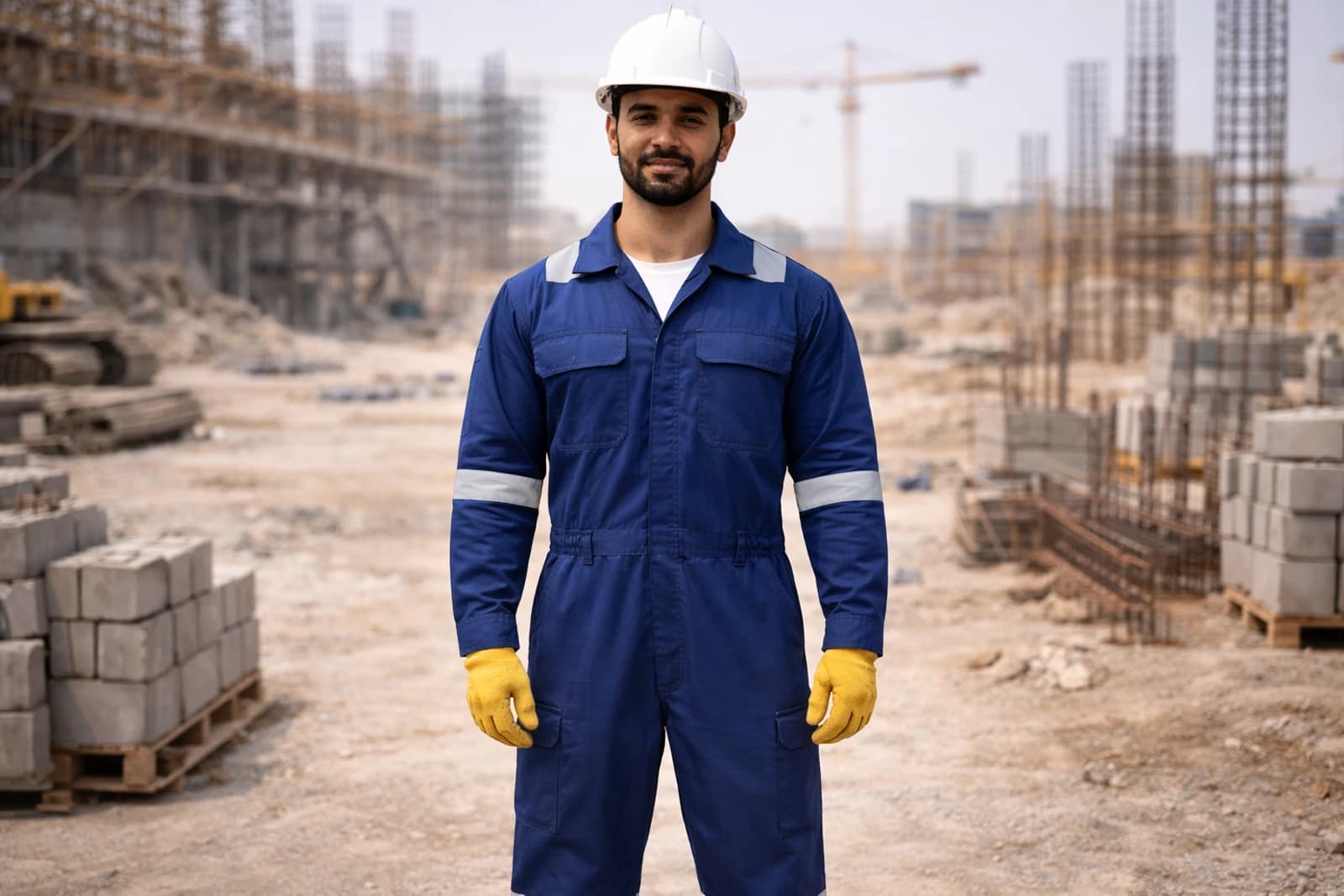
Industrial Workwear
Industrial Coverall Pro
Hard-wearing one-piece coverall for plant, maintenance, and heavy-duty operations.
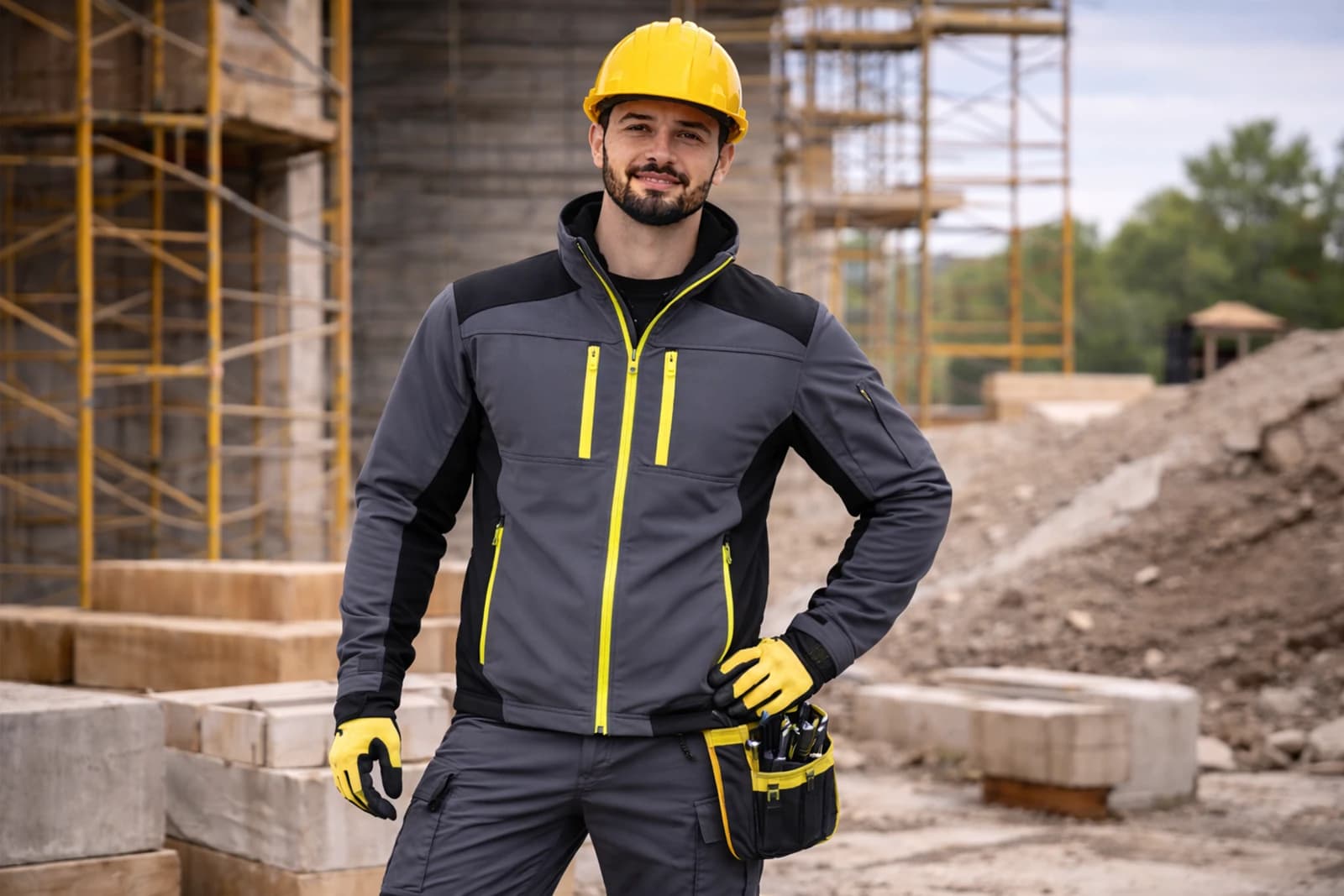
Construction Clothing
Construction Softshell Set
Flexible jacket and trouser set built for crews working across changing weather conditions.