Industrial Coveralls for Warehousing and Manufacturing in the Middle East: A B2B Sourcing Guide
Warehouses, logistics hubs, and manufacturing plants across Saudi Arabia, the UAE, and Qatar need industrial coveralls that balance worker comfort with durability, safety compliance, and professional appearance. This guide covers fabric choices, customization options, and what B2B buyers should look for when sourcing industrial coveralls from a Chinese manufacturer.

Buyer context
What procurement teams run into
<p>Warehouse supervisors, manufacturing operators, and industrial technicians in the Middle East work in environments that are hot, dusty, and physically demanding — typically indoors in unconditioned warehouses or semi-outdoor production yards where temperatures can exceed 40°C for much of the year. A standard shop-floor uniform — polo shirt and cargo trousers — often falls short: shirt fabric soaks through with sweat by mid-morning, trouser knees wear thin after weeks of kneeling on concrete, and loose-fitting cuffs or open collars create snag hazards near conveyor belts, racking systems, or powered equipment.</p><p>Many industrial managers in the GCC default to heavy cotton coveralls for safety, but these create their own problems in the Gulf climate. A 240–270 gsm cotton coverall worn in a 45°C warehouse becomes a heat-trapping suit that reduces productivity and increases the risk of heat-related incidents. Workers who are uncomfortable remove the coverall and work in undershirts, defeating the purpose of the uniform entirely.</p><p>For B2B buyers managing procurement for large workforces — from 3PL distribution centres in Jebel Ali to automotive assembly plants in King Abdullah Economic City — the challenge is finding a single coverall specification that satisfies safety officers (who want coverage and compliance), operations managers (who want durability and mobility), and the workers themselves (who want breathability and comfort).</p>
Sourcing approach
How a factory partner can respond
<p>The right industrial coverall for Middle East warehousing and manufacturing uses a polyester-cotton twill blend that balances strength with airflow. A 65/35 poly-cotton blend at 210–240 gsm is the sweet spot: the polyester content wicks moisture and resists wrinkling through long shifts, while the cotton provides a soft hand feel and static resistance. For environments with higher heat exposure — such as foundries, casting plants, or outdoor loading areas — consider a 100% cotton drill or flame-resistant (FR) variant, but for general warehousing and light manufacturing the poly-cotton blend delivers the best overall value.</p><p>Key features to specify when ordering industrial coveralls for Middle East industrial use:</p><ul><li><strong>Two-way front zipper:</strong> allows workers to sit, squat, and drive forklifts without the coverall bunching at the waist. Magnetic snap closures over the zipper give a clean professional look.</li><li><strong>Reinforced knee panels:</strong> double-layer fabric or internal knee-pad pockets on one or both knees. This is the most common wear point in warehouse and manufacturing settings — a simple reinforcement can double the garment's usable life.</li><li><strong>Multiple secure pockets:</strong> at least two chest pockets with snap or velcro closures, two side pockets, and a rule pocket or utility loop on the leg. Workers in industrial environments carry gloves, markers, measuring tools, and mobile devices throughout their shift.</li><li><strong>Vented back panel:</strong> a mesh-lined vent across the upper back significantly improves airflow in hot indoor environments, reducing heat buildup inside the coverall.</li><li><strong>Adjustable cuffs and waist:</strong> elasticated waist inserts or adjustable side tabs allow a single size run to fit a wider range of body types — relevant for Middle East workforces that include staff from diverse ethnic backgrounds.</li></ul><p>Custom branding on industrial coveralls works best with woven chest badges sewn onto the left chest pocket flap and/or back between the shoulder blades. Screen printing and heat-transfer logos are faster and cheaper but degrade faster in the Gulf climate. For companies that rebrand regularly (e.g., third-party logistics providers who change client contracts), consider a detachable breast pocket with velcro fastening that can be swapped between contracts without replacing the entire coverall.</p><p>Sourcing from a specialised Chinese manufacturer gives Middle East B2B buyers access to fabric mills that produce industrial-grade poly-cotton twill, garment factories with ISO 9001 quality management systems, and the ability to customise sizing, pocket configurations, and branding in production runs as small as 300–500 pieces per colour per size range. Typical lead times are 35–50 days from sample approval to FOB shipment from Shanghai or Ningbo ports.</p>
Recommended Products
Products that fit this use case
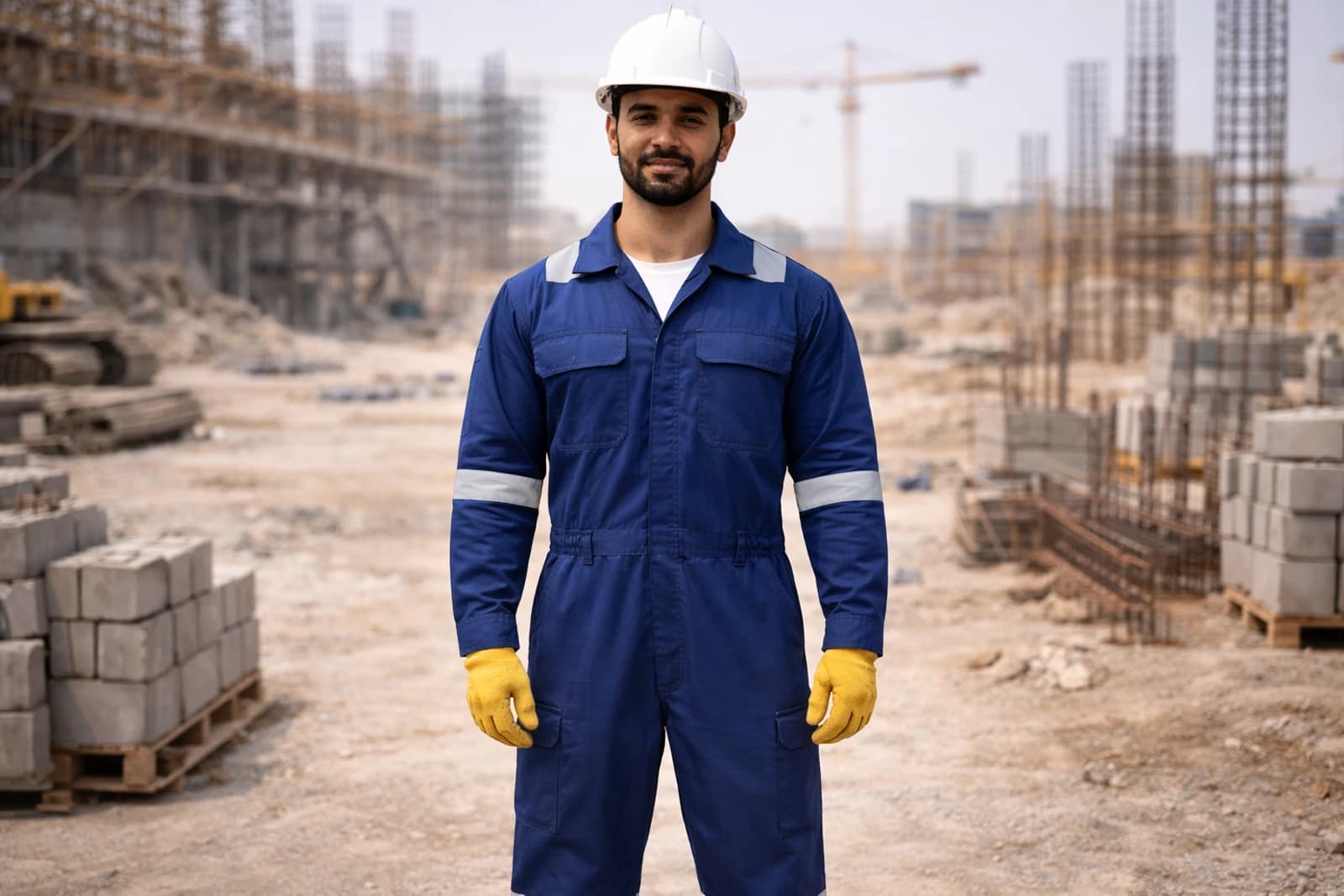
Industrial Workwear
Industrial Coverall Pro
Hard-wearing one-piece coverall for plant, maintenance, and heavy-duty operations.
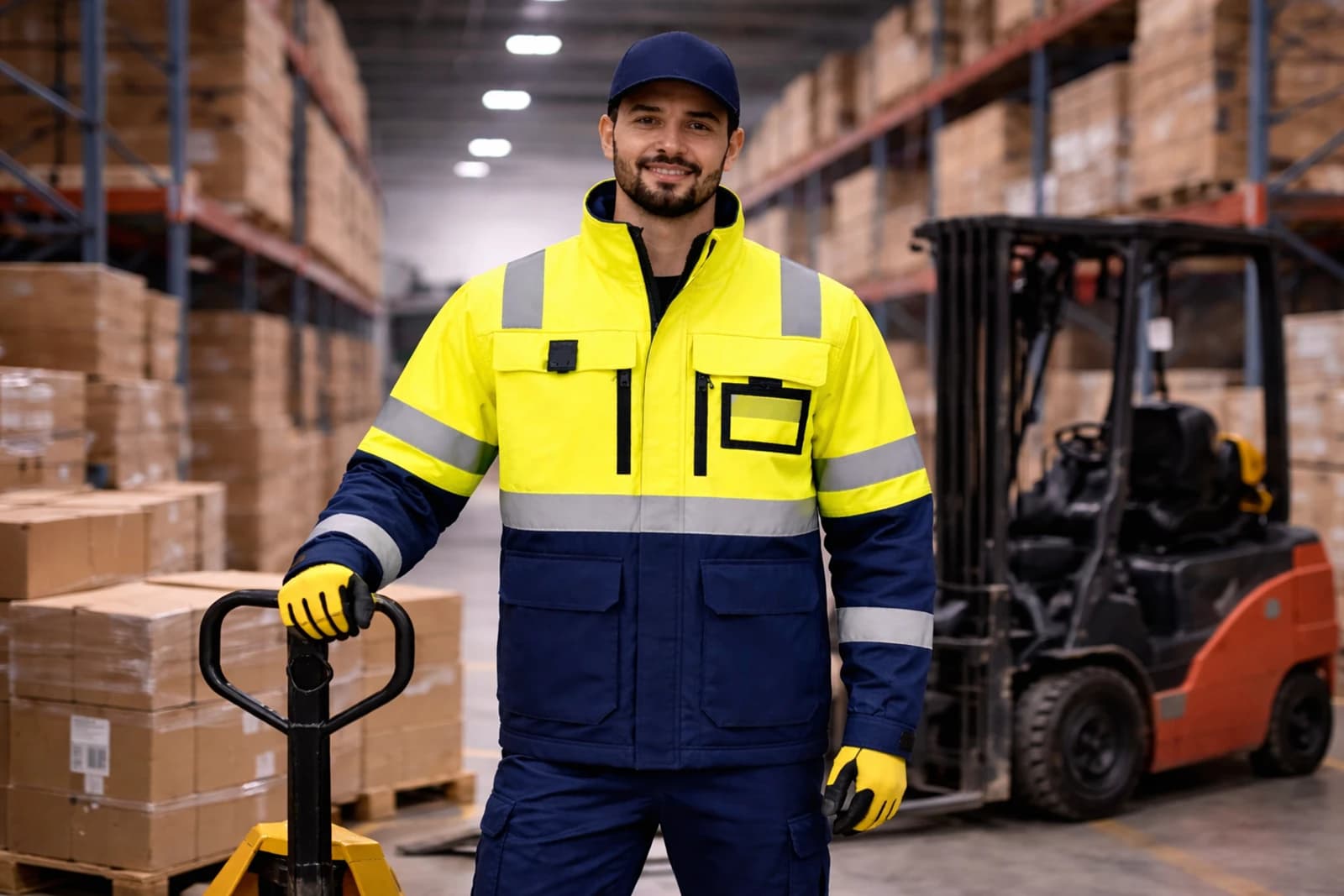
Safety Uniform
Hi-Vis Safety Jacket
Reflective safety jacket for high-visibility site operations and road work crews.