Logistics Fleet Driver Uniforms in the Middle East: A B2B Sourcing Guide for Transport and Delivery Companies
Logistics and delivery fleets across Saudi Arabia, the UAE, Qatar, and Oman need driver uniforms that balance professional branding with heat comfort, durability for long hours behind the wheel, and the versatility to move from the cab to the loading dock. This guide covers fabric technology, design considerations, and what B2B procurement teams should know when sourcing fleet driver uniforms from a Chinese workwear manufacturer.

Buyer context
What procurement teams run into
<p>The Middle East logistics sector is expanding rapidly. Saudi Arabia's Vision 2030 has driven massive investment in transport infrastructure and e-commerce fulfilment, the UAE continues to grow as a global logistics hub through DP World and Dubai South, and Qatar's post-World Cup logistics corridors now connect the country across the region. For procurement managers sourcing uniforms for drivers, delivery personnel, and fleet operations teams, the challenge is finding workwear that satisfies multiple demands at once.</p><p>Driver uniforms in the Gulf face a fundamental tension: they need to project a professional, branded image for the company, yet drivers spend most of their day sitting in air-conditioned cabs followed by short bursts of activity in 45°C heat loading and unloading cargo. A standard cotton or poly-cotton shirt that looks crisp at the start of a shift becomes soaked through with sweat the moment a driver steps out to hand-deliver a package or secure a truckload. By midday, the uniform looks unprofessional, the driver is uncomfortable, and the company's brand impression suffers with every delivery stop.</p><p>There's also a durability problem specific to fleet use. Driver uniforms are subjected to repetitive motion — reaching for steering wheels, shifting gears, climbing in and out of cabs — which causes seam stress at the shoulders, underarms, and seat. Polo buttons pop under seatbelt pressure. Trouser knees wear thin from the constant contact with the seat edge when entering and exiting the vehicle. On top of this, industrial laundering at the fleet's contracted wash service often uses high-temperature cycles that accelerate fading of company logos and brand colours.</p><p>For B2B buyers managing uniforms for 200 to 5,000 drivers and fleet personnel, the goal is a uniform system that looks professional for the full shift, keeps the driver comfortable through temperature swings between cab and loading bay, survives 50+ industrial wash cycles without noticeable fading or shrinkage, and reinforces the logistics company's brand at every touchpoint — from the first-mile pickup to the last-mile delivery handoff.</p>
Sourcing approach
How a factory partner can respond
<p>The most practical solution for Middle East fleet driver uniforms is a polo-shirt-and-trouser system using high-performance moisture-wicking fabric rather than traditional cotton or poly-cotton blends. A logistics polo uniform in 100% polyester pique or micro-mesh knit at 160–190 gsm provides four key benefits: it wicks sweat away from the body during loading and unloading periods, it dries quickly when the driver returns to the cabin, it resists creasing through a full shift, and it washes and dries rapidly without ironing — reducing the turnaround time for fleet laundry operations.</p><p>The polo design should include practical features for drivers: a three-button placket with reinforced buttonholes (buttons are the most common failure on driver polos), a pen pocket on the left sleeve for delivery paperwork, and a chest pocket sized for a smartphone or scanner. For trousers, choose a poly-cotton drill or twill (65/35 blend at 220–260 gsm) with a bit of mechanical stretch — this allows comfortable movement for climbing in and out of the cab, and the higher polyester content reduces wrinkling through the seated workday. Side pockets should be deep enough to hold keys and a wallet while seated, and the waistband should use a wide elastic insert rather than a narrow one for all-day comfort behind the wheel.</p><p>Key sourcing specifications for Middle East fleet driver uniforms:</p><ul><li><strong>Moisture-wicking fabric for the polo:</strong> Request fabric with a moisture management rating of 3.5 or higher per AATCC 195. The fabric should pull sweat from the skin to the outer surface within 10–15 seconds, keeping the driver dry during loading and unloading activity. This is the single most important feature for driver acceptance — a comfortable driver is a compliant driver who wears their uniform correctly.</li><li><strong>Brand colour fastness for Gulf sunlight:</strong> Fleet uniforms are frequently worn in direct sun during loading and delivery activity. Specify dyes with ISO 105-B02 lightfastness rating of 5 or higher to prevent brand colour fading. Request a Pantone-match colour standard on the production order so replacement batches ordered 6 or 12 months later match the original — essential for logistics brands with colour-coded fleet tiers or service levels.</li><li><strong>Logo application designed for the Gulf climate:</strong> Company logos on driver polos should use silicone heat-transfer rather than embroidery or standard screen-print. Silicone transfer is thinner, more breathable, and reflects heat better than thick embroidery thread. It also bonds permanently through 60+ industrial washes. Place logos on the left chest and the centre back (visible when the driver is walking toward or away from a customer) and keep the logo size proportional — no larger than 10 cm wide on the chest to avoid the "billboard" look.</li><li><strong>Reinforced stress points:</strong> Specify double-needle stitching at the shoulder seams, back yoke, and crotch on trousers. Ask for a reinforced button placket on the polo — the area between the second and third button takes the most stress from seatbelt pressure. For trousers used by drivers who also handle cargo loading, consider double-layer or reinforced knees from the same fabric.</li><li><strong>Sizing for multinational driver workforces:</strong> Fleet workforces in the Middle East are often diverse, with drivers from South Asia, the Levant, and East Africa. Work with your manufacturer to prepare a sizing matrix based on actual body measurements of your fleet rather than standard European sizing. Include a size-run trial with 5–10 drivers from different body types before placing the full order — adjustments at this stage save costly exchanges later.</li></ul><p>Additional considerations: For last-mile delivery drivers who interact directly with customers, consider a short-sleeve polo in a crisp branded colour paired with dark charcoal or navy trousers — this combination photographs well for delivery confirmation photos and presents a clean, professional image at the door. For long-haul truck drivers who spend days on the road, include a lightweight hi-vis safety jacket in the uniform package for mandatory rest-stop and incident response scenarios. The jacket should pack into a small pouch so it stays in the cab without taking up space.</p><p>Customization options are straightforward with a Chinese manufacturer experienced in logistics fleet uniforms. Typical MOQ ranges from 500 to 1,500 pieces per colour per design for custom-branded polos, with 30–45 day lead time from sample approval. For fleets with annual uniform replacement cycles, many manufacturers offer contract pricing with locked-in fabric and colour specifications — making second-year reorders a simple quantity confirmation without requalification.</p>
Recommended Products
Products that fit this use case

Logistics Uniform
Logistics Polo Uniform
Breathable uniform polo for warehouse, delivery, and last-mile teams.
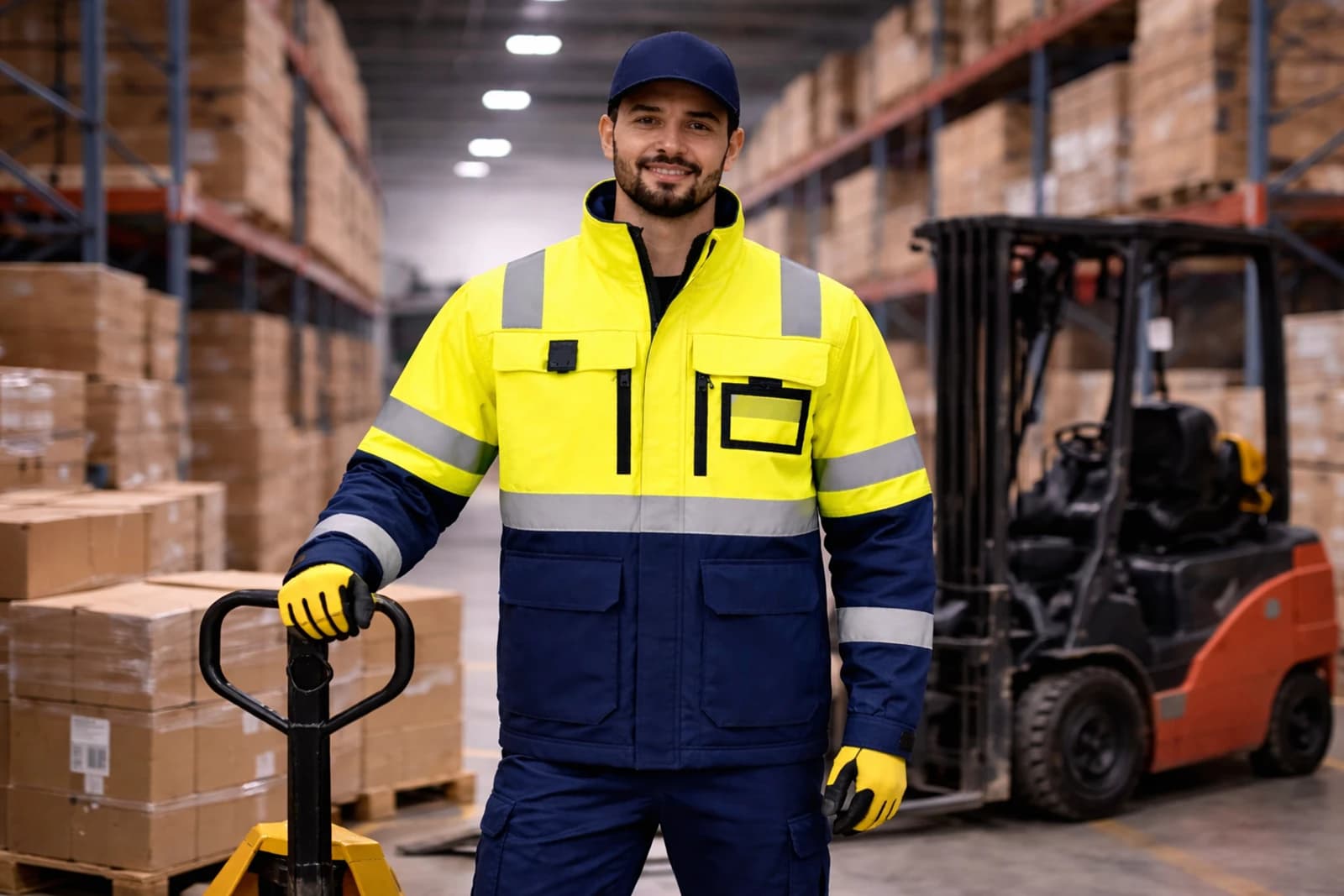
Safety Uniform
Hi-Vis Safety Jacket
Reflective safety jacket for high-visibility site operations and road work crews.