Logistics Polo Uniform for Middle East Fleet Operations: Sourcing from a Chinese Workwear Manufacturer
From Aramco's logistics fleet of 15,000+ service vehicles to Dubai's Last Mile delivery boom and Qatar's FIFA legacy cold-chain networks, Middle East logistics operators need polo uniforms that combine professional branding, heat-adaptive moisture management, and practical durability — without sacrificing B2B cost targets. For GCC fleet managers sourcing from a Chinese workwear manufacturer, this guide covers pique-knit fabric selection for 50°C+ climates, anti-pilling and colourfastness standards for desert UV, pocket configuration for handheld scanner/phone carry, logo embroidery and heat-transfer branding at scale, and bulk procurement for 500–10,000+ driver fleets.

Buyer context
What procurement teams run into
The Middle East logistics and transportation sector is booming — Saudi Arabia's Vision 2030 logistics push targets $9.6 billion in sector GDP by 2030, UAE's logistics market is projected to hit $30.7 billion by 2027, and Qatar's post-World Cup cold-chain and e-commerce logistics networks continue expanding. Fleet operators from Saudi's Hala Transport to Dubai's Akiba Freight and Qatar's Al Hadaf Logistics employ drivers who spend 8–12 hours daily in vehicles, making performance polo uniforms a critical piece of both workforce wellbeing and brand identity. For B2B buyers in the Middle East sourcing logistics polo uniforms from a Chinese workwear manufacturer, the specific challenges are different from construction or oil & gas: **Heat and sweat management inside vehicles:** Cabin temperatures in delivery vans and trucks can reach 55–60°C during summer months (June–September) even with AC running, creating a high-humidity microclimate against the driver's torso. Standard 200–220 gsm combed-cotton polo fabric absorbs moisture (6–8% of its weight) and holds it against the skin — leading to visible sweat patches, rapid odour build-up, and driver discomfort during loading/unloading cycles. Buyers need pique-knit fabrics (typically 65% polyester / 35% cotton or 50% polyester / 50% cotton blends) with a Moisture Management Class value ≥ 3.0 (AATCC 195) and 30+ seconds of wicking time to move perspiration away from skin. **Colour fading and pilling under Gulf UV conditions:** Fleet uniforms are expected to look professional for 12–18 months of daily wear with weekly industrial laundering. Under UV Index 11+ conditions for 8 months of the year, standard reactive-dyed cotton fades visibly in 10–15 wash cycles. Polyester piece-dyed fabrics (disperse dye) offer better UV fade resistance but can develop pilling (pilling grade tested per Martindale ISO 12945-2, minimum Grade 3-4 after 6,000 cycles) which destroys the professional look fleet managers rely on. Fleet operators regularly report rejecting Chinese polos that arrive with pilling rated Grade 2–2.5 after a single season. **Driver functionality requirements:** Modern logistics drivers carry handheld scanners (Zebra TC-series), mobile phones, and ID badge holders. Polo uniforms without structured pockets force drivers to clip devices to waistbands or seat belts — a common drop/fracture risk. Pocket configuration preferences vary: Saudi operators often prefer a single left-chest vertical zip pocket for scanners; UAE operators frequently request dual chest pockets with pen-slots and phone compartments; Qatari cold-chain drivers need RFID-badge-holder attachment loops. One-size-fits-all pocket designs from Chinese suppliers consistently fail GCC operator satisfaction surveys. **Branding at scale:** Fleet uniforms carry company logos, driver ID numbers, and sometimes department colour-codes. Embroidery is preferred for long-wear durability (thread counts below 12,000 stitches per logo to avoid fabric distortion), but heat-transfer silicone patches are increasingly popular for glitter-free metallic-logo effects on dark backgrounds. B2B buyers need suppliers who can maintain consistent Pantone colour matching (±2 ΔE under D65 lighting) across batch runs of 500–10,000 pieces produced 3–6 months apart — a surprisingly common failure point in China-sourced polos.
Sourcing approach
How a factory partner can respond
Middle East fleet managers sourcing logistics polo uniforms from Chinese manufacturers can ensure quality and consistency through these strategies: **1. Specify fabric performance standards upfront** Insist on a fabric technical data sheet (TDS) covering: fabric weight (190–210 gsm pique-knit is optimal for year-round GCC wear), composition (50/50 or 65/35 polyester-cotton blend for moisture management + natural feel), wicking time (≤ 30 seconds per AATCC 79), anti-pilling grade (≥ Grade 3-4 at 6,000 cycles per ISO 12945-2), and colourfastness to light (≥ Grade 5 at 20 hours ISO 105-B02). Request pre-production fabric swatches from the same dye-lot that will be used in bulk production. **2. Choose the right pocket configuration for your fleet** Rather than accepting a generic pocket, define your exact driver workflow: - For last-mile delivery drivers (Dubai, Riyadh, Doha): single left-chest zip pocket (180×130 mm minimum, wide enough for a Zebra TC21 handheld) + right-chest phone pocket (160×90 mm with an elastic top edge) - For long-haul truck drivers (cross-GCC routes): dual lower patch pockets with pen compartments on the left pocket flap - For cold-chain drivers (fresh food, pharma): add an RFID badge holder loop at left shoulder seam **3. Implement a 3-stage colour quality hold system** Require: (1) pre-production lab dip approval on your actual Pantone chip (not a screen reference), (2) first-production cut approval where colour is checked on the actual garment fabric under D65 + TL84 lighting, (3) mid-run random sampling at 10% of pieces from the production batch with ΔE measurement. Any run exceeding ±3 ΔE triggers a 100% sorting inspection at the supplier's cost. **4. Use layered branding for maximum flexibility** Digitised embroidery for the primary chest logo (maximise durability — no peeling risk after 200+ industrial launderings), combined with heat-transfer silicone patches for seasonal promotions or departmental colour-coding. Embroidery density should stay under 12,000 stitches per square inch to prevent fabric puckering on 190–210 gsm pique-knit fabric. For 5,000+ piece orders, request a split-run with different accent colours for distinct driver tiers (e.g. silver thread for lead drivers, gold for supervisors). **5. Build a size-and-fit block that reflects your workforce** Middle East logistics workforces are anthropometrically diverse — South Asian drivers (typically 160–175 cm, medium frame), Arab national drivers (170–185 cm, broader shoulders), and the occasional European expat supervisor. Insist on a 6-size block (S–3XL) with detailed measurement charts for chest half-width (50–72 cm), body length (67–83 cm), and centre-back collar height. Request 1–2% of each order as extra sample stock for fit testing and future reference. By implementing these five strategies, GCC fleet operators can expect first-pass garment approval rates above 95%, uniform service life of 14–18 months in daily use, and brand consistency maintained across quarterly procurement cycles — all at cost parity with generic alternative suppliers.
Recommended Products
Products that fit this use case

Logistics Uniform
Logistics Polo Uniform
Breathable uniform polo for warehouse, delivery, and last-mile teams.
Safety Uniform
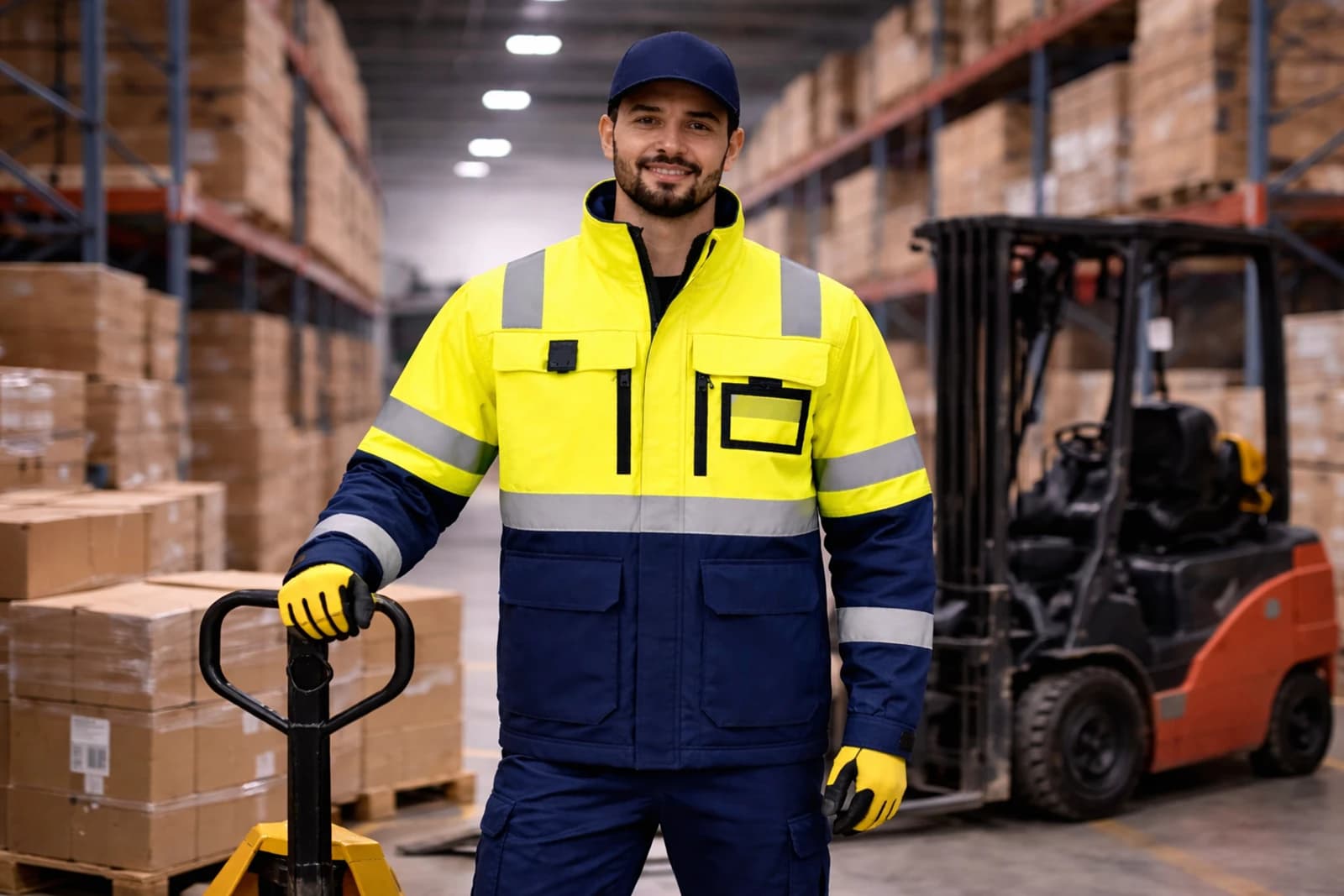
Hi-Vis Safety Jacket
Reflective safety jacket for high-visibility site operations and road work crews.