Logistics Polo Uniforms for Middle East Warehousing Teams: Sourcing Professional Workwear from China
Middle East logistics and warehousing operations require professional polo uniforms that balance comfort, durability, and corporate identity in hot climate conditions. Logistics polo uniforms provide team cohesion, brand visibility, and practical functionality for delivery and warehouse teams. Learn how to source quality polo workwear from Chinese manufacturers with proper fabric technology, customization options, and climate-adaptive features for desert logistics environments.

Buyer context
What procurement teams run into
Logistics managers and warehouse supervisors in the Middle East face significant challenges when sourcing appropriate polo uniforms for their delivery and warehousing teams. The region's extreme temperatures—often exceeding 45°C (113°F) in warehouse and outdoor delivery environments—requires workwear that provides breathability, moisture management, and comfort during physically demanding operations. Standard polo shirts designed for office or retail environments often fail in logistics settings, with materials that trap heat, restrict movement during loading/unloading tasks, and degrade quickly under intense UV exposure and frequent industrial washing. The primary challenge lies in balancing professional appearance with functional performance. Logistics polo uniforms must maintain a corporate look for customer-facing delivery personnel while providing the durability and comfort needed for warehouse operations. Many uniform suppliers offer polo shirts that look professional but lack the technical features required for logistics work, such as reinforced stitching at stress points, moisture-wicking fabrics, and UV protection for outdoor delivery routes. Chinese manufacturers may provide polo shirts that meet basic appearance requirements but perform poorly in actual desert logistics environments, leading to reduced wearer comfort and premature garment failure. Another critical issue is sizing and fit for diverse logistics teams. Middle East logistics operations employ workers with varying body types performing different roles—from warehouse picking and packing to delivery driving and customer interaction. Polo uniforms must accommodate these variations while allowing freedom of movement during physically demanding tasks. Ill-fitting uniforms can restrict movement during loading operations, cause discomfort during extended driving shifts, or fail to maintain a professional appearance during customer interactions. Standard sizing charts often don't account for the range of movements required in logistics work or the layering preferences in temperature-controlled warehouse environments. Durability presents additional complexities for logistics operations. Polo uniforms undergo significant stress from equipment contact (forklifts, pallet jacks, loading equipment), frequent washing cycles, and exposure to various environmental conditions. The collar structure, placket stitching, and side seams must withstand repeated stress without losing shape or integrity. Many imported polo shirts show premature pilling, seam failure, and color fading within months of deployment, requiring frequent replacements that strain operational budgets and disrupt uniform consistency across teams.
Sourcing approach
How a factory partner can respond
Begin by understanding the specific requirements for logistics polo uniforms in Middle East operations. For teams involved in warehousing, delivery, inventory management, and customer service, prioritize polo shirts with these key features: moisture-wicking performance fabrics, reinforced construction at stress points, UV protection for outdoor work, and professional appearance suitable for customer interactions. Look for Chinese manufacturers who specialize in technical workwear and can provide fabric samples with performance documentation for desert climate conditions. When evaluating polo fabrics for logistics applications, focus on advanced technologies that address both comfort and durability. Modern performance fabrics incorporate moisture-wicking polyester blends with strategic ventilation zones, anti-microbial treatments for odor control, and UV-resistant finishes. Some innovative fabrics feature stretch technology in key areas (shoulders, back) to allow greater freedom of movement during lifting and loading tasks. Request samples with the exact fabric composition and performance documentation planned for production, not just generic demonstration pieces. For Middle East conditions, consider polo uniforms with strategic design elements. Look for shirts with mesh-lined side panels for ventilation, reinforced collar and placket construction for durability, and tagless neck labels to prevent irritation during extended wear. Ventilation features like breathable back panels, moisture-wicking fabric technology, and strategic seam placement significantly improve comfort during physical labor in heat. These features should be integrated while maintaining a professional appearance suitable for customer-facing delivery personnel. Customization options require careful planning. When sourcing from Chinese manufacturers, discuss embroidery or printing methods that withstand industrial washing while maintaining clarity and colorfastness. Direct embroidery typically offers better durability than heat-transfer printing for logistics uniforms that undergo frequent washing. Consider placement options that accommodate different roles—chest logos for customer visibility, sleeve branding for warehouse teams, or subtle identification for management personnel. Request wash test samples with your specific logo application to verify durability before placing bulk orders. Implement a practical testing protocol before committing to large quantities. Conduct wear tests with sample polo shirts across different logistics roles—warehouse picking, delivery driving, inventory management—to evaluate performance across temperature ranges and activity levels. Perform accelerated washing tests simulating 50+ industrial laundry cycles to verify fabric integrity, colorfastness, and logo durability. Field tests should include full work shifts in actual logistics environments to assess comfort, moisture management, and freedom of movement. This approach ensures the polo uniforms will perform reliably throughout their service life in Middle East logistics operations.
Recommended Products
Products that fit this use case

Logistics Uniform
Logistics Polo Uniform
Breathable uniform polo for warehouse, delivery, and last-mile teams.
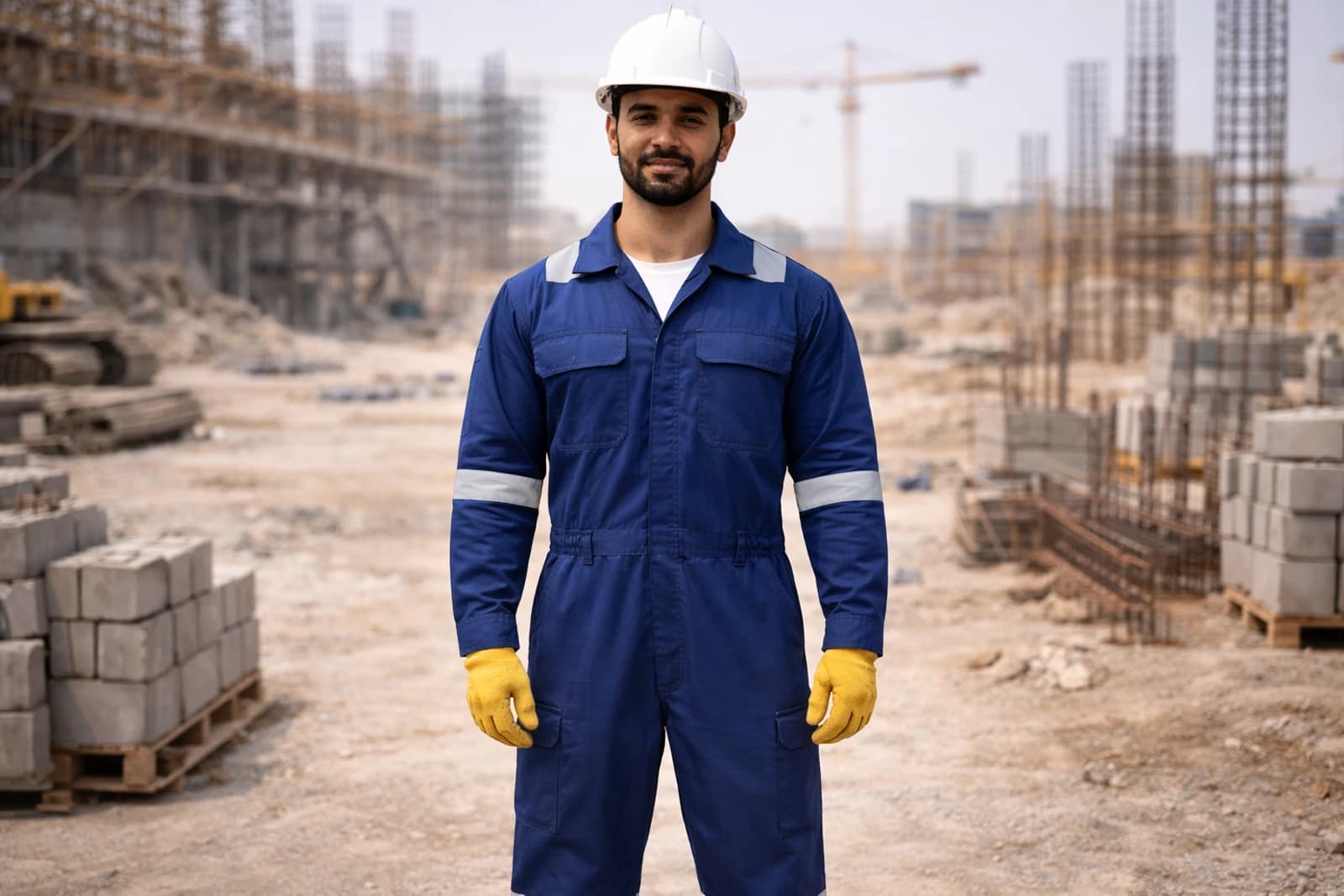
Industrial Workwear
Industrial Coverall Pro
Hard-wearing one-piece coverall for plant, maintenance, and heavy-duty operations.