Hi-Vis Jackets & Logistics Polo Uniforms: Sourcing Workwear for Middle East Warehousing & Ports
The Middle East's logistics sector is growing at double-digit rates. Dubai's Jebel Ali and Dubai South, Abu Dhabi's Khalifa Port, Saudi Arabia's Red Sea and Gulf ports, and the region's expanding free-zone and 3PL ecosystems have turned warehousing, distribution, and port operations into a massive employment engine. From forklift operators and yard marshals to warehouse pickers, loading dock crews, and fleet drivers, thousands of workers need practical, compliant, and brandable workwear every day. This sourcing guide for Middle East B2B buyers covers hi-vis safety jackets, logistics polo uniforms, fabric choices for Gulf heat, compliance (EN ISO 20471), custom branding, and volume procurement from a Chinese workwear manufacturer.

Buyer context
What procurement teams run into
The Middle East is quietly becoming one of the world's most important logistics hubs. Dubai's Jebel Ali remains the largest container port between Rotterdam and Singapore, Dubai South is building one of the planet's biggest airport-adjacent logistics zones, and Abu Dhabi's Khalifa Port and KIZAD are expanding container and industrial capacity at pace. Saudi Arabia's Vision 2030 logistics program targets the kingdom as a global logistics hub, with new ports at NEOM and Red Sea Global, while the UAE, Qatar, and Oman all invest heavily in free zones, e-commerce fulfilment centres, and cold-chain warehousing. The result: a booming demand for logistics workforce apparel. Every distribution centre, port terminal, and 3PL operation needs its staff in identifiable, safe, and practical uniforms. And for B2B buyers in the region, the challenge is sourcing workwear that works in Gulf conditions — punishing summer heat, high humidity on the coast, dust and grit in the desert, and busy sites where visibility is a genuine safety issue. This guide covers the two workhorse garments of the logistics sector — the hi-vis safety jacket and the logistics polo uniform — and how to source them at volume from a Chinese workwear manufacturer. **1. Hi-vis safety jackets: non-negotiable on active sites** Anywhere vehicles and people mix — loading docks, yard operations, port terminals, distribution-centre aprons, and roadside fleet work — high-visibility clothing is a safety requirement, not a style choice. Forklifts, reach trucks, yard tractors, tugs, and delivery vans share space with pedestrians every shift, and a worker in standard clothing is hard to see, especially at dawn, dusk, and under sodium lighting at night. When sourcing hi-vis jackets for logistics teams, Middle East buyers should specify: - **Class 2 or Class 3 visibility (EN ISO 20471).** Class 3 offers the highest retroreflective coverage and is the right call for workers who spend significant time near moving vehicles — yard marshals, traffic controllers, and dockhands. Class 2 suits warehouse pickers who cross forklift aisles and loading dock teams. Many Chinese manufacturers make both, and the price difference at volume is modest. - **Fluorescent background and retroreflective tape.** Specify fluorescent yellow-green or orange fabric with retroreflective tape positioned to EN ISO 20471 geometry. The tape must be on the torso, arms, and around the shoulders for full-class coverage. - **Breathable fabric for Gulf heat.** Full heavy hi-vis jackets are miserable in a 45°C summer. Look for a lightweight hi-vis shell (polyester 210-240gsm) with mesh lining, or a hi-vis vest worn over a polo or t-shirt for summer months. A mesh-lined jacket lets air flow while keeping the retroreflective tape visible — this is the single most important comfort feature for Middle East buyers. - **Practical details.** Two-way front zip (workers sit, bend, and crouch constantly), zipped side pockets that close securely so phones and tools don't fall out, adjustable cuffs, and — for rainy spells and coastal humidity — a DWR finish with 5,000mm+ hydrostatic head. **2. The logistics polo uniform: everyday wear, brandable, and cool** For the majority of warehouse, office, and light-operational staff, the polo shirt is the backbone of the logistics uniform. It's the garment that carries the company logo, that makes staff identifiable to visitors and colleagues, and that keeps workers comfortable through a full shift in warm conditions. Key specifications for logistics polos sourced from a Chinese manufacturer: - **Fabric:** A poly-cotton blend — typically 65% polyester / 35% cotton at 180-220gsm pique knit — gives easy-care performance, quick drying, and good durability for daily washing. For maximum coolness, add moisture-wicking treatment or specify a higher-polyester performance knit. Avoid heavy 100% cotton pique at this weight: it shrinks, creases, and holds sweat. - **Moisture-wicking and anti-odour finish:** Logistics work in the Gulf is hot, and crews work long shifts. Specify wicking yarns or a functional finish that pulls sweat to the surface and dries fast, plus an antibacterial/anti-odour treatment. Workers will thank you, retention will improve, and the garments will last longer between washes. - **Collar and trim options:** A ribbed, two-tone, or contrast-collar polo looks professional and makes the brand pop. Details like contrast piping on sleeves, tonal buttons, and a clean placket lift perceived quality — which matters for brand image and employee pride. - **Embroidery vs. transfer branding:** Layouts are often 15,000-30,000+ units, so determine the branding method up front. Embroidery is durable and premium for chest logos; silicone or PVC transfers work for back panels and larger graphics. Confirm the supplier has in-house embroidery capacity so turnaround and consistency are controlled. - **Odd sizes and grading:** Gulf workforces include drivers, technicians, and admin staff of widely varying builds. Confirm the supplier can grade from 2XS through 5XL and offer short/tall options for key roles. **3. Branding and fleet identity** In logistics, uniform consistency IS the brand. From the port gate to the delivery van, a uniformed, consistent, and well-fitted workforce signals reliability to clients and regulators. When sourcing logistics uniforms, plan for: - **Fleet-wide colour coding.** Distinct colourways per function — e.g., hi-vis yellow-green for yard staff, orange for security, branded polos with specific shoulder colours per depot or shift. This improves safety recognition and simplifies management. - **Logo placement strategy.** Decide chest, sleeve, and back placements up front. Standardise artwork files and colour matching (Pantone) so every batch matches. Ask the manufacturer to keep your Pantone references on file for reorders. - **Name and role identifiers.** Woven or embroidered name tapes and role patches are cheap at volume and add real professionalism. **4. Compliance and standards** For logistics workwear, the key standard is **EN ISO 20471** for high-visibility garments. Buyers should: - Insist on **third-party test reports** from accredited labs (SGS, TÜV, Intertek, BV) covering the garment's class rating, retroreflective performance after washing, and fabric colour fastness. - Verify **labelling** matches the spec — each garment must carry the EN ISO 20471 pictogram and class marking. - For general textiles, confirm basic quality standards: colour fastness (EN ISO 105), dimensional stability after washing, and no harmful substances under REACH or OEKO-TEX limits. A reputable Chinese manufacturer will provide these certificates readily. **5. Sourcing at volume from China** Middle East buyers consistently source logistics workwear from Chinese manufacturers for three reasons: competitive unit cost at volume, in-house embroidery and decoration capacity, and reliable lead times for repeat orders. To get the best outcome: - **Specify everything in writing.** Fabric composition and GSM, EN ISO 20471 class, branding location and size, packaging (individual polybags vs. bulk), and delivery terms (FOB vs. CIF). Ambiguity creates cost and delay. - **Order fabric and labour with seasonal timing.** Allow 30-45 days for production plus shipping, and plan reorders ahead of Ramadan and summer peaks when demand spikes. - **Request pre-production samples** (PP samples) and lab dips for colours before mass production. A 1-2 piece PP sample for a 30,000-unit order costs little and prevents expensive mistakes. - **Consolidate.** Combine hi-vis jackets, polos, and safety vests into one consolidated shipment to save on freight and simplify customs. Ports like Dubai, Jebel Ali, and Jeddah handle this routinely. **6. A practical kit list for a mid-size 3PL operation** As a planning guide, a typical 150-worker distribution centre might order: - 100 Class 3 hi-vis jackets (yard, dock, and marshalling staff) - 150 hi-vis mesh vests (summer outer layer over polos) - 300 branded polo shirts (two per operational worker, plus spares) - 40 name tapes and role patches per worker (sew-on, at volume) This system keeps staff visible where it matters, brandable across the fleet, and comfortable in relentless Gulf heat.
Sourcing approach
How a factory partner can respond
Middle East logistics employers need workwear that balances three priorities: on-site safety visibility, branding and fleet identity, and comfort in extreme Gulf heat. The solution is a two-garment system — lightweight, EN ISO 20471-certified hi-vis jackets and vests for active yard, dock, and port work, paired with breathable, moisture-wicking, brandable polo uniforms for warehouse and operational staff. Sourcing both from a single Chinese workwear manufacturer enables volume pricing, in-house embroidery, consolidated shipping, and consistent quality across the fleet — with third-party certified test reports, Pantone-matched branding, and 2XS–5XL grading for Gulf workforces. **How to buy:** Specify EN ISO 20471 Class 2/3 with mesh-lined, breathable jackets for summer. Choose 65/35 poly-cotton pique polos at 180-220gsm with wicking and anti-odour finishes. Standardise Pantone colourways, logo placements, and name-tape plans. Request pre-production samples and accredited lab reports before mass production, and consolidate hi-vis and polo orders into one shipment to cut freight. A typical 150-worker 3PL site needs ~100 Class 3 jackets, ~150 mesh vests, and ~300 polos.
Recommended Products
Products that fit this use case
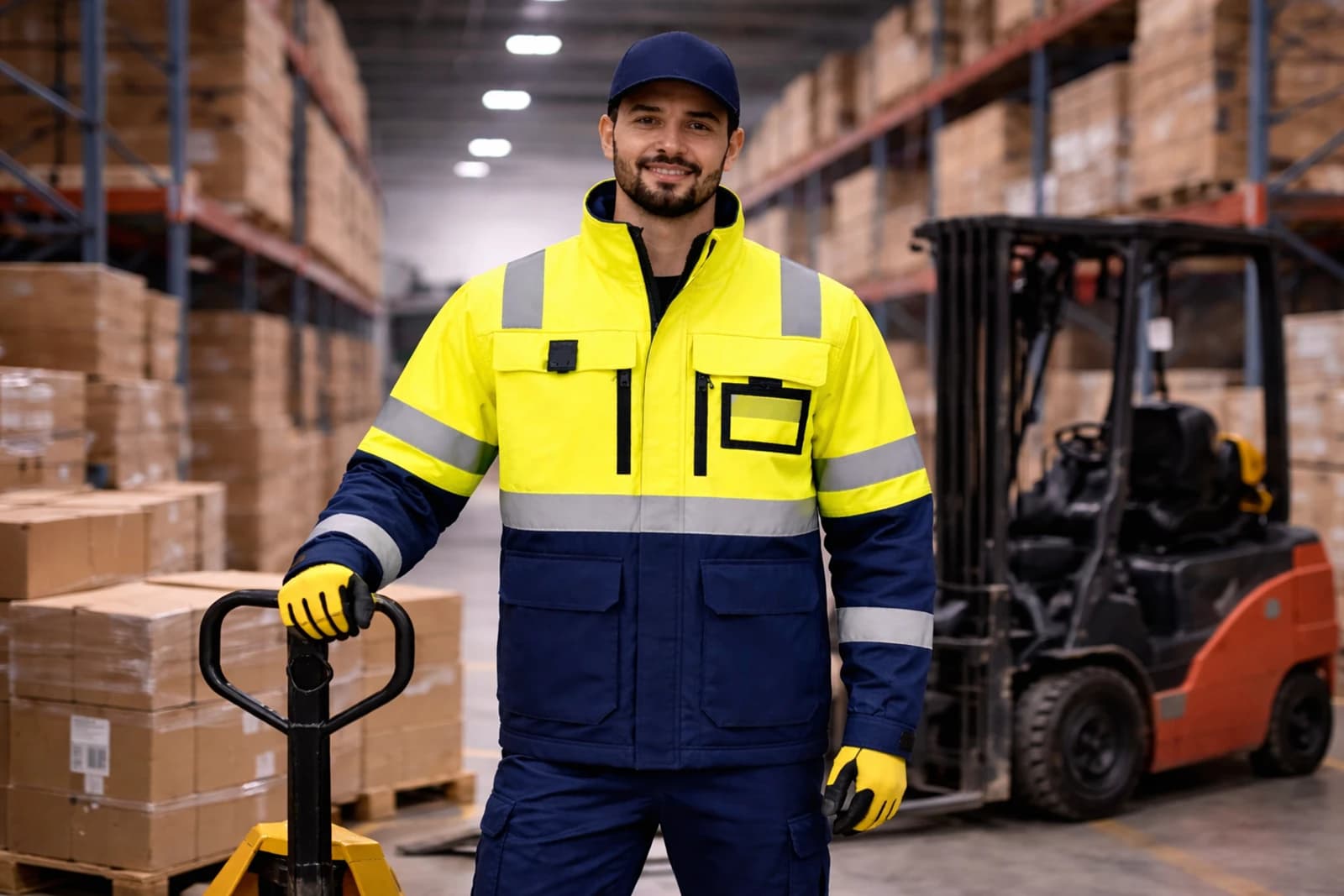
Safety Uniform
Hi-Vis Safety Jacket
Reflective safety jacket for high-visibility site operations and road work crews.
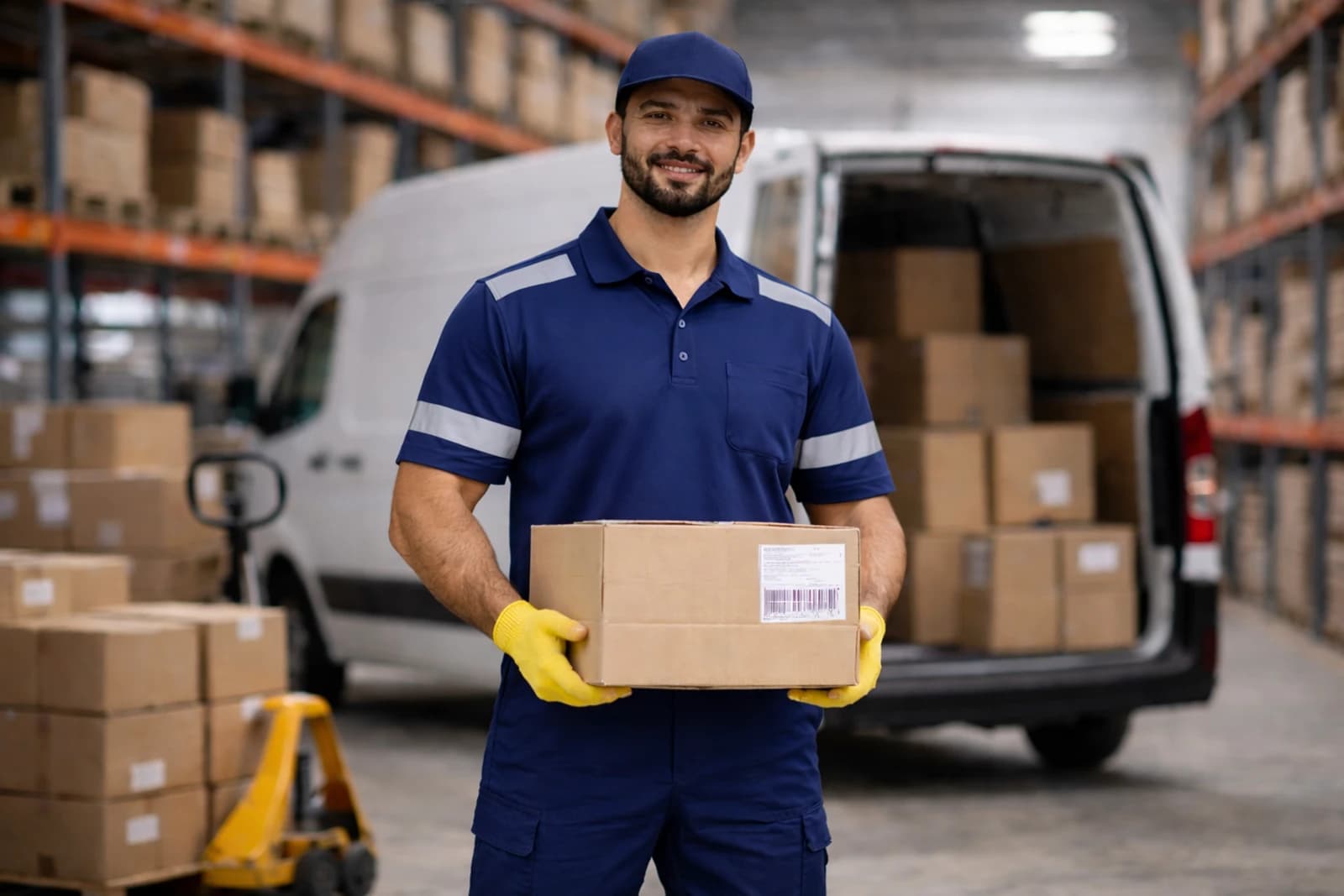
Logistics Uniform
Logistics Polo Uniform
Breathable uniform polo for warehouse, delivery, and last-mile teams.