Metal Fabrication FR Workwear: Why Welding Splash Needs a Separate Spec
Metal fabrication buyers often specify FR workwear based on flame resistance rating alone (EN ISO 11612 or NFPA 2112), then discover that garments fail when exposed to molten metal splash from welding. The root cause: FR rating tests measure fabric ignition resistance, not resistance to molten metal adhesion and heat transfer. This article covers the decision criteria for separating FR rating from welding splash protection in procurement specifications, the garment construction requirements that prevent molten metal collection, and the pilot protocol for validating splash resistance before bulk order approval.
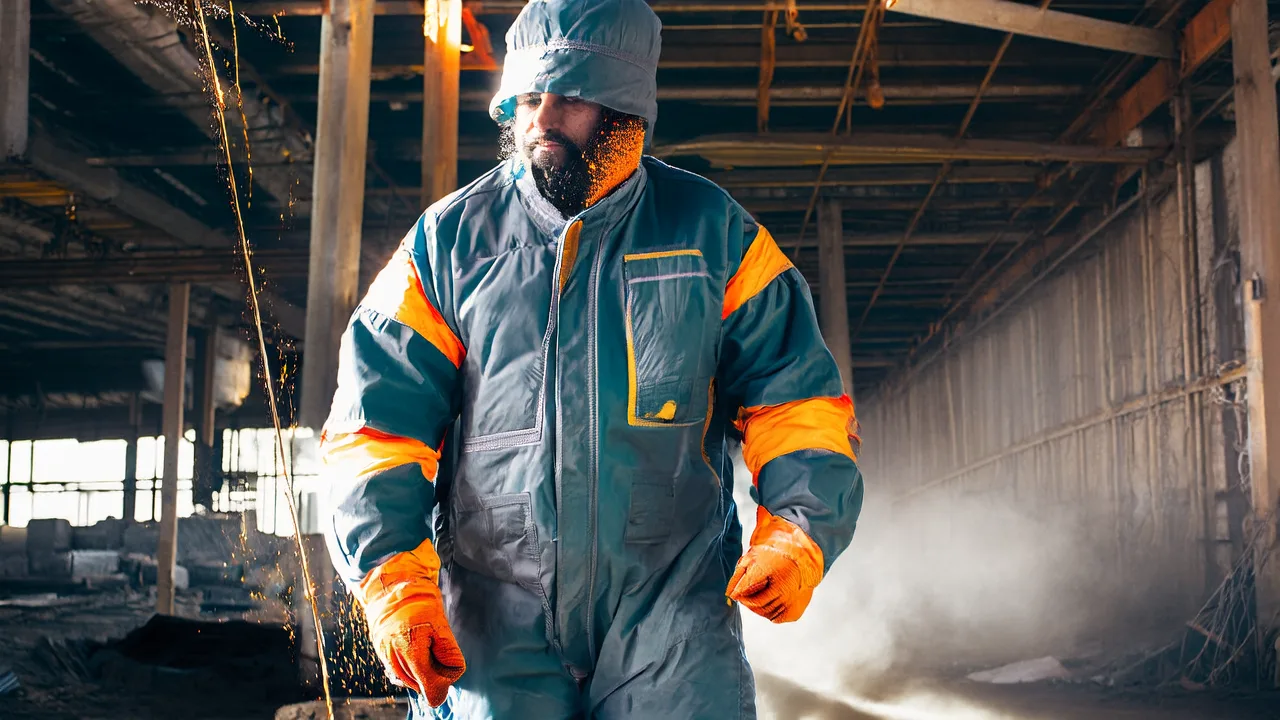
Buyer context
What procurement teams run into
Metal fabrication workwear presents a specification gap that most buyers do not recognise until they see garment failure during welding operations. The core issue: buyers specify FR (flame resistant) workwear based on FR rating alone — typically EN ISO 11612 (protective clothing against heat and flame) or NFPA 2112 (standard on flame-resistant garments for protection of industrial personnel against flash fire) — assuming that an FR-rated garment will protect workers from all heat and flame hazards in metal fabrication. But FR rating tests measure fabric ignition resistance and afterflame time, not resistance to molten metal adhesion, heat transfer from molten metal splash, or the garment's ability to shed molten metal before it burns through the fabric. The result: a garment that passes FR testing but fails catastrophically when exposed to molten metal splash from MIG, TIG, or stick welding. **1. FR rating tests do not simulate molten metal splash** FR rating tests (EN ISO 11612, NFPA 2112) evaluate fabric performance when exposed to flame or convective heat: - **EN ISO 11612:** Tests limited flame spread (ISO 15025), heat transfer (ISO 9151), and optionally molten metal splash (ISO 11821). But the molten metal splash test is optional — many FR-rated garments pass EN ISO 11612 without being tested for molten metal splash resistance. - **NFPA 2112:** Tests flash fire protection (ASTM F2700 or ISO 17202), which simulates a 3-second flash fire exposure. The test does not simulate molten metal droplets adhering to the fabric surface. The gap: a garment can pass EN ISO 11612 or NFPA 2112 without providing any protection against molten metal splash. The buyer who specifies FR workwear based on these standards alone creates a protection gap for welding operators who are exposed to molten metal droplets (temperature 1,500–1,700°C for steel, 600–650°C for aluminium) that adhere to the fabric surface and transfer heat through the fabric to the worker's skin. **2. Molten metal splash creates a different failure mode than flame exposure** When molten metal droplets contact FR fabric, the failure mechanism is different from flame exposure: - **Flame exposure:** The fabric is exposed to convective and radiant heat. FR fabric resists ignition by forming a char layer that insulates the fabric from heat. The char layer self-extinguishes when the flame source is removed. - **Molten metal splash:** The molten metal droplet (temperature 600–1,700°C) adheres to the fabric surface and transfers heat through conduction. The droplet does not ignite the fabric — it transfers heat directly through the fabric to the worker's skin, causing burns. The fabric may not ignite, but the heat transfer causes second-degree or third-degree burns before the droplet solidifies and falls off. The failure mode is specific: - **Molten steel splash (1,500–1,700°C):** The droplet adheres to the fabric surface, transfers heat through conduction, and burns through the fabric in 2–5 seconds if the fabric is not molten-metal-resistant. The fabric may char but does not ignite — the burn injury is caused by heat transfer, not flame. - **Molten aluminium splash (600–650°C):** The droplet has lower temperature but higher thermal conductivity than steel. The droplet spreads on the fabric surface, creating a larger area of heat transfer. The fabric may not burn through, but the heat transfer causes burns over a larger area of skin. **3. Garment construction determines whether molten metal collects or sheds** Even if the fabric is molten-metal-resistant, garment construction details determine whether molten metal droplets collect on the garment (creating prolonged heat transfer) or shed off the garment (minimising heat transfer): - **External pockets:** Molten metal droplets collect in external pockets, where they remain in contact with the fabric for 5–10 seconds before solidifying. The prolonged contact transfers heat through the fabric, causing burns. Welding garments should have no external pockets below the chest level — or pockets should be covered with a flap that prevents molten metal from entering. - **Open cuffs:** Molten metal droplets enter open cuffs and collect inside the sleeve, where they contact the worker's wrist and forearm. Welding garments should have closed cuffs (snap-adjusted or elasticated) that prevent molten metal from entering the sleeve. - **Front closures:** Exposed zippers or snap buttons create gaps where molten metal can enter the garment. Welding garments should have concealed closures with a fabric flap that covers the zipper or snap buttons, preventing molten metal from entering through the front opening. - **FR thread:** If the garment is sewn with non-FR thread (cotton or standard polyester), the seams fail when exposed to molten metal splash. The thread burns or melts, causing seam failure and garment opening. Welding garments should be sewn with FR thread (aramid or FR-treated polyester) that resists melting and maintains seam integrity when exposed to molten metal. **4. The procurement mistake: specifying FR rating without molten metal splash resistance** The most common procurement error is to specify FR workwear based on FR rating alone (EN ISO 11612 or NFPA 2112) without requiring molten metal splash resistance testing. The logic: "If the garment is FR-rated, it will protect workers from all heat and flame hazards." But this logic ignores the fact that FR rating tests do not simulate molten metal splash — the garment may pass FR testing but fail when exposed to molten metal droplets from welding. The buyer who specifies FR workwear without molten metal splash resistance creates a protection gap for welding operators. The garment passes FR testing but fails during welding operations, causing burn injuries and workers' compensation claims. **5. The specification conflict: FR fabric vs. molten metal splash resistance** The workwear specification for metal fabrication must balance two competing requirements: - **FR rating:** The garment must resist ignition and self-extinguish when exposed to flame. FR fabrics (aramid, FR-treated cotton, FR-treated polyester) achieve FR rating by forming a char layer that insulates the fabric from heat. - **Molten metal splash resistance:** The garment must resist heat transfer from molten metal droplets that adhere to the fabric surface. Molten-metal-resistant fabrics achieve splash resistance by using smooth, tightly woven fabric surfaces that shed molten metal droplets before they transfer heat through the fabric. The conflict: some FR fabrics (e.g., FR-treated cotton) form a char layer that resists ignition but has a rough surface that traps molten metal droplets, increasing heat transfer. Other FR fabrics (e.g., aramid) have a smooth surface that sheds molten metal droplets but may not form a char layer as effectively as FR-treated cotton. The buyer must specify a fabric that achieves both FR rating and molten metal splash resistance — or accept that no single fabric optimises both requirements and specify separate garments for welding operators (molten-metal-resistant) and non-welding roles (FR-rated only).
Sourcing approach
How a factory partner can respond
The solution for metal fabrication FR workwear is to specify molten metal splash resistance as a separate requirement in the procurement specification, with testing criteria, garment construction requirements, and a pilot protocol for validating splash resistance before bulk order approval. **Step 1: Specify molten metal splash resistance testing in the procurement specification** Include the following requirements in the procurement specification: - **Molten metal splash test:** Garments must be tested for molten metal splash resistance according to ISO 11821 (protective clothing — protection against molten metal splash). The test simulates exposure to molten metal droplets (steel or aluminium) and measures the fabric's ability to resist heat transfer and burn-through. - **Acceptance criteria:** After molten metal splash testing, the fabric must show no burn-through (no hole or opening in the fabric), and the temperature rise on the inner fabric surface must not exceed 10°C (measured by thermocouple placed behind the fabric during testing). If the fabric fails these criteria, reject the sample and require the supplier to use a different fabric or fabric treatment. - **FR rating:** Garments must also meet EN ISO 11612 requirements for limited flame spread (ISO 15025) and heat transfer (ISO 9151). The FR rating is a separate requirement from molten metal splash resistance — the garment must meet both. **Step 2: Specify garment construction requirements for welding operators** Include the following construction requirements in the procurement specification for welding operators: - **No external pockets below chest level:** External pockets collect molten metal droplets, creating prolonged heat transfer. Specify no external pockets below the chest, or specify pockets with covered flaps that prevent molten metal from entering. - **Closed cuffs:** Specify snap-adjusted or elasticated cuffs that prevent molten metal from entering the sleeve. Open cuffs allow molten metal to enter the sleeve and contact the worker's wrist and forearm. - **Concealed front closures:** Specify a fabric flap that covers the zipper or snap buttons, preventing molten metal from entering through the front opening. Exposed zippers create gaps where molten metal can enter the garment. - **FR thread:** Specify aramid or FR-treated polyester sewing thread that resists melting and maintains seam integrity when exposed to molten metal. Non-FR thread (cotton or standard polyester) burns or melts, causing seam failure. - **Smooth fabric surface:** Specify a tightly woven fabric with a smooth surface that sheds molten metal droplets before they transfer heat through the fabric. Rough fabric surfaces trap molten metal droplets, increasing heat transfer. **Step 3: Specify separate garments for welding and non-welding roles** Not all metal fabrication workers are exposed to molten metal splash. Specify separate garments for welding operators and non-welding roles: - **Welding operators:** Specify garments with molten metal splash resistance (ISO 11821 tested), closed cuffs, concealed closures, FR thread, and no external pockets below chest level. The garment is optimised for molten metal splash protection. - **Non-welding roles (grinding, cutting, assembly):** Specify FR-rated garments (EN ISO 11612 or NFPA 2112) without molten metal splash resistance testing. The garment is optimised for FR protection without the additional cost of molten metal splash resistance. This approach avoids over-specifying garments for non-welding roles (who are not exposed to molten metal splash) while ensuring welding operators receive garments with appropriate splash protection. **Step 4: Pilot the welding garment specification before bulk order approval** Before committing to a bulk order, pilot the welding garment specification with 10–15 welding operators for 4–6 weeks of actual metal fabrication operations. Collect data on: - **Garment performance:** Inspect garments after 10–15 welding shifts for molten metal adhesion, burn-through, seam failure, and fabric degradation. Check for molten metal droplets that have adhered to the fabric surface and whether the droplets have caused burn-through or heat transfer. - **Worker feedback:** Survey welding operators on garment comfort, mobility, and thermal comfort during welding operations. Check whether the garment's closed cuffs, concealed closures, and lack of external pockets interfere with welding tasks. - **Wash durability:** Wash garments according to the fabricator's laundry protocol (typically 60–75°C with alkaline detergent) and re-test for molten metal splash resistance after 10–15 wash cycles. Some fabric treatments that provide molten metal splash resistance degrade after repeated washing, reducing splash resistance over the garment's lifecycle. Use pilot data to adjust garment construction details, fabric selection, or wash protocols before full fleet commitment. **Step 5: Adjust specifications based on pilot data** After the pilot, adjust the welding garment specification based on feedback: - **If garments show molten metal burn-through:** Specify a heavier fabric weight (240–260 GSM instead of 200–220 GSM) or a different fabric type (aramid instead of FR-treated cotton) that provides better molten metal splash resistance. - **If closed cuffs interfere with welding tasks:** Specify snap-adjusted cuffs (instead of elasticated cuffs) that allow workers to adjust cuff tightness for task-specific requirements. - **If molten metal splash resistance degrades after washing:** Specify a fabric treatment that is wash-durable (rated for 50+ wash cycles) or increase the garment replacement frequency to maintain splash resistance. **Recommended garments for metal fabrication workwear:** - **Industrial coverall-pro** — specify the 220–240 GSM aramid or FR-treated cotton version with molten metal splash resistance (ISO 11821 tested), closed cuffs, concealed front closures, FR thread, and no external pockets below chest level. The coverall provides full-body protection for welding operators exposed to molten metal splash. The aramid fabric provides both FR rating and molten metal splash resistance, with a smooth surface that sheds molten metal droplets before they transfer heat through the fabric. - **Construction softshell set** — specify the 180–200 GSM FR-treated polyester version for non-welding roles (grinding, cutting, assembly) who require FR protection but are not exposed to molten metal splash. The softshell set provides FR rating (EN ISO 11612) without the additional cost of molten metal splash resistance testing. The set is suitable for lighter-duty roles where molten metal splash is not a hazard.
Recommended Products
Products that fit this use case

Industrial Workwear
Industrial Coverall Pro
Hard-wearing one-piece coverall for plant, maintenance, and heavy-duty operations.
Construction Clothing
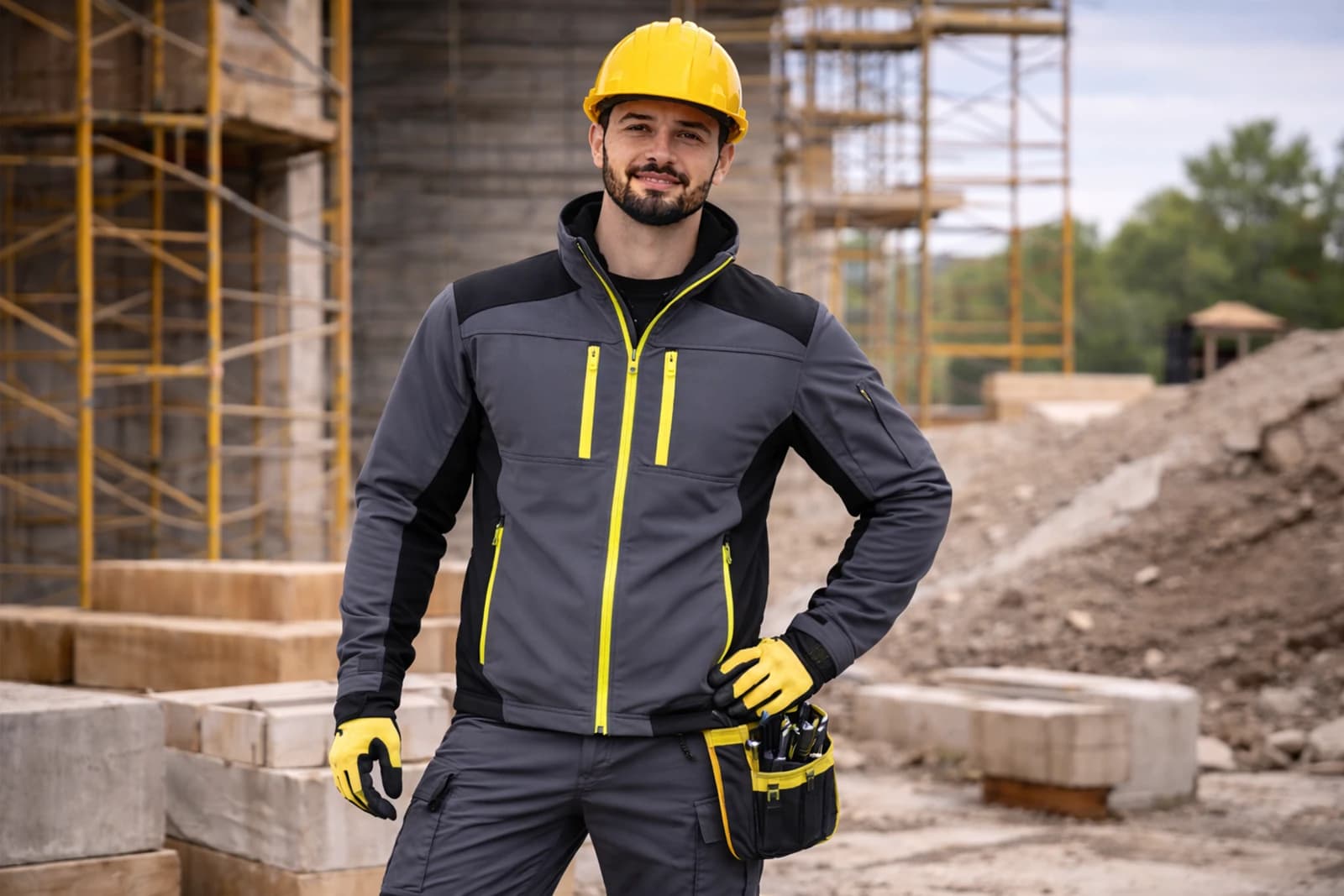
Construction Softshell Set
Flexible jacket and trouser set built for crews working across changing weather conditions.