Metal Fabrication Workwear Requires Spark Resistance Without Heat Stress
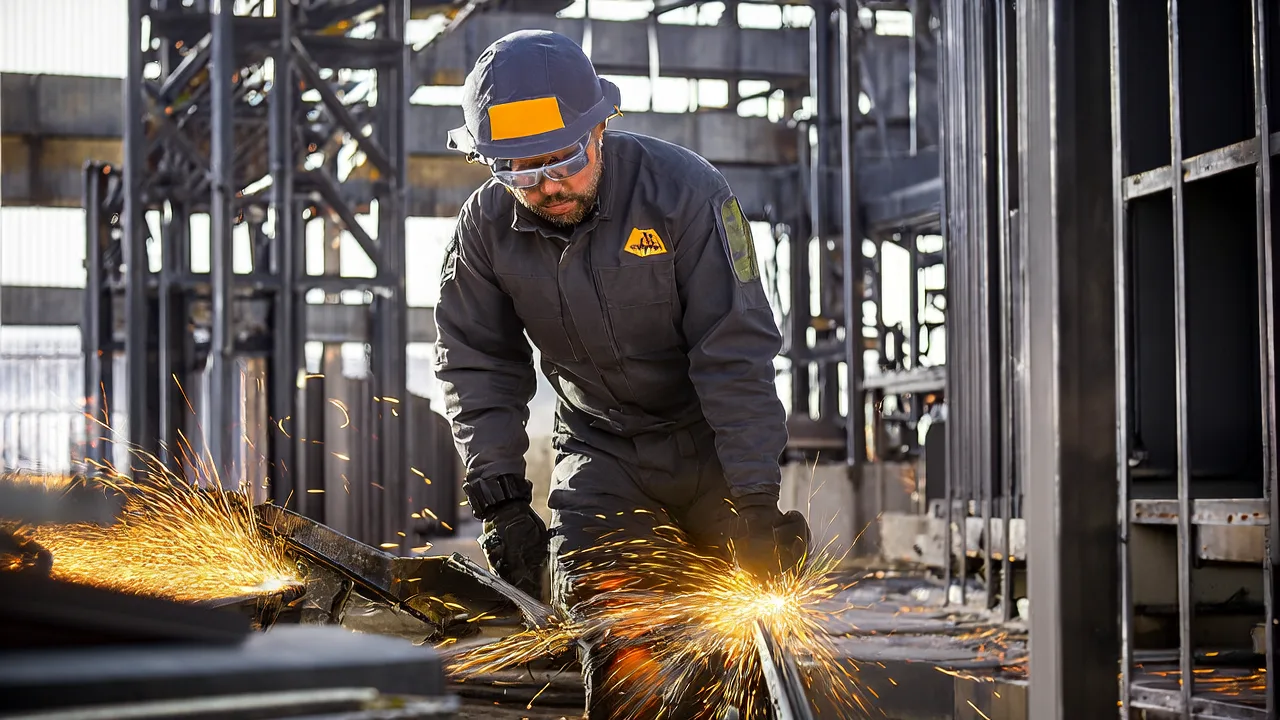
Metal fabrication shops expose workers to sparks from grinding and cutting, hot metal shards, and sharp edges — but the indoor shop environment traps heat from equipment and process operations. Buyers who specify heavy flame-resistant fabric to handle spark exposure create heat stress for workers in warm, poorly ventilated shops. Buyers who specify lighter breathable fabric to handle heat exposure leave workers unprotected against sparks that burn through standard polyester-cotton blends in seconds. The root cause: spark resistance and thermal comfort are treated as competing specifications rather than dual requirements for the same garment. This article covers the dual-hazard environment in metal fabrication shops, the fabric criteria that address both spark resistance and breathability, and the pilot protocol that validates dual performance before fleet commitment.
Buyer context
What procurement teams run into
Metal fabrication shops present a dual-hazard workwear environment that most buyers do not recognise until they see heat stress incidents or spark-burned garments. The core issue: buyers specify flame-resistant (FR) garments for metal fabrication workers based on spark protection alone, or they specify breathable garments based on thermal comfort alone, assuming that one specification addresses the workwear requirement. But metal fabrication shops present both hazards simultaneously — workers operating grinders, cutting torches, and press brakes are exposed to sparks and hot metal shards, and the indoor shop environment traps heat from equipment, process operations, and limited ventilation. The result: a garment that resists sparks but causes heat stress in the warm shop, or a garment that breathes but burns through from spark exposure. **1. The dual-hazard environment in metal fabrication shops** Metal fabrication shops present multiple simultaneous spark and heat exposure scenarios: - **Grinding and cutting operations:** Workers who grind welds, cut plate, or deburr edges are exposed to continuous spark generation from abrasive contact with metal. Sparks land on the garment surface and burn through standard polyester-cotton blend fabric in seconds, creating holes that expose skin to subsequent sparks. Simultaneously, the grinding operation generates heat in the work zone, and the worker's physical exertion raises body temperature. The indoor shop environment — often poorly ventilated, with ambient temperatures of 30–40°C (86–104°F) in summer — traps heat and prevents cooling. - **Welding-adjacent work:** Workers who position, clamp, or inspect welds are exposed to spatter and sparks from nearby welding operations. The sparks land on the garment and burn through standard fabric. Simultaneously, the welding operation generates radiant heat in the work zone, and the worker's proximity to the weld raises body temperature. The indoor shop environment amplifies the heat exposure. - **Press brake and shearing operations:** Workers who operate press brakes and shears are exposed to hot metal shards and sharp edges that can puncture or tear standard fabric. The metal shards are generated by the cutting process and land on the garment. Simultaneously, the physical exertion of positioning heavy plate and the heat generated by the hydraulic press raise body temperature. The indoor shop environment traps heat. - **Material handling and storage:** Workers who move plate, tube, and fabricated components are exposed to sharp edges and hot surfaces from recently cut or welded material. The sharp edges tear standard fabric, and the hot surfaces transfer heat to the garment. Simultaneously, the physical exertion of lifting and moving heavy material raises body temperature. The indoor shop environment — often without air conditioning — traps heat. In all scenarios, the worker's garment must address both spark resistance and thermal comfort simultaneously — addressing one hazard without addressing the other creates a specification gap that leads to garment failure or heat stress. **2. Standard FR fabric fails on breathability** Standard flame-resistant garments are made from heavy FR-treated cotton or modacrylic blend fabric designed for welding or oil and gas applications where spark exposure is continuous and intense. The garment's FR performance: - **FR treatment:** Standard FR fabric is treated with a flame-retardant chemical (typically propanoic acid-based treatment for cotton) that causes the fabric to self-extinguish when the ignition source is removed. The fabric does not continue to burn after the spark passes, and the fabric does not melt or drip onto skin. The FR performance is measured in arc rating (cal/cm²) and flame spread index — standard FR fabric typically has an arc rating of 8–12 cal/cm² and a flame spread index of less than 25. - **Standard FR fabric breathability:** Standard FR fabric is made from heavy cotton (typically 7–9 oz/yd² or 240–300 g/m²) with a tight weave construction that limits airflow through the fabric. The heavy weight and tight weave reduce breathability, causing the worker to overheat in warm shop conditions. The fabric's air permeability is typically 20–40 cubic feet per minute (CFM) per square foot — below the 50 CFM threshold for comfortable work in warm environments. The worker wearing standard FR fabric in a metal fabrication shop resists sparks but experiences heat stress — the garment addresses one hazard but not the other. **3. Standard breathable fabric fails on spark resistance** Standard breathable garments are made from lightweight polyester-cotton blend or cotton fabric designed for warehouse or assembly line applications where thermal comfort is the primary concern. The garment's breathability performance: - **Lightweight construction:** Standard breathable fabric is made from lightweight polyester-cotton blend (typically 4–5 oz/yd² or 135–170 g/m²) with an open weave or knit construction that allows airflow through the fabric. The lightweight weight and open construction provide breathability, keeping the worker cool in warm shop conditions. The fabric's air permeability is typically 60–100 CFM per square foot — above the 50 CFM threshold for comfortable work in warm environments. - **Breathable fabric spark performance:** Standard breathable fabric is made from polyester-cotton blend or untreated cotton without FR treatment. The polyester component melts when exposed to sparks, creating molten droplets that adhere to skin and cause burns. The cotton component burns through when exposed to sparks, creating holes that expose skin to subsequent sparks. The fabric does not self-extinguish, and the fabric continues to burn after the spark passes. The worker wearing standard breathable fabric in a metal fabrication shop stays cool but is unprotected against sparks — the garment addresses one hazard but not the other. **4. The procurement mistake: specifying FR or breathability without specifying both** The most common procurement error is to specify FR garments for metal fabrication workers based on spark protection alone, or to specify breathable garments based on thermal comfort alone, without specifying dual performance. The logic: "If the garment is FR, it protects against sparks" or "If the garment breathes, it keeps workers cool." But this logic addresses only one hazard and ignores the second hazard. The buyer who specifies FR fabric without breathability faces heat stress incidents — workers remove garments, reduce productivity, or experience heat exhaustion. The buyer who specifies breathable fabric without FR faces spark-burned garments and potential burn injuries. Neither outcome is acceptable. The buyer must specify garments that address both spark resistance and thermal comfort simultaneously. **5. The dual-performance specification for metal fabrication workwear** The procurement specification for metal fabrication workwear must include both spark resistance and breathability requirements: - **FR-treated cotton with breathable construction:** Specify fabric made from 100% cotton or cotton-rich blend (minimum 80% cotton) with FR treatment that causes the fabric to self-extinguish when the ignition source is removed. The fabric must have an arc rating of 8–12 cal/cm² (spark-resistant) and an air permeability of 50 CFM per square foot or higher (breathable). Require the supplier to provide testing data for both FR performance (ASTM F1959 or equivalent) and air permeability (ASTM D737 or equivalent). - **Moderate weight construction:** Specify fabric weight of 5.5–7 oz/yd² (185–240 g/m²) — heavy enough to resist spark penetration but light enough to allow airflow and thermal comfort. The moderate weight balances spark resistance and breathability. Avoid heavy FR fabric (8–9 oz/yd²) that causes heat stress, and avoid lightweight breathable fabric (4–5 oz/yd²) that burns through from spark exposure. - **Cotton-rich composition:** Specify 100% cotton or cotton-rich blend (minimum 80% cotton, maximum 20% polyester). The cotton component provides natural spark resistance (cotton chars rather than melts when exposed to sparks) and breathability. The polyester component — if included — must be limited to 20% to prevent melting and dripping. Avoid polyester-cotton blends with more than 20% polyester, which melt when exposed to sparks. - **FR-treated components:** Specify FR-treated thread for all seams (thread that self-extinguishes with the fabric). Specify FR-treated zippers or covered zippers (metal zippers with FR fabric cover to prevent heat transfer to skin). Specify FR-treated snap buttons or hook-and-loop closures. No non-FR components (standard polyester labels, standard elastic cuffs, non-FR pocket lining) may be used in the garment — non-FR components melt or burn when exposed to sparks and compromise the garment's FR performance. **6. The pilot protocol for dual-performance metal fabrication workwear** Before committing to a full fleet order, pilot dual-performance garments with 10–15 metal fabrication workers in the highest-exposure areas (grinding, cutting, welding-adjacent work) for 8–12 weeks: - **Spark exposure monitoring:** Monitor spark exposure incidents (garment burns, holes, spark penetration to skin) during the pilot period. Record whether dual-performance garments reduce spark-burned garments compared to standard FR garments or standard breathable garments. If a spark-burn incident occurs, inspect the garment for non-FR components or fabric thinning that may have compromised FR performance. - **Heat stress monitoring:** Monitor heat stress incidents (worker fatigue, dizziness, excessive sweating, heat exhaustion) during the pilot period. Record whether dual-performance garments reduce heat stress compared to standard FR garments. If a heat stress incident occurs, investigate whether the fabric weight or construction is limiting breathability. Specify a lighter dual-performance fabric or a more breathable construction — but re-test for FR performance to confirm that the adjustment does not compromise spark resistance. - **Garment durability monitoring:** Monitor garment durability (tears, punctures from metal shards, seam failure) during the pilot period. Record whether dual-performance garments maintain durability compared to standard FR garments. If durability issues occur, specify a tighter weave construction or a more durable fabric — but re-test for air permeability to confirm that the adjustment does not compromise breathability. - **Worker comfort and mobility:** Survey workers on thermal comfort, breathability, and mobility during metal fabrication tasks. Dual-performance fabrics may feel different from standard FR fabric or standard breathable fabric; confirm that workers adapt to the difference. If workers report overheating or restricted mobility, specify a lighter dual-performance fabric or a more breathable construction — but re-test for FR performance. - **Wash-cycle tracking:** Track wash cycles for each garment during the pilot. Confirm that garments maintain both FR and breathability performance after 10, 25, and 50 wash cycles. Require the supplier to provide FR and air permeability testing data for garment samples after 10, 25, and 50 wash cycles to confirm that dual performance is maintained throughout the garment's service life. **7. Adjusting the specification based on pilot data** After the pilot, adjust the garment specification: - **If spark-burn incidents occur:** Investigate whether non-FR components (labels, zippers, elastic cuffs) are compromising FR performance. Specify fully FR components for all garment elements. Require the supplier to provide FR testing data for the complete garment, not just the fabric. - **If heat stress incidents occur:** Investigate whether the fabric weight or construction is limiting breathability. Specify a lighter dual-performance fabric (lower GSM) or a more breathable construction (mesh-lined vents, open-weave fabric in non-critical zones). Ensure that the adjusted garment still meets FR performance requirements — validate with testing. - **If durability issues occur:** Investigate whether the fabric weave is degrading after washing or spark exposure. Specify a tighter weave construction or a more durable fabric. Reduce the replacement interval if the fabric loses durability after 25 wash cycles. - **If FR treatment degrades after washing:** Specify a more durable FR treatment (inherent FR fiber rather than topical treatment). Require the supplier to provide FR testing data after 50 wash cycles to confirm that FR performance is maintained.
Sourcing approach
How a factory partner can respond
The solution for metal fabrication workwear is to specify dual-performance garments that address both spark resistance and thermal comfort simultaneously, implement a pilot protocol that validates dual performance in the metal fabrication shop environment, and establish an inspection and replacement protocol that maintains dual performance throughout the garment's service life. **Step 1: Specify dual performance in the procurement specification** Include the following requirements in the procurement specification: - **FR-treated cotton with breathable construction:** Specify 100% cotton or cotton-rich blend (minimum 80% cotton) fabric with FR treatment that has an arc rating of 8–12 cal/cm² and an air permeability of 50 CFM per square foot or higher. Require the supplier to provide testing data for both FR performance (ASTM F1959 or equivalent) and air permeability (ASTM D737 or equivalent). - **Moderate weight construction:** Specify fabric weight of 5.5–7 oz/yd² (185–240 g/m²) that balances spark resistance and breathability. Require the supplier to provide fabric weight data. - **Cotton-rich composition:** Specify 100% cotton or cotton-rich blend (minimum 80% cotton, maximum 20% polyester). Require the supplier to provide fabric composition data. - **FR-treated components:** Specify FR-treated thread, FR-treated zippers or covered zippers, and FR-treated snap buttons or hook-and-loop closures. No non-FR components are permitted. **Step 2: Pilot dual-performance garments before full fleet commitment** Before committing to a full fleet order, pilot dual-performance garments with 10–15 metal fabrication workers in the highest-exposure areas (grinding, cutting, welding-adjacent work) for 8–12 weeks. Monitor spark exposure incidents, heat stress incidents, garment durability, worker comfort and mobility, and wash-cycle tracking. Require the supplier to provide FR and air permeability testing data for garment samples after 10, 25, and 50 wash cycles. **Step 3: Adjust the specification based on pilot data** After the pilot, adjust the garment specification based on spark-burn incident data, heat stress incident data, garment durability data, worker comfort feedback, and wash-cycle performance data. Specify fully FR components if spark-burn incidents occur. Specify a lighter or more breathable fabric if heat stress incidents occur — but re-test for FR performance. Specify a tighter weave or more durable fabric if durability issues occur. Specify inherent FR fiber if FR treatment degrades after washing. **Step 4: Establish an inspection and replacement protocol** Implement an inspection and replacement protocol that maintains dual performance throughout the garment's service life: - **Pre-wear inspection:** Workers inspect dual-performance garments before each wear for signs of FR or breathability performance degradation: holes, tears, thinning fabric, or damaged FR treatment. A garment with signs of degradation must be removed from service immediately. - **Wash-cycle tracking:** Track wash cycles for each dual-performance garment. Specify garment replacement based on wash-cycle count (typically 30–50 wash cycles) or based on periodic FR and air permeability testing. - **Periodic FR and air permeability testing:** Require FR and air permeability testing for garment samples after 10, 25, and 50 wash cycles to confirm that dual performance is maintained throughout the garment's service life. If the garment's FR or breathability performance degrades below the required threshold after 25 wash cycles, reduce the replacement interval to 20 wash cycles. **Recommended garments for metal fabrication workwear:** - **Industrial coverall-pro** — specify the coverall in dual-performance fabric (100% cotton or cotton-rich blend with FR treatment, moderate weight construction of 5.5–7 oz/yd², air permeability of 50 CFM per square foot or higher) for metal fabrication workers who need full-body protection from sparks, hot metal shards, and sharp edges in grinding, cutting, welding-adjacent, and press brake operations. The coverall provides full-body protection against spark exposure and thermal comfort in warm shop environments, with FR-treated components and sealed seams that prevent spark penetration. Specify the coverall with FR and air permeability testing data for the complete garment, not just the fabric.
Recommended Products
Products that fit this use case
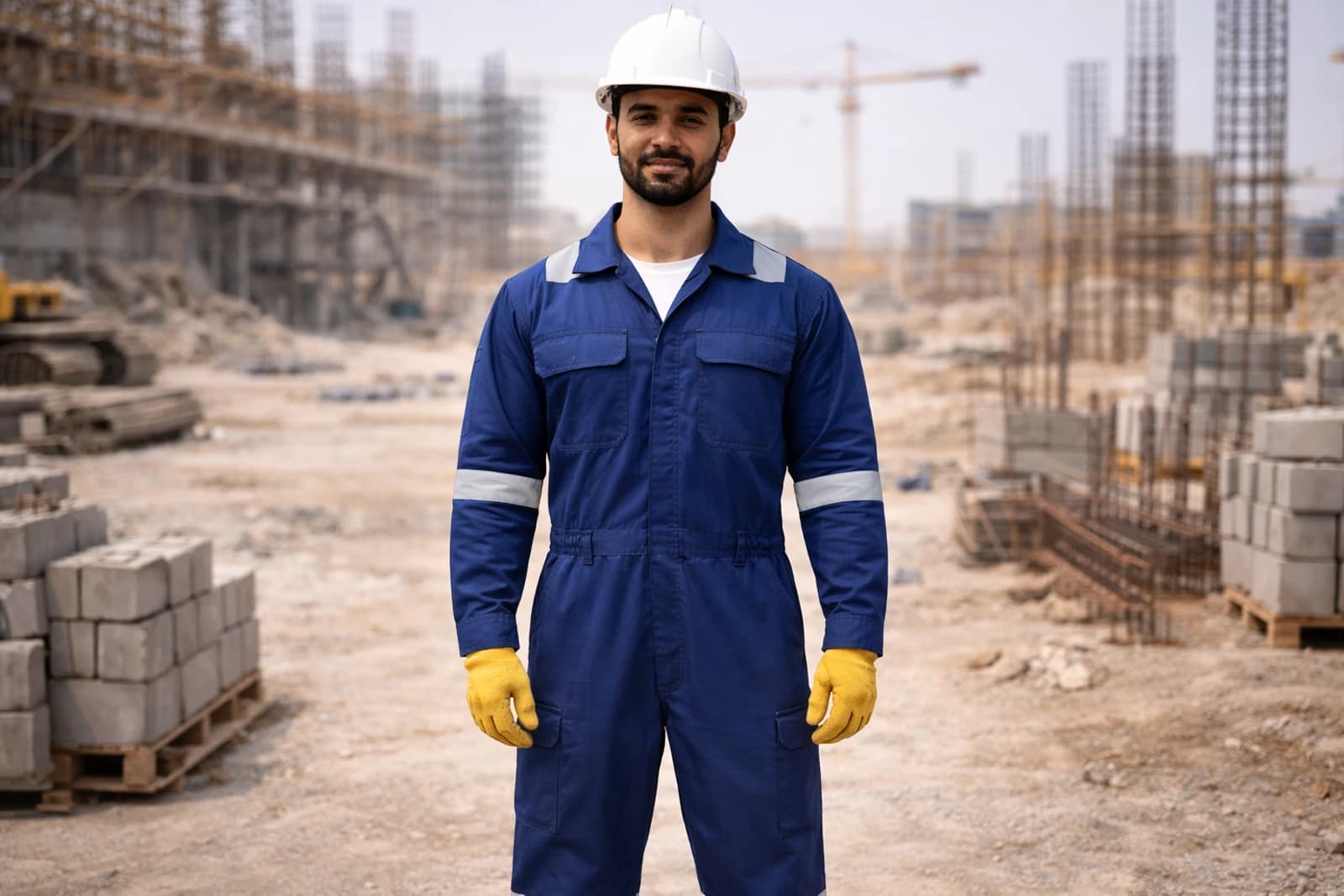
Industrial Workwear
Industrial Coverall Pro
Hard-wearing one-piece coverall for plant, maintenance, and heavy-duty operations.