Molten Metal Splash Burns Steel Mill Workers When Fabric Cannot Shed It
Molten metal splash at steel mills and foundries reaches temperatures above 1,500°C. When splash contacts an open-weave or brushed-face workwear fabric, the molten metal penetrates the fabric weave, adheres to fibers, and transfers heat directly to skin — causing severe burns even when the fabric itself is flame-resistant. Standard FR workwear specifications address arc rating and afterflame time but ignore fabric surface structure, leaving buyers with garments that pass FR lab tests but fail in molten metal splash conditions. This article covers how molten metal interacts with different fabric surfaces, why open-weave and brushed constructions fail, and the specification criteria that cause molten metal to shed rather than penetrate.
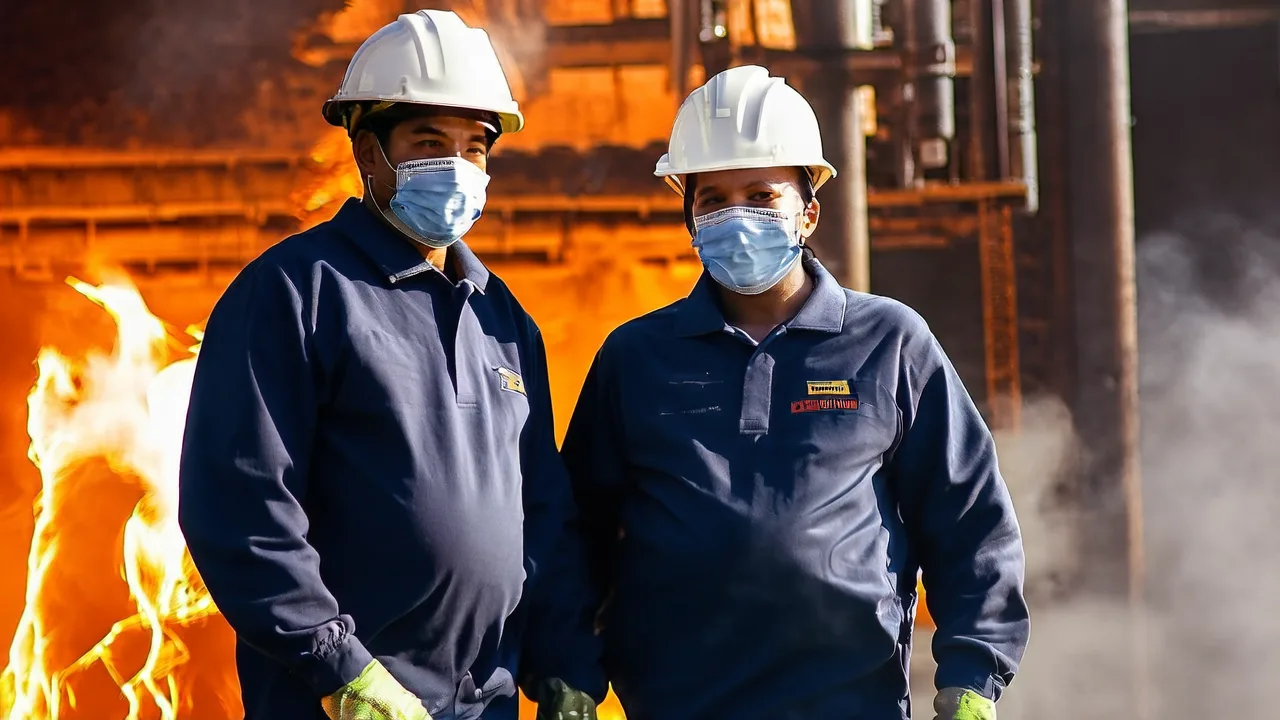
Steel mill and foundry operations — producing steel, cast iron, and alloy metals in facilities where molten metal is poured, tapped, and transferred at temperatures between 1,400°C and 1,650°C — expose workers to molten metal splash risk during every tap, pour, and ladle transfer. Workers in these operations include furnace operators, ladle handlers, pourers, casting operators, and furnace maintenance crews who work within 2–5 meters of molten metal streams. Molten metal splash events occur routinely: a splash during furnace tapping lands on a worker's forearm, a droplet during ladle transfer contacts the chest panel, a spray during casting adheres to the lower leg. Each splash event creates a burn risk that is determined not by whether the fabric is flame-resistant, but by whether the fabric surface causes molten metal to shed or to penetrate.
The mechanism:
**1. Molten metal splash behaves as a high-temperature liquid that penetrates open fabric structures**
Molten metal at 1,500°C+ behaves as a low-viscosity liquid on contact with fabric. When a molten metal droplet contacts a fabric surface, the droplet's behavior depends on the fabric surface structure. On a smooth, tight-weave fabric surface, the molten metal droplet beads, retains its spherical shape, and rolls off the fabric surface due to gravity and the smooth surface's low adhesion. On an open-weave or brushed-face fabric, the molten metal droplet penetrates the fabric weave, wicks into the fiber interstices, and adheres to the fiber surface. Once molten metal penetrates the fabric weave, it is trapped against the skin and transfers heat continuously until the metal solidifies — causing a burn injury that is more severe than the initial splash contact would suggest.
The root cause: molten metal splash burn severity is determined by fabric surface structure, not just by fabric FR rating. A fabric that passes FR lab tests (arc rating, afterflame time, char length) can still allow molten metal penetration if the fabric surface is open-weave or brushed. The FR test measures fabric ignition and afterflame — it does not measure molten metal shedding.
**2. Open-weave fabrics increase molten metal penetration by providing pathways through the fabric**
Open-weave fabric constructions — fabrics with low thread count per inch, loose yarn interlacing, or visible gaps between warp and weft yarns — create physical pathways through which molten metal can penetrate. A fabric with 40 threads per inch creates gaps of approximately 0.3–0.5 mm between yarns. Molten metal splash droplets range from 1–10 mm in diameter. When a 3 mm molten metal droplet contacts a fabric with 0.5 mm inter-yarn gaps, the droplet deforms under its own weight and pressure, forcing molten metal through the gaps and into the fabric interior. Once molten metal penetrates the first fabric layer, it contacts the next layer (undergarment or skin) and transfers heat directly.
The root cause: open-weave fabric constructions are specified for breathability and comfort in hot environments — but the same breathability that makes the fabric comfortable creates molten metal penetration pathways. The buyer who specifies an open-weave FR fabric for steel mill workwear prioritizes worker comfort over molten metal shedding, creating a garment that is comfortable in normal conditions but lethal in splash events.
**3. Brushed-face and fleece-lined fabrics trap molten metal by increasing surface area and adhesion**
Brushed-face fabrics (fabric with a napped or fleece interior surface created by brushing the fabric to raise fiber ends) and fleece-lined garments (garments with a soft fleece interior layer for insulation) create a high-surface-area interior that traps molten metal. When molten metal penetrates the outer fabric layer and contacts a brushed or fleece interior, the raised fiber ends increase the contact area between molten metal and fabric, increasing adhesion and heat transfer. The molten metal adheres to the raised fibers, solidifies within the fiber mass, and creates a hot metal mass that remains in contact with skin until the garment is removed — extending burn duration and severity.
The root cause: brushed-face and fleece-lined garments are specified for cold-weather steel mill operations (outdoor yards, winter tapping operations) where insulation is needed. The insulation function creates a molten metal trap. The buyer who specifies fleece-lined FR garments for winter steel mill operations provides warmth but creates a burn mechanism that smooth-face garments do not.
**4. Cotton and cotton-blend fabrics absorb molten metal through cellulose fiber adhesion**
Cotton fibers are cellulose-based natural fibers with a rough, irregular surface structure at the microscopic level. Molten metal contacts cotton fiber surfaces and adheres to the fiber irregularities — the rough surface creates mechanical adhesion points where molten metal grips the fiber. Additionally, cotton cellulose decomposes at approximately 300°C, creating a char layer that molten metal can bond to. Once molten metal bonds to cotton char, the metal is held in place and continues to transfer heat to the fiber and to skin beneath.
The root cause: cotton and cotton-blend fabrics (including FR-treated cotton, where cotton is treated with FR chemicals such as Proban or Pyrovatex) provide a surface that molten metal adheres to. FR-treated cotton fabric resists ignition but does not resist molten metal adhesion. The buyer who specifies FR-treated cotton coveralls for steel mill operations provides ignition resistance but not molten metal shedding.
**5. Synthetic fibers melt at temperatures below molten metal, creating a secondary burn mechanism**
Synthetic fibers (polyester, nylon, aramid) have melting points below molten metal temperatures: polyester melts at 250–270°C, nylon at 215–220°C, and even aramid (Nomex, Kevlar) decomposes at approximately 500°C — all well below molten metal at 1,500°C+. When molten metal contacts synthetic fabric, the synthetic fiber melts on contact, creating a molten polymer that mixes with the molten metal and adheres to skin. The molten polymer-metal mixture creates a burn injury that is more difficult to treat than molten metal on cotton, because the polymer must be removed from skin before burn treatment can begin.
The root cause: synthetic fibers create a secondary burn mechanism (molten polymer adhesion) in addition to the primary molten metal burn. The buyer who specifies synthetic FR fabric (aramid blends, modacrylic blends) for steel mill workwear provides FR protection but creates a molten polymer burn risk that must be managed through fabric surface treatment.
**6. The cost of getting it wrong**
The buyer who specifies open-weave, brushed-face, cotton, or untreated synthetic workwear for steel mill operations faces: - Severe burn injuries from molten metal splash events that penetrate fabric and contact skin - Extended burn duration (molten metal trapped in fabric continues transferring heat until garment removal) - Secondary burn injuries from molten synthetic polymer adhering to skin - Worker compensation claims and lost-time injuries from splash burn events - Worker refusal to wear garments perceived as unsafe (reducing compliance)
The buyer who specifies smooth-face, tight-weave, molten metal-shedding workwear faces: - Molten metal splash beads and rolls off fabric surface, minimizing burn risk - Reduced burn severity when splash events occur (fabric sheds metal before heat transfer causes injury) - Worker confidence in garment protection (increased compliance) - Reduced lost-time injuries from splash events
The solution is a steel mill and foundry workwear specification that requires molten metal-shedding fabric construction — using smooth-face, tight-weave fabrics that cause molten metal to bead and roll off rather than penetrate and adhere.
**Step 1: Specify tight-weave, smooth-face fabric construction for molten metal splash zones**
Specify workwear for furnace operators, ladle handlers, pourers, and casting operators with tight-weave, smooth-face fabric construction:
- **Fabric weave:** specify tight-weave fabric construction with minimum 80 threads per inch (warp + weft combined). Tight-weave fabric creates inter-yarn gaps below 0.2 mm — small enough to prevent molten metal droplet penetration. Specify plain weave or twill weave construction (both create smooth, tight surfaces) rather than basket weave or open-weave constructions.
- **Fabric face:** specify smooth-face fabric (calendered finish or singed finish) where fabric surface fibers are removed or flattened to create a smooth surface. Calendered fabric passes through heated rollers that flatten yarn surfaces and close fabric pores. Singed fabric passes through a gas flame that burns off protruding fiber ends, creating a smooth surface. Both finishes reduce fabric surface roughness and increase molten metal shedding.
- **Fabric weight:** specify 280–320 gsm fabric weight for molten metal splash zone garments. Heavier fabric (280+ gsm) provides more thermal mass to absorb splash heat before heat transfers to skin. Lighter fabric (below 240 gsm) provides insufficient thermal mass and allows heat transfer through the fabric even when molten metal does not penetrate.
Request supplier testing data for molten metal shedding. Ask suppliers to provide test results from EN ISO 11612 (protective clothing against heat and flame) Annex B (molten aluminum splash test) or Annex C (molten iron splash test). Specify minimum performance class: Class E3 (highest level) for molten aluminum splash or Class F3 for molten iron splash, indicating that the fabric withstands the largest splash mass (200g for aluminum, 120g for iron) without heat transfer causing injury.
**Step 2: Specify FR fabric type matched to molten metal shedding requirements**
Select FR fabric type based on molten metal shedding performance:
- **FR-treated cotton with smooth-face finish:** specify FR-treated cotton fabric (Proban or Pyrovatex treated) with calendered smooth-face finish for operations where molten metal splash risk is moderate (splash events occur but are infrequent — e.g., furnace maintenance during shutdowns, ladle lining repair). FR-treated cotton provides FR protection, and the calendered finish creates a smooth surface that promotes molten metal shedding. FR-treated cotton is less expensive than inherent FR synthetics and provides adequate protection for moderate splash risk.
- **Inherent FR aramid blend with smooth-face finish:** specify inherent FR aramid blend fabric (Nomex/Kevlar blend or equivalent) with smooth-face finish for operations where molten metal splash risk is high (frequent splash events — e.g., furnace tapping, ladle pouring, casting operations). Inherent FR aramid provides permanent FR protection (FR properties do not degrade through washing), and the smooth-face finish promotes molten metal shedding. Aramid blend fabric is more expensive than FR-treated cotton but provides superior FR durability and molten metal shedding performance.
- **Modacrylic blend with smooth-face finish:** specify modacrylic blend fabric (modacrylic/cotton or modacrylic/aramid blend) with smooth-face finish for operations where molten metal splash risk is moderate-to-high and arc flash protection is also required. Modacrylic blends provide both FR protection and arc flash resistance (arc rating 8–40 cal/cm² depending on fabric weight), and the smooth-face finish promotes molten metal shedding. Modacrylic blend fabric is appropriate for steel mill operations where workers face both molten metal splash and electrical arc flash risk.
Avoid specifying 100% synthetic fabric (polyester, nylon) for molten metal splash zones — synthetic fibers melt on contact with molten metal, creating a molten polymer burn hazard. If synthetic content is necessary for fabric durability, specify synthetic content below 20% and ensure the fabric has a smooth-face finish that minimizes synthetic fiber exposure on the fabric surface.
**Step 3: Specify garment construction that prevents molten metal entrapment**
Specify garment construction features that prevent molten metal from becoming trapped in garment structures:
- **No exposed pockets below waist:** pockets below waist (thigh pockets, cargo pockets) create horizontal surfaces where molten metal splash can land and pool. Specify garments with no exposed pockets below waist, or specify pockets with flap closures that prevent molten metal from entering pocket interiors.
- **Smooth exterior surface:** specify garments with smooth exterior surfaces — no external stitching ridges, no external seam tape, no external reinforcement patches that create surface irregularities where molten metal can adhere. Specify garments with flat-felled seams or enclosed seams that create smooth interior and exterior surfaces.
- **No brushed or fleece lining in splash zones:** specify garments without brushed-face or fleece-lined interiors in torso, arm, and leg panels that face molten metal splash risk. If insulation is required for cold-weather operations, specify insulation in garment layers that are separated from the outer shell by a smooth-face liner that prevents molten metal from contacting insulation material.
- **Closure coverage:** specify garments with closure coverage — front zipper covered by a snap-closure storm flap, collar closures that seal neck opening, wrist closures that seal sleeve ends. Closure coverage prevents molten metal splash from entering garment through closure openings.
**Step 4: Specify garment layering that provides secondary molten metal protection**
Specify a garment layering system that provides secondary protection in case molten metal penetrates the outer garment:
- **Outer layer:** molten metal-shedding coverall (Steps 1–3) as the primary protective layer.
- **Mid layer:** FR shirt and pant (FR-treated cotton or modacrylic blend, smooth-face finish) worn under the coverall. The mid layer provides secondary FR protection if molten metal penetrates the outer coverall. The mid layer's smooth-face finish also promotes molten metal shedding, reducing the likelihood that molten metal contacts skin.
- **Base layer:** FR base layer (modacrylic or FR-treated merino wool) worn against skin. The base layer provides a final FR barrier between molten metal and skin, reducing burn severity if molten metal reaches the base layer.
The layering system ensures that molten metal must penetrate multiple FR barriers before contacting skin, with each barrier promoting molten metal shedding and reducing heat transfer.
**Step 5: Train workers on molten metal splash response to reduce burn severity**
Train workers on molten metal splash response procedures that reduce burn severity when splash events occur:
- **Immediate garment removal:** train workers to remove garments contaminated with molten metal immediately after splash events. Molten metal solidifies within 2–5 seconds of contact, creating a hot metal mass trapped in fabric. Immediate garment removal (within 5 seconds) removes the hot metal mass before severe burns develop.
- **Do not brush off molten metal:** train workers not to brush molten metal off garments with hands — brushing spreads molten metal across fabric surface, increasing burn area. Instead, workers should remove garments immediately and drop them away from the body.
- **Cool burn injuries immediately:** train workers to cool burn injuries with cool (not cold) water for 10–20 minutes immediately after splash events. Immediate cooling reduces burn severity and promotes faster healing.
The training reduces burn severity when splash events occur, complementing the molten metal-shedding garment specification.
**Recommended garments for steel mill and foundry workwear:**
- **Industrial coverall-pro** — specify the coverall for furnace operators, ladle handlers, pourers, and casting operators who face high molten metal splash risk in steel mill and foundry operations. Specify the coverall with tight-weave, smooth-face FR fabric (280–320 gsm, calendered finish, EN ISO 11612 Class E3/F3 molten metal shedding performance). Specify the coverall with smooth exterior construction (flat-felled seams, no exposed pockets below waist, covered front zipper closure) that prevents molten metal entrapment. Specify the coverall with closure coverage (collar closure, wrist closures) that prevents molten metal entry through openings. The coverall's full-body coverage, molten metal-shedding fabric, and smooth construction make it suitable for steel mill and foundry operations where molten metal splash creates severe burn risk.
- **Logistics polo uniform** — specify the polo uniform for warehouse and yard workers who handle finished steel products and raw materials in areas where molten metal splash risk is low or absent. Specify the polo uniform with standard FR fabric (FR-treated cotton or modacrylic blend, 240 gsm) for FR protection without molten metal-shedding construction. The polo uniform's FR protection is appropriate for areas where arc flash or flash fire risk exists but molten metal splash risk does not. Specify the polo uniform in a color different from furnace operations garments (e.g., blue for warehouse, orange for furnace operations) to support zone-based identification and ensure that workers in molten metal splash zones wear the correct molten metal-shedding garment.
Recommended Products
Products that fit this use case

Industrial Workwear
Industrial Coverall Pro
Hard-wearing one-piece coverall for plant, maintenance, and heavy-duty operations.

Logistics Uniform
Logistics Polo Uniform
Breathable uniform polo for warehouse, delivery, and last-mile teams.