Minimum Order Quantities for Custom Workwear from China: A Guide for Middle East Buyers
Middle East B2B buyers sourcing custom workwear from China often hit the MOQ wall before discussing price or style. This guide explains how Chinese manufacturers set MOQs, what buyers can negotiate, and strategies for getting small-batch production without paying a premium that destroys your margin.

Buyer context
What procurement teams run into
<p>You have found a Chinese workwear manufacturer with good fabric options and competitive pricing. You send them your design brief for 200 custom coveralls with your company logo and reflective striping. The reply comes back: the minimum order quantity (MOQ) is 1,000 pieces per style per colour.</p> <p>This scenario plays out every day for Middle East B2B buyers who are new to sourcing from China or who need relatively small batches for a specific project, a seasonal workforce, or a trial run before committing to a larger order. The MOQ figures quoted by Chinese factories — often 500 to 3,000 pieces per style — can feel arbitrary and inflexible, especially when your total requirement is well below that threshold.</p> <p>The frustration is understandable. Your budget is set, your end customer is waiting, and you cannot justify ordering three years' worth of inventory just to meet a factory's MOQ. At the same time, the manufacturer's MOQ is rarely arbitrary. Understanding <em>why</em> those numbers exist is the first step to negotiating better terms or finding alternative sourcing strategies that still preserve your margins.</p>
Sourcing approach
How a factory partner can respond
<h2>Why Chinese Workwear Manufacturers Have MOQs</h2> <p>An MOQ is not a number the factory picked out of thin air. It is driven by three concrete cost factors in the garment production chain:</p> <ul> <li><strong>Fabric ordering:</strong> Fabric mills sell by the roll, typically 50–100 metres per roll for standard workwear fabrics. A factory that orders less than a full roll pays waste — either leftover fabric that cannot be used for another order, or a premium for split-roll cutting. A minimum fabric order of 300–500 metres is common, which at roughly 1.5 metres per coverall, translates into 200–350 garments.</li> <li><strong>Pattern and cutting setup:</strong> Every new style requires a marker (the layout pattern for cutting) and die-cutting knives for the fabric layers. This setup has a fixed cost of roughly $50–$150 per style regardless of order size. On a 100-piece order the setup cost per garment is significant; on a 1,000-piece order it is negligible.</li> <li><strong>Production line changeover:</strong> A factory running continuous production for a single style gets optimal labour efficiency. Switching to a different style or colour means stopping the line, re-threading machines, and resetting workstations — typically 1–3 hours of downtime for a medium-sized factory. That downtime is recoverable only if the subsequent run is large enough to absorb it.</li> </ul> <p>Understanding these drivers helps you see which parts of the MOQ are negotiable and which are fixed costs that genuinely cannot be lowered without making the unit price uncompetitive.</p> <h2>Strategies for Getting Around High MOQs</h2> <h3>1. Accept Stock Fabric and Standard Colours</h3> <p>The single biggest MOQ reduction comes from using fabric that the factory already has on the shelf. Chinese workwear manufacturers typically stock popular grades of poly-cotton (210–260 gsm) in black, navy, grey, and orange — the colours that move in volume. If you can design your custom garment around stocked fabric and colours, many factories will reduce their MOQ by 30–50% because the fabric cost risk is already covered.</p> <p>The tradeoff is fewer colour options and a narrower fabric selection. But for a first order or a trial run, this is often the smartest path.</p> <h3>2. Consolidate Multiple Sizes Into One Order</h3> <p>Manufacturers set MOQs per style, not per size. If you need 300 garments in a mix of S, M, L, XL, 2XL, and 3XL, negotiate a single MOQ for the total of 300 across all sizes, provided the fabric colour is the same. Most factories accept this because the cutting and sewing setup is identical for all sizes — only the pattern pieces scale up or down.</p> <p>Be prepared to accept a slightly higher unit price to compensate for the smaller total volume, typically 10–20% above the full-MOQ price.</p> <h3>3. Combine Multiple Styles Into One Production Run</h3> <p>If you need 150 coveralls and 150 hi-vis jackets, ask the factory to run both styles in the same production slot. The fabric, thread, and trim may be different, but the overhead of WeChat communication, sample approval, QC inspection, and shipping documentation is shared across the consolidated order. Many Chinese manufacturers will accept a combined minimum of 400–500 pieces across two styles.</p> <p>This works best when both styles share the same fabric colour and similar construction techniques (e.g., both are zippered front garments with elastic cuffs).</p> <h3>4. Accept a Longer Lead Time</h3> <p>Factories set lower MOQs when they can fit your order into gaps in their production schedule rather than blocking a full production slot. Ask your supplier: "If I can wait 60 days instead of 30, can you reduce the MOQ?" Factories with slack capacity are often willing to fill leftover production time with smaller orders at marginal pricing, which means your MOQ can drop significantly.</p> <h3>5. Pay a One-Time Tooling Fee</h3> <p>For very small orders — 50 to 200 pieces — the most transparent path is to agree on a tooling or setup fee of $100–$300 that covers the pattern, marker, and cutting setup costs the factory would otherwise recover through the MOQ. This brings your unit price closer to the standard rate, with the setup cost as a separate line item. It is not the cheapest per-piece option, but it is often the simplest route when you need a small batch urgently.</p> <h2>What to Put in Your First Enquiry</h2> <p>When you contact a Chinese workwear manufacturer about MOQs, save time by including this information up front:</p> <ul> <li><strong>Target MOQ</strong> (your ideal number, not the factory's)</li> <li><strong>Total quantity across all styles</strong> (helps the factory see the full picture)</li> <li><strong>Fabric preference</strong> — if you can accept stock fabric, say so explicitly</li> <li><strong>Colour flexibility</strong> — if you can use standard colours, list which ones</li> <li><strong>Delivery timeline</strong> — flexible timing opens more options</li> <li><strong>Willingness to pay a setup fee</strong> — signals you are serious and understand the factory's cost structure</li> </ul> <p>A well-structured first enquiry shows the manufacturer that you are an informed buyer. Factories respond better to buyers who understand their constraints, and a professional approach can sometimes reduce the quoted MOQ by 40% without any further negotiation.</p> <h2>The Bottom Line</h2> <p>MOQs in Chinese workwear manufacturing are real but rarely absolute. The most common mistake Middle East buyers make is accepting the first MOQ quote without discussion. A simple follow-up — "Our budget covers 300 pieces. Can you work with that if we use stock navy poly-cotton and accept a 45-day lead time?" — often produces a revised offer. The factory wants your business. The key is showing them how to make it work on their side.</p>
Recommended Products
Products that fit this use case
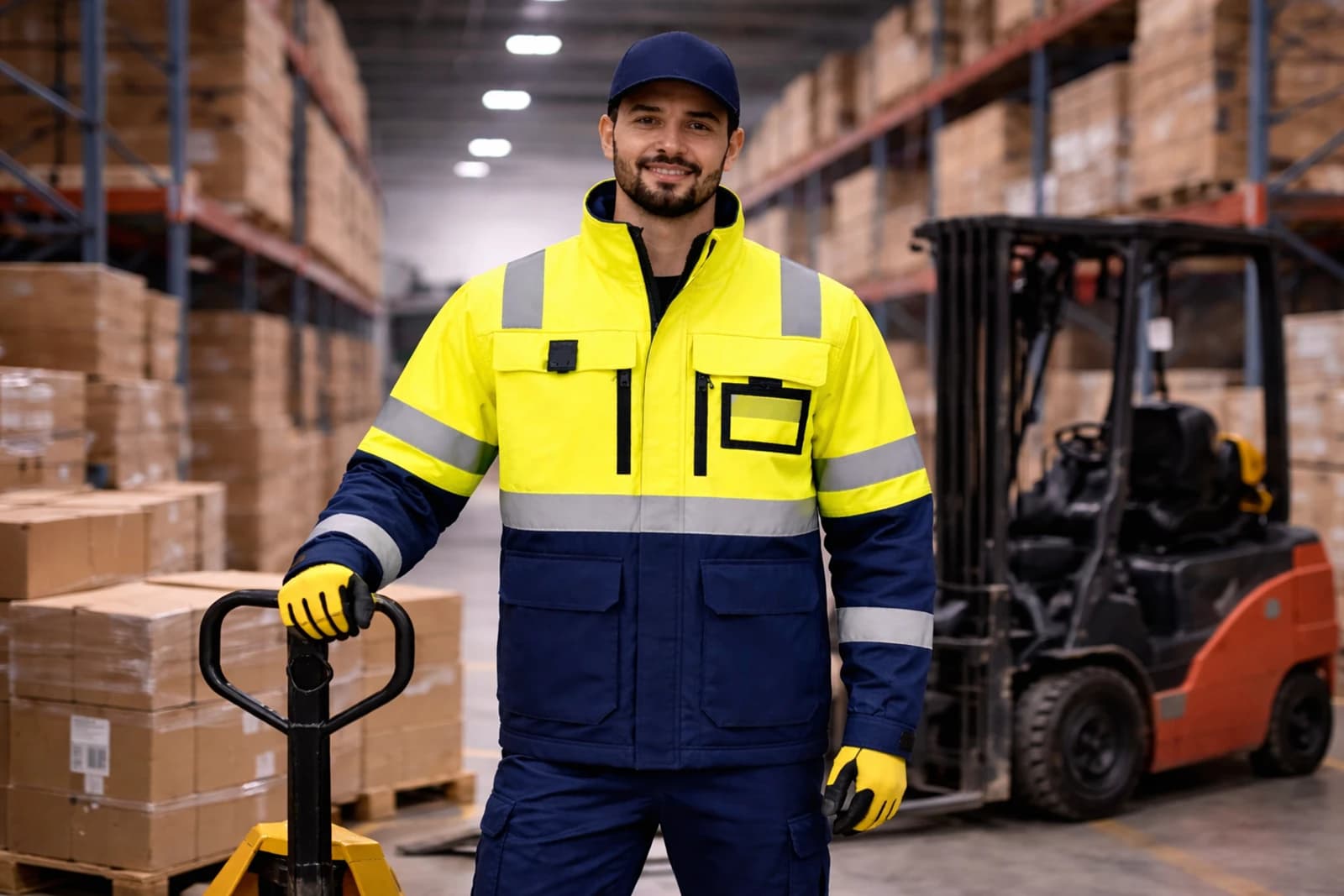
Safety Uniform
Hi-Vis Safety Jacket
Reflective safety jacket for high-visibility site operations and road work crews.

Industrial Workwear
Industrial Coverall Pro
Hard-wearing one-piece coverall for plant, maintenance, and heavy-duty operations.
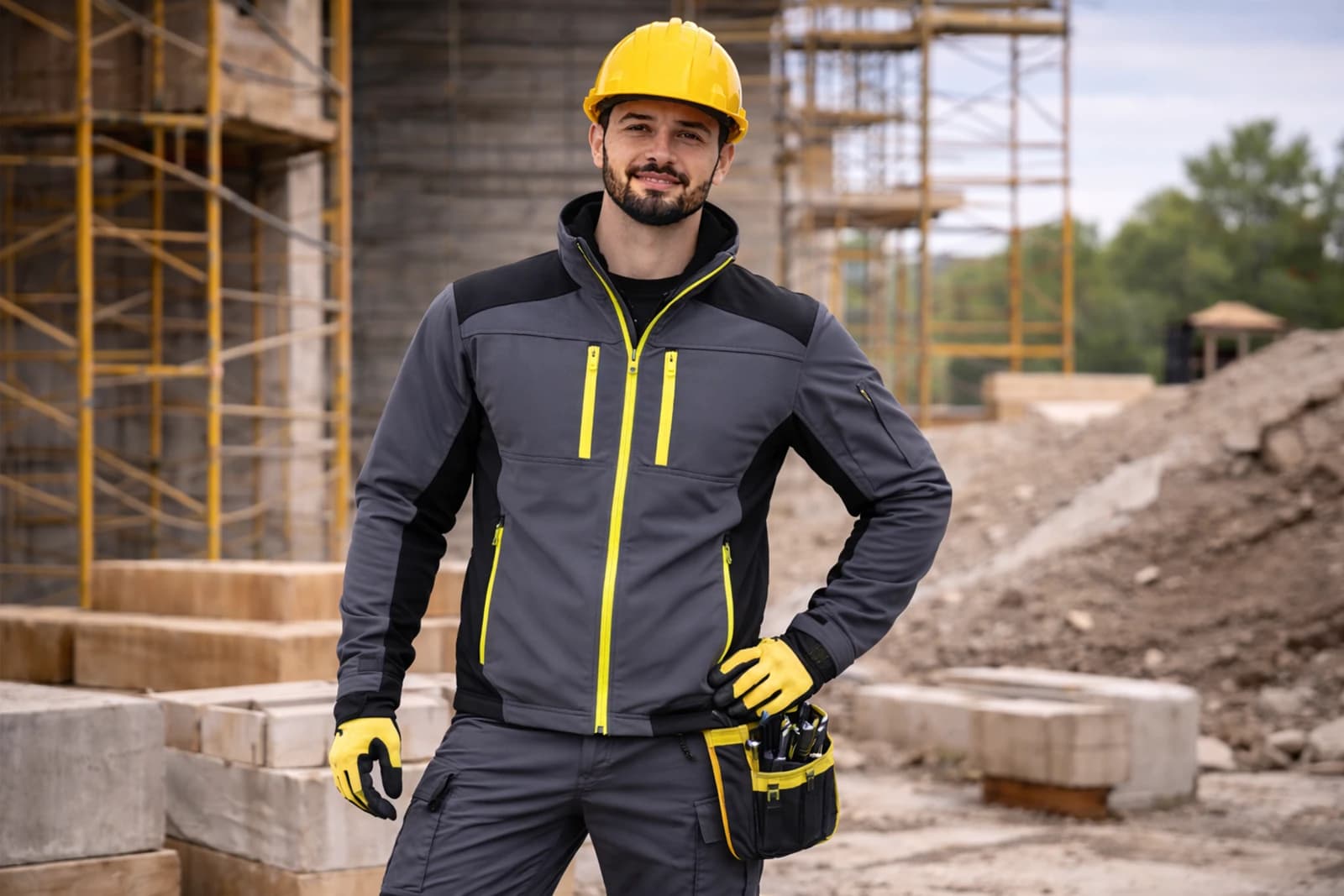
Construction Clothing
Construction Softshell Set
Flexible jacket and trouser set built for crews working across changing weather conditions.

Logistics Uniform
Logistics Polo Uniform
Breathable uniform polo for warehouse, delivery, and last-mile teams.