OEM Workwear from China: A Step-by-Step Guide for Middle East Buyers
Middle East buyers ordering custom workwear from Chinese manufacturers often find the OEM process unclear from sample to delivery. This guide walks through each stage — design brief, fabric selection, sample approval, bulk production, and shipping — so you know what to expect and how to control quality at every step.

Buyer context
What procurement teams run into
<p>Middle East B2B buyers who want custom workwear with their brand logo, company colours, and specific garment features often find the OEM process with Chinese manufacturers confusing and opaque. Without a clear roadmap, buyers run into common problems: the first sample arrives and the fit is wrong, the fabric feels different from what was discussed on WeChat, the logo embroidery placement is off, or the lead time turns out to be weeks longer than expected.</p> <p>The root cause is almost always a mismatch in expectations. The buyer assumes the manufacturer will handle all the technical details. The manufacturer assumes the buyer knows exactly what they want in terms of fabric weight, thread count, stitching standards, and packing specifications. Neither side is wrong, but the gap between assumptions creates delays, rework costs, and frustrated relationships.</p> <p>For buyers in Saudi Arabia, the UAE, Qatar, Oman, and Kuwait who may be sourcing workwear for construction crews, logistics teams, or industrial maintenance staff, understanding the standard OEM workflow is essential. It helps you ask the right questions upfront, set realistic timelines, and avoid the costly back-and-forth that eats into your margins.</p>
Sourcing approach
How a factory partner can respond
<h2>Stage 1: The Design Brief — Be Specific, Not Vague</h2> <p>The single biggest time-saver in OEM workwear sourcing is a detailed design brief. Do not just say "I want a hi-vis jacket like the one in this photo." Instead, provide written specifications: shell fabric composition and weight (e.g., 100% polyester 240 gsm), reflective tape width and placement (e.g., 50 mm tape around torso and across shoulders per EN ISO 20471), closure type (YKK zipper front, snap-button storm flap), pocket configuration, and sizing range (S–3XL or the Middle East standard of 48–62).</p> <p>Include a tech pack if you have one — a technical drawing with measurements, seam details, and construction notes. If you do not have a tech pack, ask your supplier if they can create one from your reference sample. Most experienced Chinese OEM manufacturers can produce a tech pack for a small fee (usually $30–$80 per style) that becomes your master document for the entire order lifecycle.</p> <h2>Stage 2: Fabric Selection and Testing</h2> <p>Chinese workwear fabric mills offer a vast range of options, but not all fabrics perform well in Middle East conditions. For GCC buyers, the key considerations are:</p> <ul> <li><strong>Breathability:</strong> In summer temperatures above 45°C, pure polyester traps heat. Consider poly-cotton blends (65% polyester / 35% cotton) for better moisture management, or ask about cooling-finished fabrics that reflect IR radiation.</li> <li><strong>Colour fastness:</strong> Direct sunlight in the Gulf is harsh. Specify ISO 105 B02 light-fastness rating of 5 or higher to prevent fading within months. Your supplier can order this lab test from a third-party lab like SGS or Intertek.</li> <li><strong>Anti-static / FR requirements:</strong> If your end-users work in oil and gas, petrochemical, or electrical environments, specify the applicable standard (EN 1149-5 for anti-static, EN ISO 11612 for heat and flame) before the fabric is sourced. Retrofitting FR certification to a standard fabric is not possible.</li> </ul> <p>Ask for a fabric swatch set — at least 10 cm × 10 cm of each proposed fabric — and review it under natural daylight, warehouse lighting, and evening conditions. Colours that look good in a sample room may look different on a construction site.</p> <h2>Stage 3: Sample Approval</h2> <p>After the design brief is confirmed, the manufacturer produces a sample for your approval. Do not rush this stage. A rushed sample approval is the most common source of problems later.</p> <p>Request a fit sample (one complete garment in a middle size such as M or 52) and check: garment measurements against the spec sheet, zipper and button placement, pocket positioning and depth, reflective tape alignment, label placement and spelling, and overall silhouette. Take photos of the sample on a person and compare with the tech pack drawing.</p> <p>If changes are needed — and they usually are — be precise: "Move the left chest pocket 3 cm towards the centre" is much better than "The pocket looks off." Request a revised sample if the changes are substantial. Small changes (logo size, button colour) can often be approved from photos without a second physical sample.</p> <p>Once the sample is approved, ask the manufacturer to seal it. A sealed sample — signed and dated by both parties — becomes the reference standard for bulk production. Do not skip this step.</p> <h2>Stage 4: Bulk Production and In-Process Checks</h2> <p>After sample approval, the manufacturer orders bulk fabric and trims, then begins cutting. Lead time for bulk production typically ranges from 30 to 50 days depending on order volume, fabric availability, and production line capacity. For custom fabrics (woven to your specification or dyed in a specific Pantone colour), add 10–15 days for the fabric mill.</p> <p>Request in-process inspection at 20–30% completion (see our separate guide on workwear quality control for details on inspection protocols). At this stage, check that the correct fabric is being used (compare with the sealed sample), stitch quality is consistent, and all trims and logos match the approved specifications. Issues found here are much cheaper to fix than issues found at final inspection.</p> <h2>Stage 5: Final Inspection and Packing</h2> <p>When bulk production is complete, the manufacturer performs final QC. As the buyer, you can request third-party inspection through SGS, QIMA, or Bureau Veritas. For Middle East workwear orders, we recommend AQL 2.5 standard inspection with Normal Level II sampling.</p> <p>Specify packing details in advance: polybag each garment individually (or bulk-pack by size), carton quantity (typically 10–20 pieces per carton for coveralls, 20–30 for polo shirts), carton markings including buyer name, style, size assortment, and net/gross weight, and any special packing requirements for sea freight (moisture barrier bags for containers that will pass through the Strait of Malacca humidity).</p> <h2>Stage 6: Shipping and Documentation</h2> <p>For Middle East destinations, sea freight from Shanghai or Ningbo to Jebel Ali (Dubai) takes about 15–18 days, to Dammam about 18–22 days, and to Hamad (Doha) about 16–20 days. Air freight is faster (3–5 days) but significantly more expensive for workwear volumes.</p> <p>Ensure the manufacturer provides all export documentation: commercial invoice, packing list, bill of lading, certificate of origin, and any required SASO, ESMA, or GSO conformity certificates. Missing documentation is a common cause of customs delays in GCC ports, especially for hi-vis and FR products that require safety certification.</p>
Recommended Products
Products that fit this use case
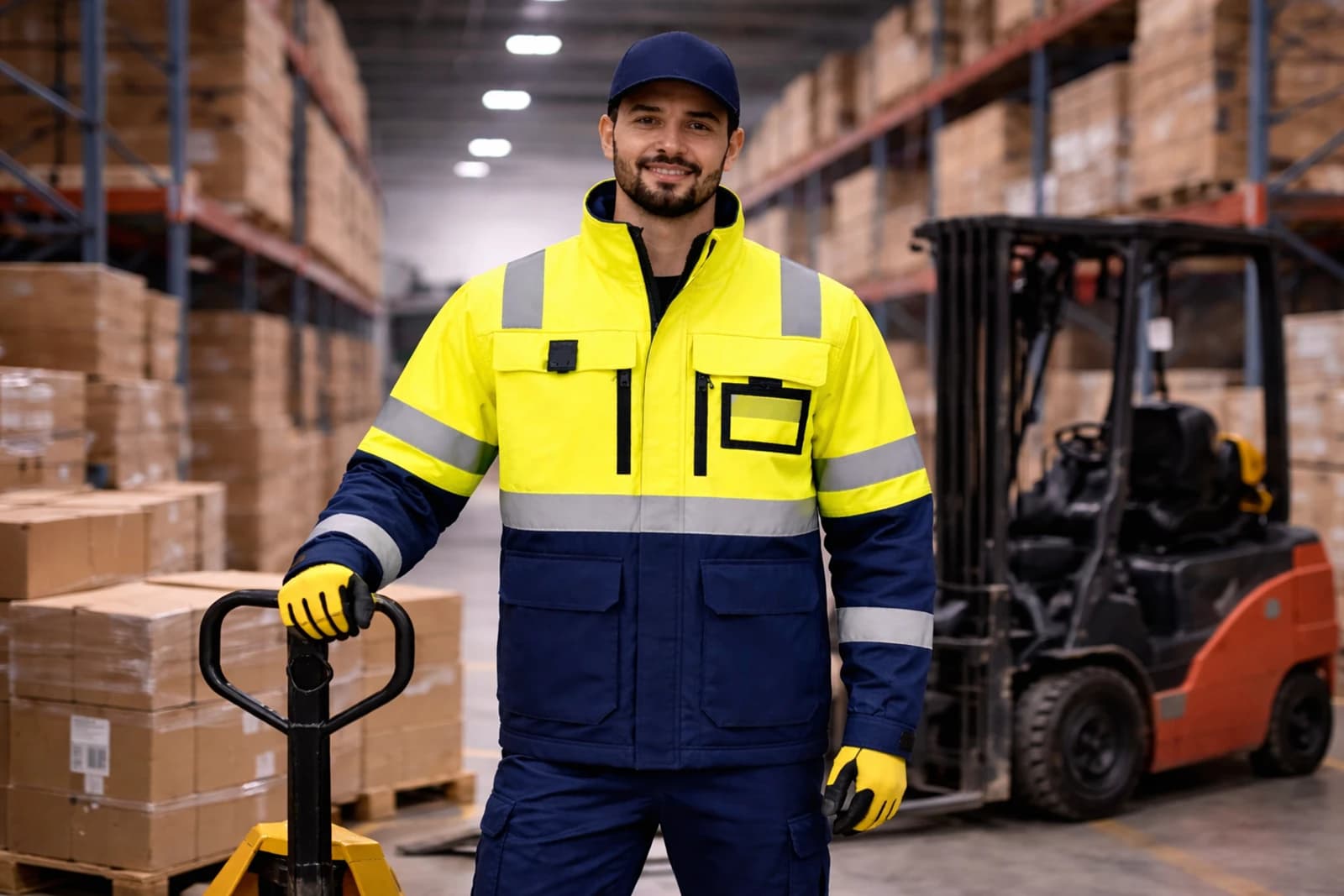
Safety Uniform
Hi-Vis Safety Jacket
Reflective safety jacket for high-visibility site operations and road work crews.

Industrial Workwear
Industrial Coverall Pro
Hard-wearing one-piece coverall for plant, maintenance, and heavy-duty operations.
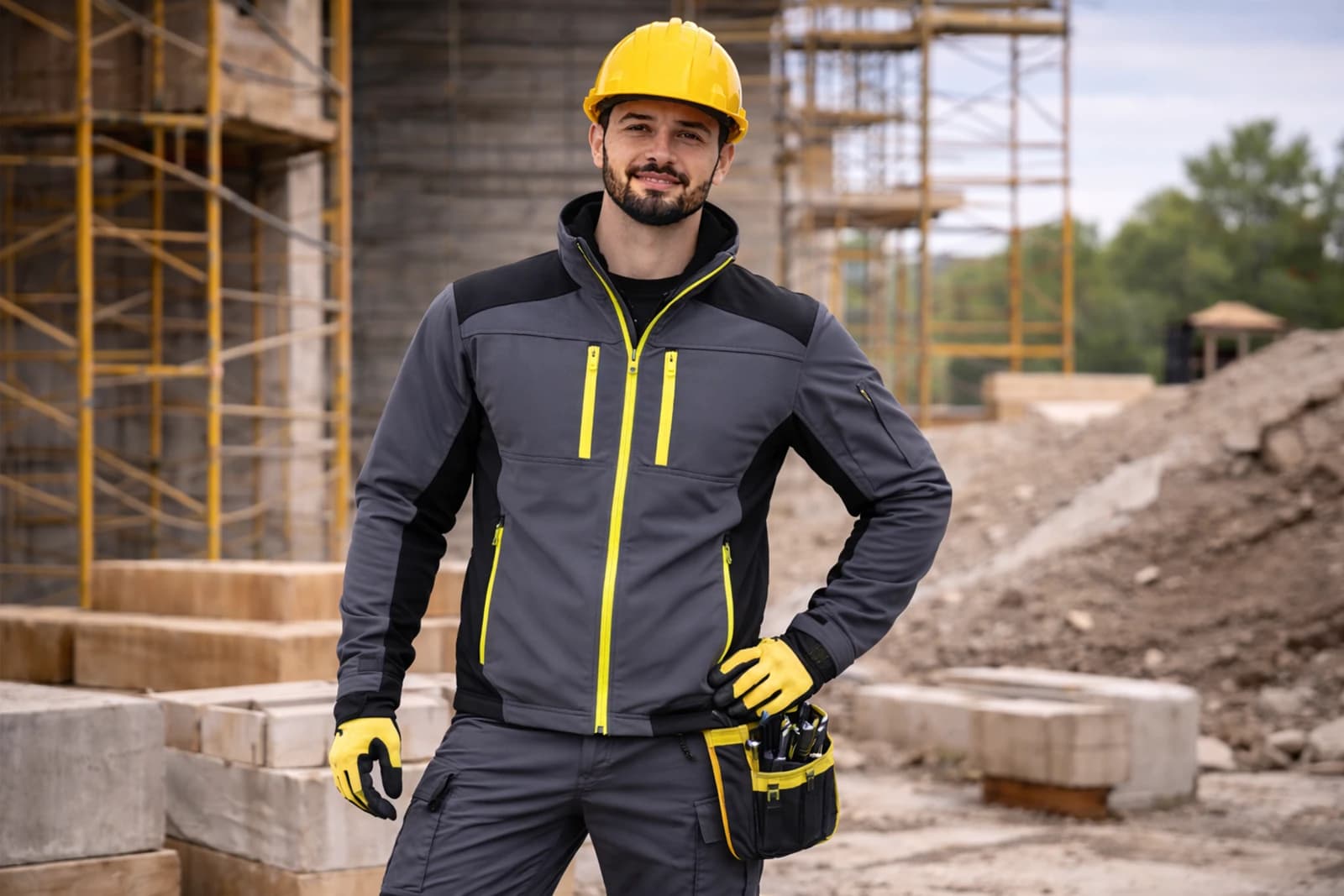
Construction Clothing
Construction Softshell Set
Flexible jacket and trouser set built for crews working across changing weather conditions.

Logistics Uniform
Logistics Polo Uniform
Breathable uniform polo for warehouse, delivery, and last-mile teams.