Oil & Gas Refinery Workwear: Sourcing Construction Softshell Sets & Industrial Coveralls for Middle East Petrochemical Plant Operations
The Middle East produces roughly one-third of the world's crude oil and hosts some of the largest refining and petrochemical complexes on earth — Saudi Aramco's Ras Tanura refinery processes over 550,000 barrels per day, ADNOC's Ruwais complex is one of the largest refining and petrochemical sites in the world, Qatar's Mesaieed and Ras Laffan industrial cities handle the planet's largest LNG export volumes, and Kuwait's Al-Zour refinery is a brand-new 615,000 bpd mega-complex. Behind every distillation column, every catalytic cracker, every pipe rack, and every tank farm turnaround is a workforce of process operators, maintenance technicians, inspectors, turnaround crews, and plant engineers who work in one of the most hazard-dense and thermally punishing industrial environments on the planet. This sourcing guide for Middle East B2B buyers covers construction softshell sets and industrial coveralls for oil & gas refinery and petrochemical plant operations, fabric specifications for hydrocarbon-process conditions, role-based garment allocation, compliance considerations, and volume procurement from a Chinese workwear manufacturer.
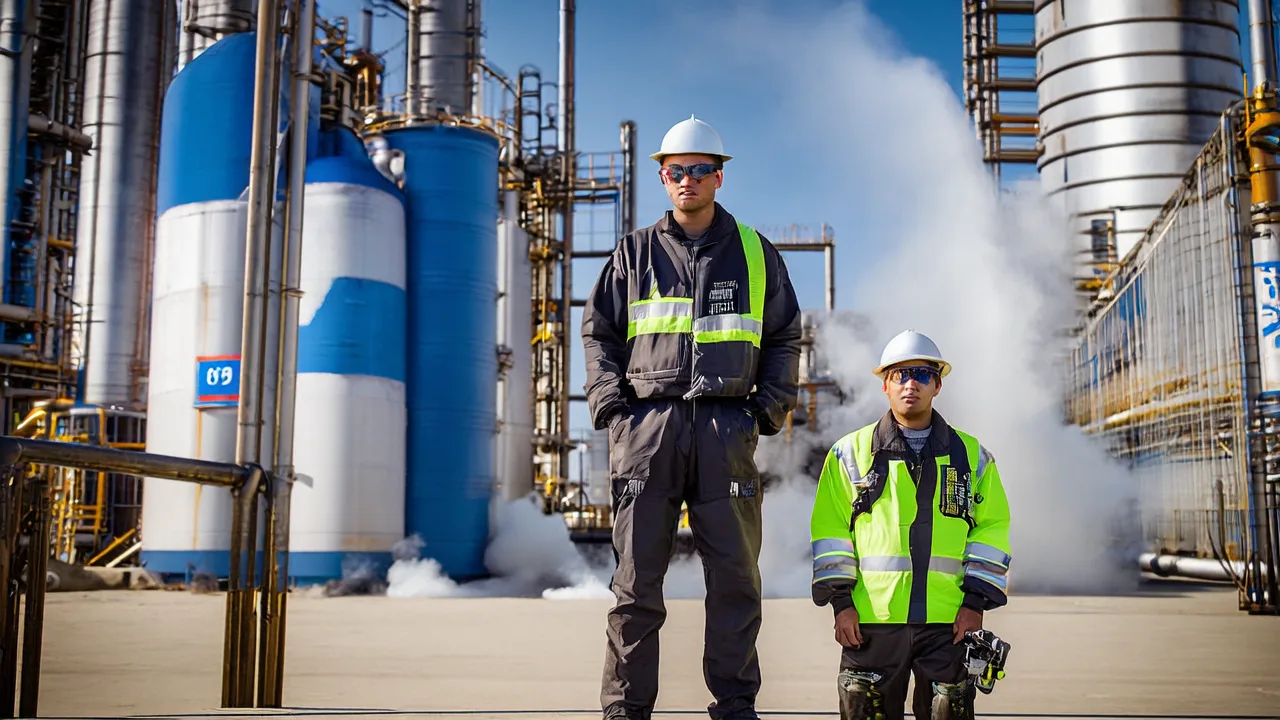
Buyer context
What procurement teams run into
The Middle East's oil & gas refining and petrochemical sector is the backbone of the regional economy. Saudi Arabia's oil sector contributes over 40% of GDP. The UAE's ADNOC group is investing USD 127 billion over five years to expand refining, petrochemical, and gas-processing capacity. Qatar is expanding LNG production capacity from 77 to 126 million tonnes per annum by 2027 through the North Field expansion — the world's largest single energy project. Kuwait, Oman, Bahrain, and Iraq all operate significant refining and petrochemical complexes. Every refinery and petrochemical plant — whether a 200,000 bpd crude distillation unit or a world-scale polyethylene plant — presents a combination of industrial hazards that demand specific workwear solutions. For B2B buyers procuring workwear for refinery and petrochemical workforces, the challenge is specific because process plant work combines hydrocarbon fire risk, high-pressure steam and hot-surface exposure, toxic chemical contact, confined-space entry, and extreme Gulf thermal conditions in environments where garment failure can have catastrophic consequences. **1. The refinery and petrochemical plant environment combines hydrocarbon fire risk, thermal extremes, and toxic chemical exposure** A refinery or petrochemical plant presents a combination of hazards that few other industrial environments match: - **Hydrocarbon fire and explosion risk.** Refineries and petrochemical plants process flammable and combustible hydrocarbons — crude oil, naphtha, gasoline, diesel, jet fuel, LPG, LNG, hydrogen, benzene, toluene, xylene, and ethylene — at temperatures and pressures where a release can ignite instantly. Flash fires with temperatures exceeding 1,000°C can develop within seconds of a hydrocarbon release. Workers in synthetic fabrics that melt (nylon, standard polyester) face catastrophic burn injuries. Garments must be inherently flame-resistant and self-extinguishing. - **High-pressure steam and hot-surface contact.** Refineries operate steam systems at 40–100 bar and temperatures of 300–550°C. Process units operate at temperatures from 200°C (FCC regenerators) to over 800°C (steam reformers, coker heaters). Pipe surfaces, vessel walls, and flanges carry hot hydrocarbons and steam. Workers performing maintenance on hot equipment face contact burns. Coveralls must resist thermal contact and provide an insulating barrier. - **Toxic chemical exposure.** Refinery and petrochemical workers handle hydrogen sulphide (H2S — lethal at 500 ppm), hydrofluoric acid (HF — used in alkylation units), sulphuric acid, caustic soda, amine solutions, catalyst dust (nickel, molybdenum, vanadium), and aromatic hydrocarbons (benzene — a known carcinogen). Garments must resist chemical penetration and provide a barrier against liquid splash contact. - **Confined-space entry.** Refinery and petrochemical maintenance requires regular entry into vessels, towers, heat exchangers, storage tanks, reactors, and underground sumps. These spaces may contain residual hydrocarbons, H2S, oxygen-deficient atmospheres, or toxic catalyst dust. Workers in confined spaces need coveralls that resist chemical contact and provide thermal protection without generating static sparks. - **Turnaround and shutdown intensity.** Major refinery turnarounds occur every 3–5 years and involve 5,000–20,000 additional workers on site for 4–8 weeks. Turnaround crews work 12-hour shifts, seven days a week, performing intensive maintenance, inspection, and modification work. Workwear must withstand continuous heavy use without degradation over the turnaround period. - **Gulf thermal extremes.** Refineries and petrochemical plants in Saudi Arabia, UAE, Qatar, Kuwait, and Iraq face 45–55°C ambient temperatures combined with intense solar radiation on process pipe racks, tank farms, and flare areas. Workers in heavy FR coveralls face heat stress risk. Garments must balance flame resistance with breathability and moisture management. - **Outdoor and elevated work.** Refinery and petrochemical workers perform tasks on pipe racks at 20–50 metres elevation, on vessel scaffolding, on tank roofs, and along coastal process units exposed to salt-laden air. Workers face wind, rain, sandstorms, and salt corrosion. Outer layers must resist weather penetration while maintaining FR performance. **2. Industrial coveralls for process operators, maintenance technicians, turnaround crews, and inspectors** For every worker who enters process areas, the industrial coverall is the primary protective garment. In oil & gas refining and petrochemical operations, the coverall must provide inherent flame resistance, thermal insulation, chemical splash resistance, and anti-static properties — all while remaining wearable in 50°C+ Gulf heat. Key specifications when sourcing coveralls for refinery and petrochemical operations from a Chinese manufacturer: **Fabric weight and composition.** Specify inherent flame-retardant fabric — modacrylic/cotton blend (typically 60% modacrylic / 35% cotton / 5% antistatic fibre) at 260–300gsm for standard process area work, or lighter-weight inherent FR fabric (modacrylic/lyocell blend, 200–230gsm) for Gulf summer conditions where heat stress is the primary concern. The inherent FR approach is essential — the flame resistance is built into the fibre and cannot be washed out. Treated cotton or treated poly-cotton loses FR protection over repeated industrial laundering and is unacceptable for hydrocarbon process areas. **EN ISO 11612 certification.** Specify coveralls meeting EN ISO 11612 (protective clothing against heat and flame) with performance levels appropriate to the refinery environment: - B1 or B2 (limited flame spread) — minimum for all process areas - C1, C2, or C3 (convective heat resistance) — for workers near fired heaters, reformers, and high-temperature process units - D1 or D2 (radiant heat resistance) — for workers on flare systems, coker units, and steam reformers - E1 or E2 (molten aluminium splash) — rarely needed in refining but relevant for some petrochemical processes - F1 or F2 (molten iron splash) — relevant for refineries with sulphur recovery units using specific processes At minimum, all refinery coveralls should meet EN ISO 11612 B1+C1. Workers in hot-process areas should meet B2+C2+D1. **EN ISO 11611 for welding.** Maintenance technicians and turnaround crews performing welding, cutting, and brazing in process areas need coveralls meeting EN ISO 11611 Class 1 or Class 2 (protective clothing for welding and allied processes). Specify inherent FR fabric that also meets welding protection requirements — this eliminates the need for separate welding coveralls and simplifies the uniform program. **Anti-static properties.** Refinery and petrochemical process areas are classified hazardous zones (Zone 0, 1, and 2 under IEC 60079 / API RP 505) where flammable gas or vapour may be present. All garments must dissipate static electricity to prevent spark ignition. Specify coveralls with anti-static fibre (carbon filament grid woven into the fabric) meeting EN 1149-5 (protective clothing — electrostatic properties). Confirm anti-static performance is maintained after 50+ industrial wash cycles. **Chemical splash resistance.** Refinery workers face contact with hydrocarbons, H2S, HF, sulphuric acid, caustic soda, amine solutions, and catalyst dust. Specify coveralls with DWR finish or chemical-repellent treatment that resists liquid hydrocarbon and aqueous chemical penetration for sufficient time to allow the worker to remove the garment before chemical contact with skin. Note: coveralls provide splash protection, not immersion protection — chemical-resistant suits (Type 3/4) are required for dedicated chemical handling tasks. **Reinforcement at high-wear zones.** Double-layer knees with internal knee-pad pockets (maintenance technicians kneel on pipe rack grating, concrete, and vessel floors constantly). Reinforced elbows for overhead valve operation and instrument maintenance. Cordura patches at cuffs — refinery workers drag cuffs across pipe racks, grating, and scaffolding all day. Reinforced seat for workers who sit on pipe supports and vessel flanges during long maintenance operations. **Pocket configuration for refinery tools.** Chest pockets sized for gas detectors and radios. Thigh cargo pockets for measuring tapes, valve keys, and F-keys. Dedicated pen pockets for permits-to-work and inspection checklists. Internal chest pocket for phone and personal gas monitor. All pockets must have secure closures (zips or snap buttons) — in process areas, loose items can fall into process equipment, create ignition sources, or become dropped-object hazards from elevated work areas. **Fit for process-area work.** Action back on the jacket for freedom of movement when climbing pipe rack ladders, operating manual valves, and performing maintenance on elevated platforms. Articulated knees for kneeling work on grating and vessel floors. Gusseted crotch for climbing vertical ladders on towers and vessels. The coverall must allow full range of motion without snagging on pipe flanges, valve handwheels, and instrumentation brackets. **Colour.** Standard refinery colours are navy blue or dark blue for process area coveralls — dark colours show hydrocarbon contamination (important for detecting leaks) and resist visible soiling in dirty process environments. Some refineries use colour-coding by role or contractor (e.g., blue for operations, orange for maintenance, green for contractors). Confirm the dye lot meets the specific refinery's colour standard. **Industrial wash durability.** Refinery coveralls accumulate hydrocarbon contamination, catalyst dust, chemical splash, and process-area soiling daily. Specify ISO 15797 compliance with ≤ 3% dimensional change after 50+ wash cycles. Confirm inherent FR performance, anti-static properties, and chemical-repellent finish are maintained after repeated industrial laundering at 60–75°C. **3. Construction softshell sets for supervisors, engineers, inspectors, and cool-weather process-area operations** While coveralls are the primary garment for process-area workers, refinery and petrochemical plant supervisors, HSE officers, commissioning engineers, project engineers, and client representatives need a versatile outer layer for early morning inspections, air-conditioned control rooms, cool-season plant operations (October–March), and outdoor areas where wind and sandstorms require weather protection. Key specifications when sourcing softshell sets for refinery and petrochemical operations from a Chinese manufacturer: **Inherent FR fabric.** This is non-negotiable. Any garment worn in refinery and petrochemical process areas must be inherently flame-resistant. Specify softshell fabric made from inherent FR fibres — modacrylic blend or FR-treated aramid-faced outer with FR fleece inner. Standard softshell fabrics (polyester/elastane) will melt on contact with hydrocarbon fire and are completely unacceptable in process areas. **Wind and weather resistance.** Refinery supervisors and engineers work outdoors during plant inspections, pre-startup safety reviews, and walkdown inspections. Softshell sets must resist wind penetration from coastal refinery locations, sandstorms (shamals), and process-unit wind channels between pipe racks. Specify three-layer bonded construction: inherent FR stretch-woven outer face with DWR finish, windproof membrane middle layer, inherent FR brushed fleece inner face. 5,000–10,000mm hydrostatic head for water resistance. **Hi-vis integration.** For supervisors and engineers who access process areas, softshell jackets should incorporate EN ISO 20471 compliant retroreflective tape on sleeves and torso. This eliminates the need to wear a separate hi-vis vest over the softshell — one garment provides both weather protection and visibility compliance in process areas where vehicle and mobile equipment traffic is constant. **Professional appearance.** Refinery supervisors, engineers, and client representatives interact with plant management, regulatory inspectors, and visiting delegations. Softshell sets provide a more professional appearance than coveralls while maintaining full process-area safety compliance. Specify clean lines, contrast stitching in company brand colours, and embroidered logos. **Layering system.** Softshell sets work as part of a layering system: inherent FR base layer (long-sleeve shirt) + inherent FR coverall for process-area tasks + inherent FR softshell jacket for weather protection. This system allows workers to adapt to temperature changes across a shift — from cool early morning (10–15°C in Gulf winter) to hot midday (45–55°C) — without compromising FR protection at any layer. **4. The softshell-and-coverall system for complete refinery uniform** The smartest procurement approach treats construction softshell sets and industrial coveralls as a unified uniform system across the refinery's operations: **Process operators (control room and field):** Inherent FR coveralls as primary garment for all field operations — valve lineups, sample points, drum draining, unit startups and shutdowns. Inherent FR softshell jacket for cool-weather field rounds and early morning shift handover outdoor periods. **Maintenance technicians (mechanical, electrical, instrumentation):** Inherent FR coveralls meeting EN ISO 11611 for welding and maintenance tasks. Inherent FR softshell jacket for outdoor maintenance work during cool months and sandstorm conditions. **Turnaround crews:** Inherent FR coveralls as primary garment for intensive 12-hour shift maintenance work. Multiple coverall sets per worker (minimum 3–4 sets) for daily change during turnaround. Inherent FR softshell jacket for cool-weather night shift work. **HSE officers and safety inspectors:** Inherent FR coveralls for process-area inspections and incident investigations. Inherent FR softshell jacket for outdoor area inspections, safety audits, and walkdowns. Professional appearance for safety committee meetings and regulatory inspections. **Commissioning engineers and project engineers:** Inherent FR coveralls for process-area commissioning activities and punch-list walkdowns. Inherent FR softshell jacket for outdoor commissioning work and cool-weather operations. Professional appearance for client meetings and project reviews. **Plant managers and senior operations staff:** Inherent FR coveralls for process-area walkdowns and emergency response. Inherent FR softshell jacket as standard daily outer layer for supervisory rounds and outdoor operations. This system means one FR standard across all garments, one colour palette, one manufacturer, and one procurement process covering every role in the refinery's operations, maintenance, and project teams. **5. Compliance and testing for refinery and petrochemical workwear** Relevant standards for Middle East oil & gas operations: - **EN ISO 11612** — protective clothing against heat and flame. Minimum B1+C1 for all process areas; B2+C2+D1 for hot-process areas near fired heaters, reformers, and cokers. Insist on third-party test reports from accredited labs (SGS, TÜV, Intertek, Bureau Veritas). - **EN ISO 11611** — protective clothing for welding and allied processes. Class 1 or Class 2 for maintenance technicians and turnaround crews performing welding, cutting, and brazing. - **EN 1149-5** — electrostatic properties. Mandatory for all garments worn in classified hazardous zones. Confirm performance after 50+ wash cycles. - **EN ISO 13688** — general requirements for protective clothing (ergonomics, sizing, ageing, marking). - **EN ISO 20471** — high-visibility clothing. Class 2 minimum for softshell jackets worn in process areas with vehicle and mobile equipment traffic. - **ISO 15797** — industrial laundering durability. Specify ≤ 3% dimensional change after 50+ wash cycles. Confirm FR and anti-static performance retention. - **ISO 105-B02** — colour fastness to light (xenon arc). Critical for Gulf refineries where garments face 8–10 hours of direct UV daily on outdoor pipe racks and tank farms. - **OEKO-TEX Standard 100** — restricted substances. Workers in extreme heat sweat heavily; skin contact with harmful chemicals from fabric treatments is a real concern. - **Company-specific PPE standards.** Major Middle East oil & gas companies (Saudi Aramco, ADNOC, QatarEnergy, KPC, OQ) have their own PPE specifications that often exceed international standards. Aramco's SAES-B-010, ADNOC's HSE PPE standards, and similar documents specify minimum fabric weights, FR performance levels, and testing requirements. Confirm the manufacturer's garments meet the specific operator's PPE specification. - **API RP 505 / IEC 60079** — classified hazardous area classification. Garments must be suitable for wear in Zone 0, 1, and 2 areas as defined by these standards. **6. Procurement strategy for refinery and petrochemical buyers** Oil & gas refinery and petrochemical operations have distinctive procurement patterns: **Volume and frequency.** A mid-size Gulf refinery employs 500–3,000 permanent operations and maintenance staff, expanding to 5,000–20,000 during turnarounds. Order inherent FR coveralls in bulk (2,000–10,000 units) for initial fleet outfitting, then reorder quarterly for replacements (refinery coveralls face aggressive contamination from hydrocarbons, catalyst dust, and chemical splash). Order softshell sets for supervisors and engineers in smaller volumes (200–1,000 units) with annual reorders. **Consolidate orders.** Order inherent FR coveralls and softshell sets in one shipment to reduce freight costs and simplify customs clearance at Jebel Ali, Dammam, Hamad Port, or Shuwaikh. A Chinese manufacturer with in-house capability for both garment types can produce and ship them together — critical when both garments must share the same FR standard and colour palette. **Plan for seasonal timing.** Order coveralls and softshell sets 3–4 months before planned turnaround periods. Major refinery turnarounds are planned 12–24 months in advance and require workwear delivery 4–6 weeks before the turnaround start date. Avoid ordering for delivery during Ramadan production slowdowns. **Stock buffer.** Order 25–30% buffer stock above annual requirements. Refinery coveralls face aggressive contamination and accelerated wear from hydrocarbons, catalyst dust, chemical splash, and frequent industrial laundering. Coveralls typically last 2–4 months in heavy refinery conditions before replacement. Reordering small batches of inherent FR garments costs far more per unit than including buffer in the original production run. **Pilot before full volume.** Order 50–100 inherent FR coveralls and 50–100 softshell sets for a trial fitting before committing to the full refinery order. Adjust sizing, fabric weight, pocket placement, and FR specifications based on field feedback from process operators, maintenance technicians, turnaround crews, and supervisors. **Standardise across all refinery roles.** Whether your refinery focuses on crude distution, catalytic cracking, hydrocracking, reforming, or petrochemical production, the same inherent FR coverall-and-softshell system works. Standardise on one coverall fabric specification and one softshell specification across all roles — this simplifies procurement, ensures consistent safety standards, and eliminates the risk of workers wearing non-FR garments in process areas. **Coordinate with operator PPE standards.** Each major Middle East oil & gas company has its own PPE specification. Confirm the manufacturer's garments meet the specific operator's requirements (Saudi Aramco SAES-B-010, ADNOC HSE PPE standards, QatarEnergy PPE specifications) and can provide the documentation packages required for operator approval.
Sourcing approach
How a factory partner can respond
The solution for Middle East oil & gas refinery and petrochemical plant operations is a two-garment workwear system — inherent FR industrial coveralls for all process-area workers (process operators, maintenance technicians, turnaround crews, inspectors) meeting EN ISO 11612 and EN 1149-5, paired with inherent FR construction softshell sets for supervisors, engineers, HSE officers, and cool-weather outdoor operations — sourced from a single Chinese workwear manufacturer for consistent FR standards, consolidated shipping, and volume pricing. **For industrial coveralls (all process-area workers):** - Inherent FR fabric — modacrylic/cotton blend (60/35/5 with antistatic fibre) at 260–300gsm for standard areas; lighter modacrylic/lyocell blend (200–230gsm) for Gulf summer heat stress management - EN ISO 11612 certified — minimum B1+C1 for all process areas; B2+C2+D1 for hot-process areas near fired heaters, reformers, and cokers - EN ISO 11611 Class 1 or Class 2 for maintenance technicians performing welding and cutting - EN 1149-5 anti-static — mandatory for classified hazardous zones (Zone 0, 1, 2); confirm performance after 50+ wash cycles - Chemical splash resistance — DWR finish resisting hydrocarbon, acid, and caustic liquid splash contact - Double-layer reinforced knees with knee-pad pockets, reinforced elbows, Cordura patches at cuffs, reinforced seat - Process-area pocket configuration: chest pockets for gas detectors and radios, thigh cargo for valve keys and measuring tapes, pen pockets for permits-to-work, internal pocket for personal gas monitor — all with secure closures - Action back, articulated knees, gusseted crotch for climbing pipe rack ladders and working on elevated platforms - Navy blue or refinery-specific colour coding by role or contractor - ISO 15797 industrial wash durability (≤ 3% dimensional change after 50+ cycles) - Third-party test reports from SGS, TÜV, Intertek, or Bureau Veritas **For construction softshell sets (supervisors, engineers, HSE officers, cool-weather operations):** - Inherent FR fabric — modacrylic blend or FR aramid-faced outer with FR fleece inner; non-negotiable for process-area wear - Three-layer bonded construction: inherent FR stretch-woven outer with DWR finish, windproof membrane, inherent FR brushed fleece inner - 5,000–10,000mm hydrostatic head; wind and sandstorm resistant - Integrated EN ISO 20471 Class 2 retroreflective tape — one garment provides weather protection and visibility compliance - Professional appearance with clean lines, contrast stitching in company brand colours, embroidered logos - Layering system compatibility: inherent FR base layer + coverall + softshell jacket **Procurement strategy:** - Treat coveralls and softshell sets as a unified uniform system with one FR standard across all garments - Consolidate both garments into one shipment to reduce freight and simplify customs - Order 3–4 months before planned turnaround periods - Stock 25–30% buffer for replacement cycles (refinery coveralls face aggressive contamination and accelerated wear) - Pilot 50–100 units per garment type before full refinery commitment - Standardise on one coverall fabric specification and one softshell specification across all refinery roles - Confirm compliance with operator-specific PPE standards (Saudi Aramco SAES-B-010, ADNOC HSE PPE, QatarEnergy PPE specifications)
Recommended Products
Products that fit this use case
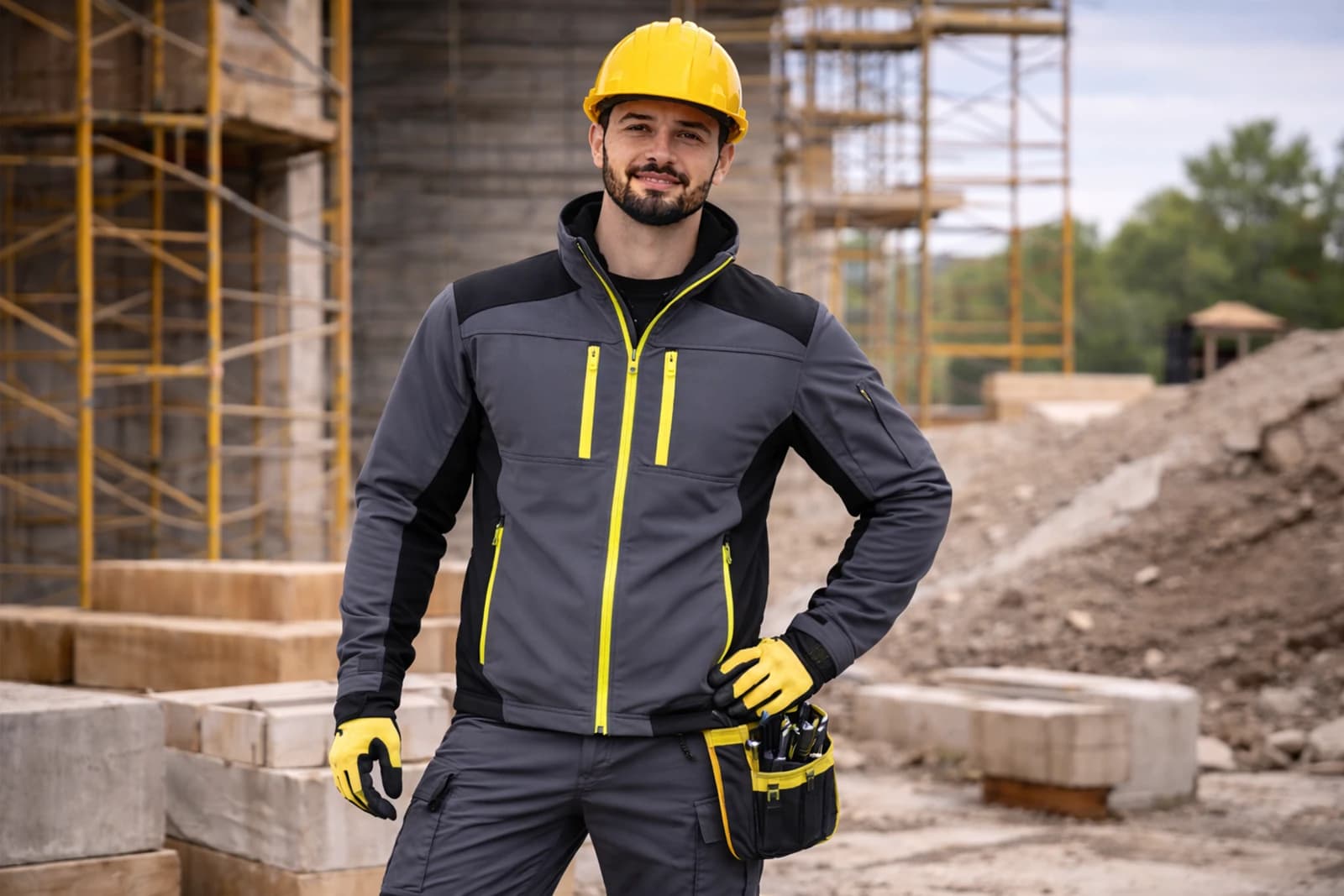
Construction Clothing
Construction Softshell Set
Flexible jacket and trouser set built for crews working across changing weather conditions.
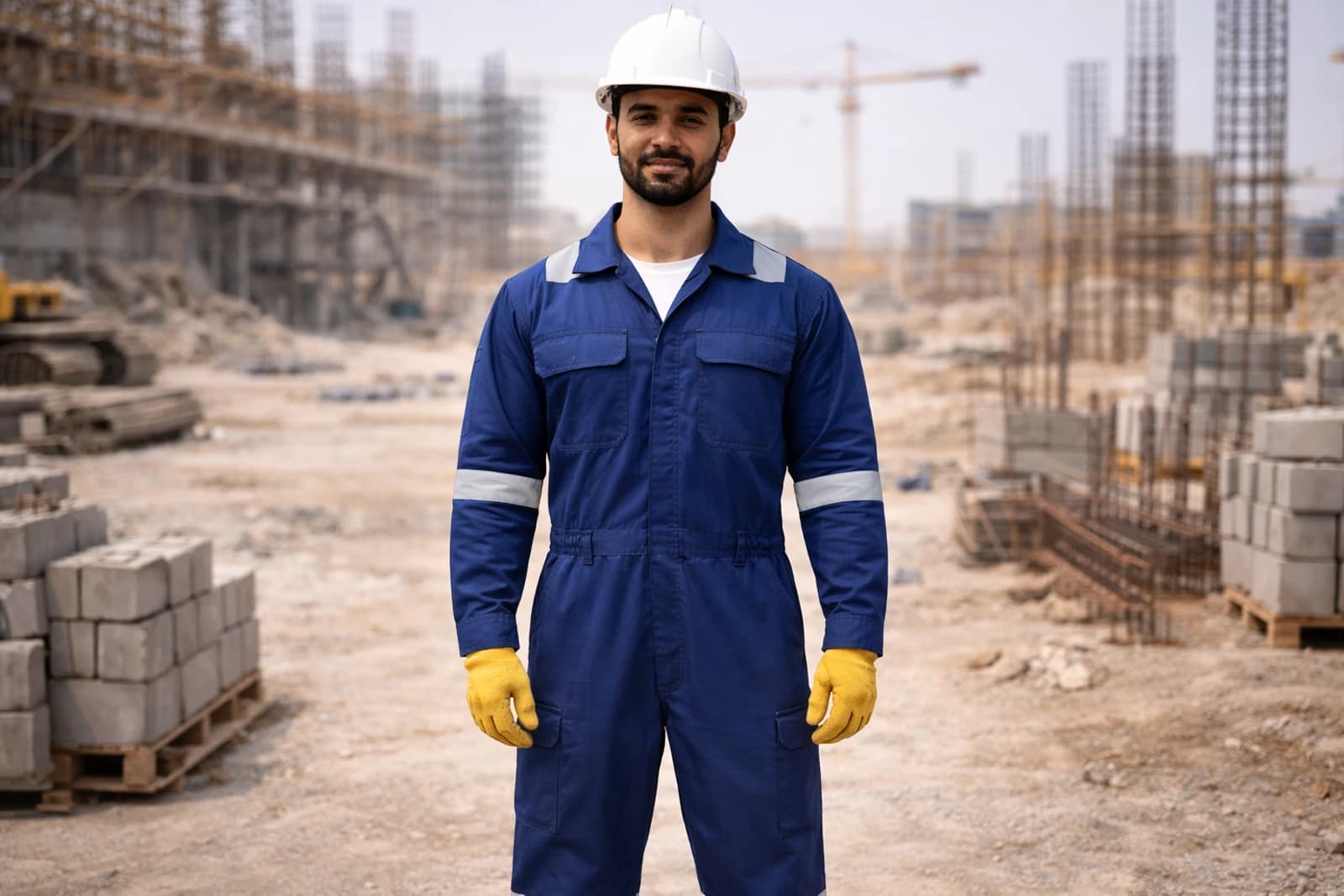
Industrial Workwear
Industrial Coverall Pro
Hard-wearing one-piece coverall for plant, maintenance, and heavy-duty operations.