Pharmaceutical Workwear Must Maintain Barrier Protection After Repeated Sterilization
Pharmaceutical cleanroom workwear is validated on new garments — then issued for daily use with repeated sterilization cycles that degrade fabric barrier properties, seam integrity, and closure function. The root cause: the procurement specification validates performance at delivery, not after 25, 50, or 100 sterilization cycles. This article covers the degradation mechanism that repeated sterilization imposes on cleanroom garments, the testing protocol that confirms barrier performance after cycle accumulation, and the replacement criteria that tie garment life to sterilization count rather than calendar time.
Buyer context
What procurement teams run into
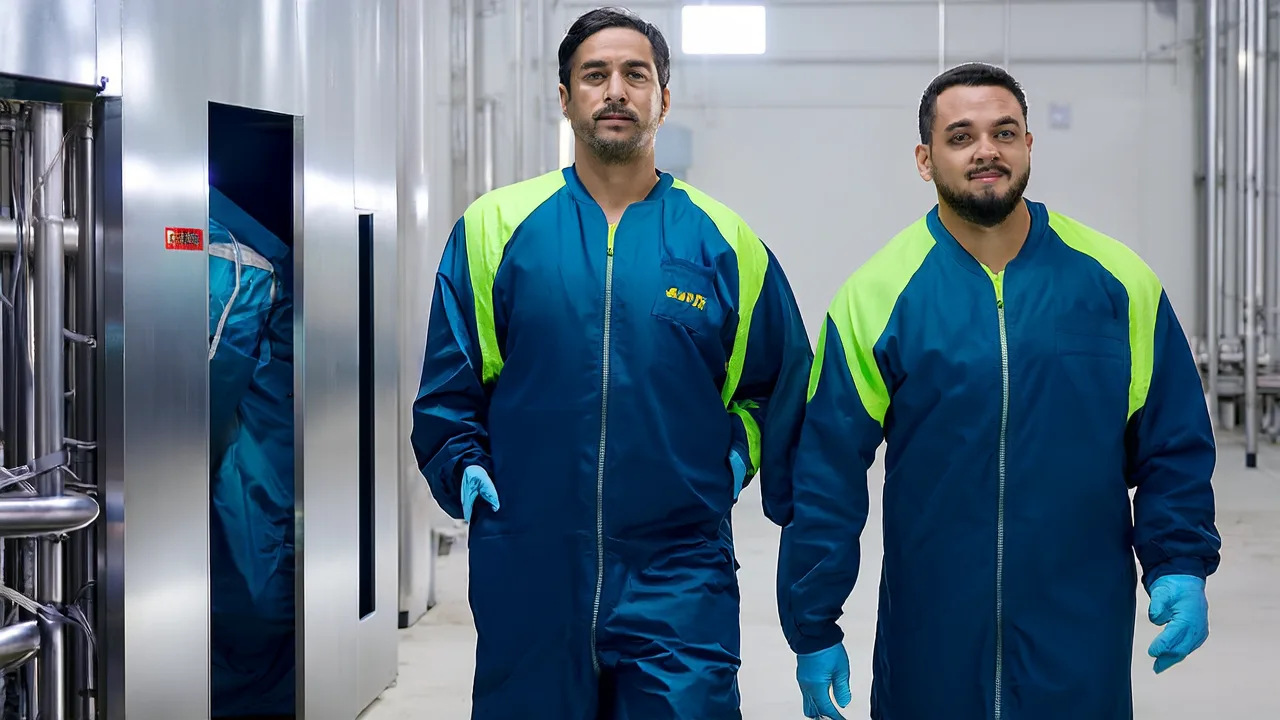
Pharmaceutical manufacturing facilities operate cleanrooms and controlled environments where workers handle active pharmaceutical ingredients (APIs), sterile products, and sensitive formulations. Cleanroom workwear — coveralls, frocks, hoods, boot covers — must maintain barrier protection that prevents worker-generated particles from contaminating the product. Garments are laundered and sterilized after every shift or every 1–3 days, depending on the cleanroom classification (ISO 5 through ISO 8) and the facility's contamination control strategy. The sterilization process subjects garments to repeated thermal, chemical, and mechanical stress: - **Autoclave sterilization:** Steam sterilization at 121°C for 15–30 minutes or 134°C for 3–5 minutes. The high temperature and moisture degrade fabric fiber integrity, weaken seam threads, and accelerate closure wear. - **Industrial laundering:** High-temperature washing (60–80°C) with chemical detergents, repeated tumbling, and high-speed extraction. The mechanical action abrades fabric surfaces, opens seam needle holes, and fatigues elastic components. - **Chemical disinfection:** Surface disinfection with hydrogen peroxide, peracetic acid, or quaternary ammonium compounds between sterilization cycles. Chemical exposure degrades fabric water-repellent coatings, weakens fiber integrity, and accelerates color fading. A cleanroom garment may undergo 50–150 sterilization cycles over its service life. Each cycle imposes cumulative degradation. The garment that passes validation testing on day one — when new — may fail barrier performance requirements after 25, 50, or 100 cycles. **1. The degradation mechanism: how repeated sterilization destroys barrier protection** Cleanroom workwear fails through mechanisms that accumulate with each sterilization cycle: - **Fabric fiber degradation:** Repeated exposure to high temperature (121–134°C autoclave), chemical detergents, and disinfectants weakens fabric fibers. Synthetic fibers (polyester, polypropylene) used in cleanroom garments undergo thermal degradation — fiber strength decreases 10–20% after 50 autoclave cycles. The fabric becomes thinner, more porous, and more prone to particle shedding. The barrier protection that prevents worker-generated particles from reaching the product degrades with each cycle. - **Seam thread weakening:** Sewing thread (typically polyester or cotton-polyester blend) undergoes repeated thermal and mechanical stress. Thread strength decreases 15–25% after 50 sterilization cycles. Seams become the primary failure point — needle holes enlarge, thread breaks, and seams split during normal wear. Seam failure creates particle generation sites and compromises the garment's barrier integrity. - **Closure fatigue:** Zippers, snaps, and elastic cuffs undergo repeated mechanical stress during donning, doffing, and sterilization. Zipper teeth wear, zipper tape frays, and zipper function degrades after 30–50 cycles. Snap corrosion or deformation causes closures to fail. Elastic cuffs lose elasticity after repeated high-temperature exposure, creating gaps at wrists and ankles that compromise barrier protection. - **Fabric surface abrasion:** Industrial laundering tumbles garments against other garments and washing machine surfaces. The mechanical action abrades fabric surfaces, generating micro-fibrils that become contamination particles. The fabric surface that was smooth and low-linting when new becomes rough and high-linting after 25–50 cycles — the opposite of the cleanroom requirement. - **Water-repellent coating loss:** Many cleanroom garments incorporate a water-repellent or anti-static coating to prevent particle adhesion. Repeated laundering and chemical disinfection strip the coating. The garment loses its anti-static or low-linting properties after 20–40 cycles — increasing particle generation and adhesion. **2. The procurement mistake: validating only new garments** The most common procurement error is to validate cleanroom workwear performance on new garments — fabric barrier testing, particle generation testing, seam strength testing — and approve the garment for fleet issue without confirming performance after repeated sterilization cycles. The logic: "If the garment passes validation when new, it will perform throughout its service life." But this logic ignores the cumulative degradation that sterilization imposes. The buyer who validates only new garments faces: - **Premature barrier failure:** Garments pass initial validation but fail barrier performance after 25–50 cycles. The cleanroom experiences contamination events — particle counts increase, product batches fail quality testing, and the facility faces regulatory scrutiny. The root cause is garment degradation, but the investigation focuses on cleaning protocols, HVAC performance, or operator technique — not garment life. - **Unplanned replacement costs:** Garments are replaced on a calendar schedule (every 3–6 months) based on initial supplier recommendations. But garments degrade at different rates depending on sterilization intensity, cleanroom classification, and operator handling. Some garments fail early (after 20–30 cycles), requiring emergency replacement. Other garments survive longer (80–100 cycles) but are replaced on calendar schedule — wasting garment life. - **Contamination control gaps:** The facility's contamination control strategy assumes garments maintain barrier protection throughout their service life. But the strategy does not account for garment degradation — there is no monitoring of garment barrier performance over time, no cycle counting, and no replacement criteria tied to actual garment condition. The contamination control strategy has a gap that garment degradation exposes. **3. The secondary driver: sterilization protocol variation across sites** Pharmaceutical companies operate multiple manufacturing sites with different sterilization protocols. Site A may use autoclave sterilization at 121°C for 20 minutes. Site B may use industrial laundering at 70°C with chemical disinfection. Site C may use both — autoclave for ISO 5 cleanrooms and industrial laundering for ISO 7–8 areas. The garment that performs well under Site A's autoclave protocol may degrade faster under Site B's industrial laundering protocol — or vice versa. The buyer who specifies one garment for all sites without confirming performance under each site's sterilization protocol faces differential garment life across sites. Site A replaces garments every 4 months. Site B replaces garments every 2 months. The procurement specification does not account for the sterilization protocol variation that drives garment life.
Sourcing approach
How a factory partner can respond
The solution for pharmaceutical cleanroom workwear is to specify garment performance after repeated sterilization cycles, require supplier testing data for barrier properties after cycle accumulation, and implement a replacement protocol tied to sterilization count rather than calendar time. **Step 1: Specify performance after repeated sterilization cycles** Include in the procurement specification a requirement that garments maintain barrier performance after a defined number of sterilization cycles. The specification should state: - **Fabric barrier performance after 50 cycles:** Fabric must maintain particle filtration efficiency of 95% or higher after 50 sterilization cycles (autoclave at 121°C for 20 minutes or industrial laundering at 70°C with chemical detergent). Require supplier testing data confirming fabric barrier performance after 50 cycles — tested per IEST-RP-CC002.7 (garment particle generation testing) or equivalent. - **Seam strength after 50 cycles:** Seams must maintain minimum 80% of original seam strength after 50 sterilization cycles. Require supplier testing data confirming seam strength after 50 cycles — tested per ASTM D1683 or equivalent. - **Closure function after 50 cycles:** Zippers, snaps, and elastic cuffs must maintain function after 50 sterilization cycles. Require supplier testing data or demonstration samples confirming closure function after 50 cycles. - **Fabric surface linting after 50 cycles:** Fabric surface must maintain low-linting performance (particle generation below defined threshold) after 50 sterilization cycles. Require supplier testing data confirming fabric surface linting after 50 cycles. If the supplier cannot provide testing data for performance after 50 cycles, request that the supplier perform the tests and provide test reports. If the supplier refuses or cannot perform the tests, this is a red flag — the supplier may not have the capability to produce garments that maintain barrier performance through repeated sterilization. **Step 2: Require sterilization cycle testing data** Require the supplier to provide sterilization cycle testing data for the specific sterilization protocol used at your site. If your site uses autoclave sterilization at 121°C for 20 minutes, require testing data for that specific protocol. If your site uses industrial laundering at 70°C with chemical disinfection, require testing data for that specific protocol. The testing data should include: - **Fabric barrier performance:** Particle filtration efficiency and particle generation testing after 25, 50, and 100 cycles. - **Seam strength:** Seam strength testing after 25, 50, and 100 cycles. - **Closure function:** Closure function evaluation after 25, 50, and 100 cycles. - **Fabric surface linting:** Linting testing after 25, 50, and 100 cycles. The testing data should confirm that the garment maintains performance throughout its expected service life (50–100 cycles) — not just at the beginning. **Step 3: Implement sterilization cycle counting** Implement a sterilization cycle counting system to track the number of cycles each garment has undergone. The cycle counting protocol: - **Label each garment** with a unique identifier (barcode, RFID tag, or sewn-in label) that links to a garment tracking database. - **Record each sterilization cycle** in the database — date, cycle type (autoclave, laundering, disinfection), and garment ID. - **Calculate cumulative cycles** for each garment — total autoclave cycles, total laundering cycles, total disinfection cycles. - **Set replacement criteria** based on cumulative cycles — replace garments after 50 cycles (or the cycle count confirmed by supplier testing data). The cycle counting system replaces calendar-based replacement with condition-based replacement. Garments are replaced based on actual sterilization exposure — not on an arbitrary calendar schedule that does not account for actual garment use. **Step 4: Pilot garments under site-specific sterilization protocols** Before committing to full fleet orders, pilot garments under your site's specific sterilization protocol for 8–12 weeks. The pilot protocol: - **Issue pilot garments** to 10–15 cleanroom operators in the highest-classification cleanrooms (ISO 5–6). - **Track sterilization cycles** for each pilot garment using the cycle counting system. - **Monitor garment performance** during the pilot — record contamination events, particle count excursions, garment failures (seam splits, closure failures, fabric tears), and operator complaints. - **Compare pilot garment performance** with baseline performance using the current garment fleet. If pilot garments maintain barrier performance through 50+ cycles without contamination events or garment failures, approve for fleet issue. If pilot garments fail before 50 cycles, investigate whether fabric barrier properties, seam construction, or closure function are insufficient — and request a second sample with enhanced specifications. **Step 5: Adjust replacement criteria based on pilot data** After the pilot, adjust the replacement criteria: - **If garments fail before 50 cycles:** Reduce the replacement cycle count to 40 or 30 cycles. Investigate whether fabric, seam, or closure specifications need enhancement. - **If garments survive beyond 75 cycles:** Extend the replacement cycle count to 60 or 70 cycles — capturing additional garment life and reducing replacement costs. - **If garments fail in specific areas** (seams, closures, cuffs): Enhance the specification for the failing component — specify higher-strength seam thread, more durable closures, or more resilient elastic. **Step 6: Account for multi-site sterilization protocol variation** If your company operates multiple sites with different sterilization protocols, specify garment performance for each site's protocol. Site A's autoclave protocol may degrade garments differently than Site B's industrial laundering protocol. Require supplier testing data for each site's protocol — and set site-specific replacement cycle counts based on the testing data. **Recommended garments for pharmaceutical cleanroom workwear:** - **Industrial coverall-pro** — specify the coverall for cleanroom operators (ISO 5–7 areas) who require full-body barrier protection. Specify the coverall with sterilization cycle testing data: fabric barrier performance, seam strength, closure function, and fabric surface linting after 50 sterilization cycles under your site's specific protocol. Implement cycle counting for the coverall fleet and replace based on cumulative cycles — not calendar time. - **Logistics polo uniform** — specify the polo uniform for warehouse and logistics staff in pharmaceutical distribution areas (ISO 8 cleanrooms or controlled unclassified areas) who require comfort and cleanliness without the full barrier protection of a coverall. Specify the polo with sterilization cycle testing data for your site's laundering protocol. Implement cycle counting for the polo fleet and replace based on cumulative cycles.
Recommended Products
Products that fit this use case

Industrial Workwear
Industrial Coverall Pro
Hard-wearing one-piece coverall for plant, maintenance, and heavy-duty operations.

Logistics Uniform
Logistics Polo Uniform
Breathable uniform polo for warehouse, delivery, and last-mile teams.