How to Verify Quality When Sourcing OEM Workwear from China: A Checklist for Middle East Importers
Many Middle East importers receive bulk workwear shipments only to find fabric weight mismatches, poor stitching, or incorrect sizing. This step-by-step quality checklist covers what to inspect during sample approval, production monitoring, and pre-shipment inspection — so you get what you ordered.

Buyer context
What procurement teams run into
<p>A distributor in Riyadh orders 10,000 hi-vis safety jackets for a roadworks contract. The factory sends photos of the pre-production sample and it looks good. When the container arrives six weeks later, the fabric feels thinner than approved, the reflective tape is positioned 3 cm lower than specified, and half the jackets have visible thread loops on the front panels.</p> <p>This is a common story across Middle East workwear procurement. The buyer may have worked with a Chinese OEM before and trusted the process — or the buyer may be new to international sourcing and did not know what to check at each stage. Either way, a container of off-spec workwear means lost time, frustrated end users, and a second order cycle that destroys the unit economics.</p> <p>The root cause is rarely bad intent from the factory. It is almost always an unclear quality protocol between buyer and manufacturer. Workwear OEM involves multiple handoffs: fabric sourcing, pattern making, sample sewing, size set approval, bulk cutting, assembly, and final packing. Without a defined checklist at each gate, small deviations accumulate into a finished product that no longer matches the original specification.</p> <p>Middle East buyers also face a unique challenge: climate-specific requirements such as high colourfastness under strong UV, shrinkage tolerance in hard-water wash cycles, and fabric breathability for hot-weather factory and construction sites. A quality checklist built for European or North American customers may miss these Gulf-specific criteria entirely.</p>
Sourcing approach
How a factory partner can respond
<h2>Stage 1: Fabric and Trim Approval (Before Sample Sewing)</h2> <p>Ask for fabric mill certificates and a physical swatch card. Check the declared GSM against actual weight using a simple gram-scale check. For the <strong>hi-vis-safety-jacket</strong>, verify that the background fabric colour and retroreflective tape meet EN ISO 20471 or ANSI/ISEA 107 brightness readings. For a <strong>construction-softshell-set</strong>, check the membrane lamination bond and seam sealing if windproof or water-resistant performance is claimed. Confirm that the thread, zipper, and elastic band suppliers are specified in the approval document — substitutions here are a common source of field failure.</p> <h2>Stage 2: Pre-Production Sample Review (Fit, Construction, Detailing)</h2> <p>Request one sample in your target size run (e.g., M, L, XL, 2XL). Compare to your spec sheet: seam allowance (minimum 1.2 cm for load-bearing seams), stitch count per inch (8–10 for woven fabrics, 10–12 for knits), and bartack reinforcement at stress points like pocket corners and zip ends. For the softshell set, check that the zip slider feels smooth and the cuff elastic is firm but not restrictive. Take photos with a ruler reference and mark any deviation clearly in red on a printed spec sheet.</p> <h2>Stage 3: Size Set and Fit Test (Before Bulk Production)</h2> <p>Gulf workforces include workers with different body proportions. Ask for a full size set sample (S through 3XL or 4XL) and have at least three people of different heights and builds try them on. Pay close attention to shoulder width, armhole depth, and crotch rise on coveralls — these are the most common fit errors in imported workwear. Photograph each fit and annotate required adjustments. A good OEM will complete two fit rounds in 7–10 working days at no extra charge if factored into the initial quotation.</p> <h2>Stage 4: Inline and Pre-Shipment Inspection (Blocking the Bad Batch)</h2> <p>For orders above 1,000 pieces, arrange a third-party or in-person inline inspection when 30–40 % of production is complete. Check stitching tension, reflective tape alignment, zip function, and colour consistency between production batches. The final pre-shipment inspection (AQL 2.5 for major defects, 4.0 for minor) should be done on a random sample of the packed cartons. Verify that labels, size markers, poly bags, and carton markings match exactly what was agreed.</p> <h2>Stage 5: Documentation for GCC Customs Clearance</h2> <p>Keep a quality file with: fabric test reports, sample approval signed photos, inspection certificates, packing list, and bill of lading. Some Saudi and UAE importers now require Saber or ESMA product safety certificates for workwear categories. Having clean documentation avoids clearance delays and demonstrates to your end client that the manufacturing process was controlled.</p> <p>The most cost-effective quality setup is to agree on a checklist before the order is placed and include it in the purchase contract. Sidaier provides spec sheets, sample photos, and inspection reports at each of these stages as a standard part of OEM service. For Middle East buyers, the upfront investment in a structured quality protocol saves thousands of dollars in rejections, re-orders, and lost contracts.</p>
Recommended Products
Products that fit this use case
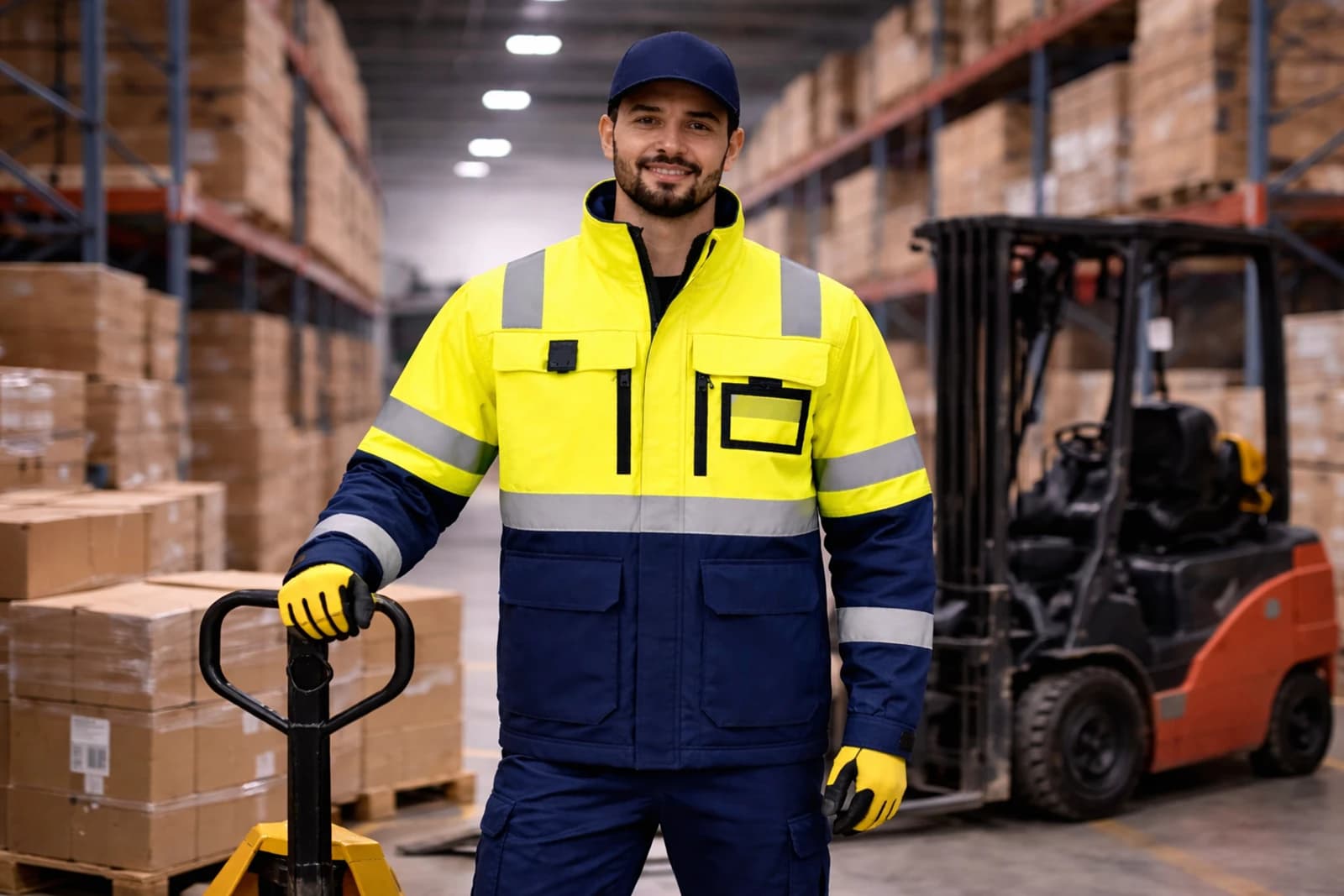
Safety Uniform
Hi-Vis Safety Jacket
Reflective safety jacket for high-visibility site operations and road work crews.
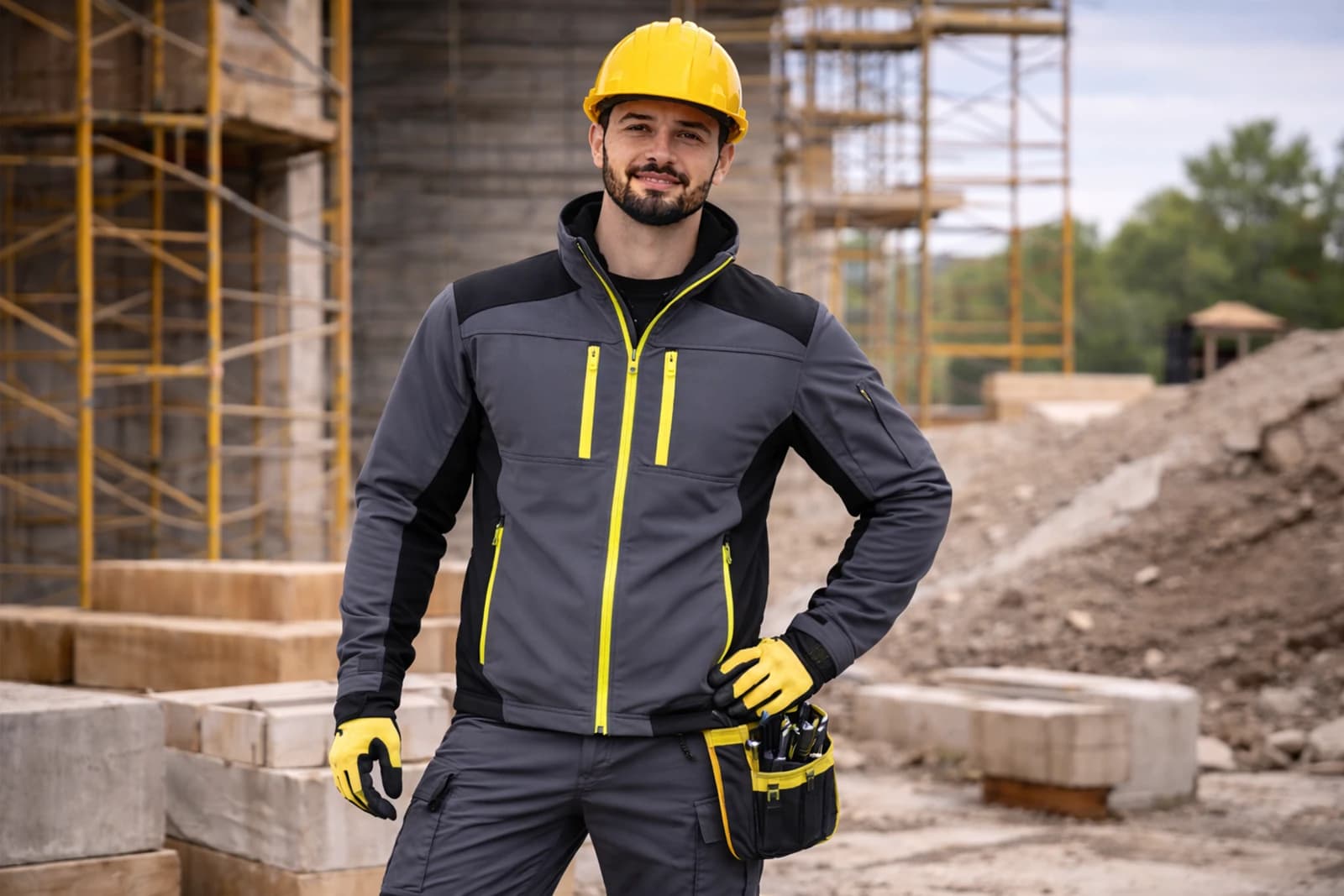
Construction Clothing
Construction Softshell Set
Flexible jacket and trouser set built for crews working across changing weather conditions.