Railway Maintenance Workwear Balances Three Competing Safety Requirements
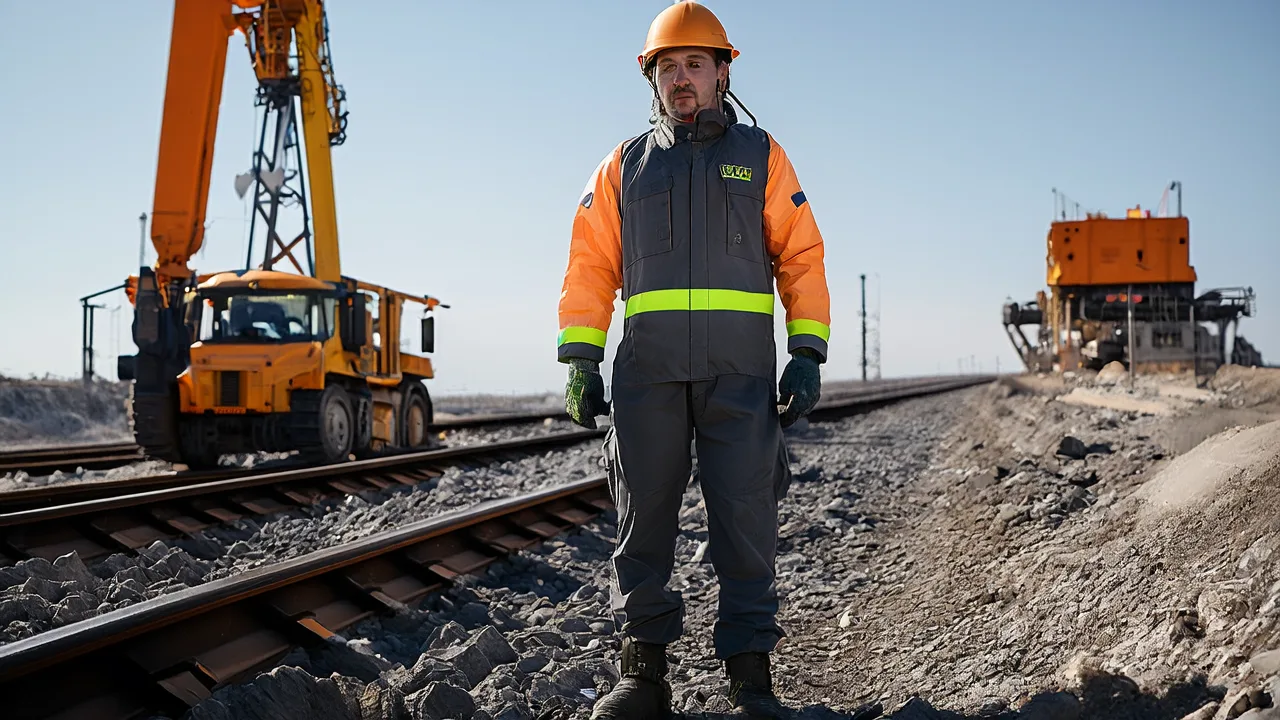
Railway track maintenance is one of the most constrained workwear environments in industrial operations. Workers face three simultaneous hazards — train strike risk requiring high visibility, ballast and rail abrasion requiring heavy-duty fabric, and electrical arc risk from 25kV overhead catenary or third-rail DC systems requiring arc-rated non-conductive materials. These three requirements pull in different directions, and a workwear specification that optimises for one often compromises the others. This article covers how to build a layered garment system that addresses all three hazards without over-specifying one at the expense of the others.
Buyer context
What procurement teams run into
Railway track maintenance is one of the most constrained workwear environments in industrial operations. Workers face three simultaneous hazards — train strike risk (requiring high visibility), ballast and rail abrasion (requiring heavy-duty fabric), and electrical arc risk from overhead catenary systems at 25kV AC or third-rail DC supplies (requiring arc-rated, non-conductive materials). These three requirements pull in different directions, and a workwear specification that optimises for one often compromises the others. **1. Visibility vs. arc-rated materials** EN ISO 20471 hi-vis garments rely on fluorescent background material (typically fluorescent yellow or orange polyester) and retroreflective tape. Arc-rated garments for electrical hazard protection typically use darker-coloured, tightly woven modacrylic or aramid blends — the dark colour is inherent to the arc-rated fibre chemistry. A garment cannot be both fluorescent yellow and arc-rated in the same fabric layer. A hi-vis jacket that meets EN ISO 20471 Class 2 but has no arc rating creates electrical hazard risk for workers within the exclusion zone of live overhead equipment. An arc-rated coverall that is dark-coloured creates visibility non-compliance for trackside work where trains pass at speed. The buyer must specify a layered system where the outermost layer provides visibility compliance and the base layer provides arc protection. **2. Abrasion resistance vs. breathability** Railway maintenance involves kneeling on granite ballast, handling steel rails and concrete sleepers, and working with track machinery such as tamping machines, rail grinders, and ballast regulators. These activities demand heavy-duty fabric (260+ GSM ripstop or canvas) at knees, seat, and cuffs. But track maintenance is physically demanding work in exposed environments — workers overheat in heavy garments during summer, and sweat-dampened garments lose thermal regulation. A 280 GSM coverall that survives 100 shifts of ballast kneeling creates heat stress risk during summer track work when ambient temperatures reach 35–40°C in direct sun. A 200 GSM coverall that keeps workers cool fails prematurely at the knees and seat from ballast abrasion. The buyer must specify reinforced construction at high-wear points without adding weight across the entire garment. **3. Arc-rated vs. conductive hardware** Standard workwear uses metal zippers, snap buttons, and D-rings. Near live electrical equipment, exposed metal hardware can conduct current or create arc initiation points. Arc-rated garment specifications require concealed zippers, plastic or covered snaps, and no exposed metal below the collar line. This changes the garment construction and hardware selection. A coverall with a standard metal front zipper creates an arc initiation point if the zipper teeth contact live equipment or if an arc flash occurs nearby. The buyer must specify concealed zip construction with plastic zipper teeth, plastic snap closures at cuffs and collar, and no metal D-rings or belt buckles below the collar line. This specification is non-negotiable for workers within the exclusion zone of live 25kV equipment. **4. The layered system approach** The procurement challenge is to specify a garment system that addresses all three hazards without over-specifying one at the expense of the others. A single garment cannot simultaneously be fluorescent yellow, arc-rated to 8 cal/cm², and abrasion-resistant to 50,000 cycles — the fibre chemistry, colour, and fabric weight requirements are mutually exclusive in a single layer. The solution is a layered system where each layer addresses a specific hazard combination, and the outermost layer provides the visibility compliance that the arc-rated base layers cannot. This approach is standard practice in electrical utility work and railway operations in Europe and the Middle East, but it requires careful specification to ensure that the layered system functions as a coherent whole rather than a collection of incompatible garments. **5. Allocation rules by role and task** Not every railway maintenance worker faces the same hazard combination. Track maintenance operatives who handle ballast and rails face abrasion and visibility risk but may not work within the electrical exclusion zone. Signal and catenary technicians who work within 3m of live 25kV equipment face arc risk and visibility risk but less abrasion risk. Lookout and protection officers who are stationed trackside to warn of approaching trains face visibility risk as their primary hazard but must still be visible to train drivers at all times. A single workwear specification across all roles creates either over-protection (arc-rated garments for workers who never enter the electrical exclusion zone) or under-protection (hi-vis garments without arc rating for technicians working near live equipment). The buyer must map each role to its actual hazard profile and specify garments accordingly.
Sourcing approach
How a factory partner can respond
The solution for railway maintenance workwear is a layered garment system where each layer addresses a specific hazard combination, and the outermost layer provides the visibility compliance that the arc-rated base layers cannot. This approach requires careful specification of each layer's performance requirements and clear allocation rules based on the worker's actual task and hazard exposure. **Layer 1 — Base garment (industrial coverall-pro):** Specify an arc-rated coverall in modacrylic/cotton blend (typically 60% modacrylic / 35% cotton / 5% antistatic fibre) at 260–280 GSM. This fabric provides: - Arc thermal protection value (ATPV) of 8–12 cal/cm² — sufficient for HRC Category 2 exposure near 25kV overhead catenary, confirmed by test report to ASTM F1959 or equivalent - Inherent flame resistance (not treated — the FR property is built into the fibre and survives 100+ industrial wash cycles without degradation) - Antistatic fibre content to prevent static charge accumulation near electrical equipment - No exposed metal hardware: concealed zip front with plastic zipper teeth, plastic snap closures at cuffs and collar, no metal D-rings or belt buckles below the collar line - Reinforced knees and seat with double-layer fabric at 350 GSM for ballast kneeling and rail handling — the reinforcement is concentrated at high-wear points without adding weight across the entire garment - Dark colour (navy or charcoal) — inherent to the arc-rated fibre, cannot be fluorescent **Layer 2 — Visibility layer (hi-vis safety jacket):** Specify an EN ISO 20471 Class 2 or Class 3 hi-vis jacket worn over the arc-rated coverall. This jacket provides: - Fluorescent yellow or orange background material (minimum 0.50 m² for Class 2, 0.80 m² for Class 3) - Retroreflective tape in 50mm-wide bands on torso and sleeves (minimum 2.50m of tape for Class 2), with test reports confirming luminous intensity and colour fastness to 100+ wash cycles - Breathable mesh-lined construction for summer track work in 35–40°C heat - Wind and water-resistant outer shell for winter and night-shift conditions - Plastic zipper front (no exposed metal) to maintain electrical safety when worn over the arc-rated coverall - The jacket does not need to be arc-rated itself — it is worn over an arc-rated base layer, and the combined system's arc protection is determined by the base layer's ATPV plus any air gap insulation **Layer 3 — Weather layer (construction softshell set):** For winter track work, night shifts, or exposed locations with wind and rain, add a construction softshell set (jacket and trousers) in a dark colour. This layer provides: - Windproof and water-resistant outer shell with breathable membrane for physical work - Fleece-lined inner for thermal insulation during cold-weather track maintenance at 0–10°C - The softshell jacket must be worn under the hi-vis jacket if the hi-vis jacket is the outermost visibility layer — or the softshell itself must be hi-vis compliant if worn as the outer layer in conditions where the hi-vis jacket is not worn **Allocation rules by role:** - Track maintenance operatives (ballast tamping, rail replacement, sleeper renewal): arc-rated coverall + hi-vis jacket as minimum; add softshell in winter or night shifts - Signal and catenary technicians (working within 3m of live 25kV equipment): arc-rated coverall as mandatory base; hi-vis jacket worn only when not within the exclusion zone; additional arc-rated gloves and face shield as required by the task risk assessment - Lookout and protection officers (stationed trackside to warn of approaching trains): hi-vis jacket as outermost garment at all times; arc-rated coverall underneath; no additional layers that obscure the hi-vis silhouette - Machine operators (inside cab of tamping machines, rail grinders): hi-vis jacket when entering/exiting the machine and when outside the cab; arc-rated coverall as base garment; cab provides weather protection so softshell not needed during operation **Procurement specification:** - Specify the arc-rated coverall with minimum ATPV of 8 cal/cm² (HRC Cat 2), confirmed by test report (ASTM F1959 or equivalent) - Specify the hi-vis jacket as EN ISO 20471 Class 2 minimum, with test reports for retroreflective tape luminous intensity and colour fastness - Confirm that no exposed metal hardware exists below the collar line on the arc-rated coverall - Specify that the hi-vis jacket uses plastic zippers and no metal snaps or D-rings - Pilot the layered system with 20–30 operatives for 4–6 weeks of actual track work before full fleet commitment — get feedback on thermal comfort, mobility during kneeling and reaching tasks, and visibility compliance during night shifts **Recommended garments for railway maintenance workwear:** - **Industrial coverall-pro** — specify the arc-rated modacrylic/cotton blend version with concealed zip, plastic snaps, reinforced knees and seat, and no exposed metal hardware. This is the base layer providing arc and flame protection for workers within the electrical exclusion zone. - **Hi-vis safety jacket** — specify EN ISO 20471 Class 2 with breathable mesh lining, plastic zipper front, and retroreflective tape rated for 100+ wash cycles. This is the outer visibility layer worn over the arc-rated coverall for trackside work where train strike risk is present.
Recommended Products
Products that fit this use case
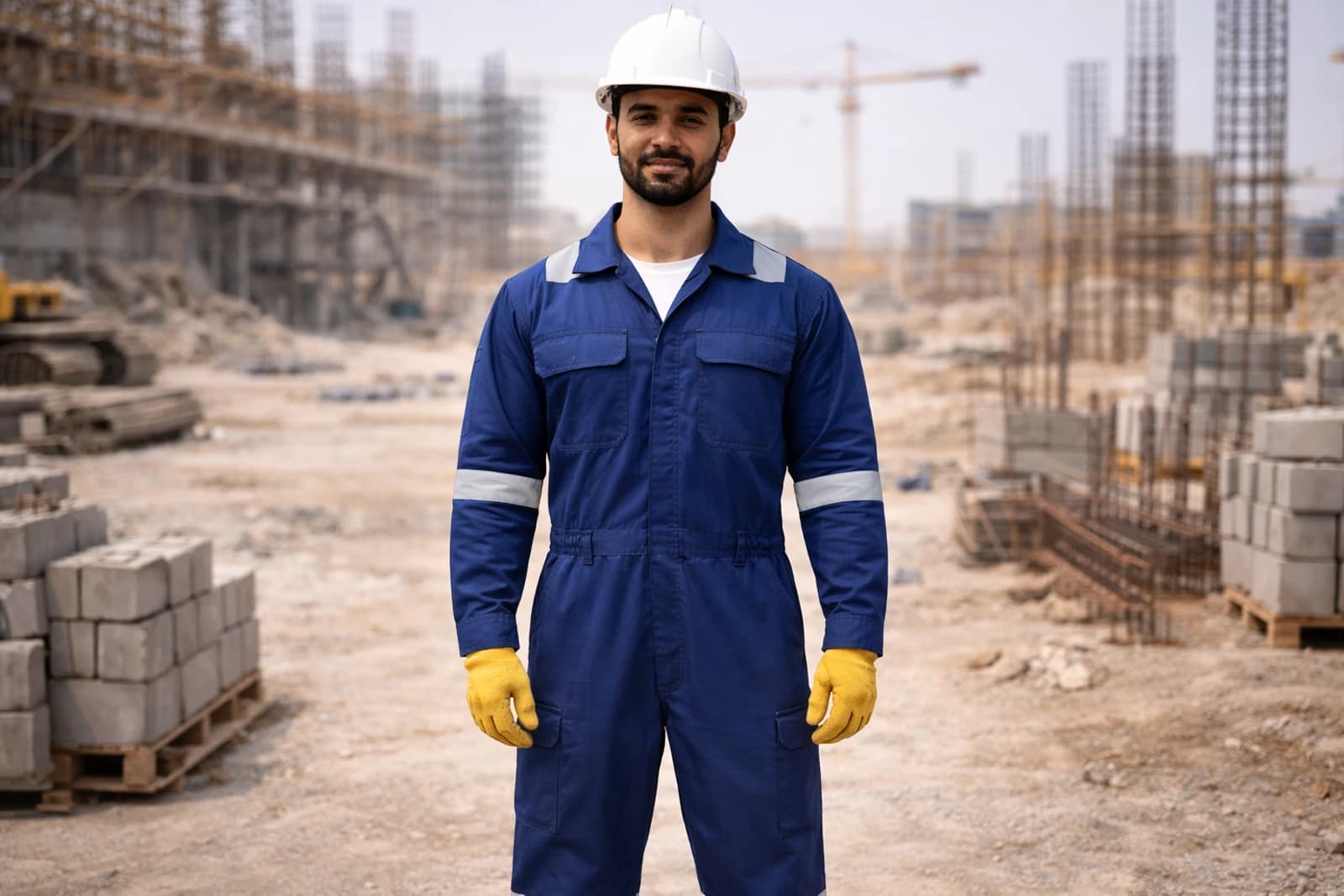
Industrial Workwear
Industrial Coverall Pro
Hard-wearing one-piece coverall for plant, maintenance, and heavy-duty operations.
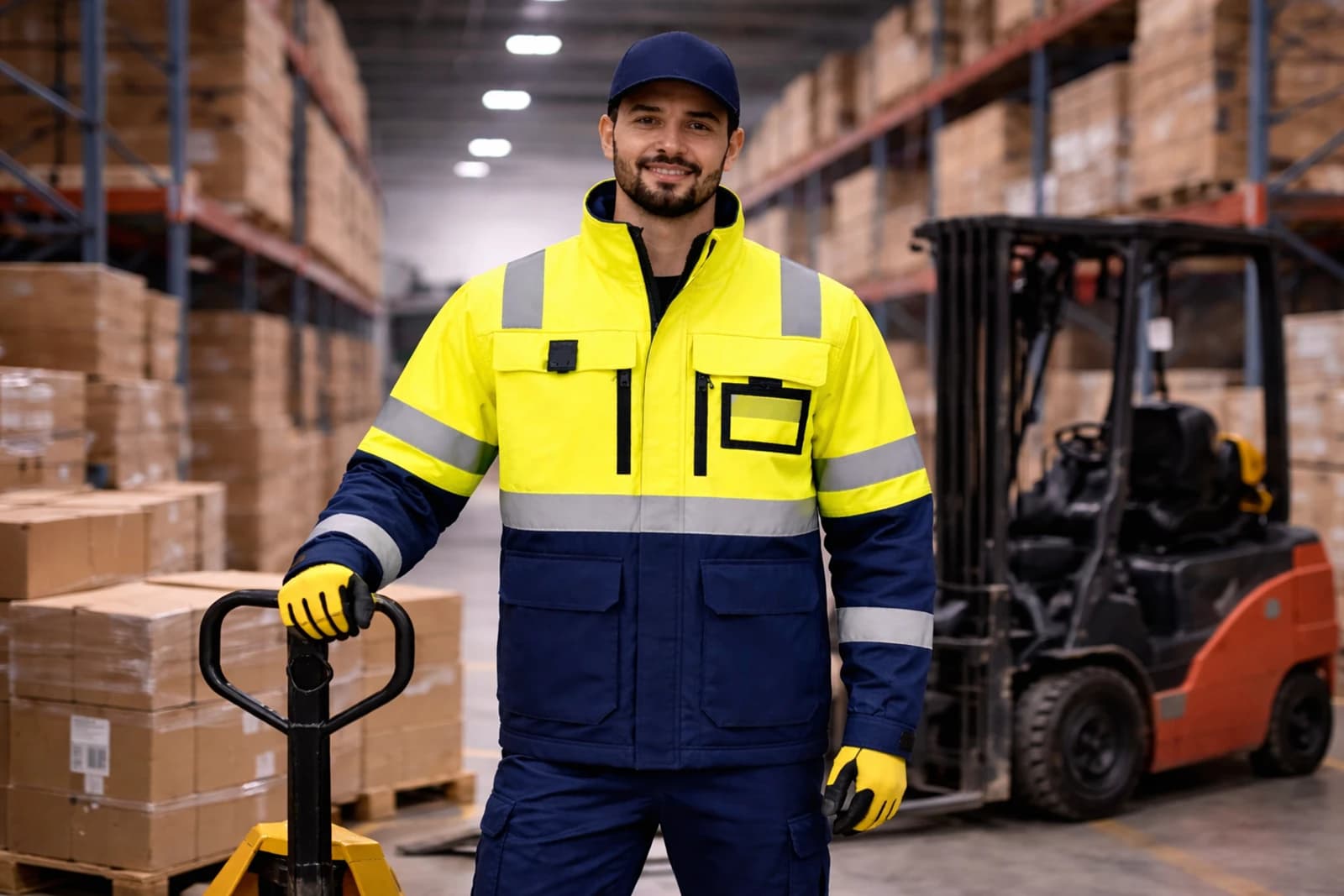
Safety Uniform
Hi-Vis Safety Jacket
Reflective safety jacket for high-visibility site operations and road work crews.