Railway Track Maintenance Workwear Degrades From Oil Exposure Before It Shows Visible Wear
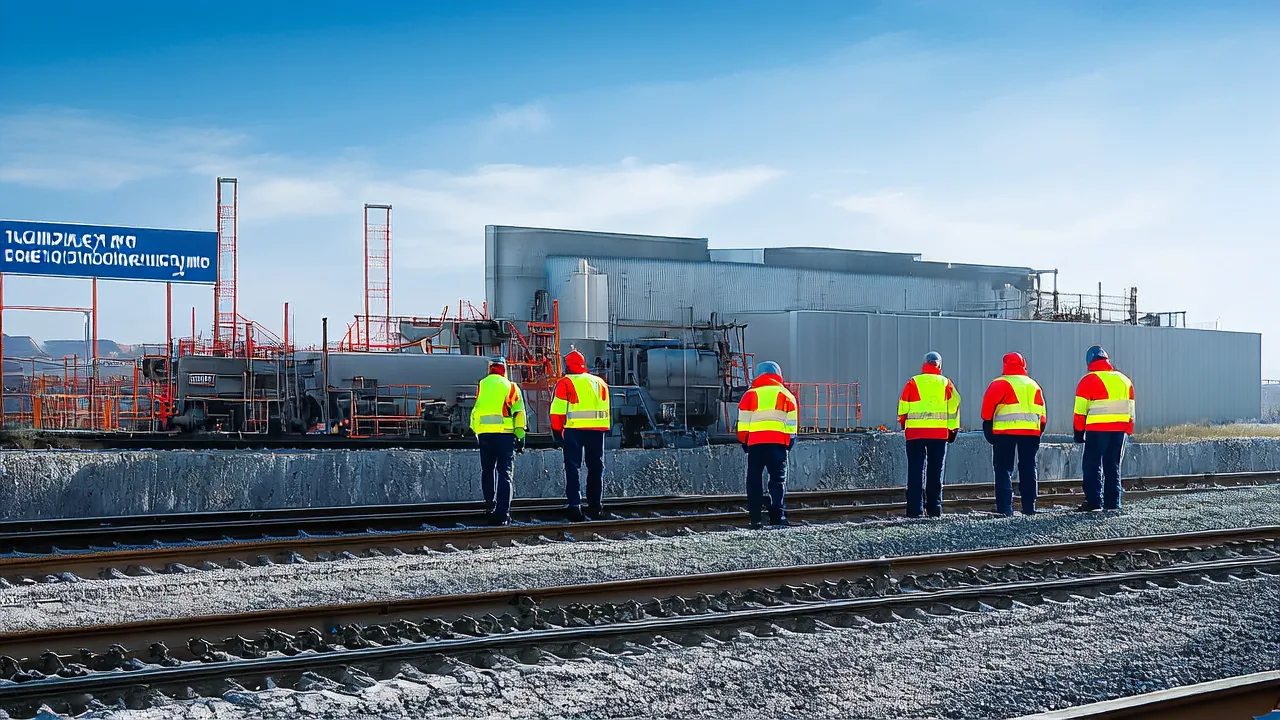
Railway track maintenance crews work near rail lubricants, switch machinery oil, and equipment grease that penetrates fabric fibers and degrades tensile strength invisibly. Garments appear serviceable while fabric integrity fails, creating tear risks during physical track work. This article covers how oil and grease degrade workwear fibers, why visible inspection misses the damage, and the replacement protocol that tracks oil exposure history rather than waiting for visible failure.
Buyer context
What procurement teams run into
Railway track maintenance crews—performing rail inspection, switch maintenance, tie replacement, and track geometry work—face oil and grease exposure that degrades workwear fabric invisibly: rail lubricants (gauge-face lubrication applied to curved rail), switch machine oil (hydraulic and gear oil from switch operating mechanisms), equipment grease (from tamping machines, ballast regulators, and maintenance-of-way equipment), and diesel fuel residue (from maintenance vehicles and hi-rail trucks). Standard workwear fabrics—cotton and cotton-blend—absorb oil and grease, which penetrate fiber structure and degrade tensile strength through chemical breakdown of cellulose fibers. Workers and supervisors inspect garments for visible wear (tears, seam failure, staining) and continue using garments that appear serviceable while fabric integrity has degraded significantly. The mechanism: **1. Oil and grease penetrate cotton and cotton-blend fibers and break down cellulose structure** Rail lubricants, hydraulic oil, gear oil, and grease are petroleum-based hydrocarbons that penetrate cotton fiber structure and break down cellulose bonds. Cotton fibers are composed of cellulose—a polymer of glucose units linked by beta-1,4-glycosidic bonds. Petroleum-based hydrocarbons dissolve the amorphous regions of cellulose (the less-ordered regions that provide fiber flexibility), reducing fiber tensile strength and creating brittleness. The root cause: cotton and cotton-blend fabrics are not designed for oil and grease resistance. Cotton fibers absorb oil and grease (cotton has high oil absorption capacity—up to 3-5 times its weight in oil). Oil penetrates fiber structure during contact and remains trapped in fiber matrix even after washing. Repeated oil exposure and incomplete oil removal through washing accumulates oil in fiber structure, progressively degrading cellulose bonds. After 20-30 oil exposure cycles, fabric tensile strength can decrease by 30-40%—yet the garment appears intact with no visible tears, seam failure, or excessive staining. **2. Oil degradation creates localized weak points that fail during physical work** Railway track maintenance involves physical work that stresses fabric: bending to inspect rail, kneeling to work on switches, climbing on maintenance equipment, pulling on rail anchors and spikes. These movements create tension at specific garment locations (knees, elbows, torso front, thighs). Oil-degraded fabric at these locations has reduced tensile strength and fails under tension—creating tears during work rather than through gradual wear. The root cause: oil exposure is not uniform across garments. Workers contact oil and grease at specific locations: torso front (leaning against equipment), thighs (kneeling on oily surfaces), knees (kneeling during switch work), sleeves (contacting rail lubricators and switch machinery). Oil accumulates at these contact points, degrading fabric locally while other garment areas remain relatively unaffected. When workers perform physical movements that create tension at oil-degraded locations, fabric tears—creating garment failure during work rather than through gradual visible wear. **3. Standard industrial washing removes surface oil but not oil trapped in fiber structure** Railway maintenance workwear is laundered through industrial washing processes that remove surface soil, dirt, and visible staining. However, industrial washing (even with heavy-duty detergents and elevated temperatures) removes only surface oil—oil trapped within fiber structure remains. The detergent emulsifies surface oil and suspends it in wash water, but oil that has penetrated fiber matrix is not accessible to detergent molecules. The root cause: industrial washing processes are designed to remove surface soil, not oil trapped in fiber structure. Oil that has penetrated cotton fiber matrix is trapped in the amorphous regions of cellulose where detergent molecules cannot effectively penetrate. After washing, surface oil is removed (garment appears clean, staining is reduced), but oil trapped in fiber structure remains and continues to degrade cellulose bonds. Workers and supervisors see clean garments after washing and assume oil exposure has been addressed—when in fact oil degradation continues. **4. Visible inspection misses oil degradation until fabric fails during work** Most railway maintenance operations replace workwear based on visible condition: tears, seam failure, excessive staining, or fabric thinning. This approach misses oil degradation because oil-damaged fabric appears intact until it fails under tension. A garment can show no visible wear while having 40-50% reduced tensile strength from oil degradation. Workers and supervisors cannot distinguish oil-degraded fabric from undamaged fabric through visual inspection. The root cause: visible wear indicators (tears, stains, seam failure) do not correlate with oil degradation. Oil degradation reduces tensile strength invisibly—fabric appears intact while fiber structure has been chemically broken down. Replacement based on visible wear extends garment service life beyond fabric integrity, creating tear risks during physical work. **5. The cost of getting it wrong** The buyer who replaces railway maintenance workwear based on visible wear faces: - Garment failure during work (tears at oil-degraded locations during physical movements) - Worker exposure risks (torn garments exposing skin to oil, grease, weather, and mechanical hazards) - Productivity loss (workers stopping work to address garment failure, changing garments mid-shift) - Worker dissatisfaction (garment failure creating discomfort, distraction, and safety concerns) - Increased replacement costs (emergency replacement of failed garments rather than scheduled replacement) The buyer who replaces railway maintenance workwear based on oil exposure tracking faces: - Garment integrity maintained (garments replaced before oil degradation creates tear risks) - Worker protection maintained (intact garments protecting workers from oil, grease, weather, and mechanical hazards) - Productivity maintained (workers completing shifts without garment failure interruptions) - Scheduled replacement (planned replacement based on oil exposure history rather than emergency replacement of failed garments)
Sourcing approach
How a factory partner can respond
The solution is a railway track maintenance workwear replacement protocol that tracks oil exposure history and replaces garments based on oil contact frequency rather than waiting for visible failure—combined with oil-resistant fabric specification that reduces oil penetration and degradation. **Step 1: Establish baseline oil exposure frequency for each maintenance role** Railway track maintenance roles have different oil exposure frequencies based on work tasks. Document the oil exposure frequency for each role: - **Switch maintenance crews:** high oil exposure (daily contact with switch machine oil, hydraulic oil, and grease from switch operating mechanisms). Switch maintenance workers contact oil and grease during every shift—operating switch machines, lubricating switch components, and working near oil-contaminated switch plates. - **Rail inspection crews:** moderate oil exposure (weekly contact with rail lubricants and equipment oil). Rail inspection workers contact rail lubricants during gauge-face lubrication inspection and contact equipment oil during hi-rail truck operation. - **Tie replacement crews:** moderate oil exposure (weekly contact with equipment grease from tamping machines and ballast regulators). Tie replacement workers contact equipment grease during tamping machine operation and maintenance. - **Track geometry crews:** low to moderate oil exposure (biweekly contact with equipment oil and grease). Track geometry workers contact equipment oil during maintenance-of-way equipment operation. The oil exposure frequency documentation enables setting replacement thresholds based on oil contact rather than visible wear. **Step 2: Set replacement thresholds based on oil exposure cycles** Set garment replacement thresholds based on oil exposure frequency and fabric oil resistance: - **High oil exposure roles (switch maintenance):** replace garments after 15-20 oil exposure cycles (approximately 3-4 weeks of daily oil contact). High-frequency oil contact degrades fabric rapidly, requiring frequent replacement to maintain fabric integrity. - **Moderate oil exposure roles (tie replacement, rail inspection):** replace garments after 25-30 oil exposure cycles (approximately 5-6 weeks of weekly oil contact). Moderate-frequency oil contact degrades fabric more slowly, enabling longer service life. - **Low oil exposure roles (track geometry):** replace garments after 35-40 oil exposure cycles (approximately 8-10 weeks of biweekly oil contact). Low-frequency oil contact degrades fabric slowly, enabling extended service life. The replacement thresholds ensure that garments are replaced before oil degradation creates tear risks—regardless of visible condition. **Step 3: Specify oil-resistant fabric that reduces oil penetration and degradation** Specify workwear fabric with oil-resistant properties that reduce oil penetration into fiber structure: - **Synthetic-blend fabric:** specify polyester-cotton blend fabric (65% polyester, 35% cotton) rather than 100% cotton. Polyester fibers are hydrophobic and resist oil absorption better than cotton fibers. Polyester-cotton blend fabric reduces oil penetration into fiber structure by 30-40% compared to 100% cotton fabric. - **Oil-repellent finish:** specify fabric with an oil-repellent finish (fluorocarbon or silicone-based) that causes oil and grease to bead on fabric surface rather than penetrate fibers. Oil-repellent finishes reduce oil penetration and enable easier oil removal through washing. Specify oil-repellent finish with wash durability testing data confirming that finish maintains oil resistance after 25, 50, and 75 wash cycles. - **Tight-weave construction:** specify fabric with a tight weave (minimum 240 gsm) that reduces oil penetration between yarns. Tight-weave fabric creates a physical barrier that slows oil penetration into fiber structure. The oil-resistant fabric specification reduces oil penetration and degradation—extending garment service life and reducing replacement frequency. **Step 4: Implement oil exposure tracking for each garment** Implement a tracking system that records oil exposure cycles for each garment: - **Garment identification:** tag each garment with a unique identifier (barcode, RFID tag, or numbered tag) that enables tracking of individual garment oil exposure history. - **Oil exposure recording:** record oil exposure events for each garment. Workers or supervisors record oil contact events (when workers contact oil, grease, or rail lubricants during work) in the tracking system. The system tracks cumulative oil exposure cycles for each garment. - **Replacement scheduling:** generate replacement schedules based on oil exposure cycles. The system flags garments that have reached the oil exposure replacement threshold, enabling proactive replacement before oil degradation creates tear risks. The oil exposure tracking system enables proactive replacement scheduling based on oil contact history—preventing garment failure during work. **Step 5: Specify industrial washing protocols that remove oil more effectively** Work with the industrial laundry provider to specify washing protocols that remove oil more effectively: - **Elevated wash temperature:** specify wash temperature of 60-70°C (140-158°F) for oil-contaminated garments. Elevated temperature increases oil solubility and enables detergent to remove more oil from fiber structure. - **Oil-specific detergent:** specify detergent formulated for oil and grease removal (alkaline detergents with emulsifiers designed for petroleum-based soils). Oil-specific detergents emulsify oil more effectively than general-purpose detergents. - **Extended wash cycle:** specify extended wash cycle time (30-45 minutes rather than 15-20 minutes) for oil-contaminated garments. Extended wash time enables detergent to penetrate fiber structure and remove trapped oil. The enhanced washing protocol removes more oil from fiber structure—slowing oil degradation and extending garment service life. **Step 6: Train workers and supervisors on oil degradation and replacement protocols** Train workers and supervisors on oil degradation patterns, the limitations of visible inspection, and the replacement protocol based on oil exposure tracking: - **Worker training:** train workers on oil degradation signs (reduced fabric strength, brittleness at oil-contact locations) and the importance of recording oil exposure events. Workers who understand oil degradation can identify garments that need replacement before scheduled replacement dates. - **Supervisor training:** train supervisors on oil exposure tracking, replacement scheduling, and garment inspection for oil degradation. Supervisors who understand the replacement protocol can ensure that garments are replaced on schedule and that oil exposure events are recorded accurately. - **Replacement communication:** communicate replacement schedules to workers and supervisors in advance. Enable workers to request early replacement if they experience garment failure before scheduled replacement dates. The training ensures that workers and supervisors understand oil degradation and the replacement protocol, enabling proactive replacement and preventing garment failure during work. **Recommended garments for railway track maintenance workwear:** - **Construction softshell set** — specify the softshell set for railway track maintenance crews who work outdoors in variable weather and require weather protection with durability for physical track work. The softshell set provides insulated, weather-resistant coverage (jacket and trouser) for workers performing track inspection, switch maintenance, and tie replacement in outdoor environments. Specify the softshell set in polyester-dominant fabric construction (80% polyester, 20% cotton or 100% polyester) that resists oil and grease absorption better than cotton-dominant fabric. Specify the softshell set with oil-repellent finish that causes oil and grease to bead on fabric surface rather than penetrate fibers. Specify the softshell set with reinforced knees and elbows that resist abrasion during kneeling and crawling during track work. The softshell set's weather protection, oil-resistant fabric, and reinforced construction make it suitable for railway track maintenance operations where oil exposure, weather protection, and physical durability are critical. - **Hi-vis safety jacket** — specify the hi-vis jacket for railway track maintenance crews who work near live tracks and require high visibility for protection from oncoming trains and maintenance vehicles. The hi-vis jacket provides visibility compliance (hi-vis colors, reflective tape) with weather protection for outdoor track work. Specify the hi-vis jacket in polyester-dominant fabric construction that resists oil and grease absorption. Specify the hi-vis jacket with oil-repellent finish that maintains visibility and fabric integrity despite oil exposure. Specify the hi-vis jacket with reflective tape that maintains visibility after repeated industrial washing and oil exposure. The hi-vis jacket's visibility compliance, oil-resistant fabric, and weather protection make it suitable for railway track maintenance operations where visibility near live tracks and oil exposure are critical.
Recommended Products
Products that fit this use case
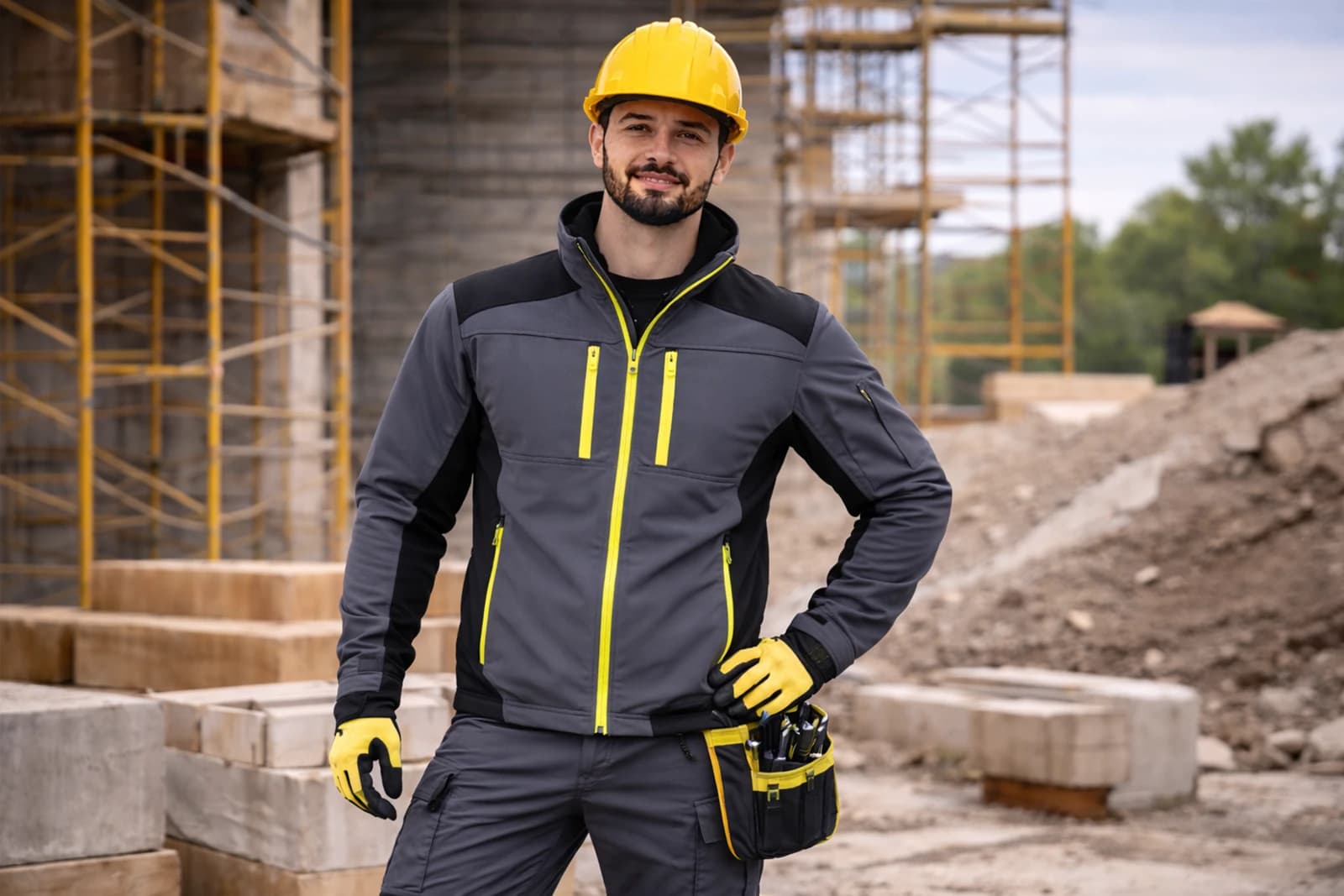
Construction Clothing
Construction Softshell Set
Flexible jacket and trouser set built for crews working across changing weather conditions.
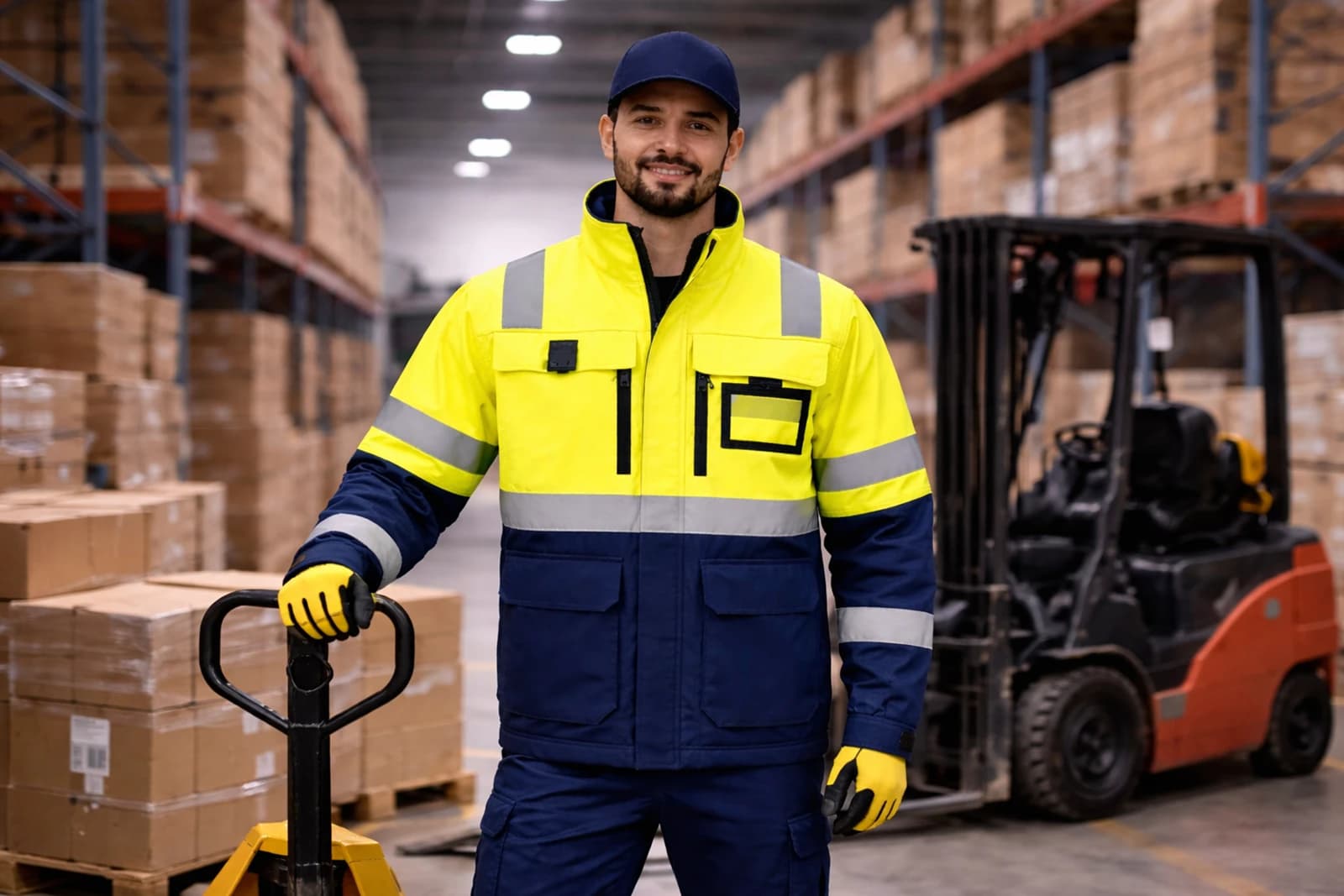
Safety Uniform
Hi-Vis Safety Jacket
Reflective safety jacket for high-visibility site operations and road work crews.