Recycling Facility Workwear Must Address Sharps and Biological Hazards
Recycling facility workers handle mixed waste streams that contain sharp objects (glass, metal, needles) and biological hazards (bacteria, viruses from organic waste). Standard workwear protects against abrasion and weather but does not address sharps resistance or biological barrier properties. The result is predictable: puncture injuries, needlestick incidents, and biological exposure that standard garments were not designed to prevent. This article covers the workwear specification that addresses the specific sharps and biological hazards present in recycling facilities.

Buyer context
What procurement teams run into
Recycling facilities process mixed waste streams—municipal solid waste, commercial waste, industrial waste, and increasingly e-waste and medical waste that has been improperly disposed. Workers perform multiple tasks: sorting materials on conveyor belts, handling waste bags, operating balers and shredders, cleaning collection vehicles, and maintaining processing equipment. Each task creates specific exposure to sharps and biological hazards that standard workwear does not address. **1. The sharps hazard in recycling is pervasive and under-controlled** Recycling facilities handle materials that contain sharp objects: broken glass, metal fragments, sharp plastic edges, needles and syringes (improperly disposed medical waste), and sharp tools or components. Workers who sort materials by hand, handle waste bags, or clear jams in processing equipment face puncture and laceration risk. Standard workwear fabric (polyester-cotton blend) does not resist puncture from sharps—a needle or sharp metal edge can penetrate the fabric and injure the worker. The sharps hazard is not limited to sorting. Workers who handle waste bags face sharps risk when bags contain hidden sharp objects. Workers who clear jams in balers or shredders face sharps risk when sharp objects are trapped in the equipment. Workers who clean collection vehicles face sharps risk from objects that have spilled or leaked. The sharps hazard is present across multiple tasks, but standard workwear does not address it. **2. The biological hazard in recycling is real but rarely specified** Recycling facilities process materials that contain biological contaminants: organic waste (food waste, yard waste), bodily fluids (from improperly disposed medical waste, diapers, animal waste), mold and bacteria (from decomposing organic materials), and viruses (from contaminated materials). Workers who handle these materials face biological exposure through skin contact, inhalation of aerosols, and contact with contaminated surfaces. Standard workwear does not provide a biological barrier. Polyester-cotton blend fabric is porous—biological contaminants can penetrate the fabric and contact the worker's skin. The fabric absorbs moisture (including biological fluids), creating a medium for bacterial growth. The fabric is not designed to be decontaminated—workers wear the same garment for multiple shifts, accumulating biological contamination over time. The biological hazard is not limited to workers who handle organic waste. Workers who sort recyclables (plastic, paper, glass, metal) handle materials that may be contaminated with biological substances (food residue, bodily fluids, mold). Workers who operate equipment in enclosed sorting facilities are exposed to airborne biological contaminants (mold spores, bacteria, endotoxins) generated by the waste stream. The biological hazard is present across the facility, not just in specific areas. **3. Standard workwear specifications do not address sharps or biological hazards** A typical workwear specification for a recycling facility includes: - Garment type: polo shirt, trouser, coverall, jacket - Fabric composition: polyester-cotton blend (65% polyester, 35% cotton) - Fabric weight: 200–240 GSM - Hi-vis requirement: yes, for workers near vehicles and machinery - Durability requirement: abrasion resistance, tear strength - Logo and branding The specification does not include: - Sharps resistance requirement: puncture resistance standard, test method, minimum puncture force - Biological barrier requirement: liquid repellency, bacterial filtration efficiency, viral penetration resistance - Decontamination procedure: how to clean and decontaminate garments, replacement criteria after biological exposure - Glove specification: sharps-resistant gloves for sorting and handling tasks The specification controls the garment's appearance and general durability but does not control whether the garment protects against sharps or biological hazards. The result is a consistent pattern of injury and exposure: workers handle sharps and biological hazards in garments that are not designed to resist them. **4. Sharps resistance requires specific fabric and garment design** Sharps resistance is not a general property—it is specific to the type of sharp object and the force of contact. A fabric that resists a needle may not resist a sharp metal edge. The workwear specification must identify the specific sharps hazards present in the facility and specify fabric that resists those hazards. Fabric options for sharps resistance: - High-performance polyethylene (HPPE) blend fabric: provides cut resistance (rated to EN ISO 13977 or ANSI/ISEA 105 cut levels) and moderate puncture resistance. Suitable for workers who handle sharp metal edges, glass, or plastic. HPPE fabric is lightweight and breathable but may not resist needle puncture. - Kevlar or aramid blend fabric: provides high cut resistance and puncture resistance. Suitable for workers who handle sharp metal objects or glass. Kevlar fabric is durable but heavier and less breathable than HPPE. - Needle-resistant fabric (e.g., tightly woven synthetic fabric with puncture-resistant treatment): provides resistance to needle puncture. Suitable for workers who handle waste bags that may contain needles or syringes. Specify needle puncture resistance test (e.g., ASTM F1342 or EN ISO 13977) with minimum puncture force. Garment design features for sharps resistance: - Reinforced high-risk areas: double-layer fabric or puncture-resistant panels at forearms, chest, and abdomen (areas most likely to contact sharps during sorting and handling tasks). - Sealed seams: prevent sharps from penetrating through stitch holes. Standard sewn seams have needle holes that a sharp object can penetrate. Sealed seams (heat-sealed or ultrasonically welded) eliminate the needle holes. - Smooth-surface fabric: fabric that does not snag on sharp objects, reducing the risk that a sharp object will catch and penetrate the fabric. **5. Biological barrier requires specific fabric and decontamination procedure** Biological barrier is not a general property—it is specific to the biological contaminant and the exposure route. A fabric that repels liquid may not block airborne bacteria. The workwear specification must identify the specific biological hazards present in the facility and specify fabric that provides an appropriate barrier. Fabric options for biological barrier: - Liquid-repellent treated polyester: provides resistance to liquid penetration (water, bodily fluids). Suitable for workers who handle organic waste or materials contaminated with bodily fluids. The liquid-repellent treatment degrades with washing—specify the number of wash cycles the treatment is guaranteed for, and define replacement criteria when the treatment degrades. - Tightly woven synthetic fabric with small pore size: provides resistance to bacterial penetration (bacterial filtration efficiency rated to ASTM F2101 or EN 14683). Suitable for workers in enclosed sorting facilities exposed to airborne bacteria and mold spores. Specify bacterial filtration efficiency (e.g., minimum 80% for moderate-risk areas, minimum 95% for high-risk areas). - Coated or laminated fabric: provides high resistance to liquid and biological penetration. Suitable for workers who handle high-risk biological materials (e.g., medical waste, animal waste). The fabric is heavier and less breathable—specify as a limited-use garment (worn only during high-risk tasks, removed and decontaminated after use). Garment design features for biological barrier: - Liquid-repellent closures: zippers with storm flaps, or snap closures with overlapping flaps, prevent liquid biological contaminants from penetrating through the closure. - Elasticated or sealed cuffs: prevent liquid biological contaminants from running down the arm into the garment. - High collar: protects the neck from liquid splash and airborne contaminants. Decontamination procedure: - Define how garments are cleaned and decontaminated: industrial laundering at specific temperature (e.g., 60°C minimum for bacterial decontamination), specific detergent, specific wash cycle. - Define replacement criteria after biological exposure: when a garment is contaminated with high-risk biological material (e.g., bodily fluids, medical waste), discard the garment—do not attempt to decontaminate and reuse. - Define replacement criteria based on wear: when the liquid-repellent treatment degrades (after a specified number of wash cycles), replace the garment. **6. The specification gap: no sharps or biological requirement creates injury and exposure risk** Most recycling facility workwear specifications do not include: - Sharps resistance requirement: no puncture resistance standard, no test method, no minimum puncture force. - Biological barrier requirement: no liquid repellency standard, no bacterial filtration efficiency, no viral penetration resistance. - Decontamination procedure: no instruction for cleaning and decontaminating garments, no replacement criteria after biological exposure. - Glove specification: no sharps-resistant gloves for sorting and handling tasks. The result is a consistent pattern of injury and exposure: workers handle sharps and biological hazards in garments that are not designed to resist them. Puncture injuries, needlestick incidents, and biological exposure occur predictably—not because the hazards are unexpected, but because the workwear specification does not address them.
Sourcing approach
How a factory partner can respond
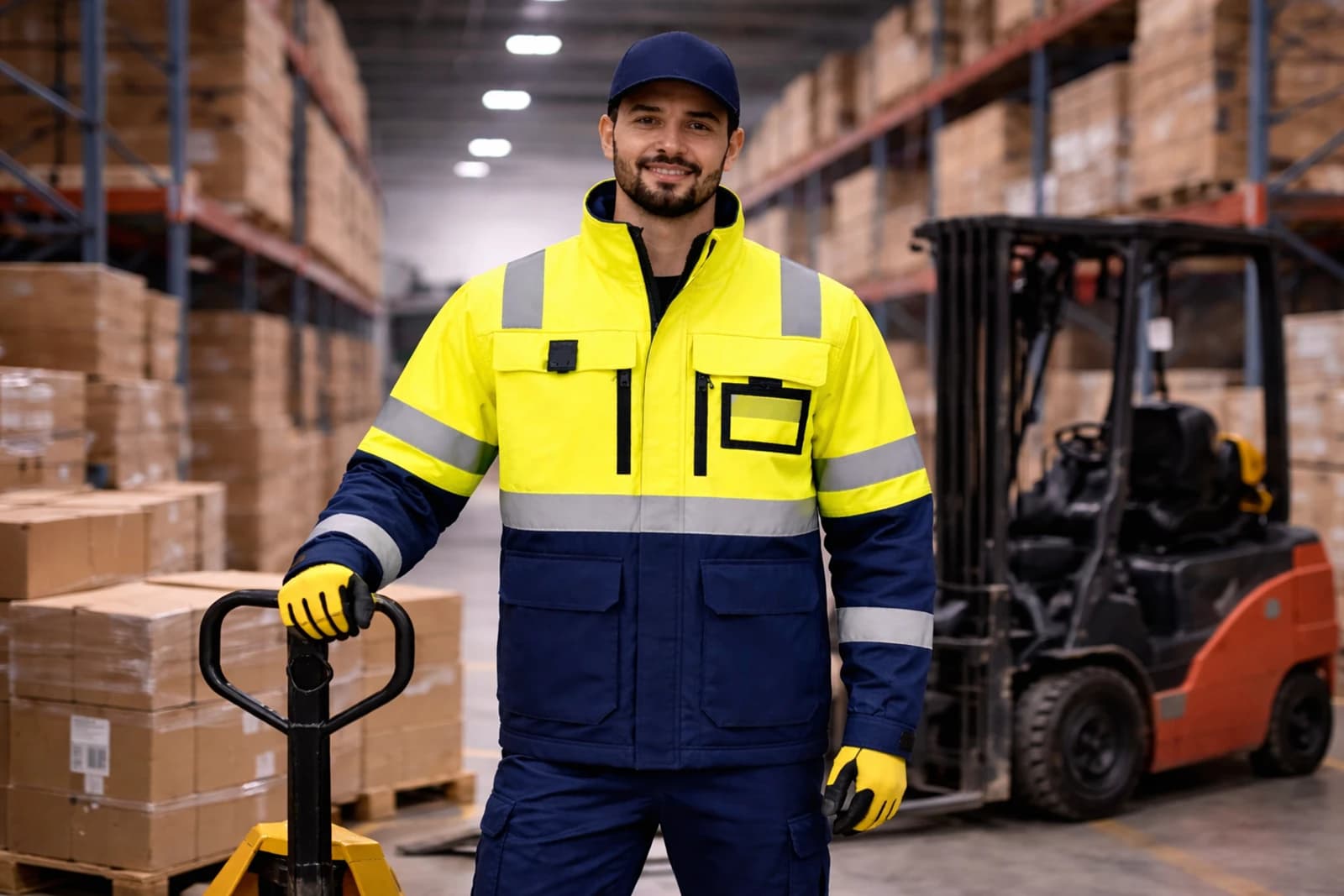
The solution is to add sharps resistance and biological barrier requirements to the workwear specification for recycling facility workers—specifying fabric type, garment design, decontamination procedure, and glove specification that protect against sharps and biological hazards while meeting the visibility, durability, and comfort demands of the work environment. **Step 1: Identify the sharps and biological hazards by role and task** Not all workers in a recycling facility face the same sharps and biological hazards. The first step is to identify which workers handle sharps and biological materials, and which tasks create exposure risk: - Sorting workers: workers who sort materials on conveyor belts by hand. These workers face the highest sharps risk (handling sharp metal, glass, plastic) and high biological risk (handling materials contaminated with organic waste, bodily fluids, mold). Specify sharps-resistant and biologically protective garments for these workers. - Waste bag handling workers: workers who handle and open waste bags. These workers face sharps risk from hidden sharp objects in bags and biological risk from contaminated bag contents. Specify sharps-resistant (needle-resistant) garments for these workers. - Equipment operators: workers who operate balers, shredders, and other processing equipment. These workers face sharps risk when clearing jams or maintaining equipment (sharp objects trapped in equipment) and biological risk from airborne contaminants in enclosed facilities. Specify sharps-resistant garments for these workers. - Vehicle cleaning workers: workers who clean waste collection vehicles. These workers face sharps risk from spilled sharp objects and biological risk from vehicle contamination. Specify sharps-resistant and biologically protective garments for these workers. - Outdoor workers: workers who work outdoors (yard waste processing, vehicle operation). These workers face low sharps and biological risk but require hi-vis compliance for vehicle and machinery areas. Specify standard durable garments with hi-vis compliance for these workers. Document the sharps and biological hazards by role and task: which sharps and biological materials are handled, what tasks create exposure risk, how frequently the tasks are performed, and what concentration or severity of hazard is present. Use this documentation to determine which workers require sharps-resistant and biologically protective garments. **Step 2: Specify sharps-resistant fabric for workers with sharps risk** For workers with sharps risk, specify fabric that resists the specific sharps hazards present in the facility: - Identify the sharps hazards: broken glass, sharp metal edges, needles, sharp plastic, etc. - Consult fabric manufacturer data on sharps resistance: identify fabrics that resist the specific sharps hazards. Fabric manufacturers provide sharps resistance data (e.g., cut resistance rating to EN ISO 13977 or ANSI/ISEA 105, puncture resistance rating to ASTM F1342) for their fabrics—use this data to select fabric that resists the facility's sharps hazards. - Specify the fabric in the procurement specification: include the fabric type, fabric weight, and sharps resistance data (e.g., "fabric must resist needle puncture with minimum puncture force of 50N per ASTM F1342"). Require the garment manufacturer to provide fabric test data confirming sharps resistance before bulk production. - Consider the tradeoff between sharps resistance and comfort: sharps-resistant fabrics are often heavier and less breathable than standard polyester-cotton. For workers who wear sharps-resistant garments all day, specify a fabric that balances sharps resistance with breathability and comfort. For workers who wear sharps-resistant garments only during high-risk tasks, specify a heavier fabric that provides higher sharps resistance but is worn for limited durations. **Step 3: Specify biologically protective fabric for workers with biological risk** For workers with biological risk, specify fabric that provides an appropriate barrier to the specific biological hazards present in the facility: - Identify the biological hazards: organic waste, bodily fluids, mold, bacteria, viruses. - Consult fabric manufacturer data on biological barrier: identify fabrics that provide resistance to the specific biological hazards. Fabric manufacturers provide biological barrier data (e.g., liquid repellency rating to ISO 4920, bacterial filtration efficiency to ASTM F2101 or EN 14683) for their fabrics—use this data to select fabric that provides an appropriate barrier. - Specify the fabric in the procurement specification: include the fabric type, fabric weight, and biological barrier data (e.g., "fabric must provide liquid repellency rating of 80 or higher per ISO 4920" or "fabric must provide bacterial filtration efficiency of at least 80% per ASTM F2101"). Require the garment manufacturer to provide fabric test data confirming biological barrier before bulk production. - Consider the tradeoff between biological barrier and comfort: biologically protective fabrics are often heavier and less breathable than standard polyester-cotton. For workers who wear biologically protective garments all day, specify a fabric that balances biological barrier with breathability and comfort. For workers who wear biologically protective garments only during high-risk tasks, specify a heavier fabric that provides higher biological barrier but is worn for limited durations. **Step 4: Specify garment design features that prevent sharps penetration and biological contamination** For workers with sharps and biological risk, specify garment design features that prevent penetration at seams, closures, and gaps: - Reinforced high-risk areas: specify double-layer fabric or puncture-resistant panels at forearms, chest, and abdomen for sharps-resistant garments. - Sealed seams: specify heat-sealed or ultrasonically welded seams for sharps-resistant and biologically protective garments. Sealed seams eliminate needle holes that sharps or biological contaminants can penetrate. - Liquid-repellent closures: specify zippers with storm flaps, or snap closures with overlapping flaps, for biologically protective garments. The flap prevents liquid biological contaminants from penetrating through the closure. - Elasticated or sealed cuffs: specify elasticated cuffs or sealed cuffs for biologically protective garments. The cuff prevents liquid biological contaminants from running down the arm into the garment. **Step 5: Specify sharps-resistant gloves for sorting and handling tasks** Sharps-resistant garments protect the body, but hands are the most exposed area during sorting and handling tasks. Specify sharps-resistant gloves for workers who handle sharps: - Identify the sharps hazards: broken glass, sharp metal edges, needles, sharp plastic. - Select gloves with appropriate sharps resistance: consult glove manufacturer data on cut resistance (EN ISO 13977 or ANSI/ISEA 105 cut levels) and puncture resistance (ASTM F1342). Select gloves that resist the specific sharps hazards present in the facility. - Specify the gloves in the procurement specification: include the glove type, cut resistance rating, puncture resistance rating, and size range. Require the glove manufacturer to provide test data confirming sharps resistance. - Consider the tradeoff between sharps resistance and dexterity: sharps-resistant gloves are often thicker and less dexterous than standard gloves. For workers who require high dexterity (e.g., sorting small objects), specify a glove that balances sharps resistance with dexterity. For workers who require high sharps resistance (e.g., handling sharp metal), specify a thicker glove that provides higher sharps resistance but reduces dexterity. **Step 6: Define decontamination and replacement procedure after biological exposure** When a garment is contaminated with biological material, the worker must know what to do—and the site must have a procedure for decontamination or replacement: - Immediate action: if a garment is contaminated with high-risk biological material (e.g., bodily fluids, medical waste), the worker must remove the garment immediately and wash the affected skin with soap and water. The contaminated garment must not be continued to be worn—the biological material may continue to penetrate the fabric and contact the skin. - Decontamination: for minor contamination (small splash, low-risk biological material), the garment may be decontaminated by industrial laundering at specific temperature (e.g., 60°C minimum for bacterial decontamination), specific detergent, specific wash cycle. Confirm with the fabric manufacturer that the garment can be laundered without losing sharps resistance or biological barrier properties. - Replacement: after a garment is contaminated with high-risk biological material, discard the garment—do not attempt to decontaminate and reuse. After a garment is contaminated multiple times with low-risk biological material, discard the garment—the biological contamination may have compromised the fabric's biological barrier properties. - Record-keeping: record every biological contamination incident: the biological material involved, the task being performed, the garment type, and the disposition (decontaminated, discarded). Use the data to identify patterns—such as a specific task that consistently creates contamination, indicating that the task procedure or the garment specification may need adjustment. **Step 7: Pilot the sharps-resistant and biologically protective workwear before full implementation** Before committing to a full fleet order, pilot the sharps-resistant and biologically protective garments with one group of workers (e.g., sorting workers) for 8–10 weeks: - Issue the sharps-resistant and biologically protective garments to 10–15 workers who handle sharps and biological materials. - Collect data on: worker comfort (survey), garment condition after 4, 6, 8, and 10 weeks (inspect for fabric degradation, seam failure, sharps penetration), sharps and biological contamination incidents (record every incident), and worker feedback on the garment's sharps resistance, biological barrier, and comfort. - Compare results to the previous standard garment: did sharps injuries decrease? Did biological contamination incidents decrease? Did workers report better confidence in the garment's protection? Did the garment's comfort meet the workers' needs for all-day wear? Use pilot data to refine the fabric selection, garment design, and decontamination procedure before full implementation across all workers with sharps and biological risk. **Recommended garments for recycling facility workwear:** - **Industrial coverall-pro** — specify with sharps-resistant and biologically protective fabric for workers who handle sharps and biological materials (sorting workers, waste bag handling workers, vehicle cleaning workers). The coverall provides full-body protection against sharps and biological contamination. Specify with sealed seams to prevent sharps and biological penetration through stitch holes, reinforced high-risk areas (forearms, chest, abdomen) for sharps resistance, and liquid-repellent closures and elasticated cuffs for biological protection. Specify hi-vis version for workers who also require visibility compliance for vehicle and machinery areas. - **Hi-vis safety jacket** — specify for outdoor workers and supervisors who require visibility compliance but face low sharps and biological risk. The hi-vis jacket provides visibility compliance (EN ISO 20471 or ANSI/ISEA 107) for workers who work near vehicles, machinery, or in low-light conditions. The jacket is worn over the base garment (polo or coverall) and can be removed when the worker moves to a non-hi-vis area.
Recommended Products
Products that fit this use case

Industrial Workwear
Industrial Coverall Pro
Hard-wearing one-piece coverall for plant, maintenance, and heavy-duty operations.
Safety Uniform
Hi-Vis Safety Jacket
Reflective safety jacket for high-visibility site operations and road work crews.