Recycling Facility Workwear: Why Puncture-Resistant Fabric Fails the Wash Test
Recycling facility workwear must resist puncture from sharps embedded in waste — needles, broken glass, metal fragments — while surviving daily high-temperature washing for biological decontamination. Standard puncture-resistant fabrics use heavyweight, tightly woven constructions that trap biological contaminants in their dense fiber structure and cannot be effectively cleaned at 60°C+. Standard washable fabrics use lightweight cotton blends that offer no puncture resistance. The result: buyers choose between puncture protection that fails hygiene requirements and washable fabric that fails within weeks of sharps exposure. This article covers the mechanism that makes puncture resistance and washability conflict, the fabric construction criteria that can deliver both, and the sampling protocol that validates puncture and wash performance before bulk commitment.
Buyer context
What procurement teams run into
Municipal recycling facilities and materials recovery facilities (MRFs) process household and commercial waste streams to recover paper, cardboard, plastics, metals, and glass. Sort line workers stand alongside conveyor belts and manually separate recyclables from contaminants throughout every shift. The waste stream contains sharps — broken glass, metal fragments, needles, sharp plastic edges, and occasional hazardous items — that puncture standard workwear fabric on contact. At the same time, the waste stream carries biological contaminants — bacteria, mold, viruses, and organic residues — that deposit on garment surfaces throughout every shift and require daily high-temperature washing to decontaminate. The workwear specification must deliver two protections simultaneously: - **Puncture resistance:** fabric must resist penetration by sharps encountered during manual sorting - **Washability:** fabric must survive daily washing at 60°C or higher to achieve biological decontamination These two requirements conflict in standard fabric constructions. The mechanism: **1. Puncture-resistant fabric fails the wash test** Puncture-resistant fabrics achieve their performance through heavyweight construction (high fabric weight per unit area) and tight weave density (high thread count). The heavy, dense construction increases the force required for a sharp object to penetrate the fabric — the sharp object must break or displace more fibers to create a hole. But the same heavy, dense construction that resists puncture also traps biological contaminants: - **Dense fiber structure retains biological particles:** Bacteria, mold spores, and organic residues become mechanically trapped within the fabric interstices — the contaminants are lodged between fibers and cannot be removed by standard washing. The denser the weave, the more effectively contaminants are trapped. - **Heavyweight fabric has lower moisture permeability:** Washing water and detergent cannot penetrate the fabric structure effectively, reducing cleaning efficiency. The outer surface may appear clean, but biological contaminants remain trapped within the fabric interior. - **Dense fabric requires more aggressive washing:** Extended wash cycles and higher mechanical action are needed to achieve cleaning — but extended washing at high temperature degrades the fabric's fiber integrity, reducing puncture resistance over repeated wash cycles. The fabric that resists puncture when new loses puncture protection after 15–25 wash cycles because the washing process breaks down the dense fiber structure. The result: a fabric that achieves high puncture resistance when new fails biological decontamination requirements after washing — or loses puncture resistance after repeated wash cycles because the washing process degrades the dense fiber structure. **2. Washable fabric fails the puncture test** Washable fabrics achieve their performance through lightweight construction (low fabric weight per unit area) and open weave structure (lower thread count). The light, open construction allows washing water and detergent to penetrate the fabric freely, removing biological contaminants effectively. The fabric also dries quickly and maintains its integrity through repeated high-temperature wash cycles. But the same light, open construction that enables effective washing provides minimal puncture resistance: - **Lightweight fabric has fewer fibers per unit area:** A sharp object encounters less fiber resistance and penetrates easily. The force required to puncture the fabric is low — even dull sharps penetrate without significant force. - **Open weave structure has larger gaps between yarns:** A sharp object pushes yarns aside and penetrates without breaking fibers. The sharp object passes through the gaps in the weave rather than having to break yarns. - **Low fabric weight means less energy absorption:** The fabric cannot absorb the energy of a puncture event — the sharp object displaces fabric with minimal force and creates a hole. The result: a fabric that washes effectively and survives repeated high-temperature cycles offers no meaningful puncture protection — sort line workers experience sharps punctures within the first days of wear. **3. The procurement mistake: choosing one requirement and ignoring the other** The most common procurement error is to specify workwear for one requirement and accept the tradeoff on the other: - **Specify puncture-resistant fabric and accept poor washability:** Biological contamination accumulates on garments, creating hygiene risk for workers and contaminating the facility environment. Workers report skin irritation, respiratory complaints from mold spores trapped in fabric, and general discomfort from garments that cannot be effectively cleaned. The facility faces potential regulatory non-compliance with occupational health requirements for biological exposure control. - **Specify washable fabric and accept poor puncture resistance:** Workers experience sharps punctures, injury rates increase, and workers reject the garments. Workers layer personal clothing under workwear to compensate for lack of puncture protection — creating heat stress and reducing mobility. The facility faces injury claims and workers' compensation costs. The buyer who chooses puncture resistance without washability faces biological contamination risk, worker hygiene complaints, and potential regulatory non-compliance. The buyer who chooses washability without puncture resistance faces sharps injury risk, worker complaints, and rapid garment replacement costs (garments punctured beyond repair within weeks of issue). **4. The secondary driver: the assumption that one fabric property covers both** Some buyers assume that a fabric with high puncture resistance will also survive washing — or that a fabric that survives washing will also resist puncture. The assumption: "If the fabric is strong enough to resist puncture, it's strong enough to survive washing" or "If the fabric survives repeated washing, it must be strong enough to resist puncture." But puncture resistance and washability are governed by different fabric properties: - **Puncture resistance** depends on fabric weight, weave density, and fiber strength — heavy, dense, strong fibers - **Washability** depends on fabric permeability, moisture wicking, and dimensional stability — light, open, stable fibers A fabric can be heavy and dense (puncture-resistant) but dimensionally unstable in hot water (fails washing). A fabric can be light and open (washable) and dimensionally stable in hot water (survives washing) — but offers no puncture resistance. The two properties are not correlated. The buyer must specify and test both independently. **5. The cost of getting it wrong** The buyer who specifies only puncture resistance without washability faces: - Biological contamination accumulation on garments — workers exposed to bacteria, mold, and organic residues throughout every shift - Worker hygiene complaints and skin irritation — workers reject garments and revert to inadequate personal clothing - Potential regulatory non-compliance with occupational health requirements for biological exposure control - Garment replacement due to washing degradation — garments lose puncture resistance after 15–25 wash cycles and must be replaced prematurely The buyer who specifies only washability without puncture resistance faces: - Sharps puncture injuries — workers experience needle sticks, glass cuts, and metal fragment punctures - Worker complaints and garment rejection — workers layer personal clothing under workwear, creating heat stress and reducing mobility - Rapid garment replacement — garments punctured beyond repair within 2–4 weeks of issue, requiring frequent emergency replacement orders - Injury claims and workers' compensation costs — facility faces liability for sharps injuries that workwear should have prevented
Sourcing approach
How a factory partner can respond
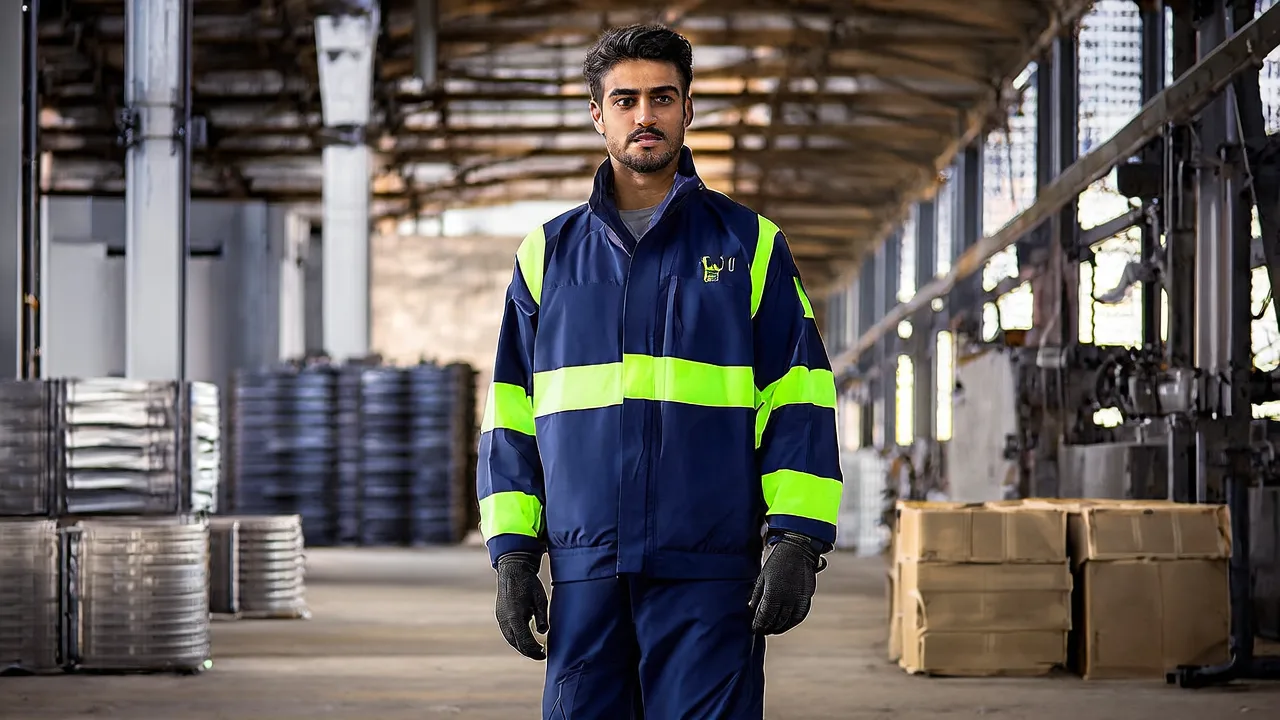
The solution for recycling facility workwear is to specify dual-performance requirements — puncture resistance and washability — in the procurement specification, require supplier testing data for both properties on the same fabric, and validate both through sampling before bulk commitment. **Step 1: Define dual-performance requirements in the specification** Include both requirements in the procurement specification: - **Puncture resistance:** Fabric must resist puncture from sharps encountered during manual sorting — specify minimum puncture force threshold tested per a recognized puncture resistance standard (such as ISO 13998 or EN 388 puncture test). - **Washability:** Fabric must survive daily washing at 60°C or higher for biological decontamination — specify minimum wash cycle survival (minimum 25 wash cycles to represent approximately 6 months of daily washing) tested per a recognized wash durability standard. - **Puncture resistance after washing:** Fabric must maintain puncture resistance after repeated washing — specify that puncture force threshold must be maintained after 25 wash cycles at 60°C+. The specification should require that both properties are achieved on the same fabric — not that one fabric provides puncture resistance and a separate fabric provides washability. The garment must deliver both protections simultaneously. **Step 2: Specify fabric construction criteria that enable both properties** Work with the supplier to identify fabric constructions that can deliver both puncture resistance and washability. The fabric construction criteria: - **Moderate fabric weight:** Heavy enough to resist puncture but light enough to allow washing water penetration — a balanced weight that achieves both properties. Avoid extremely heavy fabrics (which trap contaminants) and extremely light fabrics (which offer no puncture resistance). - **Balanced weave density:** Tight enough to resist sharp object penetration but open enough to allow effective cleaning — a balanced weave that achieves both properties. Avoid extremely tight weaves (which trap biological particles) and extremely open weaves (which allow sharps to pass through gaps). - **Inherent fiber properties:** Specify fibers that resist puncture through inherent strength (not through fabric weight alone) and survive high-temperature washing without degradation. Synthetic fibers with high tensile strength and thermal stability (polyester, nylon, or engineered fibers) maintain puncture resistance through repeated washing — unlike cotton fibers that degrade in hot water. - **Fabric treatment or finish:** Specify chemical treatment that enhances puncture resistance without reducing washability — or a fabric finish that maintains biological decontamination effectiveness without trapping contaminants. Anti-microbial finishes can supplement wash-based biological decontamination but should not be the primary decontamination mechanism. The supplier should provide fabric construction data — weight, weave density, fiber composition, and any treatments — and confirm that the construction achieves both puncture resistance and washability. **Step 3: Require supplier testing for both properties** Require the supplier to provide testing data for both puncture resistance and washability on the same fabric sample: - **Puncture resistance test:** Test the fabric per a recognized puncture resistance standard (ISO 13998 or EN 388 puncture test) — report the puncture force required to penetrate the fabric. - **Wash durability test:** Subject the fabric to repeated wash cycles at 60°C or higher (minimum 25 wash cycles to represent approximately 6 months of daily washing) — report fabric dimensional change, color fastness, and fabric integrity after washing. - **Puncture resistance after washing:** Test the fabric's puncture resistance after repeated wash cycles — confirm that the fabric maintains puncture resistance after 25+ wash cycles. This is the critical test — confirming that the fabric does not lose puncture protection as a result of repeated high-temperature washing. If the fabric achieves high puncture resistance when new but loses puncture resistance after 10–15 wash cycles, the fabric does not meet the dual requirement — the puncture resistance depends on fabric weight or density that degrades in washing, rather than on inherent fiber strength that survives washing. **Step 4: Evaluate samples against both criteria** When the supplier submits samples, evaluate both properties: - **Visual and physical inspection:** Confirm fabric weight, weave density, and construction match the specification. - **Puncture resistance evaluation:** Perform or request puncture testing — confirm that the fabric resists puncture from representative sharps (broken glass, metal fragments, sharp plastic). - **Wash test:** Subject samples to repeated wash cycles at 60°C or higher (minimum 5 wash cycles for sample evaluation) — confirm that the fabric maintains dimensional stability, color fastness, and fabric integrity. - **Puncture resistance after wash:** Perform puncture testing on washed samples — confirm that puncture resistance is maintained after washing. If the sample passes puncture testing but fails wash testing (fabric degrades, shrinks, or loses integrity), request a second sample with different fabric construction that survives washing — lighter weight, more open weave, or synthetic fiber that resists hot-water degradation. If the sample passes wash testing but fails puncture testing (fabric is too light or open), request a second sample with enhanced puncture resistance — heavier weight, tighter weave, or puncture-resistant fiber. If the sample passes both tests when new but loses puncture resistance after washing, request a second sample with fabric that maintains puncture resistance through repeated washing — inherent fiber strength rather than fabric weight alone. **Step 5: Pilot garments in the sorting environment** Before committing to full fleet orders, pilot dual-performance garments with 10–15 sort line workers for 8–12 weeks: - **Puncture performance monitoring:** Record frequency of sharps punctures through garment fabric during sorting tasks — compare with baseline puncture rate using current garments. If puncture frequency increases, investigate whether fabric puncture resistance is insufficient or whether construction features (reinforced panels, double-layer areas) are needed. - **Wash performance monitoring:** Inspect garments after repeated facility washing cycles — record fabric dimensional change, color fastness, fabric integrity, and biological decontamination effectiveness (swab testing for biological contamination after washing). If fabric degrades or biological contamination persists, investigate whether fabric washability is insufficient or whether washing protocol needs adjustment. - **Worker feedback:** Collect worker feedback on garment comfort, mobility, and ease of cleaning — confirm that the dual-performance garment does not sacrifice comfort for protection. If workers report excessive heat or restricted mobility, investigate whether fabric weight is too high or whether ventilation features can be added without compromising puncture resistance. If pilot garments resist puncture and survive washing without degradation, approve for fleet issue. If pilot garments experience punctures or washing degradation, investigate whether fabric construction, fiber selection, or fabric treatment needs adjustment — and request a second sample with enhanced specifications. **Step 6: Implement condition-based replacement** Recycling facility workwear replacement should be driven by garment condition — not calendar schedule: - **Replace garments when puncture damage compromises protection:** Multiple punctures in high-exposure areas (forearms, chest, abdomen), punctures that create holes larger than a defined threshold, or punctures that expose skin to sharps risk. - **Replace garments when washing degradation compromises protection:** Fabric thinning, seam failure, color fading that reduces visibility, or biological contamination that persists after washing. - **Track replacement reasons by garment type and worker role:** Identify whether puncture damage or washing degradation is the primary replacement driver. If puncture damage dominates, enhance the specification for puncture resistance. If washing degradation dominates, enhance the specification for washability. - **Adjust the specification based on replacement data:** Use replacement tracking data to refine the dual-performance specification — balancing puncture resistance and washability based on actual garment performance in the sorting environment. **Recommended garments for recycling facility workwear:** - **Industrial coverall-pro** — specify the coverall for sort line workers who face daily sharps exposure and biological contamination throughout every shift. The coverall provides full-body protection against puncture and must survive daily high-temperature washing for biological decontamination. Specify the coverall with dual-performance fabric: puncture-resistant construction that maintains protection after repeated 60°C+ washing cycles. Request the supplier to provide puncture resistance testing data after 25+ wash cycles before approving bulk production. - **Hi-vis safety jacket** — specify the hi-vis jacket for yard workers and outdoor facility operators who work near vehicle traffic (collection trucks, bale handlers, loading equipment) in low-light conditions. The hi-vis jacket provides visibility compliance for outdoor workers and must resist puncture from sharps encountered during bale handling and yard operations. Specify the hi-vis jacket with puncture-resistant outer shell and reflective tape that survives repeated washing without delamination.
Recommended Products
Products that fit this use case

Industrial Workwear
Industrial Coverall Pro
Hard-wearing one-piece coverall for plant, maintenance, and heavy-duty operations.

Safety Uniform
Hi-Vis Safety Jacket
Reflective safety jacket for high-visibility site operations and road work crews.