Shipbuilding & Shipyard Workwear: Sourcing Hi-Vis Safety Jackets & Industrial Coveralls for Middle East Marine Fabrication and Vessel Maintenance Operations
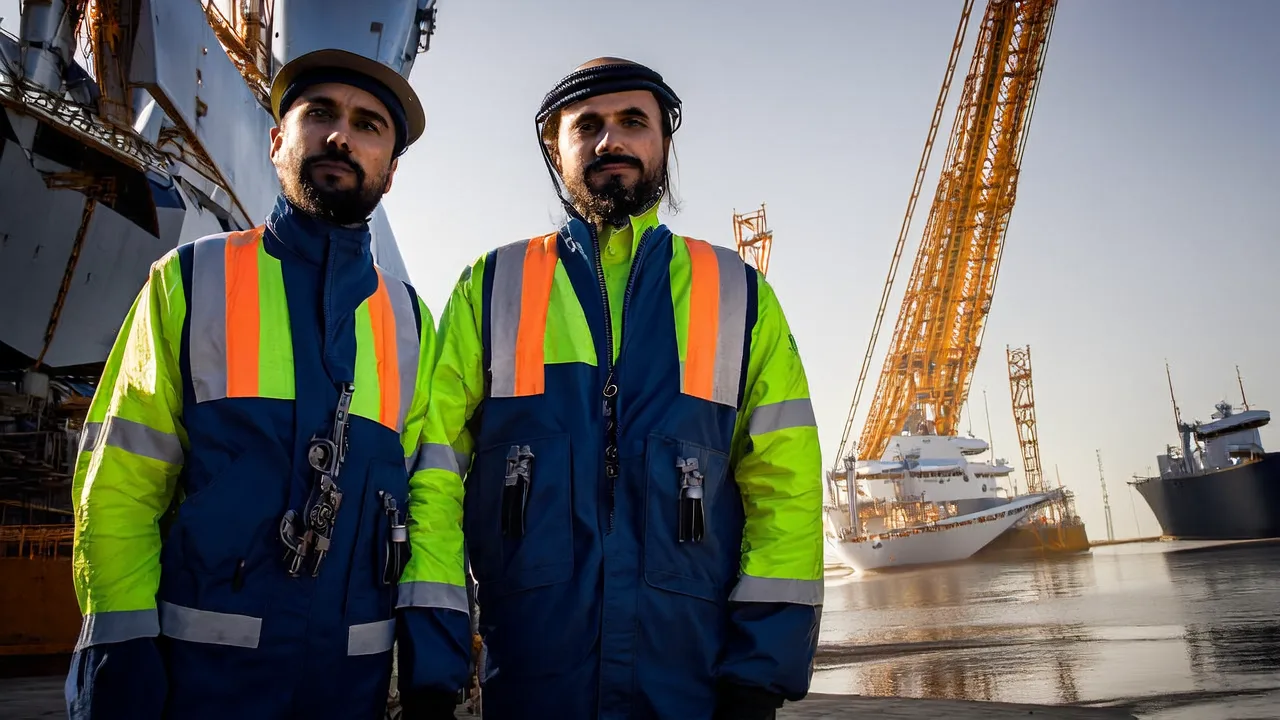
The Middle East is home to some of the world's most strategically important shipyards — Dubai Drydocks World is the largest drydock facility in the Middle East and one of the top five globally, Qatar's Nakilat shipyards support the world's largest LNG carrier fleet, Bahrain's ASRY serves regional naval and commercial vessels, and Saudi Arabia's King Salman Naval Yard is one of the largest new-build naval shipyard programmes on earth. Behind every hull plate, every engine overhaul, every ballast tank coating, and every superstructure modification is a workforce of shipfitters, welders, blasters, painters, pipefitters, scaffolders, riggers, and marine engineers who work in one of the most confined-space-intensive and visibility-critical industrial environments on the planet. This sourcing guide for Middle East B2B buyers covers EN ISO 20471 hi-vis safety jackets and industrial coveralls for shipbuilding and shipyard operations, fabric specifications for marine fabrication conditions, role-based garment allocation, compliance considerations, and volume procurement from a Chinese workwear manufacturer.
Buyer context
What procurement teams run into
The Middle East's shipbuilding and ship repair sector is a cornerstone of regional maritime strategy. The UAE's maritime sector contributes over USD 17 billion annually to the national economy. Dubai Drydocks World handles over 3,000 vessel repairs per year across its floating docks, graving docks, and fabrication halls. Qatar's Nakilat shipyards built and maintain the entire Hamad-class LNG carrier fleet — one of the most valuable commercial fleets in the world. Saudi Arabia's King Salman Naval Yard, a USD 6 billion facility, is being built to construct and maintain the Royal Saudi Navy's next-generation frigate and corvette programme. Bahrain's Arab Shipbuilding and Repair Yard (ASRY) has served commercial and naval vessels for over 40 years. Oman, Kuwait, and Iraq all maintain significant shipyard and marine fabrication capacity. Every shipyard — whether building new vessels or repairing existing ones — presents a unique combination of industrial hazards that demand specific workwear solutions. For B2B buyers procuring workwear for shipyard workforces, the challenge is specific because shipyard work combines heavy steel fabrication, confined-space entry, overhead crane operations, and marine coating application in environments where visibility is literally a matter of life and death. **1. The shipyard environment combines confined spaces, heavy lifting, and extreme visibility requirements** A shipyard presents a combination of hazards that few other industrial environments match: - **Confined-space density.** Ship hulls, double-bottom tanks, void spaces, engine rooms, and ballast tanks are among the most confined industrial workspaces on earth. Workers enter spaces with entry openings as small as 600mm × 600mm, work in areas with headroom below 1.5 metres, and operate in environments with limited natural ventilation and zero natural light. Workers in standard clothing are extremely difficult to see in these dark, confined spaces — especially when covered in welding smoke, abrasive dust, or coating overspray. - **Overhead crane and heavy-lift operations.** Shipyard gantry cranes lift hull blocks weighing 200–800 tonnes. Mobile cranes move steel plates, engine blocks, and prefabricated modules across the yard. Workers on the ground in assembly halls and building berths must be visible to crane operators at all times. A worker in standard clothing against steel-grey hull plates and concrete yard surfaces is nearly invisible to crane operators working from 15–30 metres above. - **Vehicle and transporter traffic.** Shipyard building berths, prefabrication areas, and plate stores see constant movement of heavy transporters, flatbed trucks, forklifts, and multi-axle module carriers. Workers on foot share these areas with vehicles that have large blind spots. High-visibility clothing is the primary defence against vehicle-pedestrian collisions. - **Welding, cutting, and thermal hazards.** Shipfitters and welders perform manual metal arc (MMA), gas metal arc (GMAW/MIG), flux-cored (FCAW), and submerged arc welding on mild steel, high-tensile steel, and stainless steel hull structures. Workers face welding spatter at 1,500°C+, ultraviolet radiation from arc welding, molten metal splash, and hot slag. Coveralls must resist welding spatter penetration without igniting or melting. - **Abrasive blasting and coating application.** Blasters prepare steel surfaces to Sa 2.5 / NACE No. 2 standard using copper slag, garnet, or steel grit at 7–10 bar pressure. Painters apply epoxy primers, polyurethane topcoats, and anti-fouling coatings using airless spray at 200–300 bar. Workers face abrasive particle impact, isocyanate exposure from polyurethane coatings, and solvent vapour from epoxy systems. Coveralls must resist abrasive blast media penetration and chemical coating contact. - **Marine environment exposure.** Shipyard workers on building berths, quaysides, and floating docks face salt-laden air, sea spray, and high humidity. Steel surfaces corrode rapidly — workers handle rusted steel, sharp corroded edges, and marine growth. Garments must resist salt corrosion degradation and maintain performance in 80–95% humidity conditions typical of Gulf coastal shipyards. - **Night shift and low-light operations.** Major shipyards operate 24/7 during vessel repair campaigns and new-build programmes. Night shift workers face the same crane, vehicle, and confined-space hazards as day shift workers but with dramatically reduced visibility. Hi-vis clothing is the primary safety measure for night operations. **2. Hi-vis safety jackets for shipyard crane zones, building berths, transporter areas, and night shift workers** For every worker who spends time in crane-operated zones, building berths, prefabrication areas, or on night shift, the hi-vis safety jacket is a life-saving garment. Shipyards have dense heavy-lift operations — gantry cranes, mobile cranes, and heavy transporters operate in close proximity to workers on foot. A worker in standard clothing is extremely difficult to see against grey hull steel, concrete yard surfaces, and marine environments. Key specifications when sourcing hi-vis jackets for shipyard operations from a Chinese manufacturer: **Fabric weight and composition.** Specify lightweight polyester 210–240gsm with mesh lining for Gulf coastal shipyard conditions. Shipyards in Dubai, Doha, Bahrain, and Jubail face 45–55°C ambient temperatures combined with 80–95% humidity from coastal marine environments. Effective temperature in enclosed ship halls can exceed 60°C. Heavy hi-vis jackets are unbearable in these conditions — workers will remove them, defeating the safety purpose. A mesh-lined jacket allows air flow while keeping retroreflective tape visible. **EN ISO 20471 Class 3.** Class 3 offers the highest retroreflective coverage and is the right call for all workers who spend significant time in crane zones, building berths, and transporter areas. Confirm the jacket meets EN ISO 20471 minimum retroreflective intensity (typically 330 cd/lx/m² for Class 3). **Fluorescent background and retroreflective tape.** Specify fluorescent yellow-green or orange fabric with retroreflective tape positioned to EN ISO 20471 geometry. For shipyard environments, specify tape with excellent adhesion that resists peeling from welding spatter, abrasive blast media, coating overspray, salt spray, and frequent washing. Shipyard hi-vis jackets face more aggressive contamination than most industrial environments — tape adhesion is critical. **Welding spatter resistance.** Shipyard hi-vis jackets face constant exposure to welding spatter from adjacent shipfitters and welders. Specify fabric that resists welding spatter penetration without igniting or melting. Consider inherent flame-retardant polyester (not just treated) for workers who spend significant time near welding operations. Confirm the fluorescent background fabric and retroreflective tape maintain performance after contact with welding spatter. **Chemical and coating resistance.** Shipyard hi-vis jackets face contact with epoxy primers, polyurethane topcoats, anti-fouling paints, solvent thinners, and hydraulic fluids from crane and transporter operations. Specify fabric that resists hydrocarbon and solvent degradation. Confirm retroreflective tape maintains performance after coating contact. **Practical details for shipyard work.** Two-way front zip (workers climb through hatch openings, into double-bottom tanks, and up vertical ladders constantly). Zipped side pockets that close securely — dropped items in confined ship spaces become hazards for workers below. Adjustable cuffs that seal tight against abrasive blast media and coating overspray. DWR finish with 5,000mm+ hydrostatic head for sea spray and coating splash resistance. **Durability.** Shipyard hi-vis jackets face constant abrasion from steel plate edges, scaffolding tubes, rope and chain contact, and confined-space crawling. Specify reinforced shoulders and elbows, and confirm the retroreflective tape maintains performance after 50+ industrial wash cycles in salt-contaminated conditions. **3. Industrial coveralls for shipfitters, welders, blasters, painters, pipefitters, and marine engineers** Workers performing the core fabrication and maintenance tasks in shipyards — cutting steel plates, fitting hull sections, welding joints, blasting surfaces, applying coatings, fitting pipework, and installing marine engines — need full-body protection against the physical and thermal demands of marine fabrication. Key specifications when sourcing coveralls for shipyard operations from a Chinese manufacturer: **Fabric weight and composition.** Specify 260–280gsm poly-cotton twill (65% polyester / 35% cotton) or inherent flame-retardant fabric for welding-intensive roles. The polyester content provides abrasion resistance against sharp steel edges, wire brush contact, and scaffolding tubes. The cotton content provides breathability in hot, humid ship hall conditions. For welders and shipfitters performing heavy welding, specify inherent FR fabric (modacrylic/cotton blend, 240–260gsm) that self-extinguishes on contact with welding spatter and resists molten metal penetration. **Welding spatter and thermal resistance.** Shipfitters and welders face welding spatter at 1,500°C+ constantly. Specify fabric that passes EN ISO 11611 Class 1 or Class 2 (protective clothing for welding and allied processes). The coverall must self-extinguish within 2 seconds after removal from flame source and resist molten metal splash penetration. For heavy welding roles, specify additional leather or FR-treated aprons and sleeve protectors worn over the coverall. **Reinforcement at high-wear zones.** Double-layer knees with internal knee-pad pockets (shipfitters and welders kneel on steel plates, concrete, and tank floors constantly). Reinforced elbows for overhead welding and pipefitting. Cordura patches at cuffs — shipyard workers drag cuffs across sharp steel edges, concrete floors, and scaffold tubes all day. Reinforced seat for workers who sit on steel edges and tank floors during long fitting and welding operations. **Pocket configuration for shipyard tools.** Chest pockets sized for welding electrodes, filler wire, and measuring tapes. Thigh cargo pockets for grinders, needle guns, chipping hammers, and wire brushes. Dedicated pen pockets for weld maps and inspection hold points. Internal chest pocket for phone and gas detector. All pockets must have secure closures — tools dropped in confined ship spaces become hazards for workers below and foreign object debris in completed vessels. **Fit for confined-space work.** Action back on the jacket for freedom of movement when fitting hull sections, welding overhead joints, and climbing through hatch openings. Articulated knees for kneeling work on tank floors. Gusseted crotch for climbing vertical ladders inside ship holds and double-bottom tanks. The coverall must allow full range of motion without snagging on hatch edges, pipe supports, and structural members in confined spaces. **Colour.** Dark colourways (navy, charcoal, dark blue) for welding and fabrication areas where welding arc UV and spatter marks are constant. Lighter colourways (khaki, sand) for blasting and painting areas where coating colour contamination must be visible for quality control. Confirm ISO 105-B02 xenon-arc fade testing for outdoor building berth work. **Industrial wash durability.** Shipyard coveralls accumulate welding spatter, abrasive blast dust, coating overspray, hydraulic oil, salt contamination, and rust particles daily. Specify ISO 15797 compliance with ≤ 3% dimensional change after 50+ wash cycles. Garments must maintain reinforcement integrity, pocket closure function, and FR performance (for welding coveralls) after repeated industrial laundering in salt-contaminated conditions. **4. The hi-vis-and-coverall system for complete shipyard uniform** The smartest procurement approach treats hi-vis jackets and coveralls as a unified uniform system across the shipyard's operations: **Shipfitters and welders (fabrication and assembly):** Industrial coveralls in inherent FR fabric as primary garment for steel cutting, fitting, and welding. Hi-vis jacket over the coverall at all times when working in crane zones, building berths, and outdoor assembly areas. Coveralls provide welding spatter and thermal protection; hi-vis jacket provides life-saving visibility to crane operators and vehicle drivers. **Abrasives blasters and painters (surface preparation and coating):** Industrial coveralls in tightly woven poly-cotton as primary garment for blasting and painting operations. Coveralls resist abrasive blast media penetration and coating overspray contact. Hi-vis jacket over the coverall when working in outdoor blasting areas near vehicle routes or when moving between blast bays and paint shops through yard traffic zones. **Pipefitters and marine engineers (mechanical installation):** Industrial coveralls in poly-cotton twill as primary garment for pipework fabrication, engine installation, and mechanical systems fitting. Hi-vis jacket over the coverall at all times in crane zones, engine rooms, and pipe shops near overhead crane operations. **Scaffolders and riggers (access and lifting):** Industrial coveralls in poly-cotton twill as primary garment for scaffolding erection and rigging operations. Hi-vis jacket mandatory at all times — scaffolders and riggers work at height and near crane operations where visibility is critical. Additional reflective accessories (armbands, helmet tape) for maximum visibility during lifting operations. **Quality inspectors and surveyors:** Industrial coveralls for confined-space inspections (tank inspections, weld inspections, coating thickness measurements). Hi-vis jacket for yard area transit and building berth walkdowns. Professional appearance for client and classification society inspections. **Night shift workers across all trades:** Hi-vis jacket mandatory over coveralls for all night shift operations. Night shift shipyard work is among the highest-risk industrial operations — reduced visibility combined with heavy-lift operations, confined-space work, and welding creates extreme hazard. Hi-vis jacket is the primary safety measure. This system means one colour palette for coveralls, one hi-vis standard, one manufacturer, and one procurement process covering every trade across the shipyard's fabrication, assembly, and repair operations. **5. Compliance and testing for shipyard workwear** Relevant standards for Middle East shipyard operations: - **EN ISO 20471** — high-visibility clothing. Class 3 for all workers in crane zones, building berths, and transporter areas. Insist on third-party test reports from accredited labs (SGS, TÜV, Intertek, Bureau Veritas) covering retroreflective performance after washing and fabric colour fastness. - **EN ISO 13688** — general requirements for protective clothing (ergonomics, sizing, ageing, marking). Applies to both hi-vis jackets and coveralls. - **EN ISO 11611** — protective clothing for welding and allied processes. Class 1 for light welding (TIG, light MIG); Class 2 for heavy welding (MMA, FCAW, submerged arc). Applies to coveralls for shipfitters and welders. - **EN ISO 11612** — protective clothing against heat and flame. Applies to coveralls for workers near furnaces, heat treatment areas, and heavy thermal cutting operations. - **ISO 105-B02** — colour fastness to light (xenon arc). Critical for Gulf coastal shipyards where garments face 8–10 hours of direct UV daily on outdoor building berths. - **ISO 15797** — industrial laundering durability. Shipyard workwear is washed at 60–75°C in industrial machines. Specify dimensional change ≤ 3% after 50+ wash cycles. - **OEKO-TEX Standard 100** — restricted substances. Workers in extreme heat and humidity sweat heavily; skin contact with harmful chemicals from fabric treatments is a real concern. - **Classification society requirements.** Major shipyards working under Lloyd's Register, DNV, ABS, Bureau Veritas, and ClassNK classification may have specific PPE requirements for workers performing class-inspected work (welding, coating, confined-space entry). Confirm the manufacturer's garments meet classification society PPE specifications. - **GCC labour ministry uniform regulations** — Saudi Arabia, UAE, Qatar, Kuwait, Oman, and Bahrain have labour ministry requirements for worker uniforms including minimum fabric weight, breathability standards, and employer obligations for PPE provision. Confirm the manufacturer's garments meet GCC-specific requirements. **6. Procurement strategy for shipyard buyers** Shipyard operations have distinctive procurement patterns: **Volume and frequency.** A mid-size Gulf shipyard employs 500–5,000 workers across fabrication, assembly, blasting, painting, pipefitting, and mechanical installation. Order coveralls in bulk (1,000–5,000 units) for initial fleet outfitting, then reorder quarterly for replacements (shipyard coveralls face accelerated wear from welding spatter, abrasive blast media, and confined-space abrasion). Order hi-vis jackets in similar volumes with semi-annual reorders. **Consolidate orders.** Order hi-vis jackets and coveralls in one shipment to reduce freight costs and simplify customs clearance at Jebel Ali, Dammam, Hamad Port, or Mina Salman. A Chinese manufacturer with in-house capability for both garment types can produce and ship them together. **Plan for seasonal timing.** Order hi-vis jackets and coveralls 3–4 months before peak shipyard activity periods. Major vessel repair campaigns often coincide with dry-docking schedules (typically planned during cooler months, October–April in the Gulf). New-build programmes follow construction milestones that drive peak workforce levels. Avoid ordering for delivery during Ramadan production slowdowns. **Stock buffer.** Order 25–30% buffer stock above annual requirements. Shipyard workwear faces accelerated wear from welding spatter, abrasive blast media, coating overspray, confined-space abrasion, and salt contamination. Coveralls typically last 2–4 months in heavy shipyard conditions before degradation. Reordering small batches of custom-specified garments costs far more per unit than including buffer in the original production run. **Pilot before full volume.** Order 50–100 hi-vis jackets and 50–100 coveralls for a trial fitting before committing to the full shipyard order. Adjust sizing, fabric weight, pocket placement, and FR specifications based on field feedback from shipfitters, welders, blasters, painters, pipefitters, and riggers. **Standardise across trades.** Whether your shipyard focuses on new construction, vessel repair, or both, the same hi-vis-and-coverall system works. Standardise on one coverall fabric specification and one hi-vis class across all trades — this simplifies procurement, ensures consistent safety standards, and makes all shipyard workers instantly identifiable in crane zones and building berths.
Sourcing approach
How a factory partner can respond
The solution for Middle East shipbuilding and shipyard operations is a two-garment workwear system — EN ISO 20471 Class 3 hi-vis safety jackets for all workers in crane zones, building berths, transporter areas, and night shift operations, paired with industrial coveralls for shipfitters, welders, blasters, painters, pipefitters, and marine engineers performing the core fabrication and maintenance tasks — sourced from a single Chinese workwear manufacturer for consistent quality, consolidated shipping, and volume pricing. **For hi-vis safety jackets (crane zones, building berths, transporter areas, night shift):** - Lightweight polyester 210–240gsm with mesh lining for Gulf coastal shipyard heat and humidity (45–55°C ambient plus 80–95% RH) - EN ISO 20471 Class 3 with fluorescent yellow-green or orange fabric - Retroreflective tape on torso, arms, and shoulders (330 cd/lx/m² minimum) with excellent adhesion resisting welding spatter, abrasive blast media, coating overspray, and salt spray - Welding spatter resistant — inherent FR polyester fabric that doesn't ignite or melt on contact with welding spatter from adjacent operations - Chemical and coating resistant — fabric and tape maintain performance after contact with epoxy primers, polyurethane topcoats, anti-fouling paints, and hydraulic fluids - Two-way front zip, zipped side pockets (confined-space safe — no dropped items in ship holds), adjustable cuffs sealing against blast media and coating overspray, DWR finish (5,000mm+ hydrostatic head) - Reinforced shoulders and elbows for abrasion against steel edges, scaffolding, and confined-space crawling - Third-party test reports from SGS, TÜV, Intertek, or Bureau Veritas **For industrial coveralls (shipfitters, welders, blasters, painters, pipefitters, marine engineers):** - 260–280gsm poly-cotton twill (65% polyester / 35% cotton) for general fabrication roles; inherent FR modacrylic/cotton blend (240–260gsm) for welding-intensive roles - EN ISO 11611 Class 1 or Class 2 certified for welding and allied processes — fabric self-extinguishes within 2 seconds and resists molten metal splash penetration - Double-layer reinforced knees with knee-pad pockets, reinforced elbows, Cordura patches at cuffs, reinforced seat - Shipyard-specific pocket configuration: chest pockets for welding electrodes and filler wire, thigh cargo for grinders and chipping hammers, pen pockets for weld maps, internal pocket for phone and gas detector - Action back jacket fit with articulated knees and gusseted crotch for confined-space work — climbing through hatches, kneeling on tank floors, climbing vertical ladders inside ship holds - Dark colourways for welding areas, lighter colourways for blasting and painting areas - ISO 15797 industrial wash durability (≤ 3% dimensional change after 50+ cycles), OEKO-TEX Standard 100 **Procurement strategy:** - Treat hi-vis jackets and coveralls as a unified uniform system across all shipyard trades - Consolidate both garments into one shipment to reduce freight and simplify customs - Order 3–4 months before peak shipyard activity periods (vessel repair campaigns, new-build milestones) - Stock 25–30% buffer for replacement cycles (shipyard workwear faces accelerated wear from welding spatter, abrasive blast media, coating overspray, and salt contamination) - Pilot 50–100 units per garment type before full shipyard commitment - Standardise on one coverall fabric specification and one hi-vis class across all trades for consistent safety
Recommended Products
Products that fit this use case
Safety Uniform
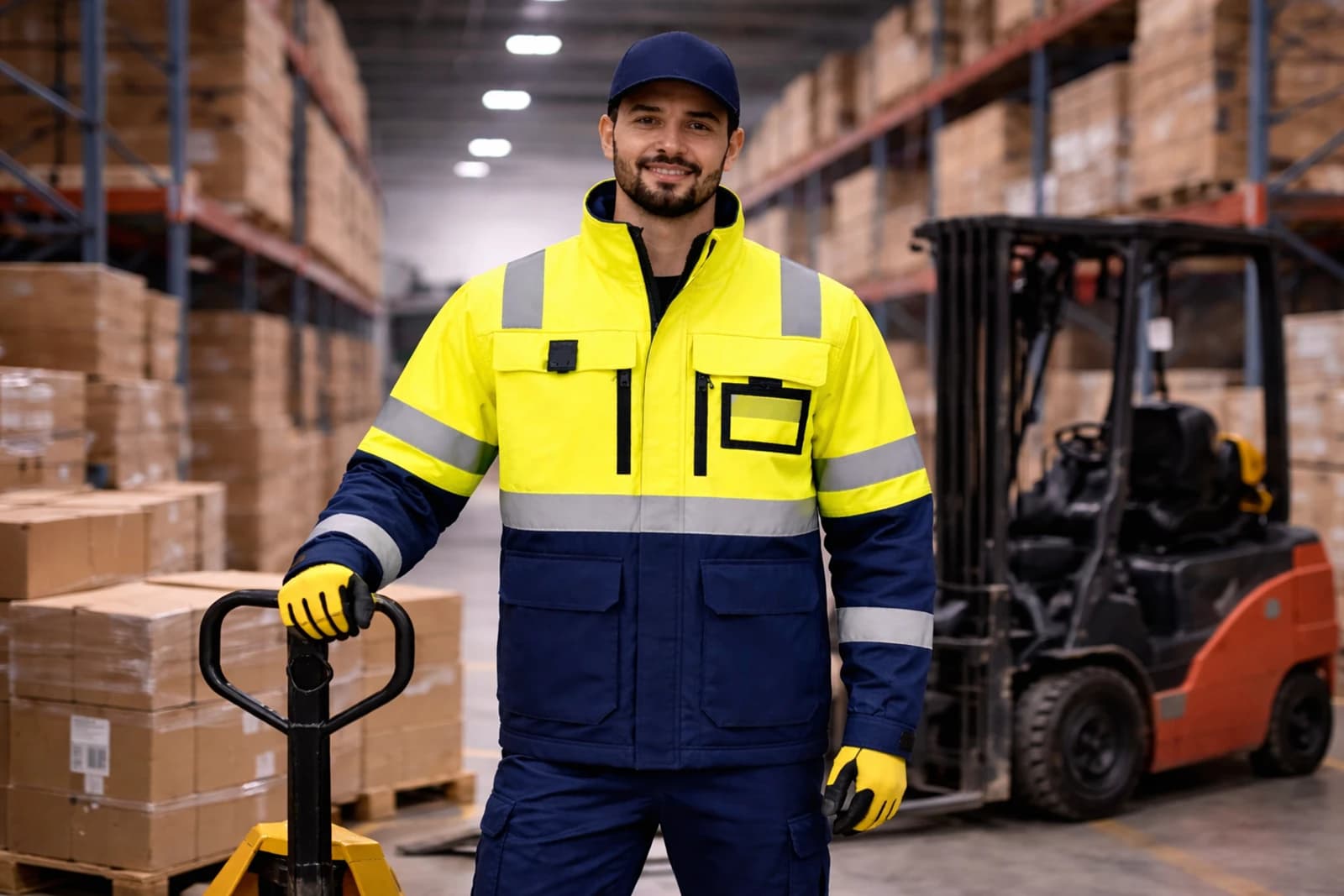
Hi-Vis Safety Jacket
Reflective safety jacket for high-visibility site operations and road work crews.
Industrial Workwear
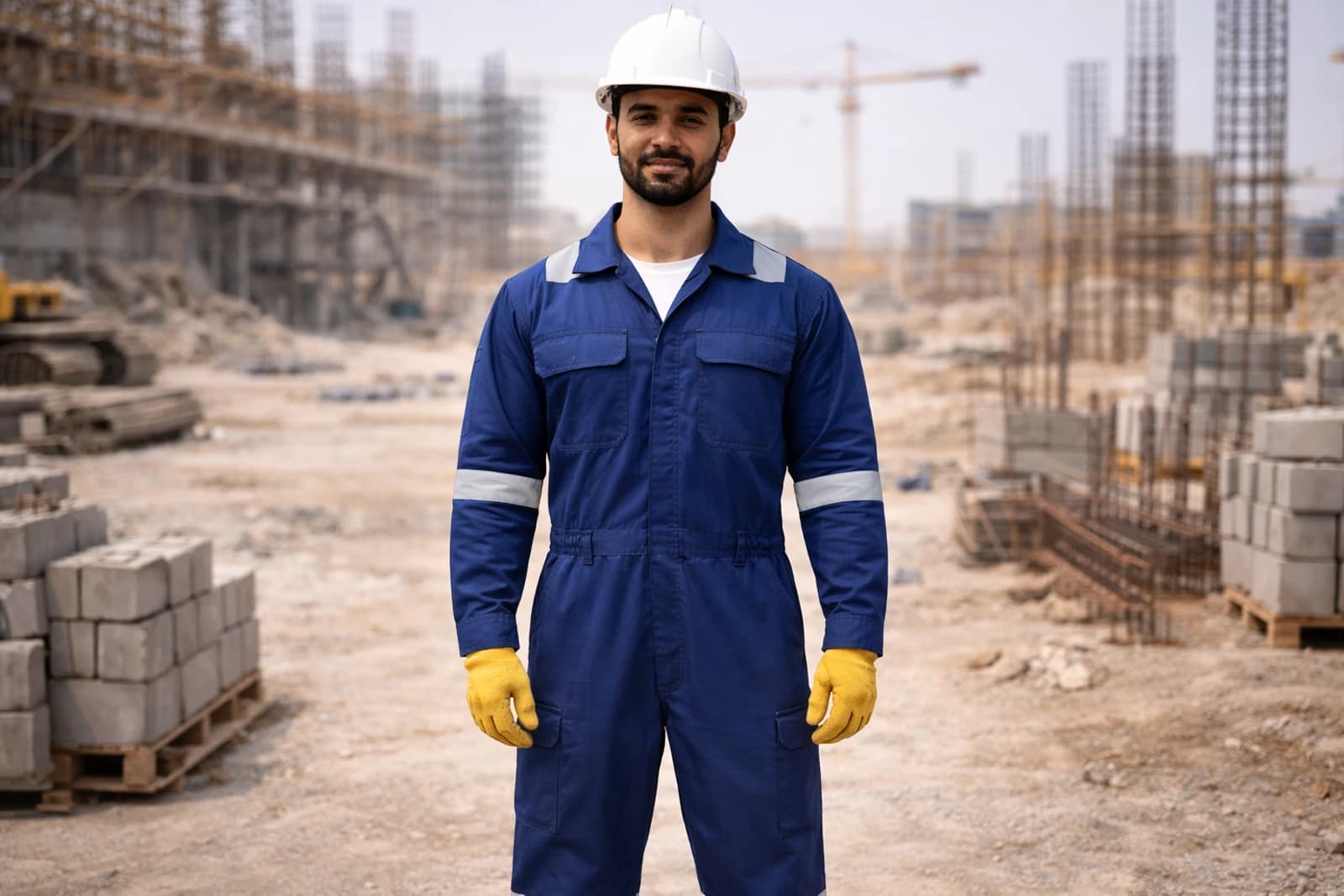
Industrial Coverall Pro
Hard-wearing one-piece coverall for plant, maintenance, and heavy-duty operations.