Sizing Mistakes GCC Buyers Make When Ordering Workwear from China
Many Middle East buyers receive workwear shipments that are too short in the torso, narrow in the shoulders, or tight across the chest — not because the factory cut corners, but because the sizing specifications were not aligned. This guide covers how to set accurate size charts and manage the sample approval process when sourcing hi-vis jackets, polo uniforms, and coveralls from a Chinese manufacturer.

Buyer context
What procurement teams run into
<p>A Saudi Arabian logistics company orders 3,000 polo uniforms from a Chinese supplier using the factory's standard Asian size chart — S through 3XL. The shipment arrives and the warehouse manager distributes samples to a test group of 20 drivers and loaders representing every team. Fifteen report that the 2XL fits tighter across the chest and shorter in the body than the uniforms they currently wear. The neck opening feels narrow, and the sleeves ride up when drivers reach for steering wheels. The procurement team had assumed that Asian 2XL equals GCC 2XL — and now faces a choice: ship everything back and lose the season, or ask workers to accept an uncomfortable uniform.</p><p>In Qatar, a construction contractor orders 1,500 hi-vis safety jackets for a highway expansion project. The jacket sizing is based on an international chest measurement chart that the factory provided. When the first 500 units arrive, the site supervisor notices that the jacket sleeves are consistently 3 to 5 cm too short for the crew. The issue traces back to the measurement point: the factory's size chart measures sleeve length from centre-back neck to wrist, while the contractor assumed sleeve length was from shoulder seam to wrist. The difference of 3 cm does not sound like much — until every crew member on a 40°C day has to pull their jacket sleeves down repeatedly while handling rebar and concrete forms.</p><p>These are sizing specification problems, not quality problems. The factory produced exactly what was ordered. The issue is that body proportions and measurement conventions differ between Chinese manufacturing standards and GCC buyer expectations, and neither party realised the gap existed until the garments arrived. A few clear specification steps during the quotation and sample stages would have prevented both scenarios.</p>
Sourcing approach
How a factory partner can respond
<h2>Why Standard Asian Size Charts Do Not Fit GCC Workers</h2><p>Chinese workwear manufacturers build their standard size charts around domestic and Southeast Asian body proportions. The typical Asian 2XL is designed for a 110–115 cm chest and a 74–78 cm waist, with a back length around 74 cm and sleeves averaging 82–84 cm. GCC male workers — particularly in construction, logistics, and industrial roles — tend to have broader shoulders, longer arms relative to torso length, and a fuller chest at the same labelled size. The practical difference is that an Asian 2XL hi-vis jacket fits a GCC worker like a tight Asian XL would, especially in the shoulder width and sleeve length dimensions.</p><p><strong>The fix is not to order one size up.</strong> Ordering one or even two sizes larger introduces problems in other areas: the waist becomes too loose, the hem rides up under the arms, and the collar gapes open. Instead, work with your Chinese manufacturer to create a custom size chart based on actual GCC body measurements, with separate specifications for chest, waist, hip, shoulder width, sleeve length, back length, and collar circumference. A well-prepared size chart has six to eight measurement points per garment type and includes a tolerance range for each point (typically ±1 cm for critical dimensions such as sleeve length and chest).</p><h2>Getting the Sample Approval Process Right</h2><p>Every GCC buyer should require a pre-production sample in the target size before full production begins. The sample serves as the binding reference for measurement check: the factory, the buyer, and the quality inspector all agree to work from the same physical garment. For hi-vis jackets, the sample check should verify that the sleeve length aligns with the agreed measurement point (shoulder seam to wrist, not centre-back to wrist), that the chest allows full range of motion over a work shirt, and that the reflective tape does not pull or pucker when the jacket is worn at the maximum intended size. For logistics polo uniforms, the sample check should confirm that the collar lies flat, the body does not ride up when the wearer raises both arms, and the sleeve opening is wide enough for forearm movement during lifting and carrying.</p><p>A practical approach used by experienced GCC importers is to request three sample sizes — the best-fit estimate and one size above and below — then select workers from the target team to try each size and report comfort across four movements: standing straight, arms forward, overhead reach, and seated driving position. The resulting fit feedback translates into measurement adjustments for the full production size run. This adds two to three weeks to the lead time but eliminates the risk of re-shipping an entire container.</p>
Recommended Products
Products that fit this use case
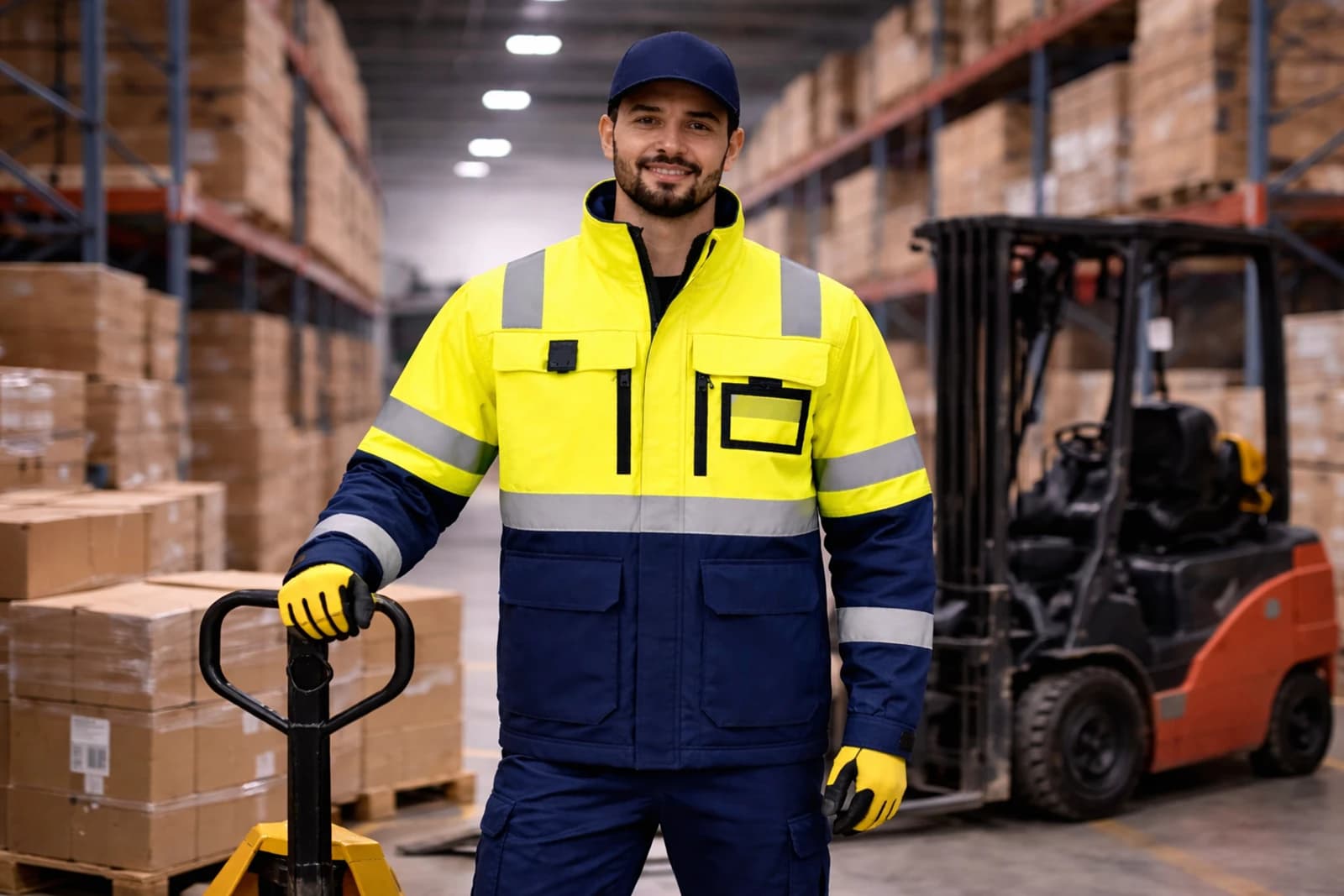
Safety Uniform
Hi-Vis Safety Jacket
Reflective safety jacket for high-visibility site operations and road work crews.

Logistics Uniform
Logistics Polo Uniform
Breathable uniform polo for warehouse, delivery, and last-mile teams.