Softshell Layers & Hi-Vis Visibility: Sourcing Port Terminal Workwear for Middle East Seaport Cargo Operations
Middle East seaports are among the busiest cargo gateways on earth — Jebel Ali handles over 15 million TEU annually, Saudi Arabia's King Abdulaziz Port in Dammam is expanding for Vision 2030 trade targets, Oman's Port of Salalah is a transshipment hub for the Indian Ocean, and Qatar's Hamad Port has become a major logistics node since 2017. Behind every container moved is a waterfront workforce — gantry crane operators, stevedores, reach-stacker drivers, tally clerks, lashing crews, and terminal supervisors — who work in one of the most visibility-critical and weather-exposed industrial environments in the world. This sourcing guide for Middle East B2B buyers covers construction softshell sets and EN ISO 20471 hi-vis safety jackets for port and maritime cargo terminals, fabric specifications for coastal conditions, compliance considerations, and volume procurement from a Chinese workwear manufacturer.
Buyer context
What procurement teams run into
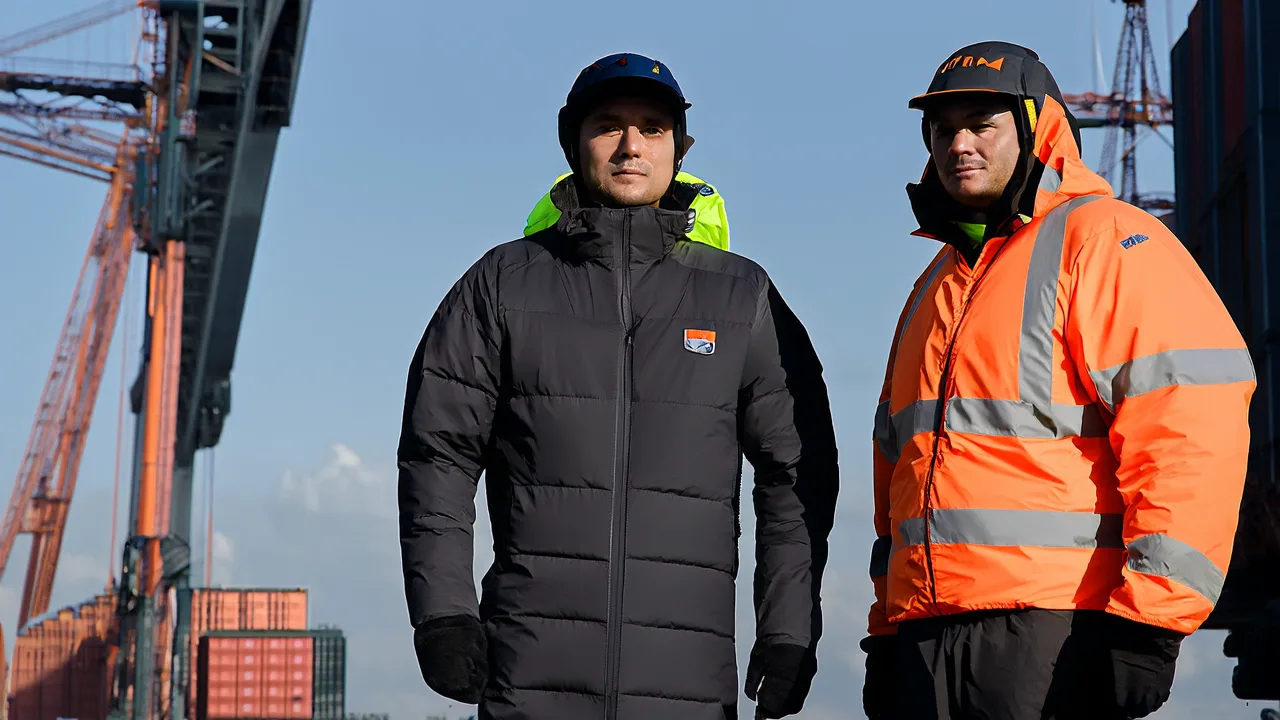
The Middle East's port and maritime cargo sector is a critical pillar of regional trade. The UAE's Jebel Ali Port in Dubai is the busiest container port in the Middle East and the 9th busiest globally, handling over 15 million TEU per year. Saudi Arabia's King Abdulaziz Port in Dammam and King Abdullah Port in Jazan are expanding to support Vision 2030's goal of making the Kingdom a global logistics hub. Oman's Port of Salalah handles over 4 million TEU as a transshipment gateway between Asia and Europe. Qatar's Hamad Port, Kuwait's Shuwaikh and Shuaiba ports, and Bahrain's Khalifa Bin Salman Port all serve growing trade volumes. Egypt's Port Said, Sokhna, and Alexandria ports handle Suez Canal-adjacent cargo for North Africa. Every one of these ports operates 24/7, 365 days a year. Cargo vessels don't wait for daylight or comfortable temperatures. Workers move containers, break bulk, and project cargo through every weather condition the Gulf and wider Middle East can deliver — and the waterfront adds hazards that inland industrial sites don't face. For B2B buyers procuring workwear for port terminal workforces, the challenge is specific: **1. The port terminal environment combines visibility, weather, and physical hazards in one location** A container terminal or break-bulk cargo dock presents a unique combination of workplace hazards: - **Constant vehicle and equipment movement.** Reach stackers, straddle carriers, terminal tractors, forklifts, and automated guided vehicles (AGVs) operate continuously across the terminal. Workers on foot — lashing crews, tally clerks, inspectors — share the same surface. A worker in standard clothing is nearly invisible against the backdrop of stacked containers, especially at night, in coastal fog, or during sandstorms. - **Coastal wind and temperature swings.** Port terminals are open waterfront environments. In Gulf winters (December–February), pre-dawn temperatures can drop to 10–15°C with wind chill off the sea making it feel colder. By midday the same shift can reach 25–30°C. Workers need layering options — a garment that provides warmth at 5 AM and can be removed or ventilated by noon. - **Salt-laden air and moisture.** Coastal terminals expose garments to salt spray, high humidity (80–95% RH is common in Gulf coastal cities), and occasional rain or sea splash. Fabrics must resist salt corrosion of zippers and hardware, and must dry quickly after getting wet. - **Abrasive cargo and rigging.** Stevedores and lashing crews handle steel coils, timber, heavy machinery, and container twist-locks. Forearms, thighs, and knees contact rough cargo surfaces, steel edges, and twisted wire lashings constantly. - **Chemical exposure.** Break-bulk terminals handle chemicals, fertilisers, clinker, and petroleum products. Garments may contact chemical dust, residues, and spills. - **Shift work across all lighting conditions.** Port operations run 24/7. Workers transition between full daylight, dawn, dusk, overcast conditions, night operations under high-mast lighting, and sandstorm-reduced visibility. Hi-vis clothing must perform in all conditions. **2. Construction softshell sets for lashing crews, stevedores, and terminal maintenance teams** For workers who spend significant time outdoors on the quay, in container yards, or at break-bulk cargo faces, the construction softshell set (jacket and trousers) is the right base garment. It provides wind resistance, light water protection, and abrasion resistance — without the bulk and heat load of a lined winter jacket that would be unbearable by mid-morning. Key specifications when sourcing softshell sets for port terminal work from a Chinese manufacturer: **Fabric weight and composition.** Specify 280–320gsm bonded softshell — polyester face (92–95%) with elastane (5–8%) for stretch, bonded to a brushed polyester backing. The outer face resists abrasion from container corners, steel cargo edges, and wire lashings. The brushed backing provides warmth for pre-dawn and night shifts without trapping heat during daytime work. **Wind and water resistance.** DWR (durable water repellent) finish with 5,000–8,000mm hydrostatic head. Port terminals are fully exposed to coastal wind and salt spray. The DWR finish blocks wind chill, sheds light rain and sea spray, and allows moisture vapour to escape during physical work. For Gulf conditions, this level of water resistance is sufficient — fully waterproof membranes trap too much heat in humid conditions. **Reinforcement at high-wear zones.** Double-layer knees with internal knee-pad pockets (lashing crews kneel on concrete quay surfaces and steel deck plates). Reinforced elbows for cargo handling. Cordura or similar abrasion-resistant patches at cuffs, hem, and pocket corners. Bar-tacked stress points at all seam intersections — port work is physically demanding. **Pocket configuration.** Zipped chest pockets (for phones, radios, and tally sheets — must close securely so items don't fall into the sea or between containers). Side hand pockets on the jacket. Cargo pockets on trousers with hook-and-loop or snap closures. Pen pockets for tally clerks and inspectors. All pockets must have secure closures — open pockets near the water's edge are a loss hazard. **Salt resistance of hardware.** Specify corrosion-resistant zippers (YKK Natulon or equivalent anti-corrosion zippers) and stainless steel or coated snap buttons. Standard steel zippers corrode rapidly in salt-laden coastal air — within weeks, not months. This is a critical specification for port workwear that inland industrial garments don't require. **Reflective accents.** Retroreflective piping or tape on shoulders, sleeves, and trouser legs. While not full EN ISO 20471 Class 3, reflective accents improve visibility in reach-stacker zones and low-light conditions. For workers who need full hi-vis certification, the softshell is worn under a hi-vis jacket or vest. **Fit and layering.** Action back on the jacket (pleated for freedom of movement when climbing onto containers and reaching for lashings). Articulated knees on trousers. Adjustable cuffs and waist. The fit must accommodate layering — a worker may wear a t-shirt under the softshell in summer mornings, or a thermal base layer in winter night shifts. **3. Hi-vis safety jackets for all terminal workers in vehicle and equipment zones** For every worker who spends time on the quay, in the container yard, or near terminal vehicles, the hi-vis safety jacket is a life-saving garment. Port terminals have dense vehicle traffic — reach stackers have blind spots extending 10+ metres, straddle carriers operate in narrow lanes between container stacks, and terminal tractors run constant loops between quay and yard. A worker in standard clothing is extremely difficult to see. Key specifications when sourcing hi-vis jackets for port terminals from a Chinese manufacturer: **Fabric weight and composition.** Specify lightweight polyester 210–240gsm with mesh lining for Gulf conditions. Heavy hi-vis jackets are unbearable in 45°C summer heat combined with coastal humidity — workers will remove them, defeating the safety purpose. A mesh-lined jacket allows air flow while keeping retroreflective tape visible. **EN ISO 20471 Class 3.** Class 3 offers the highest retroreflective coverage and is the right call for all workers who spend significant time near moving vehicles and equipment — lashing crews, tally clerks, terminal tractor drivers (when outside the cab), inspectors, and supervisors. Confirm the jacket meets EN ISO 20471 minimum retroreflective intensity (typically 330 cd/lx/m² for Class 3). **Fluorescent background and retroreflective tape.** Specify fluorescent yellow-green or orange fabric with retroreflective tape positioned to EN ISO 20471 geometry. The tape must be on the torso, arms, and around the shoulders for full-class coverage. For port environments, specify tape with excellent adhesion that resists peeling from salt spray abrasion, humidity, and frequent washing. **Salt and moisture resistance.** Port hi-vis jackets face salt spray, high humidity, and frequent washing in saline water conditions. Specify fabric and tape that maintain retroreflective performance after 50+ wash cycles in industrial laundering. Confirm the fluorescent background fabric resists salt-induced colour degradation — some dyes fade unevenly when exposed to salt air, creating patchy visibility. **Practical details for port work.** Two-way front zip (workers bend, crouch, and climb onto containers constantly). Zipped side pockets that close securely — dropped items on a quay are a safety hazard and often lost to the sea. Adjustable cuffs. DWR finish with 5,000mm+ hydrostatic head for coastal rain and sea spray. **Durability.** Port hi-vis jackets face more abrasion than most industrial environments — workers lean against container corners, handle wire lashings, and crawl through confined cargo spaces. Specify reinforced shoulders and elbows, and confirm the retroreflective tape maintains performance after heavy physical use. **4. The softshell-and-hi-vis system for complete port terminal workwear** The smartest procurement approach treats softshell sets and hi-vis jackets as a unified uniform system: **Summer (May–October):** Hi-vis jacket over a polo or t-shirt for daytime yard work. Softshell trousers with a t-shirt for early-morning shifts (skip the jacket — it's too warm by 8 AM). Hi-vis jacket mandatory for all outdoor workers regardless of heat — this is non-negotiable for safety. **Shoulder seasons (March–April, November):** Softshell jacket over a polo for morning and evening shifts, with hi-vis jacket over the softshell when working in vehicle zones. Softshell trousers with the polo or a long-sleeve base layer for all-day outdoor work. **Winter (December–February):** Full softshell set (jacket and trousers) with hi-vis jacket over the softshell for all outdoor shifts. Night-shift workers in full softshell plus hi-vis jacket. Supervisors and tally clerks in softshell with hi-vis vest for quick recognition. **Sandstorm and reduced-visibility events:** All outdoor workers in hi-vis jacket regardless of other garments. Terminal operators typically suspend non-essential outdoor work during severe sandstorms, but essential crews (security, emergency response) must remain visible. This system means one colour palette for softshells (navy or charcoal is standard for port terminals — dark colours hide cargo dust and grease), one hi-vis standard, one manufacturer, and one procurement process covering the full terminal operation. **5. Compliance and testing for port terminal workwear** Relevant standards for Middle East port operations: - **EN ISO 20471** — high-visibility clothing. Class 3 for all workers in vehicle and equipment zones. Insist on third-party test reports from accredited labs (SGS, TÜV, Intertek, Bureau Veritas) covering retroreflective performance after washing and fabric colour fastness — specifically including salt-spray resistance testing. - **EN ISO 13688** — general requirements for protective clothing (ergonomics, sizing, ageing, marking). Applies to both softshell sets and hi-vis jackets. - **ISO 105-B02** — colour fastness to light (xenon arc). Critical for Gulf port sites where garments face 8–10 hours of direct UV daily plus salt-air exposure. - **ISO 15797** — industrial laundering durability. Port workwear is washed at 60–75°C in industrial machines, often with additional rinse cycles to remove salt. Specify dimensional change ≤ 3% after 50+ wash cycles. - **OEKO-TEX Standard 100** — restricted substances. Workers in extreme heat and humidity sweat heavily; skin contact with harmful chemicals is a real concern. - **Port-specific HSE requirements.** Many major ports (Jebel Ali, Dammam, Salalah) have internal HSE standards that exceed national regulations for hi-vis performance, PPE durability, and garment labelling. Confirm the manufacturer can meet port-specific requirements. **6. Procurement strategy for port terminal buyers** Port terminal operations have distinctive procurement patterns: **Volume and frequency.** A mid-size Gulf container terminal employs 300–1,500 operational staff. Order softshell sets in bulk (300–1,500 units) for initial fleet outfitting, then reorder semi-annually for replacements (softshell sets typically last 6–12 months in heavy port use). Order hi-vis jackets in similar volumes (300–1,500 units) with quarterly reorders — hi-vis jackets wear faster than softshells due to constant abrasion against containers and cargo. **Consolidate orders.** Order softshell sets and hi-vis jackets in one shipment to reduce freight costs and simplify customs clearance at Jebel Ali, Dammam, Salalah, or Hamad ports. A Chinese manufacturer with in-house capability for both garment types can produce and ship them together. **Plan for seasonal timing.** Order softshell sets in August–September for December–February delivery (pre-winter, when layering garments are needed most). Order hi-vis jackets year-round based on consumption rates — these are high-turnover items. Avoid ordering for summer delivery during Ramadan production slowdowns. **Stock buffer.** Order 20–25% buffer stock above annual requirements. Port workwear wears out quickly — abrasion from containers, salt corrosion of hardware, and fading from UV and salt air all shorten garment life. Reordering small batches of custom garments costs far more per unit than including buffer in the original production run. **Pilot before full volume.** Order 50–100 softshell sets and 50–100 hi-vis jackets for a trial fitting before committing to the full terminal order. Adjust sizing, fabric weight, pocket placement, and hardware specifications based on field feedback from lashing crews, stevedores, and terminal supervisors. **Standardise across terminal functions.** Whether your terminal handles containers, break bulk, RoRo, or project cargo, the same softshell-and-hi-vis system works. Standardise on one colour palette and one hi-vis class across all functions — this simplifies procurement, ensures consistent safety standards, and makes your terminal's workforce instantly recognisable.
Sourcing approach
How a factory partner can respond
The solution for Middle East port and maritime cargo terminals is a two-garment workwear system — construction softshell sets for lashing crews, stevedores, terminal maintenance teams, and all outdoor workers who need wind resistance, light water protection, and abrasion durability, paired with EN ISO 20471 Class 3 hi-vis safety jackets for every worker in vehicle and equipment zones — sourced from a single Chinese workwear manufacturer for consistent quality, consolidated shipping, and volume pricing. **For construction softshell sets (outdoor terminal workers):** - 280–320gsm bonded softshell — polyester face with elastane for stretch, bonded to brushed polyester backing - DWR finish with 5,000–8,000mm hydrostatic head for coastal wind and salt spray protection - Double-layer reinforced knees with knee-pad pockets, reinforced elbows, Cordura patches at cuffs and hem - Corrosion-resistant zippers (YKK Natulon or equivalent) — critical for salt-laden coastal air - Zipped chest and cargo pockets with secure closures to prevent items falling into the sea - Retroreflective accents on shoulders, sleeves, and trouser legs for supplementary visibility - Action back jacket fit with articulated knees for climbing and cargo handling freedom - Dark colourways (navy, charcoal) to hide cargo dust and grease **For hi-vis safety jackets (all workers in vehicle and equipment zones):** - Lightweight polyester 210–240gsm with mesh lining for Gulf heat and humidity - EN ISO 20471 Class 3 with fluorescent yellow-green or orange fabric - Retroreflective tape on torso, arms, and shoulders (330 cd/lx/m² minimum) - Salt and moisture resistant — fabric and tape maintain performance after 50+ wash cycles in saline conditions - Two-way front zip, zipped side pockets, adjustable cuffs, DWR finish (5,000mm+ hydrostatic head) - Reinforced shoulders and elbows for abrasion against container corners and cargo edges - Third-party test reports from SGS, TÜV, Intertek, or Bureau Veritas **Procurement strategy:** - Treat softshell sets and hi-vis jackets as a unified uniform system across all terminal functions (container, break bulk, RoRo, project cargo) - Consolidate both garments into one shipment to reduce freight and simplify customs - Order softshell sets in August–September for pre-winter delivery; order hi-vis jackets year-round based on consumption - Stock 20–25% buffer for replacement cycles (port workwear faces accelerated wear from salt, abrasion, and UV) - Pilot 50–100 units per garment type before full fleet commitment
Recommended Products
Products that fit this use case
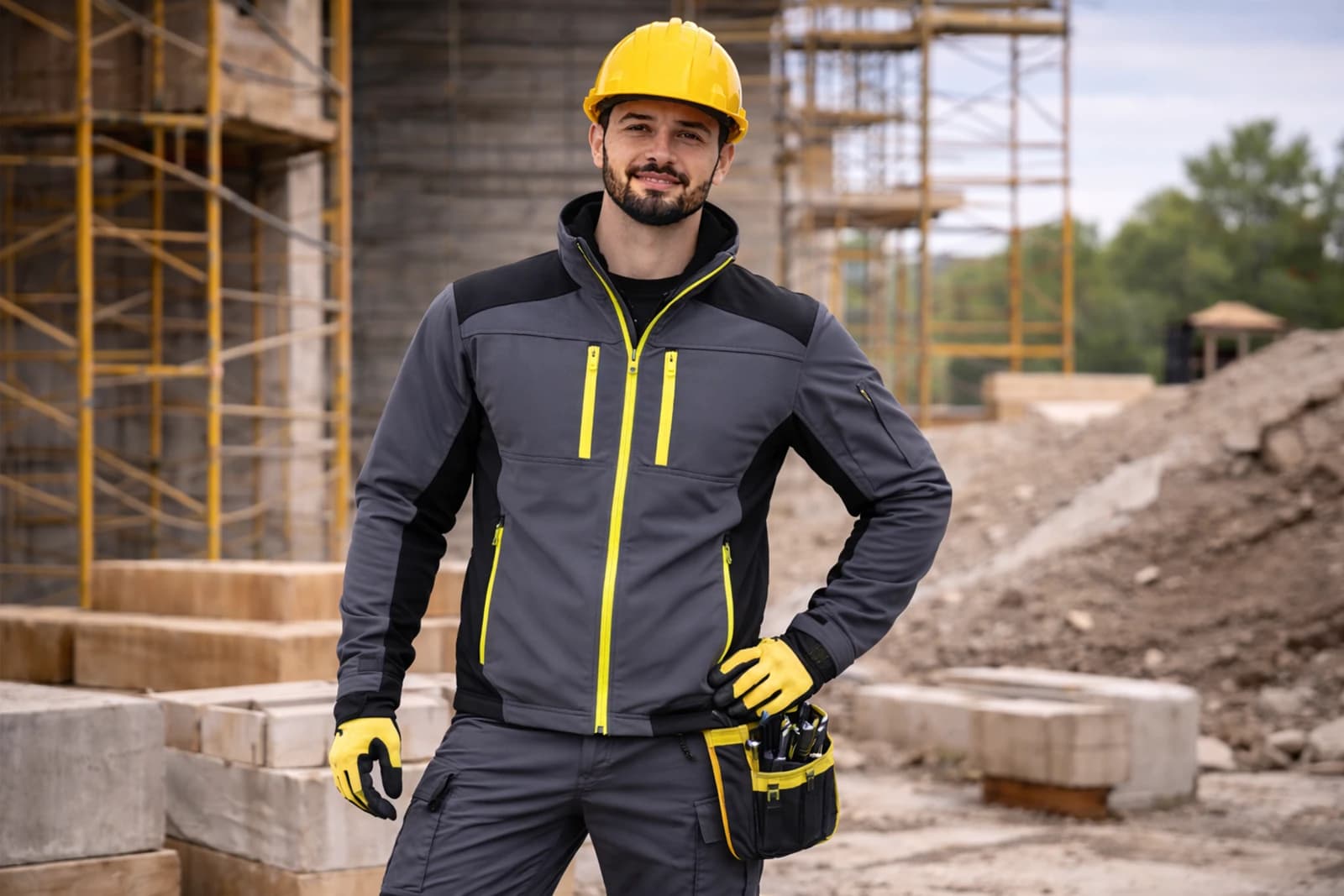
Construction Clothing
Construction Softshell Set
Flexible jacket and trouser set built for crews working across changing weather conditions.
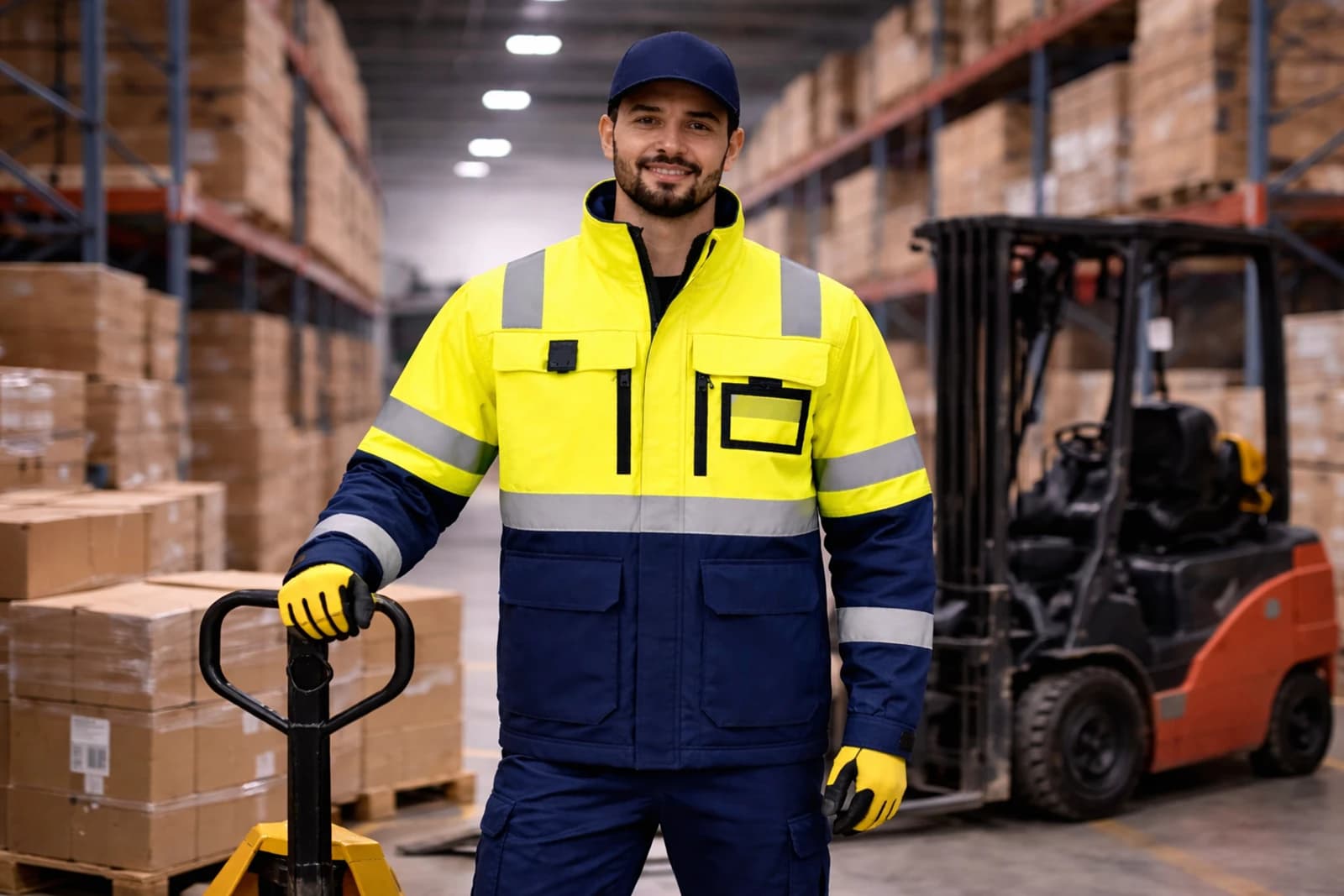
Safety Uniform
Hi-Vis Safety Jacket
Reflective safety jacket for high-visibility site operations and road work crews.