Solar Farm Workwear: Sourcing Construction Softshell Sets & Logistics Polo Uniforms for Middle East Utility-Scale PV Projects
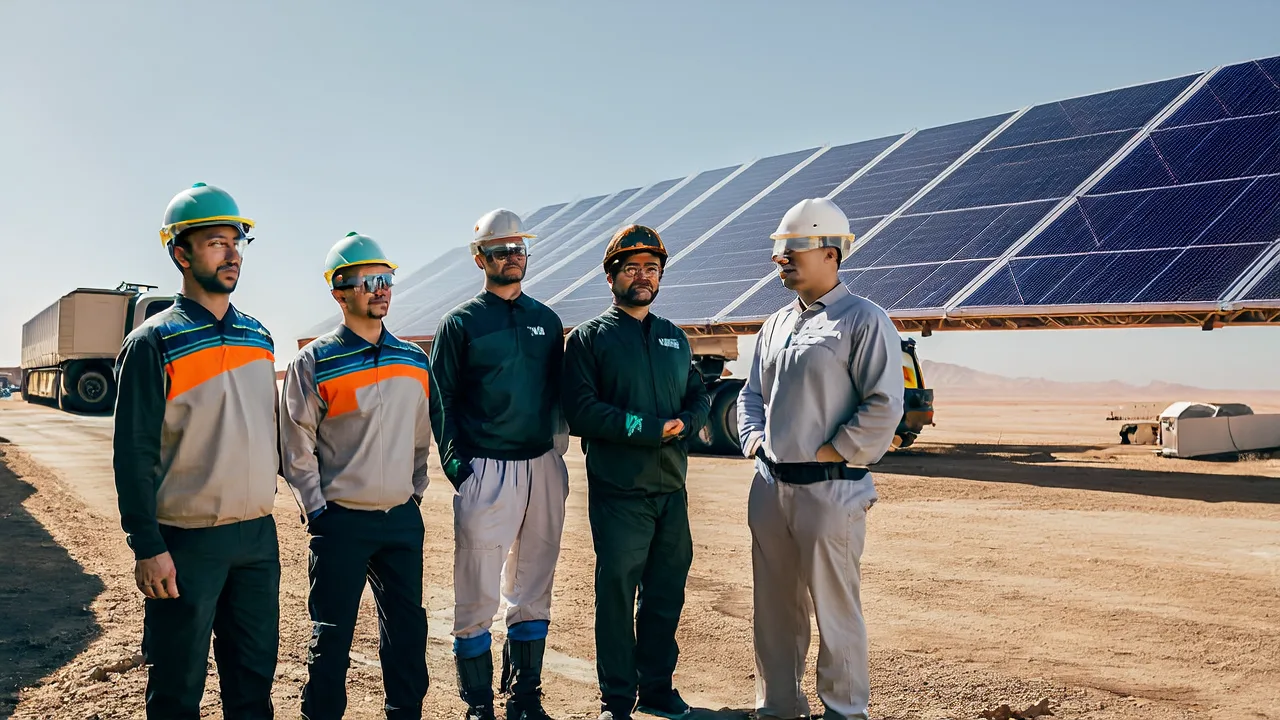
The Middle East is building solar capacity at a pace unmatched anywhere on earth — Saudi Arabia's Sudair 1.5 GW and Al Shuaibah 2 GW projects, the UAE's Al Dhafra 2 GW solar plant (one of the world's largest), Qatar's Al Kharsaah 800 MW, Oman's Ibri II and Manah phases, and NEOM's planned renewable energy mega-complex are transforming desert landscapes into vast solar arrays. Behind every installed panel is a workforce of civil contractors, piling crews, mounting structure erectors, PV module installers, electrical technicians, string inverter commissioning engineers, and O&M staff who work in one of the most sun-exposed and physically demanding construction environments on the planet. This sourcing guide for Middle East B2B buyers covers construction softshell sets and logistics polo uniforms for utility-scale solar PV projects, fabric specifications for desert conditions, role-based garment allocation, compliance considerations, and volume procurement from a Chinese workwear manufacturer.
Buyer context
What procurement teams run into
The Middle East's solar PV construction boom is unprecedented. Saudi Arabia's National Renewable Energy Program (NREP) targets 16 GW of solar by 2030. The UAE aims for 44% clean energy capacity by 2030 with gigawatt-scale solar plants across Abu Dhabi and Dubai. Qatar's Al Kharsaah solar plant powers the entire country's electricity grid during peak daylight hours. Oman has commissioned multiple 500 MW+ solar phases as part of its target for 30% renewable electricity by 2030. NEOM's planned 20+ GW renewable energy complex will be the largest on earth. Across the wider region, Egypt's Benban solar park is one of the world's largest, Jordan targets 31% renewable electricity by 2030, and Kuwait, Bahrain, and Iraq are all scaling up solar capacity. Every utility-scale solar PV project — whether 500 MW or 5 GW — follows a construction sequence that employs a diverse workforce operating across dramatically different conditions over a 12–24 month build programme. For B2B buyers procuring workwear for these workforces, the challenge is specific because solar construction combines outdoor civil works, precision electrical installation, and long-term operations & maintenance in some of the most sun-exposed environments on earth. **1. The solar PV construction environment is uniquely sun-exposed and physically demanding** A utility-scale solar PV project site presents multiple distinct work phases, each with its own hazard profile: - **Civil works and site preparation.** Grading, access road construction, drainage installation, and foundation piling involve heavy plant (excavators, graders, piling rigs, compactors) operating in close proximity to workers on foot. Workers face abrasive desert soil, dust, and full sun exposure with no shade across hectares of cleared desert. - **Mounting structure erection.** Steel or aluminium mounting structures are assembled and fixed to foundations. Workers handle long steel sections, use torque tools, and work at low heights (ground-mounted) or on structures up to 3–5 metres high. Workers face sharp metal edges, pinch points, and full sun exposure on reflective desert surfaces. - **PV module installation.** Workers carry and position glass-fronted PV modules (typically 20–30 kg each) onto mounting structures, connect MC4 connectors, and secure clamps. Workers handle fragile glass surfaces, work at heights on tilted structures, and face extreme radiant heat from desert sand reflecting onto module glass surfaces. - **Electrical works and commissioning.** DC string cabling, combiner box installation, inverter commissioning, and MV transformer connection involve qualified electrical technicians working with live DC circuits up to 1500V. Workers face electrical arc flash hazard and must wear garments that don't melt or ignite. - **Operations & maintenance (O&M).** Once commissioned, solar farms employ O&M crews for 25–30 years of operation. Workers perform module cleaning (manual or robotic), vegetation management, inverter maintenance, and performance monitoring. Workers face full sun exposure daily across the plant's entire operating life. **2. Construction softshell sets for civil works crews, structure erectors, and early/late shift workers** Solar PV construction in the Middle East follows a specific shift pattern to avoid peak heat: civil works and heavy lifting often start at 5:00–6:00 AM and continue until 10:00–11:00 AM, then resume from 3:00–4:00 PM until sunset. Some projects run night shifts during summer months. Workers in early morning and late afternoon shifts face temperatures of 15–25°C in winter (December–February) with wind chill across open desert — conditions where a lightweight insulating layer is essential. Key specifications when sourcing softshell sets for solar construction from a Chinese manufacturer: **Fabric weight and composition.** Specify 280–320gsm bonded softshell — polyester face (92–95%) with elastane (5–8%) for stretch, bonded to a brushed polyester backing. The outer face resists abrasion from mounting structure steel edges and PV module aluminium frames. The brushed backing provides warmth for pre-dawn starts and late afternoon shifts during Gulf winter months. **Wind and dust resistance.** DWR finish with 5,000–8,000mm hydrostatic head for dust storm protection and occasional rain. Solar farms are built in open desert with no windbreaks — dust storms (shamals) can reduce visibility to metres and drive fine sand into garments. A wind-resistant softshell face prevents dust penetration while allowing breathability. **Reinforcement at high-wear zones.** Double-layer knees with internal knee-pad pockets (structure erectors kneel on desert ground and concrete foundations constantly). Reinforced elbows for module handling and clamping work. Cordura patches at cuffs and hem for abrasion against mounting structure edges. **Pocket configuration.** Zipped chest pockets for phones, radios, and MC4 connector samples. Side hand pockets. Cargo pockets on trousers with secure closures for torque wrenches, cable ties, and small tools. All pockets must have zippers — items dropped on solar farm sites are lost in vast desert areas and become foreign object debris that can damage PV modules. **Reflective accents.** Retroreflective piping on shoulders, sleeves, and trouser legs for supplementary visibility during pre-dawn and post-sunset shifts. Solar construction sites use heavy plant and vehicles extensively — workers must be visible to excavator and crane operators in low-light conditions. **Fit and layering.** Action back on the jacket for freedom of movement when lifting PV modules and handling long mounting structure sections. Articulated knees for kneeling work. The softshell must layer comfortably over a polo uniform underneath without restricting movement. **UV protection.** UPF 50+ fabric rating for workers who spend full shifts in direct desert sun. Solar farm workers receive some of the highest cumulative UV exposure of any industrial workforce — garment fabric must provide reliable sun protection. **3. Logistics polo uniforms for PV module installers, electrical technicians, O&M crews, and site supervisors** The majority of solar PV construction and O&M work happens in full daylight — PV module installation, electrical commissioning, module cleaning, and performance monitoring all require daylight hours. Workers in these roles need a lightweight, breathable, professional garment that provides sun protection, moisture management, and company branding across 8–12 hour shifts in 40–50°C desert heat. Key specifications when sourcing polo uniforms for solar PV projects from a Chinese manufacturer: **Fabric.** 180–220gsm pique knit in 65% polyester / 35% cotton with moisture-wicking treatment and UPF 50+ sun protection. Solar PV workers face the highest cumulative UV exposure of any industrial workforce — polo fabric must provide maximum sun protection while remaining breathable in extreme heat. **Collar and trim.** Ribbed collar with contrast piping in project developer or EPC contractor brand colours; tonal buttons; clean placket. The collar must hold its shape after repeated industrial washing and months of direct UV exposure. Solar polo uniforms face 8–10 hours of direct UV daily — collar curl and fade are common failure points. **Branding.** Embroidered chest logos with Pantone colour matching for EPC contractor, project developer, or O&M operator branding. Woven name tapes and role patches ("PV INSTALLER," "ELECTRICAL TECHNICIAN," "O&M CREW," "SITE SUPERVISOR," "COMMISSIONING ENGINEER"). Solar farm branding is visible to project owners, grid operators, and government inspectors — professional appearance matters. **Sizing.** Full size range (2XS–4XL+) with Middle East / South Asian body proportions for the multinational solar construction workforce. Gulf solar projects employ workers from South Asia, Southeast Asia, the Arab world, Africa, and Europe — sizing must accommodate diverse body types. **Colour fastness.** ISO 105 certified for Gulf sun and industrial laundering. Solar polo uniforms face 8–10 hours of direct UV daily on open desert sites plus frequent washing from sweat and dust. Colours must not fade to an inconsistent patchwork appearance over a 3–6 month garment life. **Moisture management.** Solar PV module installers and O&M crews transition between full sun exposure (extreme heat) and shaded inverter stations or control buildings (air-conditioned). Garments must wick moisture efficiently in both environments to maintain comfort and professional appearance. **4. The softshell-and-polo system for complete solar PV project uniform** The smartest procurement approach treats softshell sets and polo uniforms as a unified uniform system across the solar PV project lifecycle: **Civil works and structure erection crews (early/late shifts):** Construction softshell set as primary garment during winter months and shoulder seasons. Polo uniform underneath for comfort and branding. Softshell provides warmth for 5:00 AM starts in December–February desert conditions. **PV module installation crews (daylight shifts):** Logistics polo uniform as primary garment. Softshell jacket available for early morning starts in winter and for evening work during short winter daylight hours. Polo provides sun protection and breathability during 40–50°C summer installation campaigns. **Electrical technicians and commissioning engineers:** Polo uniform as daily garment for daylight electrical works. Softshell jacket for early morning cable pulling and late evening inverter commissioning during winter. Polo with company branding for grid authority inspections and client visits. **O&M crews (operations phase):** Polo uniform as primary daily garment for module cleaning, vegetation management, and inverter maintenance across the 25–30 year operating life. Softshell jacket for pre-dawn module cleaning shifts in winter and for desert night patrols. **Site supervisors and project managers:** Polo uniform with distinctive colour (e.g., white or light blue vs. dark colours for field crews) for instant recognition across vast solar farm sites. Softshell jacket for site walkdowns in early morning and late afternoon. This system means one colour palette, one branding scheme, one manufacturer, and one procurement process covering every role across the 12–24 month construction phase and 25–30 year operations phase. **5. Compliance and testing for solar PV project workwear** Relevant standards for Middle East solar construction: - **EN ISO 13688** — general requirements for protective clothing (ergonomics, sizing, ageing, marking). Applies to both softshell sets and polo uniforms. - **EN ISO 20471** — high-visibility clothing. Class 2 or 3 for workers near heavy plant and vehicles. Supplementary hi-vis vests or jackets may be required over polo uniforms for civil works phases. - **IEC 62446** — PV system maintenance requirements. O&M staff working on live DC circuits must wear garments that resist arc flash and don't melt. - **ISO 105-B02** — colour fastness to light (xenon arc). Critical for Gulf solar sites where garments face 8–10 hours of direct UV daily on open desert with no shade. - **ISO 15797** — industrial laundering durability. Solar workwear is washed at 60–75°C in industrial machines. Specify dimensional change ≤ 3% after 50+ wash cycles. - **OEKO-TEX Standard 100** — restricted substances. Workers in extreme heat sweat heavily; skin contact with harmful chemicals is a real concern. - **UPF 50+ certification** — ultraviolet protection factor for polo uniform fabric. Solar PV workers receive the highest cumulative UV exposure of any industrial workforce — garment fabric must provide reliable sun protection. **6. Procurement strategy for solar PV project buyers** Solar PV projects have distinctive procurement patterns: **Volume and frequency.** A 1 GW solar PV project employs 500–2,000 construction workers at peak, plus 50–150 O&M staff for 25–30 years of operation. Order polo uniforms in bulk (1,000–5,000 units) for initial construction workforce outfitting, then reorder quarterly during the 12–24 month construction phase. Order softshell sets in smaller volumes (200–800 units) for winter shift workers. Order O&M polo uniforms in annual batches for the 25–30 year operating life. **Consolidate orders.** Order softshell sets and polo uniforms in one shipment to reduce freight costs and simplify customs clearance at Dammam, Jebel Ali, or Sohar ports. A Chinese manufacturer with in-house capability for both garment types can produce and ship them together. **Plan for seasonal timing.** Order softshell sets in August–September for December–February delivery (pre-winter, when early morning shifts require layering). Order polo uniforms 3–4 months before construction mobilisation or before summer installation campaigns. Avoid ordering for summer delivery during Ramadan production slowdowns. **Stock buffer.** Order 25–30% buffer stock above annual requirements. Solar PV workwear faces accelerated wear from UV exposure, dust abrasion, and frequent washing. Polo uniforms typically last 3–6 months in heavy desert sun before fading and fabric degradation. Reordering small batches of custom-branded garments costs far more per unit than including buffer in the original production run. **Pilot before full volume.** Order 50–100 softshell sets and 50–100 polo uniforms for a trial fitting before committing to the full project order. Adjust sizing, fabric weight, pocket placement, and branding specifications based on field feedback from civil works crews, PV module installers, electrical technicians, and O&M staff. **Plan for the operations phase.** Solar PV projects have 25–30 year operating lives. Establish a long-term supply agreement with the Chinese manufacturer for annual O&M polo uniform orders — this ensures consistent branding, fabric quality, and pricing across the entire project lifecycle.
Sourcing approach
How a factory partner can respond
The solution for Middle East utility-scale solar PV projects is a two-garment workwear system — construction softshell sets for civil works crews, structure erectors, and early/late shift workers during winter months and shoulder seasons, paired with logistics polo uniforms for PV module installers, electrical technicians, O&M crews, and site supervisors working in full daylight — sourced from a single Chinese workwear manufacturer for consistent quality, consolidated shipping, and volume pricing. **For construction softshell sets (civil works, structure erection, early/late shifts):** - 280–320gsm bonded softshell — polyester face with elastane, bonded to brushed polyester backing - DWR finish with 5,000–8,000mm hydrostatic head for dust storm protection and wind resistance - Double-layer reinforced knees with knee-pad pockets, reinforced elbows, Cordura patches at cuffs and hem - Retroreflective piping on shoulders, sleeves, and trouser legs for pre-dawn and post-sunset visibility - Action back jacket fit with articulated knees for lifting PV modules and handling mounting structures - UPF 50+ fabric rating for full-shift desert sun exposure - Zipped pockets throughout for secure tool and connector storage **For logistics polo uniforms (PV installation, electrical works, O&M, supervisors):** - 180–220gsm pique knit in 65% polyester / 35% cotton with moisture-wicking and UPF 50+ sun protection - Ribbed collar with contrast piping in EPC contractor or project developer brand colours - Embroidered chest logos with Pantone colour matching; woven name tapes and role patches - Full size range (2XS–4XL+) with Middle East / South Asian body proportions for multinational workforce - ISO 105 colour-fastness certified for Gulf desert sun and industrial laundering - Moisture management for transition between full sun exposure and shaded inverter stations **Procurement strategy:** - Treat softshell sets and polo uniforms as a unified uniform system across construction and 25–30 year operations phases - Consolidate both garments into one shipment to reduce freight and simplify customs - Order softshell sets in August–September for pre-winter delivery; order polo uniforms 3–4 months before construction mobilisation - Stock 25–30% buffer for replacement cycles (solar workwear faces accelerated wear from UV, dust, and frequent washing) - Pilot 50–100 units per garment type before full project commitment - Establish long-term supply agreement for annual O&M polo uniform orders across the 25–30 year operating life
Recommended Products
Products that fit this use case
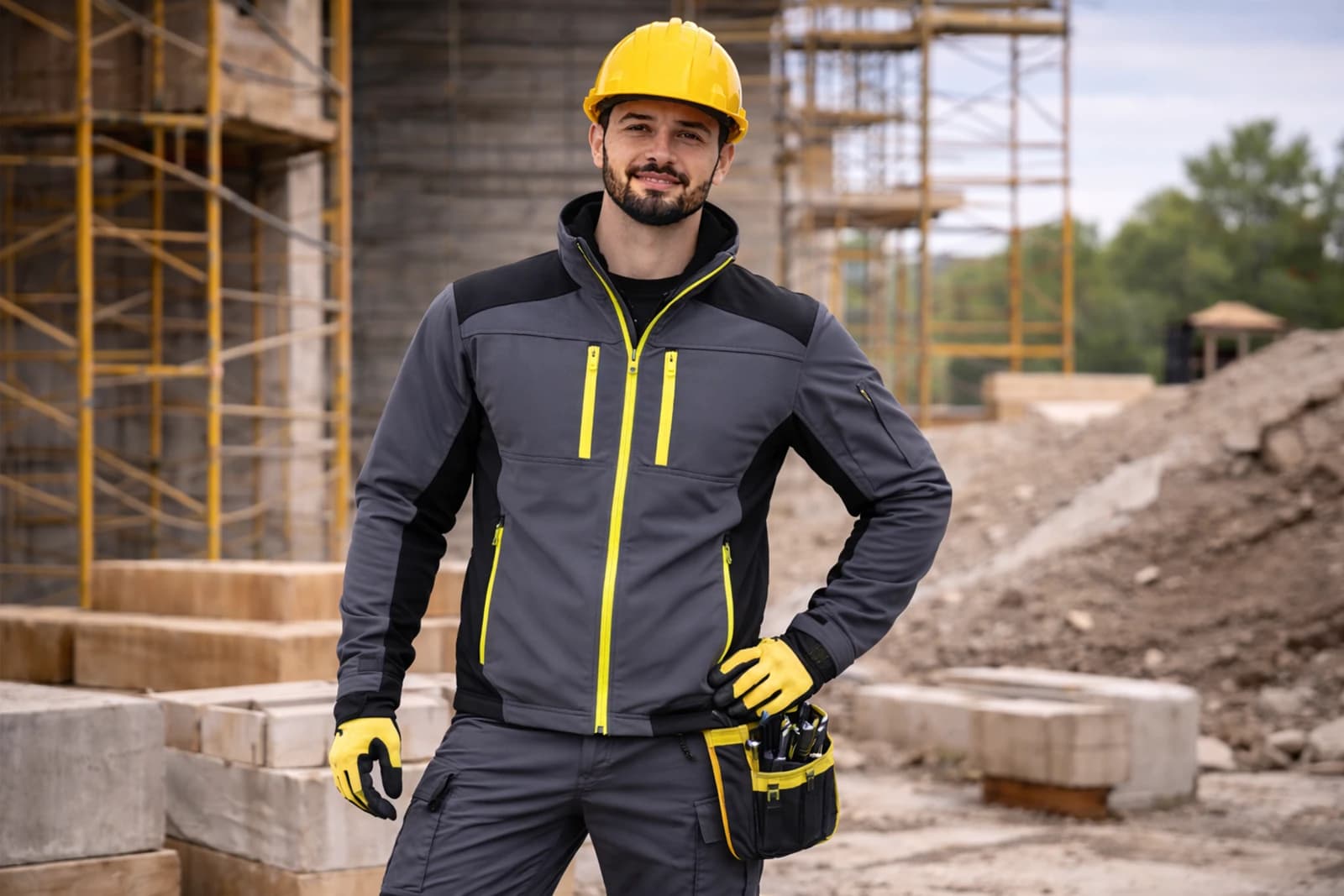
Construction Clothing
Construction Softshell Set
Flexible jacket and trouser set built for crews working across changing weather conditions.

Logistics Uniform
Logistics Polo Uniform
Breathable uniform polo for warehouse, delivery, and last-mile teams.