Sorting Hall Workwear: Cut Resistance That Does Not Trap Heat
Recycling sorting hall workers handle glass shards, metal edges, and broken plastics throughout every shift — and need cut-resistant workwear. But standard cut-resistant fabric traps heat in warm sorting halls, causing heat stress. Standard breathable fabric provides no cut protection, causing lacerations. The root cause: cut resistance and breathability are specified as separate requirements, but the worker performs both tasks in the same garment. This article covers the dual-constraint specification gap in sorting hall workwear, the moderate-weight cut-resistant fabric criteria that address cut protection and breathability simultaneously, and the pilot protocol that validates dual performance before fleet commitment.

Buyer context
What procurement teams run into
Workers at recycling and waste sorting facilities handle mixed waste streams — municipal solid waste, commercial waste, construction debris — that contain glass shards, metal edges, broken plastics, sharp wire, and other cut hazards. Sorting line workers reach into waste streams by hand to separate materials, pull sharp objects from conveyor belts, and handle broken glass and metal throughout every shift. Cut and laceration risk is constant. But sorting halls are warm environments. Indoor sorting halls reach 30–38°C in summer from solar gain through roof panels, heat from conveyor motors, and limited air circulation. Outdoor sorting yards are fully exposed to sun and ambient heat. Workers need breathable workwear that allows sweat evaporation and heat dissipation — but they also need cut-resistant workwear that protects hands, forearms, and torso from sharp objects. **1. Standard cut-resistant fabric fails on thermal comfort** Standard cut-resistant workwear typically uses tight-weave construction with high fabric weight (7–9 oz/yd², 240–300 g/m²) incorporating cut-resistant fibers (UHMWPE, glass fiber, stainless steel mesh). The heavy, tight construction provides cut resistance (ANSI Cut Level A4–A6 or EN 388 Level C–E) but traps heat and blocks air circulation: - **Low air permeability:** Heavy cut-resistant fabric has air permeability of 10–20 CFM per square foot — far below the 40–60 CFM needed for comfortable work in warm environments. The tight weave that stops sharp objects also blocks air circulation, preventing sweat evaporation and heat dissipation. - **High thermal mass:** Heavy cut-resistant fabric (240–300 g/m²) absorbs and retains body heat. Workers wearing standard cut-resistant garments in warm sorting halls experience heat stress, sweat buildup, and fatigue within 1–2 hours. The garment protects against cuts but causes thermal distress. - **No moisture management:** Standard cut-resistant fabric does not wick moisture. Sweat accumulates on the skin side of the fabric, creating a damp, uncomfortable environment that accelerates heat stress and skin irritation. The worker wearing standard cut-resistant fabric in a sorting hall is protected from cuts but experiences heat stress — the garment addresses cut protection but not thermal comfort. **2. Standard breathable fabric fails on cut protection** Standard breathable workwear uses lightweight polyester-cotton blend (4–5 oz/yd², 135–170 g/m²) with open-weave construction for air circulation. The lightweight, breathable construction provides thermal comfort in warm sorting halls but offers no cut protection: - **Low cut resistance:** Lightweight breathable fabric achieves ANSI Cut Level A1 or less — insufficient to resist glass shards, metal edges, or broken plastics. Sharp objects penetrate the fabric easily during handling, causing cuts and lacerations to hands, forearms, and torso. - **Open weave construction:** The open weave that allows air circulation also allows sharp objects to contact the skin. Glass shards and metal edges catch in the fabric weave and cut through to the skin during handling. - **Cotton component vulnerability:** Cotton fiber has low cut resistance and tears easily when contacted by sharp objects. The cotton component in breathable fabric creates a weak point that sharp objects penetrate readily. The worker wearing standard breathable fabric in a sorting hall is comfortable but experiences frequent cuts and lacerations — the garment provides thermal comfort but no cut protection. **3. The procurement mistake: specifying cut resistance OR breathability, not both** The most common procurement error is to specify cut-resistant garments for sorting line workers and accept heat stress as unavoidable, or specify breathable garments and accept cut risk as unavoidable. The logic: "If the garment resists cuts, it protects workers from sharp objects" or "If the garment is breathable, it keeps workers comfortable in warm sorting halls." But this logic addresses only one requirement and ignores the other. The buyer who specifies cut-resistant fabric without breathability faces heat stress incidents, reduced productivity, and worker complaints. The buyer who specifies breathable fabric without cut resistance faces cut and laceration incidents, first aid treatments, and potential lost-time injuries. The buyer often procures two separate garments — cut-resistant for high-risk tasks, breathable for low-risk tasks — and expects workers to change garments between tasks. But sorting line workers do not change garments between tasks: the waste stream contains mixed sharp objects throughout the shift, and the worker handles sharp and non-sharp items in continuous sequence. The result: workers wear the breathable garment for comfort and accept cut risk, or wear the cut-resistant garment and accept heat stress. **4. The dual-performance specification gap** The root cause: cut resistance and breathability are specified as separate requirements in the procurement specification, without addressing the dual-task reality. The specification states: "Garment must achieve ANSI Cut Level A4 or higher" OR "Garment must have air permeability of 40+ CFM" — but does not require both performance criteria simultaneously. The supplier provides a garment that meets one requirement and fails the other. The buyer accepts the garment because it meets the specified requirement — without recognizing that the unspecified requirement is equally critical. The dual-performance specification gap exists because: - **Cut resistance testing and breathability testing are separate test methods.** Suppliers test cut resistance (ASTM F2992-15 or EN 388:2016 Method 2) and air permeability (ASTM D737) separately, and report results independently. The buyer reviews cut resistance data and accepts the garment without checking air permeability — or reviews air permeability data and accepts the garment without checking cut resistance. - **Heavy cut-resistant fabric is the industry default.** Most cut-resistant workwear suppliers default to heavy, tight-weave construction (7–9 oz/yd²) because it achieves higher cut resistance levels easily. The supplier does not offer moderate-weight cut-resistant fabric as a standard option, and the buyer does not request it. - **Buyers do not specify both requirements simultaneously.** The procurement specification lists cut resistance as a mandatory requirement and breathability as a "nice to have" — or vice versa. The supplier optimizes for the mandatory requirement and deprioritizes the "nice to have."
Sourcing approach
How a factory partner can respond
The solution for sorting hall workwear is to specify dual-performance garments that address both cut resistance and breathability simultaneously through moderate-weight cut-resistant fabric and strategic ventilation features, and to pilot the specification before fleet commitment. **Step 1: Specify moderate-weight cut-resistant fabric** Specify polyester or polyester-cotton blend fabric incorporating cut-resistant fiber (UHMWPE or stainless steel fiber blend) at moderate weight (5–6 oz/yd², 170–200 g/m²). The fabric must achieve minimum cut resistance of ANSI Cut Level A3–A4 (or EN 388 Level C) while maintaining air permeability of 40–60 CFM per square foot. The moderate weight provides sufficient cut resistance for handling glass shards, metal edges, and broken plastics without the thermal burden of heavy cut-resistant fabric (7–9 oz/yd²). Require the supplier to provide cut resistance testing data (ASTM F2992-15 or EN 388:2016 Method 2) and air permeability testing data (ASTM D737 or equivalent) for the specified fabric — confirm that both criteria are met by the same fabric sample. **Step 2: Specify strategic ventilation features** Specify garment construction with ventilation features that enhance air circulation without compromising cut protection: - **Mesh-lined vent openings** at back yoke and underarm areas (areas with low cut risk from waste handling) - **Open-weave fabric panels** at inner elbow and back panels (areas with low sharp-object contact risk) - **Roll-up sleeve tabs** that allow workers to secure sleeves above the elbow during low-risk tasks (reducing heat burden on forearms) Avoid ventilation features in high-cut-risk areas: forearm fronts, chest fronts, and hand areas must maintain full cut-resistant fabric coverage. Specify that ventilation features must not reduce the garment's overall cut resistance below ANSI Cut Level A3. **Step 3: Specify cut-resistant components** Specify cut-resistant thread for all seams (thread incorporating UHMWPE or similar cut-resistant fiber). Specify cut-resistant pocket lining (pocket openings are cut-risk areas where workers reach in and out). Specify covered elastic cuffs (elastic encased in cut-resistant fabric) to prevent sharp objects from contacting the wrist area. No non-cut-resistant components in high-risk areas — non-cut-resistant thread, pocket lining, or elastic cuffs create weak points that sharp objects penetrate. **Step 4: Pilot before fleet commitment** Pilot moderate-weight cut-resistant garments with 10–15 sorting line workers in the highest-exposure tasks for 8–12 weeks. Monitor: - **Cut incidents:** Record frequency and severity of cuts and lacerations. Compare with baseline cut incident rate using standard breathable garments. If cut incidents increase, investigate whether fabric cut resistance is insufficient or whether ventilation features have created cut-risk gaps. - **Heat stress incidents:** Record frequency of heat stress symptoms (excessive sweating, dizziness, fatigue). Compare with baseline heat stress rate using standard cut-resistant garments. If heat stress persists, investigate whether fabric weight is too high or whether ventilation features are insufficient. - **Garment durability:** Monitor fabric abrasion, seam integrity, and cut resistance maintenance after repeated washing. Require supplier testing data for cut resistance after 10, 25, and 50 wash cycles. **Step 5: Adjust specification based on pilot data** After the pilot, adjust the garment specification: - **If cut incidents increase:** Specify higher cut resistance (ANSI A4–A5) or reduce ventilation feature area. Confirm that the adjusted fabric still maintains adequate breathability (40+ CFM). - **If heat stress persists:** Specify lighter fabric weight (4.5–5 oz/yd²) or add ventilation features. Confirm that the adjusted fabric still meets cut resistance requirements (ANSI A3+). - **If cut resistance degrades after washing:** Specify more durable cut-resistant fiber (inherent cut-resistant fiber rather than blended fiber) or reduce garment replacement interval. Require supplier testing data for cut resistance after 50 wash cycles. **Recommended garments for sorting hall workwear:** - **Construction softshell set** — specify the softshell set in moderate-weight cut-resistant fabric (5–6 oz/yd², 170–200 g/m², UHMWPE blend) for outdoor sorting yard workers who handle mixed waste in exposed conditions. The softshell provides cut resistance, weather protection (wind and light rain), and breathability for outdoor sorting tasks. Specify with cut resistance testing data (ANSI Cut Level A3–A4) and air permeability testing data (40–60 CFM). The softshell set's jacket and pant combination provides full-body cut protection without the thermal burden of heavy cut-resistant coveralls. - **Hi-vis safety jacket** — specify the hi-vis jacket for all sorting hall and yard workers who need visibility near forklifts, loaders, and heavy equipment operating in sorting areas. The hi-vis jacket provides ANSI/ISEA 107 Class 2 or Class 3 visibility compliance without adding significant thermal burden. Specify with cut-resistant outer shell for sorting yard workers who handle waste near loading areas where forklift traffic is concentrated. The hi-vis jacket is worn over the softshell set or standalone for visibility-critical tasks.
Recommended Products
Products that fit this use case
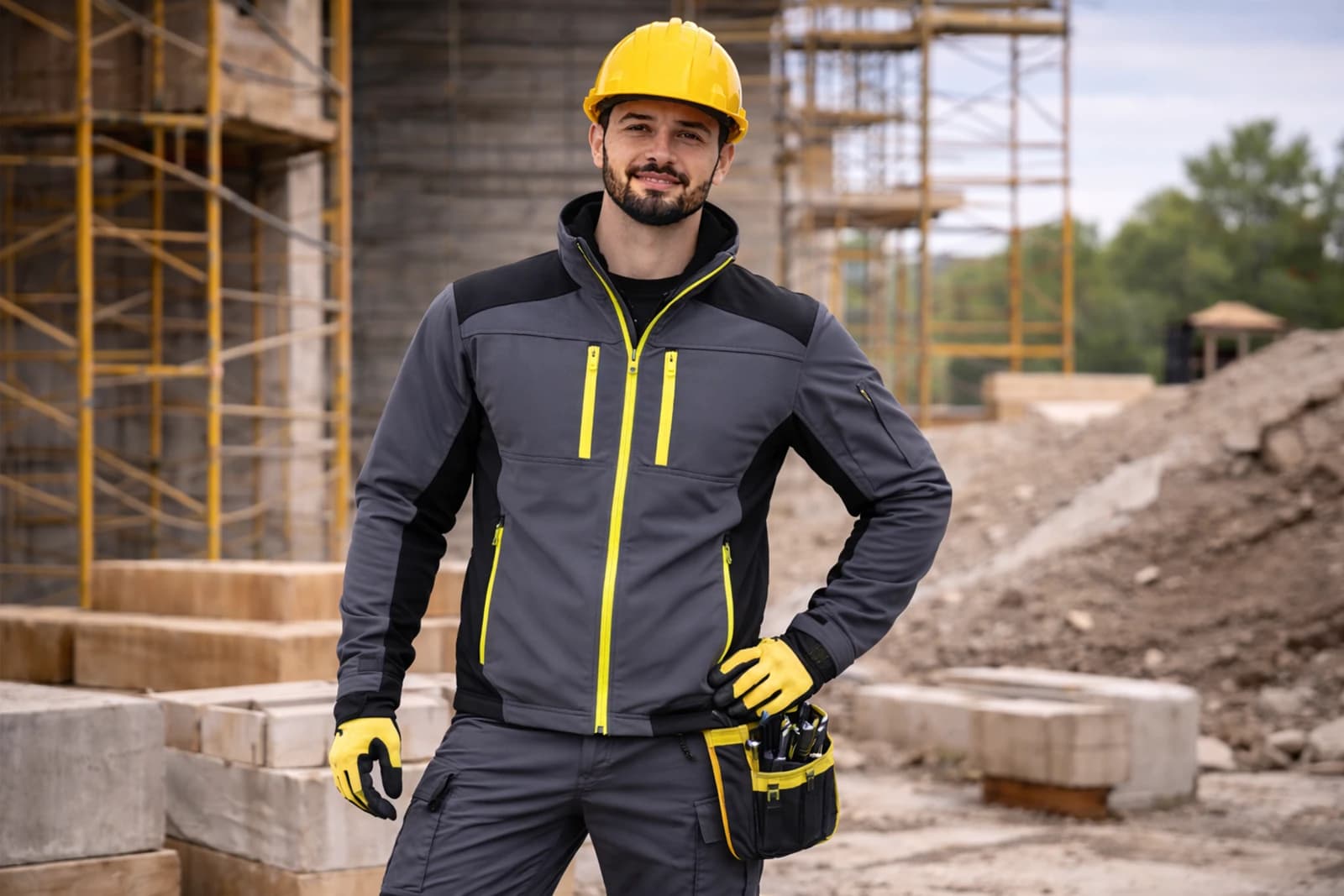
Construction Clothing
Construction Softshell Set
Flexible jacket and trouser set built for crews working across changing weather conditions.
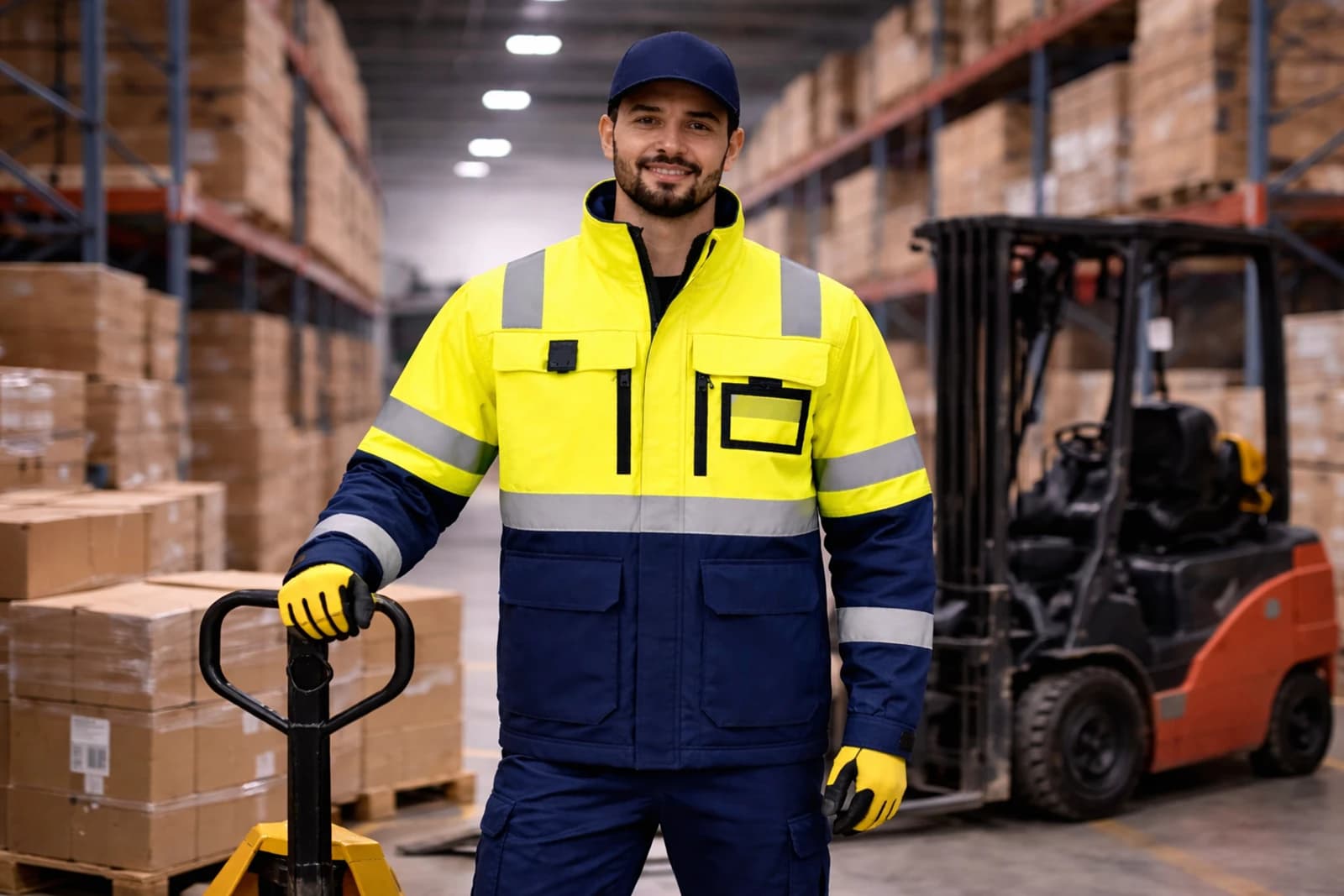
Safety Uniform
Hi-Vis Safety Jacket
Reflective safety jacket for high-visibility site operations and road work crews.