Technical Polo Uniforms for Middle East Logistics: Why Cotton Polos Fail in Gulf Warehouses and What to Source Instead
Most Middle East logistics operators issue standard cotton polos to warehouse and distribution center teams. Within months, they shrink, fade, trap sweat, and look unprofessional. This guide explains the fabric science behind technical polo uniforms purpose-built for Gulf logistics environments and how B2B buyers can source them cost-effectively from Chinese manufacturers.

Buyer context
What procurement teams run into
<p>Middle East logistics hubs — from Jebel Ali in Dubai to King Abdullah Port near Jeddah and Doha's Ras Bufontas — employ tens of thousands of warehouse associates, pickers, loaders, and yard supervisors. Most are issued a standard polo uniform: 100 % cotton or a cheap poly-cotton blend, screen-printed with the company logo, often in dark colours.</p> <p>Within three months the problems emerge:</p> <ul> <li><strong>Sweat saturation.</strong> Cotton absorbs moisture and holds it. In a 40 °C Dubai warehouse with no air conditioning on the loading dock, a cotton polo becomes a wet rag within an hour. The worker is uncomfortable, odour develops quickly, and the garment takes hours to dry even in air-conditioned break rooms.</li> <li><strong>Fading and shrinking.</strong> Gulf water hardness and strong detergents accelerate colour loss. A deep navy polo turns greyish after 10–15 washes. Shrinkage of 5–8 % is common, turning a well-fitted L into a tight M that rides up when reaching for high rack items.</li> <li><strong>Pilling and collar curling.</strong> The constant friction of safety vest straps, tool belts, and warehouse shelving causes cotton-blend collars to curl and fabric surfaces to pill. The uniform looks worn out even when it is functionally fine — which hurts the professional image logistics operators want to project.</li> <li><strong>Heat retention.</strong> Standard cotton polos trap heat against the body. Workers in non-air-conditioned receiving areas or truck yards experience heat stress faster, leading to more frequent rest breaks and lower picking productivity.</li> </ul> <p>The root cause is almost always the same: the buyer treated the polo uniform as a commodity garment and chose the lowest-priced option that could carry a logo. For GCC warehouses that operate 24/7 in cycles of heat, humidity, and air-conditioned cold zones, a commodity polo is the wrong product from day one.</p>
Sourcing approach
How a factory partner can respond
<h2>What Makes a Polo Uniform Technical (and Why It Matters in Gulf Logistics)</h2> <p>A technical polo uniform is engineered for the specific demands of a logistics environment. It differs from a fashion polo or a basic corporate shirt in four critical ways:</p> <h3>1. Fabric: Moisture-Wicking, Fast-Drying, Anti-Odour</h3> <p>The ideal logistics polo for the Middle East uses a <strong>double-knit pique</strong> fabric in 100 % polyester microfiber or a <strong>65/35 poly-cotton blend with moisture-management finish</strong>. The key is the knit construction: double-knit pique creates air channels that allow sweat to evaporate quickly while maintaining the classic polo texture that looks professional. A moisture-management finish (such as wicking or quick-dry treatment) pulls sweat from the skin to the fabric surface where it dries — this keeps the worker feeling dry even on long shifts in hot conditions.</p> <p>Target fabric weight: 180–220 gsm. This is light enough to breathe in summer heat but substantial enough to hold its shape after dozens of washes. Polos below 160 gsm look flimsy and show body contours; polos above 240 gsm add unnecessary heat retention.</p> <h3>2. Colourfastness and Anti-Shrinkage</h3> <p>For Gulf logistics uniforms, specify <strong>ISO 105-B02 lightfastness rating of Grade 5 or higher</strong> — this ensures the colour does not fade under the strong UV exposure that happens during loading dock and yard work. Specify <strong>shrinkage below 3 %</strong> in both length and width after 5 washes (tested to ISO 6330). A technical polo maintains its fit and colour for 50+ industrial wash cycles, whereas a commodity cotton polo is effectively disposable after 15–20 washes.</p> <h3>3. Collar and Cuff Construction</h3> <p>The collar is the first part of a polo to look worn out. Specify a <strong>knitted collar and cuffs with elastic core</strong> (not cut-and-sew single-layer fabric). Knitted collars with elastane or rubber core retain their shape even after being caught on rack edges, safety harness straps, and tool belts. A <strong>three-button placket</strong> with reinforced buttonholes and cross-stitched buttons also outlasts the standard two-button placket found on generic polos.</p> <h3>4. Logo Application That Lasts</h3> <p>Screen printing cracks and peels on technical fabrics. For logistics polos, specify <strong>silicone heat-transfer or embroidery</strong>. Silicone heat-transfer bonds at the molecular level to polyester microfibers and flexes with the fabric without cracking for 50+ industrial washes. Embroidery (chest or sleeve) is durable but adds weight and can limit stretch — place it on a stabilised panel, never directly over the stretch fabric near the shoulder seam.</p> <h2>Mapping Polo Uniforms to Logistics Zones</h2> <p>Not every worker in a distribution center needs the same polo. A tiered approach saves money while maintaining quality:</p> <table> <tr><th>Zone</th><th>Role</th><th>Recommended Polo Type</th><th>Key Specs</th></tr> <tr><td>Administration & office</td><td>Supervisors, planners</td><td>Classic pique polo, branded</td><td>65/35 poly-cotton, 200 gsm, chest embroidery</td></tr> <tr><td>Warehouse floor</td><td>Pick pack, putaway</td><td>Hi-vis technical polo</td><td>100 % polyester wicking, hi-vis colour, reflective tape optional, 190 gsm</td></tr> <tr><td>Loading dock & yard</td><td>Loaders, yard dogs</td><td>Hi-vis technical polo + hi-vis safety jacket</td><td>Same polo + EN ISO 20471 hi-vis jacket when around moving vehicles</td></tr> <tr><td>Cold storage</td><td>Chiller/freezer pickers</td><td>Technical polo + fleece vest</td><td>Polo as base layer under insulated vest; wicking prevents chill from sweat</td></tr> </table> <p>This tiered approach lets you order a single polo SKU for the entire warehouse floor but add the hi-vis safety jacket only for dock and yard workers who need it. The <strong>logistics-polo-uniform</strong> from Sidaier matches warehouse-floor requirements out of the box, and pairing it with the <strong>hi-vis-safety-jacket</strong> for dock teams produces a coherent, certified safety system from one supplier.</p> <h2>Procurement Tips for GCC B2B Buyers</h2> <h3>Sample Before Bulk Order</h3> <p>Order pre-production samples in your three most common sizes (e.g., M, L, XL). Test them in the actual warehouse environment for one week. Check: does the collar stay crisp after a full shift? Does the fabric dry within 15 minutes after a sweat cycle? Is the logo intact after three industrial washes?</p> <h3>Size Distribution Matters</h3> <p>Gulf logistics workforces include South Asian, Southeast Asian, Arab, and African workers with different body proportions. A size chart developed for European or Chinese body types will not fit. Work with your Chinese manufacturer to create a GCC-specific size set. Expect sample adjustments; a good OEM will complete two fit rounds in 7–10 working days.</p> <h3>MOQ and Lead Time</h3> <p>Technical polos are simpler to produce than jackets or coveralls, so MOQs are lower. Expect 100–200 pieces per colour per size spread, with a 30–40 day lead time from sample approval. Factory-direct pricing from a Chinese manufacturer typically ranges from $4–$8 per piece depending on fabric quality, embroidery vs. heat-transfer, and order volume.</p> <h2>Summary</h2> <p>Cotton polos are the wrong choice for Gulf logistics uniforms. They trap heat, fade fast, shrink, and look unprofessional within weeks. Technical polo uniforms — engineered with moisture-wicking double-knit fabric, anti-shrink construction, reinforced collars, and durable logo application — perform for 50+ industrial washes in the region's harsh conditions. For B2B buyers sourcing for Middle East distribution centers, the right approach is a tiered system: technical polos for the warehouse floor plus hi-vis jackets for dock and yard zones, sourced from a single Chinese OEM who understands both garment types and Gulf climate requirements.</p>
Recommended Products
Products that fit this use case

Logistics Uniform
Logistics Polo Uniform
Breathable uniform polo for warehouse, delivery, and last-mile teams.
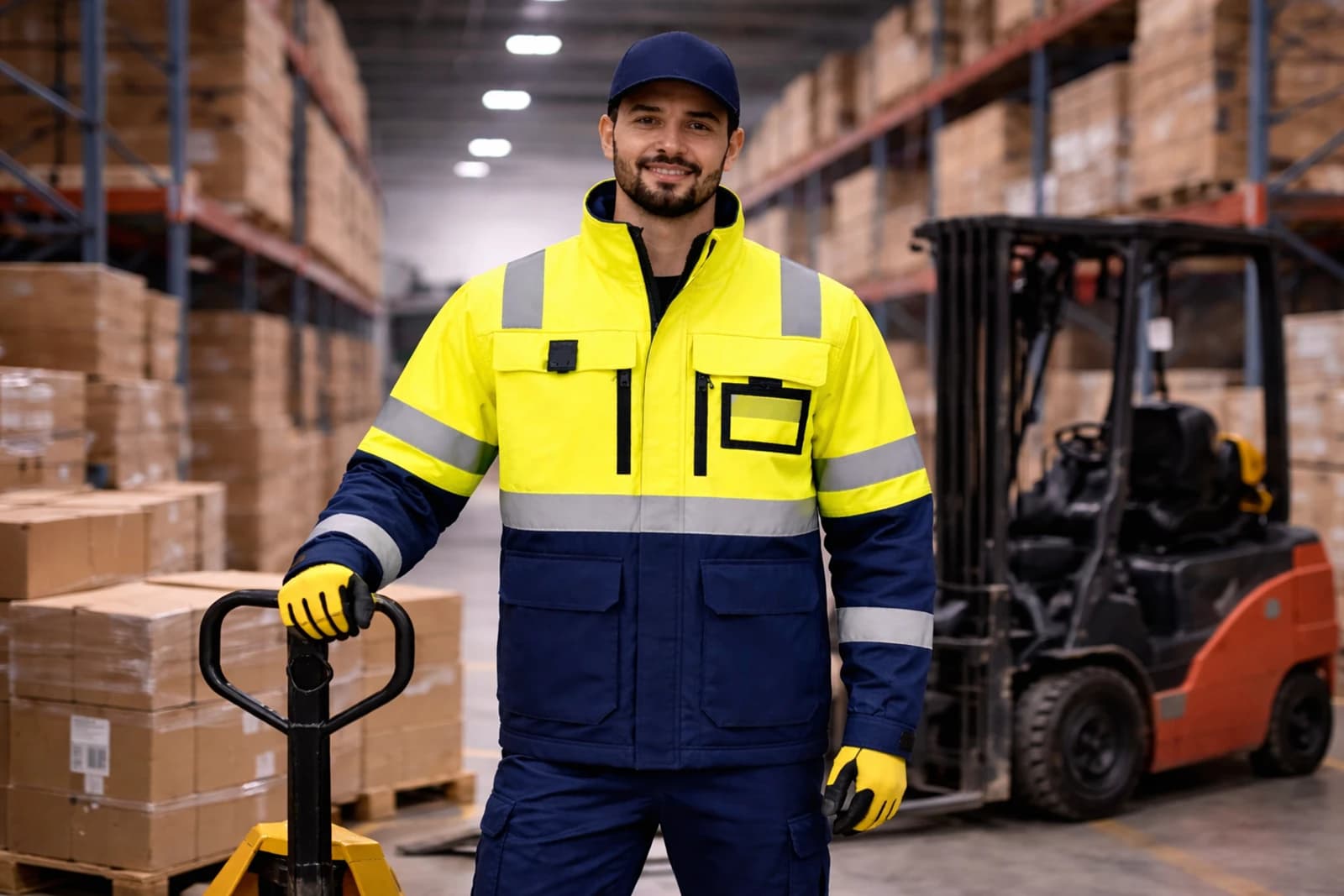
Safety Uniform
Hi-Vis Safety Jacket
Reflective safety jacket for high-visibility site operations and road work crews.