Warehouse Safety Workwear for Middle East Inland Logistics: What B2B Buyers Need to Know
Middle East warehouse and inland logistics operators need workwear that balances safety compliance with comfort in hot, confined environments. From hi-vis distribution center jackets to heat-friendly logistics polo uniforms, this guide covers fabric standards, reflective tape placement, and what to specify when sourcing from a Chinese manufacturer.

Buyer context
What procurement teams run into
A procurement officer for a Saudi Arabian logistics company places an order for 3,000 hi-vis vests and polo uniforms for four regional distribution centers. The vests arrive without properly positioned reflective tape — the horizontal bands sit too low on the torso, and the background fabric is a shade of orange that does not match the company's brand color. The polo shirts shrink in the first wash cycle, pulling the embroidered logo off-center on the chest. Warehouse and inland logistics workwear has a different set of requirements than last-mile delivery or construction work. Distribution center workers move between loading docks, forklift zones, and storage aisles — they need 360-degree high visibility, breathable fabrics for hot warehouse environments that can reach 45°C inside metal-roofed buildings, and sleeves and cuts that do not snag on racking or pallets. Many Middle East logistics operators buy the same uniform for warehouse staff and delivery drivers. This creates issues: warehouse workers need closer-fitting sleeves and higher abrasion resistance on elbows and knees from repeated contact with shelving and cardboard boxes. The hi-vis requirement is also more constant indoors under mixed lighting conditions — warehouse LED and fluorescent lighting does not reflect retroreflective tape as effectively as direct sunlight, so the tape grade matters more. B2B buyers who source from China without specifying warehouse-specific requirements often receive garments designed for outdoor construction or general industrial use. The fabric is too heavy for indoor heat, the vis tape is grade 2 when grade 1 is needed for mixed-lit environments, and the polo fabric puckers around embroidery because the stabilizer was designed for heavyweight cotton rather than lightweight moisture-wicking polyester-blend fabric.
Sourcing approach
How a factory partner can respond
The key is to write a warehouse-specific specification rather than reusing a general logistics RFQ. Start by distinguishing the two uniform categories: enclosed-environment hi-vis for indoor wear requires EN ISO 20471 Class 2 with the highest retroreflective performance, because low ambient light inside warehouses reduces tape effectiveness. Specify silver reflective tape with a minimum 50 mm width and place it to create a full torso X-pattern that remains visible when workers bend or reach for upper racks. For the hi-vis jacket, select a mesh-style hi-vis safety jacket rather than a fully lined one. The open mesh construction allows air circulation in hot warehouse conditions, and the lightweight 100% polyester base resists fading from frequent industrial washing. Ensure the reflective tape is heat-bonded silicone-free tape — silicone-based adhesives lose adhesion faster in the 40–50°C warehouse temperatures common in Gulf summer logistics hubs. For the polo uniform, specify a logistics-polo-uniform with anti-pilling treatment (tested to at least ISO 12945-2 at grade 4) and enzyme-washed fabric to prevent shrinkage. The collar should have a fused interlining that withstands 25+ industrial washes without curling. For embroidery areas, ask the factory to use a cut-away stabilizer designed for performance knit fabrics — this prevents the logo from puckering after washing and keeps the brand presentation crisp across the entire fleet. A practical step: request shrinkage and colorfastness test reports before production. Ask for results from AATCC 135 (dimensional stability after 5 washes) and a grey scale rating of at least 4 for color change after 20 wash cycles. Most Chinese workwear factories serving export markets can provide these reports from SGS or Intertek within 10 working days. For a pilot order of 500 pieces per warehouse location, this upfront due diligence saves the cost of replacing an entire fleet's uniforms 6 months early.
Recommended Products
Products that fit this use case
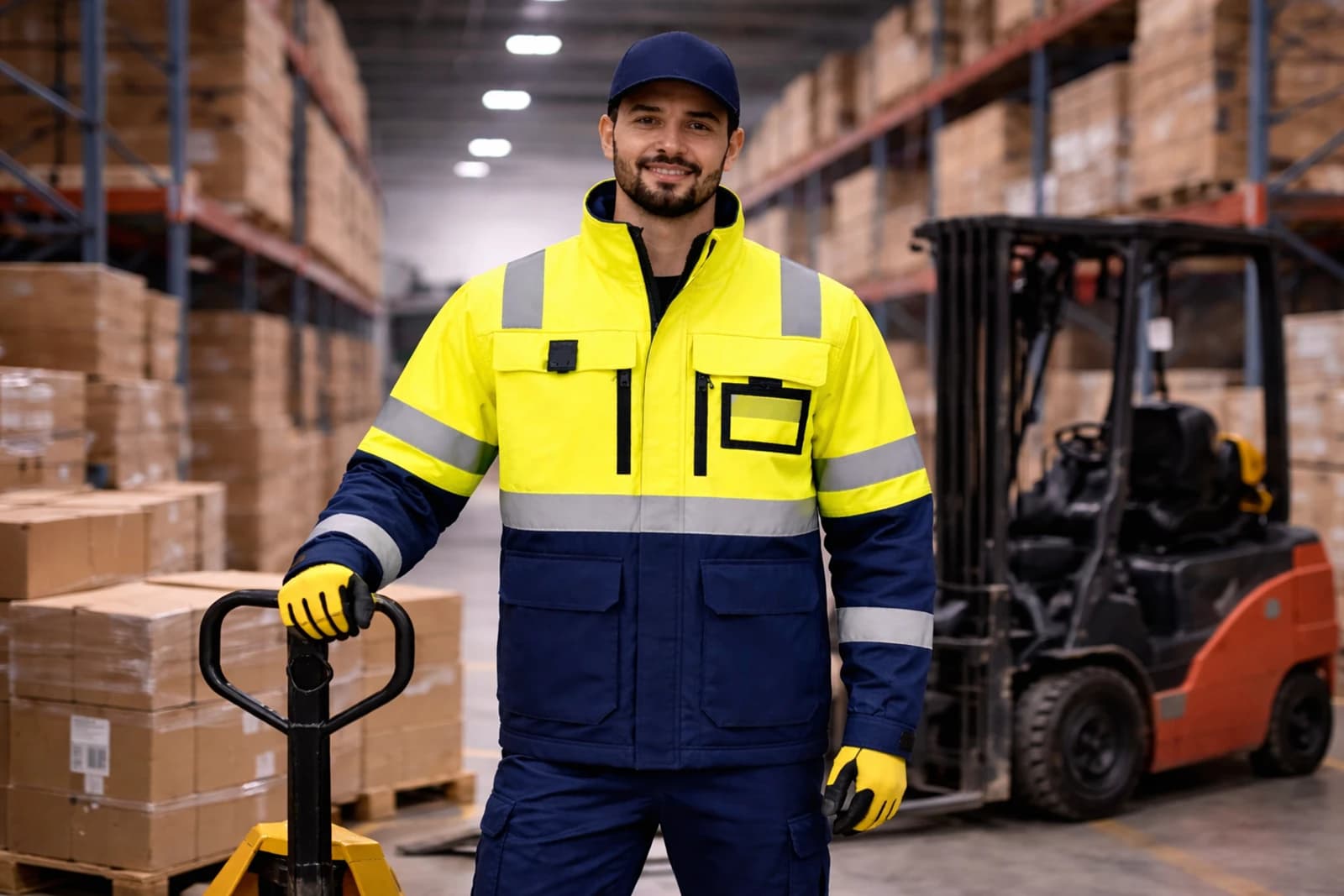
Safety Uniform
Hi-Vis Safety Jacket
Reflective safety jacket for high-visibility site operations and road work crews.

Logistics Uniform
Logistics Polo Uniform
Breathable uniform polo for warehouse, delivery, and last-mile teams.