Wastewater Plants Specify Chemical-Resistant Uniforms for Chlorine Splash Zones
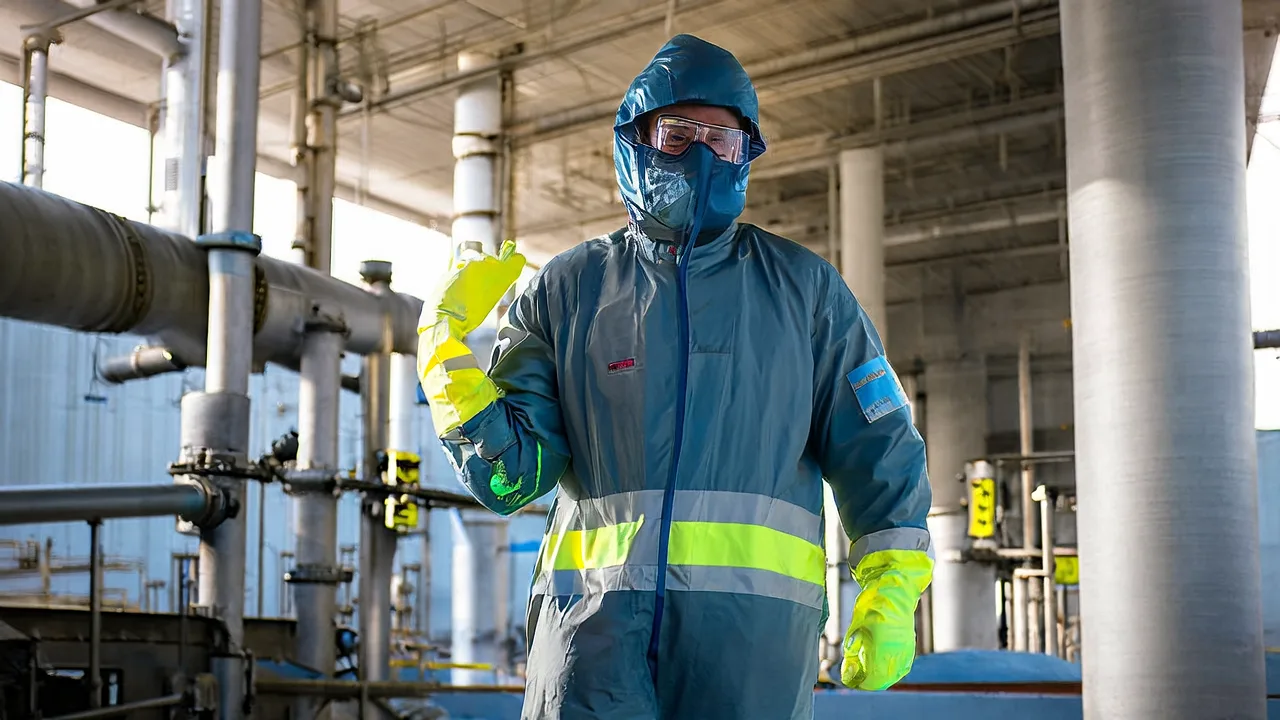
Wastewater treatment workwear must resist chemical splash exposure from chlorine, sulfuric acid, and coagulants while preventing biological hazard contact with worker skin. Standard workwear fabrics absorb chemical splashes and allow pathogens to contact skin within seconds. Chemical-resistant fabrics that block chemicals are impermeable and trap heat in outdoor treatment areas. The result: buyers choose between chemical protection that causes heat stress and comfort that fails within the first splash contact. This article covers the mechanism that makes chemical resistance and breathability conflict, the fabric and design criteria that deliver both, and the zone-based specification that matches garment properties to each treatment area's exposure profile.
Buyer context
What procurement teams run into
Wastewater treatment plants process municipal or industrial wastewater through screening, primary settling, biological treatment (activated sludge or trickling filter), secondary settling, disinfection (chlorine, UV, or ozone), sludge handling, and effluent discharge operations. Process operators, maintenance technicians, laboratory staff, and sludge handling workers work in environments where garments face three simultaneous constraints: - **Chemical splash exposure:** Disinfection operations use chlorine gas, sodium hypochlorite, or chlorine dioxide. pH adjustment uses sulfuric acid or caustic soda. Coagulant dosing uses aluminum chloride or ferric chloride. Sludge dewatering uses polymer chemicals. Process operators and maintenance technicians work within meters of chemical storage tanks, dosing pumps, and injection points throughout every shift. Chemical splashes occur during valve operations, pipe connections, tank sampling, pump maintenance, and chemical transfer. Chemical-resistant fabric must resist penetration and degradation from chlorine compounds, strong acids, strong alkalis, and oxidizing agents. - **Biological hazard exposure:** Raw wastewater contains bacteria (E. coli, Salmonella, Legionella), viruses (norovirus, hepatitis A, rotavirus), parasites (Giardia, Cryptosporidium, helminth eggs), and fungi. Workers in screening, primary settling, sludge handling, and wet well operations contact raw wastewater, aerosols, and splashes throughout every shift. Biological hazards penetrate standard workwear fabric within seconds of splash contact and contact worker skin, creating infection risk through cuts, abrasions, mucous membrane contact, or ingestion. - **Heat stress in outdoor and semi-enclosed areas:** Wastewater treatment plants are predominantly outdoor facilities with semi-enclosed process buildings (pump stations, laboratory areas, sludge handling buildings). Ambient temperature reaches 30-40°C during summer months in many regions. Workers generate body heat from physical labor (valve operations, pipe connections, equipment maintenance). Garments must enable heat and moisture vapor dissipation to prevent heat stress during full-shift wear. The workwear specification must deliver three protections simultaneously: - **Chemical splash resistance:** fabric must resist penetration and degradation from chlorine compounds, acids, alkalis, and oxidizing agents - **Biological barrier:** fabric must prevent raw wastewater, aerosols, and splashes from contacting worker skin - **Heat dissipation:** fabric must enable air circulation and moisture vapor transmission to prevent heat stress in outdoor treatment areas These three requirements conflict in standard fabric constructions. The mechanism: **1. Chemical-resistant fabric that blocks chemicals traps heat** Chemical-resistant fabrics achieve their performance through impermeable barrier constructions — continuous film coatings (polyurethane, PVC, butyl rubber), laminated membrane layers (PTFE, PVDF), or heavily coated synthetic fabrics that create a continuous barrier preventing chemical penetration. The impermeable construction blocks chemical molecules from passing through the fabric and contacting worker skin. But the same impermeable construction that blocks chemicals also traps heat: - **Impermeable fabric has zero air permeability:** Air cannot pass through the continuous film or membrane layer. Body heat and moisture vapor generated by the worker cannot dissipate through the fabric. The worker experiences heat buildup under the garment within 30-45 minutes of work in outdoor treatment area conditions. - **Impermeable fabric has zero moisture vapor transmission:** Sweat vapor generated by the worker's body cannot pass through the impermeable barrier. Moisture accumulates between the skin and the garment, creating clamminess, discomfort, and heat stress. - **Impermeable fabric adds garment weight:** Chemical-resistant garments with continuous film coatings weigh 30-50% more than standard workwear. The additional weight adds to worker fatigue over 8-10 hour shifts of physical labor. The result: a fabric that blocks chemical splashes causes heat stress for wastewater treatment operators. Operators experience heat exhaustion, reduce productivity, and may seek relief by removing garments or opening closures — creating chemical and biological exposure risk. **2. Breathable fabric that dissipates heat offers no chemical or biological protection** Breathable fabrics achieve their performance through open-weave constructions, lightweight fabric weight, and moisture-wicking fiber content. The open, light construction enables air circulation and moisture vapor transmission — workers stay cool and comfortable throughout the shift in outdoor treatment areas. But the same open, light construction that enables breathability also offers no chemical or biological protection: - **Open weave structure allows chemical penetration:** Chemical splashes pass through the gaps in the weave and contact the worker's skin immediately. The fabric provides no meaningful chemical resistance. - **Absorbent fiber content retains chemicals:** Natural fibers (cotton) and standard synthetic fibers (polyester) absorb chemical splashes and hold the chemical against the worker's skin. The absorbed chemical continues to contact skin until the garment is removed, increasing exposure duration and severity. - **Open weave structure allows biological penetration:** Raw wastewater splashes, aerosols, and droplets pass through the fabric weave and contact worker skin. Biological hazards (bacteria, viruses, parasites) penetrate the fabric within seconds of splash contact. - **Absorbent fabric retains biological hazards:** Absorbent fibers retain wastewater droplets and hold biological hazards against the worker's skin throughout the shift. The prolonged contact increases infection risk. The result: a fabric that dissipates heat effectively offers no chemical or biological protection. Operators experience chemical burns from acid or chlorine splashes within seconds of contact, and biological hazards contact skin immediately upon wastewater splash exposure. The garment that is comfortable becomes a safety liability. **3. The procurement mistake: specifying one fabric property and accepting the tradeoff on the other** The most common procurement error is to specify workwear for one requirement and accept the tradeoff on the other: - **Specify chemical-resistant fabric and accept heat stress:** Operators in chemical handling areas experience heat exhaustion, reduced productivity, and may remove garments or open closures to seek relief — creating chemical and biological exposure risk. The treatment plant faces operator discomfort, reduced productivity in chemical handling operations, and potential chemical exposure incidents when garments are removed. - **Specify breathable fabric and accept chemical burns and biological exposure:** Operators throughout chemical handling and sludge operations experience chemical splashes that penetrate fabric and contact skin. Chemical burns from acid or chlorine splashes occur within seconds. Biological hazards contact skin immediately upon wastewater splash exposure. The treatment plant faces chemical burn incidents, potential infection risk, first aid treatments, and potential regulatory non-compliance with occupational safety requirements for chemical and biological hazard protection. The buyer who chooses chemical resistance without breathability faces heat stress and operator rejection within hours. The buyer who chooses breathability without chemical resistance faces chemical burns and biological exposure throughout every shift. **4. The secondary driver: one garment specified for all treatment plant zones** Many wastewater treatment plants specify one workwear garment for all operational workers — the same fabric, the same design — regardless of the worker's specific zone and its exposure profile. But wastewater treatment plants have distinct zones with different combinations of chemical exposure, biological hazard exposure, and heat stress: - **Chemical handling and disinfection areas:** High chemical splash exposure (chlorine, acids, alkalis, oxidizing agents), moderate biological hazard exposure (limited raw wastewater contact), moderate heat stress (outdoor or semi-enclosed). The primary garment requirement is chemical splash resistance with breathability. - **Screening and primary settling areas:** Moderate chemical splash exposure (limited chemical use in these areas), high biological hazard exposure (raw wastewater, aerosols, splashes), moderate heat stress (outdoor). The primary garment requirement is biological barrier with breathability. - **Sludge handling and dewatering areas:** Moderate chemical splash exposure (polymer chemicals), high biological hazard exposure (raw sludge, aerosols), moderate heat stress (semi-enclosed building). The primary garment requirement is biological barrier with moderate chemical resistance. - **Laboratory and control room areas:** Low chemical splash exposure (limited chemical handling in lab), low biological hazard exposure (no raw wastewater contact), low heat stress (air-conditioned). The primary garment requirement is professional appearance and general comfort. - **Yard and outdoor maintenance areas:** Low chemical splash exposure (limited chemical contact), low biological hazard exposure (limited wastewater contact), high heat stress (outdoor, sun exposure), high visibility requirement (vehicle traffic). The primary garment requirement is visibility compliance with general durability. The buyer who specifies one garment for all zones must choose a compromise fabric that delivers moderate chemical resistance and moderate breathability — but the compromise fabric does not fully meet the primary requirement of any zone. Chemical handling operators still experience heat stress or still suffer chemical burns. Screening area workers lack biological barrier. The compromise satisfies no zone fully. **5. The cost of getting it wrong** The buyer who specifies only chemical resistance without breathability faces: - Heat stress for chemical handling operators — operators experience heat exhaustion, reduced productivity, and may remove garments or open closures to seek relief - Chemical exposure from garment removal — operators removing garments or opening closures in chemical areas contact chemical splashes without protection - Operator complaints and high garment rejection — chemical handling operators reject the garments and seek alternatives that do not meet chemical resistance requirements The buyer who specifies only breathability without chemical resistance faces: - Chemical burn incidents throughout every shift — operators experience chemical burns from acid, chlorine, or alkali splashes that penetrate fabric and contact skin - Biological exposure incidents — operators contact raw wastewater splashes and aerosols that penetrate fabric and contact skin, creating infection risk - First aid treatments and potential lost-time injuries — chemical burn incidents and potential infection incidents require medical treatment and may result in lost work time - Potential regulatory non-compliance with occupational safety requirements for chemical and biological hazard protection
Sourcing approach
How a factory partner can respond
The solution for wastewater treatment workwear is to specify zone-based garment requirements — matching fabric properties to the specific chemical exposure, biological hazard exposure, and thermal profile of each treatment plant zone — and to specify fabric constructions that deliver chemical splash resistance while enabling breathability for chemical handling areas where both requirements apply. **Step 1: Map treatment plant zones by chemical exposure, biological hazard exposure, and thermal profile** Before specifying workwear, map the treatment plant's operational areas by their chemical splash exposure level, biological hazard exposure level, and heat stress level: - **High chemical exposure / moderate biological exposure / moderate heat stress:** Chemical handling and disinfection areas. Primary requirement: chemical splash resistance with breathability. - **Moderate chemical exposure / high biological exposure / moderate heat stress:** Screening and primary settling areas. Primary requirement: biological barrier with breathability. - **Moderate chemical exposure / high biological exposure / moderate heat stress:** Sludge handling and dewatering areas. Primary requirement: biological barrier with moderate chemical resistance. - **Low chemical exposure / low biological exposure / low heat stress:** Laboratory and control room areas. Primary requirement: professional appearance and general comfort. - **Low chemical exposure / low biological exposure / high heat stress / high visibility requirement:** Yard and outdoor maintenance areas. Primary requirement: visibility compliance with general durability. The zone mapping identifies which workers need chemical-resistant fabric, which workers need biological barrier fabric, and which workers need breathable fabric. **Step 2: Specify fabric constructions that deliver chemical splash resistance and breathability** For chemical handling operators who need both chemical splash resistance and breathability, work with the supplier to identify fabric constructions that deliver both properties. The fabric construction criteria: - **Chemical-resistant fiber content or treatment:** Specify fabric with inherent chemical resistance (fiber content that resists chemical degradation — such as modacrylic, aramid, or specialized polyester formulations) or fabric with chemical-resistant treatment (durable water repellent treatment that causes chemical splashes to bead and roll off the fabric surface rather than penetrating). The chemical-resistant treatment must be durable through repeated washing cycles. - **Tight weave construction for biological barrier:** Specify fabric with tight weave density that prevents liquid penetration — the tight weave creates a physical barrier that prevents wastewater splashes and aerosols from passing through the fabric and contacting worker skin. The tight weave must maintain its barrier properties after repeated washing and wear. - **Moderate fabric weight for breathability:** Specify fabric in the 180-220 GSM range — structured enough to maintain chemical-resistant treatment and tight weave integrity, but light enough to enable air circulation and moisture vapor transmission in outdoor treatment areas. Avoid extremely heavy fabrics (which trap heat) and extremely light fabrics (which may have insufficient structure for chemical or biological protection). - **Moisture-wicking treatment or construction:** Specify fabric with moisture-wicking capability — either through fiber cross-section design or through fabric construction that enables capillary moisture transport. The moisture-wicking capability enables sweat vapor to pass through the fabric and dissipate, keeping the operator cool and dry despite chemical-resistant treatment. - **Chemical splash testing:** Specify fabric that has been tested for chemical splash resistance — ISO 6529 (protective clothing — protection against chemicals) or equivalent test standard. The fabric must resist penetration from chlorine compounds, sulfuric acid, caustic soda, and coagulant chemicals for a defined contact time (minimum 10 minutes for splash protection). Require the supplier to provide chemical splash testing data. The supplier should provide fabric construction data — fiber content, fabric weight, weave density, chemical splash testing data (penetration resistance for specific chemicals), air permeability, moisture vapor transmission rate, and wash durability data — and confirm that the construction achieves chemical splash resistance, biological barrier, and breathability. **Step 3: Specify zone-specific garment types** Based on the zone mapping, specify different garment types for different zones: - **Chemical handling and disinfection operators (high chemical exposure, moderate biological exposure):** Specify a coverall with chemical-resistant, breathable fabric construction — chemical-resistant fiber or treatment, tight weave for biological barrier, moderate weight, moisture-wicking capability. The coverall must provide full-body coverage for chemical splash protection. Specify the coverall with sealed seams (seam edges sealed to prevent chemical penetration through needle holes) and chemical-resistant closures (covered zippers, sealed cuffs). Require the supplier to provide chemical splash testing data before approving bulk production. - **Screening and primary settling operators (moderate chemical exposure, high biological exposure):** Specify a coverall with biological barrier fabric construction — tight weave that prevents liquid penetration, moisture-wicking capability for comfort. The coverall must provide full-body coverage for biological barrier protection. Specify the coverall with tight cuffs and collar to prevent wastewater splash penetration at openings. - **Sludge handling operators (moderate chemical exposure, high biological exposure):** Specify a coverall with biological barrier fabric construction and moderate chemical resistance — tight weave for biological barrier, chemical-resistant treatment for polymer chemical splash protection. The coverall must provide full-body coverage for biological and chemical protection. - **Laboratory and control room staff (low chemical exposure, low biological exposure):** Specify a garment with appearance-focused fabric construction — smooth surface, professional appearance, comfortable hand feel. The garment must look clean and professional throughout the shift. - **Yard and outdoor maintenance workers (low chemical exposure, low biological exposure, high visibility requirement):** Specify a hi-vis safety jacket with visibility-compliant fabric construction and general durability for outdoor treatment plant yard conditions. The hi-vis jacket must comply with visibility standards (EN ISO 20471 or equivalent) for workers near vehicle traffic. **Step 4: Specify design features that enhance chemical and biological protection** In addition to fabric properties, specify design features that enhance chemical and biological protection: - **Sealed or bound seams:** Specify garments with sealed seams (seam edges sealed with tape or adhesive) or bound seams (seam edges enclosed in tape). Stitched seams create needle holes that allow chemical and biological penetration. Sealed or bound seams eliminate needle holes and prevent penetration through seam areas. - **Tight, fitted cuffs:** Specify elastic or fitted cuffs that close tightly at the wrist. Tight cuffs prevent chemical splashes and wastewater from entering the garment at the wrist. Loose cuffs allow splashes to enter and contact the worker's arms. - **High collar or integrated hood:** Specify garments with high collars or integrated hoods that protect the neck and head from chemical splashes and biological aerosols. The collar or hood must close tightly at the neck to prevent splash penetration. - **Covered closures:** Specify garments with covered zippers (zipper covered by fabric flap) or concealed snaps. Exposed zippers create gaps that allow chemical and biological penetration. Covered closures eliminate gaps and prevent penetration through closure areas. - **Minimal external pockets and features:** Specify garments with minimal external pockets and surface features. Each external feature creates additional seams and openings that can allow chemical or biological penetration. A clean, simple garment design minimizes penetration points. **Step 5: Evaluate samples under wastewater-treatment-environment conditions** When the supplier submits samples, evaluate chemical resistance, biological barrier, and breathability under conditions that replicate the treatment plant environment: - **Chemical splash evaluation:** Apply chemical splashes (chlorine solution, sulfuric acid, caustic soda, coagulant solution) to fabric samples. Evaluate fabric for chemical penetration (does the chemical pass through the fabric and contact the surface beneath?), fabric degradation (does the chemical damage the fabric structure?), and bead-off performance (does the chemical bead and roll off the fabric surface?). Confirm that the fabric resists chemical penetration for the required contact time. - **Biological barrier evaluation:** Apply liquid splashes to fabric samples and evaluate for liquid penetration (does the liquid pass through the fabric and contact the surface beneath?). Confirm that the fabric prevents liquid penetration and maintains barrier properties after repeated washing. - **Breathability evaluation:** Measure the fabric's air permeability and moisture vapor transmission rate — confirm that the fabric enables heat and moisture vapor to pass through. If possible, have chemical handling operators wear the garment in treatment plant conditions for a full shift and confirm that they do not experience excessive heat buildup or sweating. - **Wash durability evaluation:** Subject samples to repeated wash cycles (minimum 30 wash cycles at 60°C) — confirm that the fabric maintains chemical resistance, biological barrier, and breathability after washing. Test chemical splash resistance after washing — confirm that chemical-resistant treatment does not degrade after repeated wash cycles. If the sample passes chemical resistance evaluation but fails breathability (fabric traps heat), request a second sample with enhanced breathability — lighter weight, moisture-wicking treatment, or engineered weave construction. If the sample passes breathability but fails chemical resistance (fabric allows chemical penetration), request a second sample with enhanced chemical resistance — chemical-resistant fiber content, tighter weave, or enhanced chemical-resistant treatment. **Step 6: Implement replacement and exposure tracking** Wastewater treatment workwear replacement should be managed by actual garment condition and exposure history, not by calendar: - **Chemical handling operator garments:** Replace garments when chemical-resistant treatment degrades (fabric no longer beads chemical splashes, chemical penetration occurs during splash contact) or when fabric integrity is compromised (tears, thinning, seam degradation). Track replacement by zone and by garment type. Do not replace on calendar basis — replace based on actual chemical resistance performance. - **Screening and sludge handling operator garments:** Replace garments when biological barrier degrades (fabric allows liquid penetration) or when fabric integrity is compromised. Track replacement by zone and by garment type. - **Exposure tracking:** Implement an exposure tracking system that records garment issue date, chemical exposure incidents (number and type of chemical splashes), wash cycles, and replacement date. Use exposure data to identify garments that degrade prematurely and adjust specifications or washing protocols accordingly. Confirm that the washing protocol (temperature, cycle, detergent) does not degrade chemical-resistant treatment. **Recommended garments for wastewater treatment workwear:** - **Industrial coverall-pro** — specify the coverall for chemical handling operators who work in disinfection areas, chemical storage areas, and dosing operations and need chemical splash resistance with breathability throughout every shift. Specify the coverall with chemical-resistant, breathable fabric construction: chemical-resistant fiber or treatment, tight weave for biological barrier, moderate weight (180-220 GSM), moisture-wicking capability, sealed seams, tight cuffs, high collar, and covered closures. Request the supplier to provide chemical splash testing data (ISO 6529 or equivalent) and air permeability testing data before approving bulk production. - **Hi-vis safety jacket** — specify the hi-vis jacket for yard and outdoor maintenance workers who work in outdoor treatment plant yard areas, near vehicle traffic, and in outdoor maintenance operations and need visibility compliance with general durability. Specify the hi-vis jacket with visibility-compliant fabric construction and general durability for outdoor treatment plant yard conditions. Request the supplier to provide visibility compliance certification (EN ISO 20471 or equivalent) before approving bulk production.
Recommended Products
Products that fit this use case

Industrial Workwear
Industrial Coverall Pro
Hard-wearing one-piece coverall for plant, maintenance, and heavy-duty operations.

Safety Uniform
Hi-Vis Safety Jacket
Reflective safety jacket for high-visibility site operations and road work crews.