Wastewater Workwear Must Resist Wet Biological Exposure Without Trapping Heat
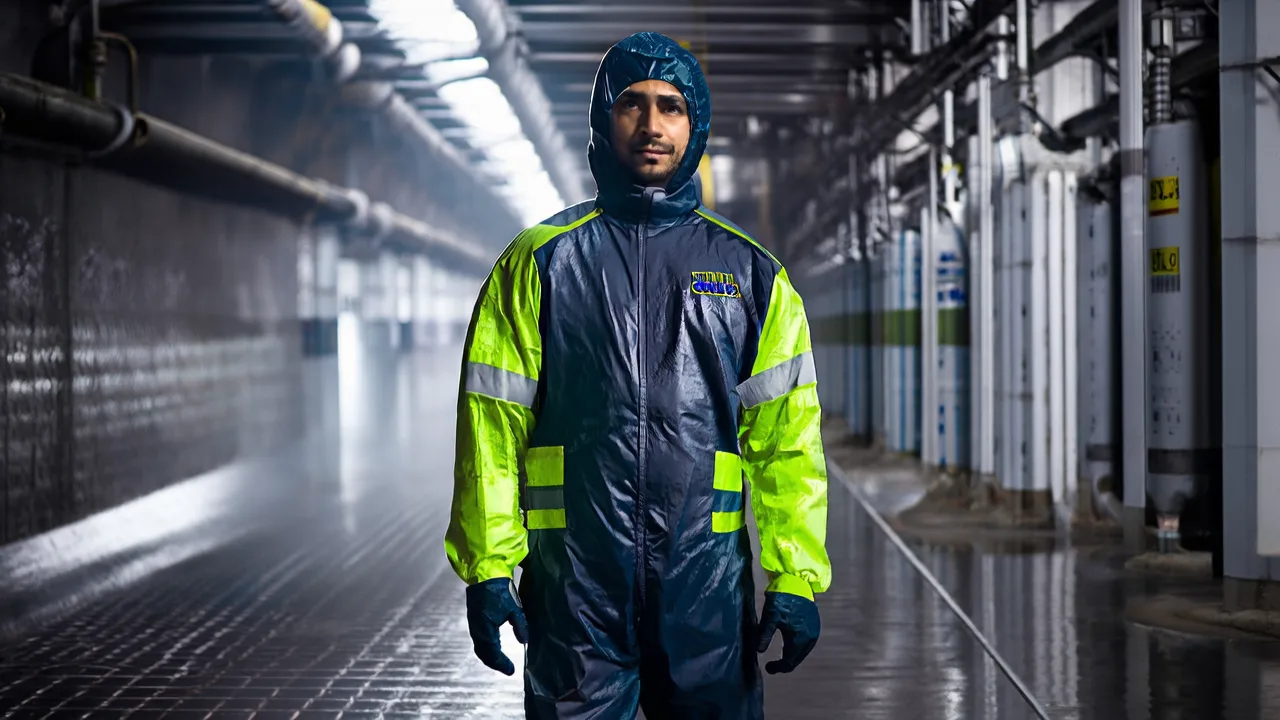
Wastewater treatment workwear must resist wet biological exposure from raw sewage, process splashes, and aerosolized pathogens while enabling moisture vapor transmission so workers do not overheat in confined spaces and warm process areas. Standard water-resistant fabrics use tight, coated constructions that trap heat and moisture vapor against the worker's body and cause heat stress in pump rooms and confined spaces. Standard breathable fabrics absorb process liquids quickly and become saturated with biological contaminants within hours. The result: buyers choose between liquid protection that causes heat exhaustion in confined spaces and breathable fabric that fails biological exposure control within a single shift. This article covers the mechanism that makes wet biological resistance and heat dissipation conflict, the fabric and design criteria that can deliver both, and the zone-based specification that matches fabric properties to the specific exposure profile of each wastewater treatment area.
Buyer context
What procurement teams run into
Municipal wastewater treatment plants process raw sewage through screening, primary sedimentation, biological aeration, secondary clarification, sludge handling, and disinfection operations. Process operators, sludge handlers, pump room attendants, and confined space entry teams work in environments where wet biological exposure is constant and heat stress risk is elevated by confined space geometry and process equipment heat output. The work environment exposes garments to three simultaneous constraints: - **Wet biological exposure:** Raw sewage, return activated sludge, primary sludge, and process splashes contain pathogens (bacteria, viruses, parasites) and biological aerosols generated by aeration equipment. Process workers contact wet biological liquids on every task — valve operation, pump maintenance, sludge dewatering, clarifier walk inspection, and wet well entry. Biological liquids penetrate fabric, saturate the garment, and maintain continuous skin contact throughout the shift. - **Chemical exposure:** Chlorine dioxide or sodium hypochlorite used for disinfection, hydrogen sulfide generated in anaerobic zones, and coagulant chemicals used in sludge treatment create chemical exposure that combines with wet biological exposure. Chemical residues deposit on fabric surfaces and penetrate fabric structure alongside biological liquids. - **Heat stress in confined spaces:** Pump rooms, wet wells, valve vaults, and digester interiors have limited air circulation and elevated temperatures from process equipment and biological activity. Workers in these spaces generate body heat that cannot dissipate in the confined, warm environment. Garments must enable moisture vapor transmission to prevent heat stress. The workwear specification must deliver three protections simultaneously: - **Wet biological resistance:** fabric must resist penetration by biological liquids and prevent pathogen contact with worker skin - **Chemical resistance:** fabric must resist penetration by disinfection chemicals and process chemicals - **Heat dissipation:** fabric must enable moisture vapor transmission to prevent heat stress in confined spaces These three requirements conflict in standard fabric constructions. The mechanism: **1. Water-resistant fabric traps heat in confined spaces** Water-resistant fabrics achieve their performance through tight weave constructions, coated fabric surfaces, and membrane laminates that create a continuous barrier against liquid penetration. The coated, impermeable construction prevents biological liquids from penetrating the fabric — liquids bead on the surface and do not reach the worker's skin. But the same impermeable construction that resists liquid penetration also traps heat: - **Coated fabric has zero air permeability:** Air cannot pass through the fabric. Body heat and moisture vapor generated by the worker cannot dissipate through the fabric. The worker experiences heat buildup under the garment within 15–30 minutes of work in confined spaces with elevated ambient temperature. - **Membrane laminate has low moisture vapor transmission:** Even breathable membranes have limited moisture vapor transmission rates. In confined spaces where ambient temperature approaches or exceeds body temperature, the temperature gradient that drives moisture vapor transmission reverses — moisture vapor cannot pass from the worker's skin through the garment to the environment. The worker experiences clamminess, sweat accumulation, and heat stress. - **Impermeable fabric creates microclimate heat buildup:** The garment creates a sealed microclimate between the worker's skin and the fabric interior. Body heat accumulates in this microclimate, raising skin temperature 2–4°C above ambient. In confined spaces where ambient temperature is already elevated, the worker experiences heat stress, excessive sweating, dizziness, and fatigue. The result: a fabric that resists wet biological penetration causes heat stress for workers in confined spaces. Workers experience heat exhaustion, reduce productivity, and may seek relief by removing garments — creating biological exposure risk. **2. Breathable fabric absorbs biological liquids** Breathable fabrics achieve their performance through open weave constructions, lightweight fabric weight, and moisture-wicking fiber content. The open, light construction enables air circulation through the fabric — heat and moisture vapor pass through freely, keeping the worker cool and comfortable even in confined spaces with elevated ambient temperature. But the same open, light construction that enables breathability also absorbs biological liquids: - **Open weave structure has larger gaps between yarns:** Biological liquids enter the gaps in the weave and penetrate through to the worker's skin without significant resistance. The fabric provides no meaningful liquid barrier. - **Lightweight fabric has lower fiber mass:** Biological liquids penetrate the fabric quickly because there are fewer fibers to absorb and retain the liquid. The fabric becomes saturated with raw sewage or process sludge within 30–60 minutes of exposure. - **Moisture-wicking fibers transport biological liquids:** The same moisture-wicking mechanism that transports sweat vapor also transports biological liquids from the fabric surface to the worker's skin. The fabric actively draws biological contaminants toward the worker's body. The result: a fabric that dissipates heat effectively absorbs biological liquids and creates pathogen exposure risk. Workers experience skin contact with raw sewage, biological aerosols deposit on skin, and the garment that is comfortable becomes a biological exposure hazard. **3. The procurement mistake: specifying one fabric property and accepting the tradeoff on the other** The most common procurement error is to specify workwear for one requirement and accept the tradeoff on the other: - **Specify water-resistant fabric and accept heat stress:** Workers in confined spaces experience heat exhaustion, reduce productivity, and may remove garments to seek relief — creating biological exposure risk. The plant faces productivity loss in confined space operations and potential biological exposure incidents. - **Specify breathable fabric and accept biological liquid penetration:** Workers throughout the process area experience biological liquid saturation within hours. Garments look and smell contaminated. Workers experience skin contact with pathogens. The plant faces biological exposure incidents, worker health complaints, and potential regulatory non-compliance with occupational health requirements for biological exposure control. The buyer who chooses water resistance without heat dissipation faces heat stress and productivity loss in confined spaces. The buyer who chooses breathability without liquid resistance faces biological exposure risk and worker health complaints throughout the process area. **4. The secondary driver: one garment specified for all wastewater treatment zones** Many wastewater treatment plants specify one workwear garment for all process workers — the same fabric, the same design — regardless of the worker's specific zone and its exposure profile. But wastewater treatment plants have distinct zones with different combinations of wet biological exposure, chemical exposure, and heat stress risk: - **Wet process areas (sludge handling, primary sedimentation, aeration basins):** High wet biological exposure, moderate chemical exposure, moderate heat stress risk (outdoor or semi-enclosed areas with some air circulation). The primary garment requirement is wet biological resistance. - **Confined spaces (wet wells, valve vaults, digestors, pump rooms):** High wet biological exposure, high chemical exposure (H2S, chlorine), high heat stress risk (limited air circulation, elevated temperature). The primary garment requirement is wet biological resistance AND heat dissipation. - **Outdoor yard areas (clarifier walks, outfall areas, vehicle traffic zones):** Moderate wet biological exposure (splash risk), low chemical exposure, low heat stress risk (outdoor air circulation). The primary garment requirement is visibility compliance and general comfort. - **Laboratory and control room:** Low wet biological exposure, low chemical exposure, low heat stress risk. The primary garment requirement is appearance and general comfort. The buyer who specifies one garment for all zones must choose a compromise fabric that delivers moderate liquid resistance and moderate breathability — but the compromise fabric does not fully meet the primary requirement of any zone. Confined space workers still experience heat stress. Wet process workers still experience biological liquid saturation. The compromise satisfies no zone fully. **5. The cost of getting it wrong** The buyer who specifies only water resistance without heat dissipation faces: - Heat stress for confined space workers — workers experience heat exhaustion, reduced productivity, and may remove garments to seek relief - Biological exposure risk — workers removing garments in confined spaces creates skin contact with pathogens - Worker complaints and high garment rejection — confined space workers reject the garments and seek alternatives that do not meet biological protection requirements The buyer who specifies only breathability without liquid resistance faces: - Biological liquid saturation throughout the process area — garments saturated with raw sewage within hours - Biological exposure incidents — workers experience skin contact with pathogens, creating health risk - Worker health complaints — workers report skin irritation, gastrointestinal symptoms, and respiratory complaints from biological exposure - Potential regulatory non-compliance with occupational health requirements for biological exposure control
Sourcing approach
How a factory partner can respond
The solution for wastewater treatment workwear is to specify zone-based garment requirements — matching fabric properties to the specific exposure profile of each wastewater treatment zone — and to specify fabric constructions that deliver both wet biological resistance and heat dissipation for workers in confined spaces where both requirements apply. **Step 1: Map wastewater treatment zones by exposure profile** Before specifying workwear, map the plant's process areas by their wet biological exposure level, chemical exposure level, and heat stress risk: - **High wet biological / high heat stress:** Confined spaces (wet wells, valve vaults, digesters, pump rooms). Primary requirement: wet biological resistance AND heat dissipation. - **High wet biological / moderate heat stress:** Wet process areas (sludge handling, primary sedimentation, aeration basins). Primary requirement: wet biological resistance. - **Moderate wet biological / low heat stress:** Outdoor yard areas (clarifier walks, outfall areas). Primary requirement: visibility and general comfort. - **Low wet biological / low heat stress:** Laboratory and control room. Primary requirement: appearance and comfort. The zone mapping identifies which workers need water-resistant fabric, which workers need breathable fabric, and which workers need both properties. **Step 2: Specify fabric constructions that deliver both wet biological resistance and heat dissipation** For confined space workers who need both wet biological resistance and heat dissipation, work with the supplier to identify fabric constructions that deliver both properties. The fabric construction criteria: - **Moderate water resistance with breathable membrane:** Specify fabric with a breathable membrane laminate (e.g., microporous membrane or hydrophilic membrane) that resists liquid water penetration while enabling moisture vapor transmission. The membrane must have a hydrostatic head rating sufficient to resist process liquid penetration (minimum 1000 mm H2O) AND a moisture vapor transmission rate sufficient to enable heat dissipation (minimum 5000 g/m²/24h). - **Moderate fabric weight:** Light enough to enable heat dissipation but heavy enough to resist liquid penetration. A balanced weight (180–220 gsm) that achieves both properties. Avoid extremely heavy fabrics (which trap heat) and extremely light fabrics (which allow liquid penetration). - **Seam sealing:** Specify fabric with sealed or welded seams in areas that contact biological liquids. Needle holes in unsealed seams create liquid penetration paths that bypass the fabric's water resistance. Seamed garments must have sealed seams at shoulders, chest, arms, and legs. - **Chemical resistance:** Specify fabric that resists disinfection chemicals (chlorine dioxide, sodium hypochlorite) and H2S exposure without degradation. The fabric must maintain water resistance and breathability after chemical exposure. - **Anti-microbial treatment:** Specify fabric with anti-microbial treatment that inhibits bacterial growth on the fabric surface. The treatment does not replace liquid resistance but reduces biological contamination accumulation on the fabric surface between washing cycles. The supplier should provide fabric construction data — weight, hydrostatic head rating, moisture vapor transmission rate, seam sealing method, chemical resistance data, and anti-microbial treatment — and confirm that the construction achieves both wet biological resistance and heat dissipation. **Step 3: Specify zone-specific garment types** Based on the zone mapping, specify different garment types for different zones: - **Confined space workers (high biological, high heat stress):** Specify a garment with breathable water-resistant fabric construction — breathable membrane laminate, moderate weight, sealed seams, chemical resistance, anti-microbial treatment. The garment must resist biological liquid penetration AND enable heat dissipation for workers in confined spaces with elevated temperature. Require the supplier to provide hydrostatic head testing data and moisture vapor transmission testing data before approving bulk production. - **Wet process workers (high biological, moderate heat stress):** Specify a garment with water-resistant fabric construction — tight weave, water-repellent finish, moderate weight, sealed seams. The garment must resist biological liquid penetration for workers exposed to process splashes throughout every shift. Heat dissipation is secondary because these areas have some air circulation. - **Outdoor yard workers (moderate biological, low heat stress):** Specify a hi-vis garment with water-repellent finish and breathable construction. The garment must provide visibility compliance for outdoor workers near vehicle traffic and enable general comfort. Water resistance is secondary because splash exposure is intermittent. - **Laboratory and control room staff (low biological, low heat stress):** Specify a garment with appearance-focused fabric construction — smooth surface, light color, comfortable hand feel. The garment must look clean and professional throughout the shift. **Step 4: Specify design features that reduce biological contamination accumulation** In addition to fabric properties, specify design features that reduce biological contamination accumulation and exposure risk: - **Minimal external seams and pockets:** External seams and pockets create ledges where biological liquids accumulate. Specify garments with minimal external seams, concealed pockets, and smooth exterior surfaces that do not trap biological liquids. - **Sealed or covered seams:** Internal seams that are sealed or covered prevent biological liquids from entering the garment interior through needle holes. Specify garments with sealed or covered seams in areas that contact biological liquids. - **Smooth closures:** Specify smooth closures (concealed zippers, covered snaps) that do not create ledges where biological liquids accumulate. Avoid exposed buttons or rough-textured closures that trap biological contaminants. - **Elastic or fitted cuffs:** Specify elastic or fitted cuffs that prevent biological liquids from entering the garment through the wrist opening. Loose cuffs allow biological liquids to enter the garment and accumulate on the worker's skin and personal clothing. - **Ventilation features:** Specify ventilation features (mesh-lined vents, underarm vents) in areas that do not contact biological liquids. Ventilation features enable heat dissipation without compromising liquid resistance in non-exposure areas. **Step 5: Evaluate samples under wastewater-environment conditions** When the supplier submits samples, evaluate both wet biological resistance and heat dissipation under conditions that replicate the wastewater treatment environment: - **Liquid penetration evaluation:** Expose the fabric sample to biological liquid simulant (or actual process liquid under controlled conditions) for a defined period — confirm that the fabric resists liquid penetration through to the worker's skin. Confirm that the fabric surface does not show visible liquid penetration after 2–4 hours of exposure. - **Heat dissipation evaluation:** Measure the fabric's moisture vapor transmission rate — confirm that the fabric enables moisture vapor to pass through. If possible, have workers wear the garment in confined space conditions and confirm that they do not experience excessive heat buildup or sweating. - **Chemical resistance evaluation:** Expose the fabric to disinfection chemicals (chlorine dioxide, sodium hypochlorite) and H2S — confirm that the fabric maintains water resistance and breathability after chemical exposure. - **Wash test:** Subject samples to repeated wash cycles at 60°C+ (minimum 25 wash cycles) — confirm that the fabric maintains water resistance, breathability, chemical resistance, and anti-microbial properties after washing. If the sample passes liquid penetration evaluation but fails heat dissipation (fabric traps heat), request a second sample with enhanced breathability — more breathable membrane, lighter weight, or ventilation features. If the sample passes heat dissipation but fails liquid penetration (fabric allows liquid through), request a second sample with enhanced water resistance — higher hydrostatic head rating, sealed seams, or water-repellent finish. **Step 6: Implement zone-based replacement and washing protocols** Wastewater treatment workwear replacement and washing should be managed by zone: - **Confined space garments:** Replace garments when water resistance degrades (hydrostatic head rating decreases after repeated washing, breathable membrane degrades) or when chemical resistance degrades (fabric degradation from chlorine or H2S exposure). Track replacement by zone and by garment type. - **Wet process garments:** Replace garments when water resistance degrades (water-repellent finish degrades after repeated washing) or when fabric integrity is compromised. Track replacement by zone and by garment type. - **Washing protocol:** Specify washing temperature and cycle appropriate for biological decontamination (minimum 60°C) — confirm that the washing protocol does not degrade water resistance, breathability, or chemical resistance. If garments require more frequent washing in high-exposure zones, confirm that the fabric survives the increased washing frequency without degradation. **Recommended garments for wastewater treatment workwear:** - **Industrial coverall-pro** — specify the coverall for confined space workers (wet well entrants, valve vault technicians, digester maintenance, pump room attendants) who face wet biological exposure and heat stress risk throughout every shift. Specify the coverall with breathable water-resistant fabric construction: breathable membrane laminate with minimum 1000 mm H2O hydrostatic head and minimum 5000 g/m²/24h moisture vapor transmission rate, sealed seams, chemical resistance, and anti-microbial treatment. Request the supplier to provide hydrostatic head and moisture vapor transmission testing data before approving bulk production. - **Hi-vis safety jacket** — specify the hi-vis jacket for outdoor yard workers (clarifier walk operators, outfall area attendants, vehicle traffic zone workers) who work near vehicle traffic and need visibility compliance with secondary water resistance. Specify the hi-vis jacket with water-repellent finish and breathable construction that enables comfort during outdoor work. Request the supplier to provide water repellency testing data and visibility compliance certification before approving bulk production.
Recommended Products
Products that fit this use case

Industrial Workwear
Industrial Coverall Pro
Hard-wearing one-piece coverall for plant, maintenance, and heavy-duty operations.
Safety Uniform
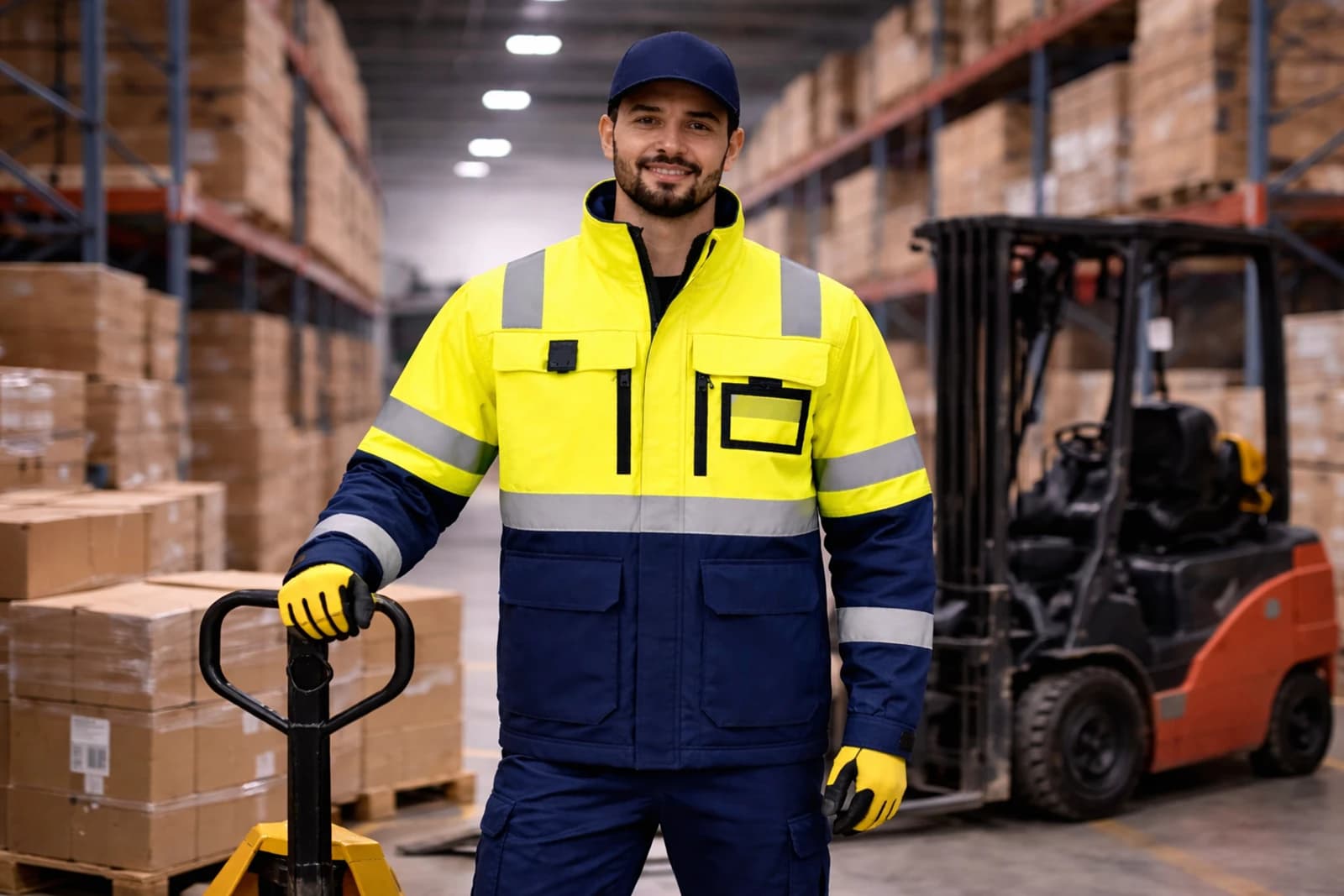
Hi-Vis Safety Jacket
Reflective safety jacket for high-visibility site operations and road work crews.