What Garment Features Reduce Spark Burns in Metal Fabrication?
Metal fabrication shops expose workers to sparks from welding, cutting, and grinding operations that penetrate standard workwear fabrics and cause burn injuries. Most specifications treat spark exposure as a flame-resistant fabric problem — but garment construction features determine whether sparks penetrate fabric, become trapped against skin, or are shed safely. This article covers the fabric selection criteria that resist spark penetration, the construction features that prevent spark trapping, and the zone-based specification that matches garment coverage to each area's spark exposure level.
Buyer context
What procurement teams run into
Metal fabrication shops — producing structural steel, machine guards, industrial frames, and custom metal components — expose workers to sparks generated by welding (MIG, TIG, stick), cutting (plasma, oxy-fuel, abrasive saw), and grinding (angle grinders, belt sanders). Sparks are molten metal particles ejected at high velocity, with temperatures exceeding 1,500°C. When sparks contact workwear fabric, they can penetrate the weave, become trapped in fabric folds, or melt synthetic fibers — creating burn injuries that range from minor discomfort to serious skin damage. The mechanism: **1. Standard workwear fabrics allow spark penetration through the weave** Cotton and cotton-blend fabrics — the default choice for general workwear — have a weave structure that allows sparks to penetrate between yarns. Once a spark penetrates the fabric weave, it contacts skin directly, causing a burn injury. The spark may be small (a single molten particle) but carries enough thermal energy to cause a first-degree or second-degree burn on contact. The root cause: standard workwear fabrics are not designed for spark resistance. Loose-weave fabrics, lightweight fabrics (below 200 gsm), and fabrics with open weave structures allow sparks to penetrate and contact skin. **2. Garment construction features trap sparks against skin** Standard workwear construction includes features that create spark traps — locations where sparks become lodged and remain in contact with skin long enough to cause burns: - **External pockets with flaps:** sparks fall into pocket openings and become trapped between the pocket flap and the pocket body. The worker's body heat and movement keep the spark in contact with skin through the fabric, extending burn duration. - **Cuffs and wrist closures:** sparks enter through open cuffs and become trapped between the cuff and the wrist. Elastic cuffs, button cuffs, and loose wrist closures create pockets where sparks accumulate. - **Collar and neck openings:** sparks fall into collar openings and become trapped between the collar and the neck. Open collar designs allow spark entry; closed collar designs prevent it. - **Waistbands and belt lines:** sparks fall into waistband gaps and become trapped between the waistband and the skin. Loose waistbands or waistbands without secure closures create spark traps. - **Seams and stitching:** raised seams, exposed stitching, and seam allowances create ridges where sparks can lodge. Sparks that lodge in seams remain in contact with fabric long enough to penetrate or melt fibers. The root cause: standard workwear construction is optimized for utility and ease of dressing — not for spark management. Garment features that create pockets, gaps, and ridges become spark traps that extend spark-skin contact duration. **3. Synthetic fabrics melt when contacted by sparks, creating worse burns** Polyester, nylon, and other synthetic fabrics — commonly used in workwear for durability and moisture-wicking — melt when contacted by high-temperature sparks. Melted synthetic fibers adhere to skin, creating contact burns that are more severe than the spark itself. The melted fabric must be removed from the wound before treatment, extending injury severity and recovery time. The root cause: synthetic fabrics are not designed for spark resistance. When sparks contact synthetic fabric, the fabric melts rather than resisting or shedding the spark. **4. Workers move between zones with different spark exposure levels** Metal fabrication shops have distinct zones with different spark generation levels: - **High-spark areas:** welding stations, cutting stations, grinding stations. These areas generate continuous sparks. Workers in these areas face constant spark exposure throughout the shift. - **Moderate-spark areas:** assembly stations, fitting stations, material handling areas near spark-generating operations. Sparks travel from high-spark areas and expose workers who are not directly welding or cutting. - **Low-spark areas:** administrative offices, paint booths, finishing areas, material storage. These areas should be free of sparks, but workers move between zones and carry spark exposure risk. Workers move between zones throughout the shift — from welding to assembly to material handling. A worker wearing standard workwear in a high-spark area faces continuous spark penetration risk. The same worker in a low-spark area faces minimal spark risk but may still be exposed to traveling sparks from nearby operations. The root cause: workwear that does not distinguish between spark exposure zones either over-specifies protection (paying for full spark-resistant garments in low-spark areas) or under-specifies protection (creating burn risk in high-spark areas). **5. Frequent washing degrades spark-resistant properties not validated for wash durability** Spark-resistant fabrics and treatments — tight-weave construction, spark-resistant finishes, FR treatments — degrade through industrial washing. Repeated washing loosens fabric weave, degrades spark-resistant finishes, and reduces FR properties. Garments that resist spark penetration at receipt may not resist penetration after 25-50 wash cycles. The root cause: without wash durability validation, buyers cannot prove that garments maintain spark-resistant properties throughout their service life. A garment that performs well at receipt may allow spark penetration after repeated washing. **6. The cost of getting it wrong** The buyer who specifies standard workwear for metal fabrication without addressing spark penetration faces: - Burn injuries for workers (sparks penetrating fabric and contacting skin) - Extended injury severity (sparks trapped in garment features, melted synthetic fibers adhering to skin) - Regulatory liability (occupational health violations from burn injuries) - Budget waste (replacing garments that degrade prematurely, under-replacing garments that lose spark resistance after washing) The buyer who specifies fabrication-appropriate workwear faces: - Burn injuries reduced (spark-resistant fabric and construction prevent spark penetration) - Injury severity minimized (garment construction eliminates spark traps, fabric resists melting) - Regulatory compliance maintained (spark exposure controls demonstrate due diligence) - Garment service life optimized (wash-durable fabric maintains spark resistance through repeated laundering)
Sourcing approach
How a factory partner can respond
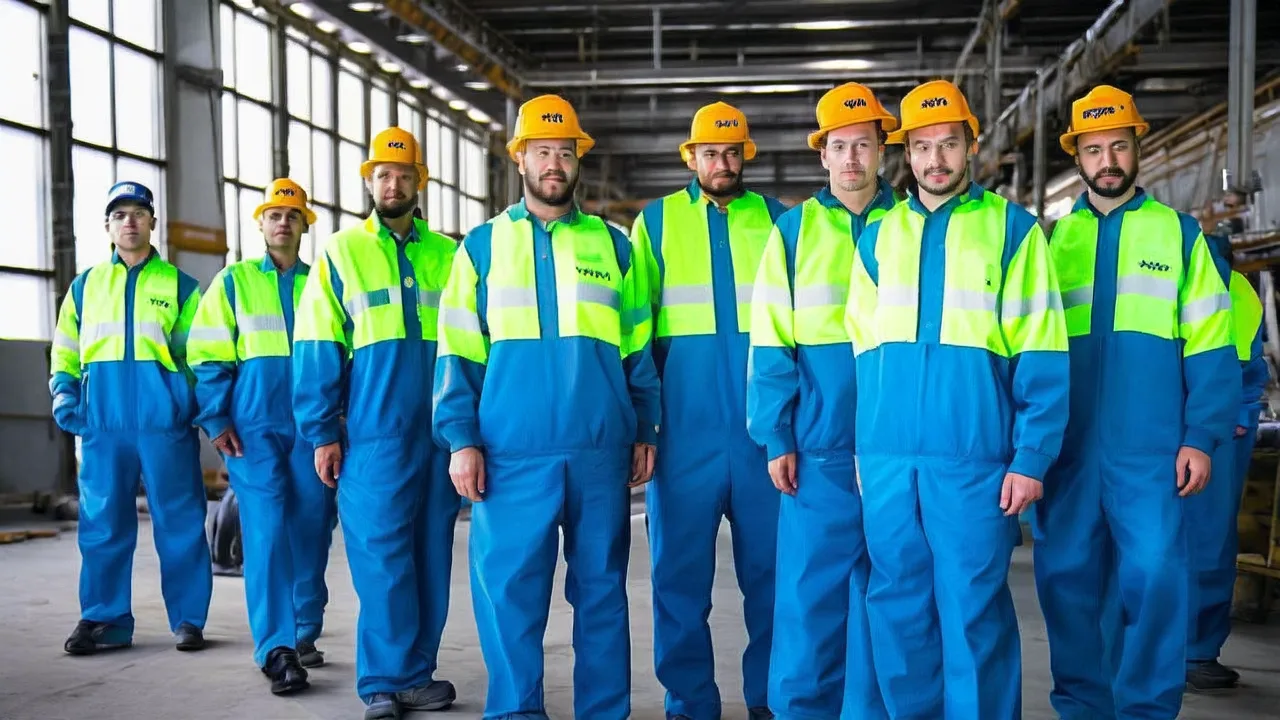
The solution is a metal fabrication workwear specification that addresses spark penetration, spark trapping, fabric melt risk, zone-based coverage, and wash durability — treating spark exposure as a garment construction problem rather than just a fabric selection problem. **Step 1: Specify tight-weave, heavyweight fabric that resists spark penetration** For metal fabrication workwear, specify fabrics that prevent sparks from penetrating the weave: - **Tight-weave cotton or cotton-blend fabric:** specify fabric with a tight weave (minimum 250 gsm for welding and cutting areas) that prevents sparks from penetrating between yarns. Tight-weave fabrics cause sparks to remain on fabric surface where they cool and fall off, rather than penetrating and contacting skin. Cotton fabric chars when contacted by sparks but does not melt — the charred area can be brushed off, and the fabric continues to provide protection. - **Heavyweight fabric:** specify fabric weight of 250-300 gsm for high-spark areas (welding, cutting, grinding). Heavier fabrics have tighter weave structures and more fiber mass to absorb spark energy without penetration. Lightweight fabrics (below 200 gsm) allow spark penetration even with tight weave. - **Wash durability:** require supplier testing data confirming that fabric maintains tight weave and spark-resistant properties after 25, 50, and 75 wash cycles. The testing data proves that garments maintain spark resistance throughout their service life. The fabric specification ensures that garments prevent spark penetration — the primary mechanism of burn injuries in metal fabrication. **Step 2: Specify garment construction that eliminates spark traps** Specify garment construction that eliminates features that trap sparks: - **No external pockets over high-spark areas:** specify garments with no external pockets on the chest or upper body for workers in welding and cutting areas. External pockets create spark traps where sparks become lodged. If pockets are required, specify internal pockets accessed through a sealed opening, or specify pockets on the lower body (thigh) away from direct spark exposure. - **Covered closures:** specify covered zippers with fabric flaps that cover the zipper teeth. Covered closures eliminate crevices where sparks can lodge. Avoid exposed buttons — buttons create crevices where sparks accumulate. - **Elastic or snap cuffs:** specify cuffs that close tightly around the wrist to prevent spark entry. Elastic cuffs or snap-adjustable cuffs seal the wrist opening, preventing sparks from entering and becoming trapped. Avoid open cuffs or loose button cuffs that allow spark entry. - **Closed collar:** specify garments with closed collar designs that seal the neck opening. Closed collars prevent sparks from falling into the neck area. Avoid open collar designs that allow spark entry. - **Enclosed seams:** specify flat-felled seams or bound seams that enclose raw fabric edges. Enclosed seams eliminate raised seams and stitching ridges where sparks can lodge. - **No loose components:** specify garments with no drawstrings, loose labels, or dangling components. Loose components create spark traps and increase burn risk. The construction specification ensures that garment features don't create spark traps that extend spark-skin contact duration. **Step 3: Avoid synthetic fabrics that melt on spark contact** For high-spark areas, specify natural fiber fabrics (cotton, cotton-blend) rather than synthetic fabrics (polyester, nylon). Cotton fabric chars when contacted by sparks but does not melt. The charred area can be brushed off, and the fabric continues to provide protection. Synthetic fabrics melt on spark contact, creating melted fibers that adhere to skin and cause severe contact burns. If synthetic fabrics are required for durability or moisture-wicking, specify fabrics with a cotton-rich blend (minimum 60% cotton) that reduces melt risk, or specify fabrics with spark-resistant treatments that prevent melting. The fabric selection ensures that garments resist melting on spark contact — preventing the severe burns caused by melted synthetic fibers adhering to skin. **Step 4: Create a zone-based specification that matches garment coverage to each area** Metal fabrication shops have distinct zones with different spark exposure levels. Specify different garments for each zone: - **High-spark areas (welding, cutting, grinding):** specify full coverall in tight-weave, heavyweight cotton fabric (250-300 gsm). The coverall provides full body coverage, preventing spark penetration and eliminating personal clothing as a spark exposure source. Specify the coverall with enclosed seams, no external chest pockets, covered zippers, elastic cuffs, and closed collar. Specify the coverall with wash durability testing data confirming that fabric maintains spark resistance after 50 wash cycles. - **Moderate-spark areas (assembly, fitting, material handling near spark operations):** specify coverall or two-piece suit (shirt and trouser) in tight-weave cotton fabric (200-250 gsm). These areas have lower spark exposure but still require spark protection. Specify the garment with spark-resistant construction features (enclosed seams, covered closures, elastic cuffs). - **Low-spark areas (administrative, paint booths, finishing, material storage):** specify polo shirt and trouser in cotton or cotton-blend fabric. These areas should be free of sparks — the polo provides professional appearance without the full coverage needed in high-spark areas. Specify the polo in company-branded colors for professional appearance. The zone-based specification matches garment coverage and cost to each area's spark exposure level. The buyer doesn't over-specify workwear for low-spark areas (paying for full coveralls not needed) and doesn't under-specify workwear for high-spark areas (creating burn risk). **Step 5: Track garment condition and replace based on fabric degradation** Repeated washing degrades fabric weave and spark-resistant properties. Track garment condition and replace garments before fabric degradation increases spark penetration risk: - **Wash cycle tracking:** record the number of wash cycles for each garment. Set a maximum wash cycle limit based on supplier wash durability testing (e.g., replace garments after 50 wash cycles if wash durability testing confirms fabric maintains spark resistance through 50 cycles). - **Periodic fabric inspection:** inspect garments periodically (monthly or quarterly) for fabric degradation — weave loosening, charred areas, seam degradation, closure damage. Garments that show fabric degradation are removed from service regardless of wash cycle count. - **Spark penetration testing:** test garments periodically for spark penetration resistance — expose fabric to standardized spark exposure and measure penetration rate. Garments that allow spark penetration above the acceptance threshold are removed from service. The tracking and replacement protocol ensures that garments are replaced before fabric degradation increases spark penetration risk — maintaining protection throughout garment service life. **Step 6: Address spark exposure through facility-level controls** Workwear specification is one element of spark exposure management. The facility must also implement spark control measures: - **Welding screens and curtains:** install welding screens and curtains around welding and cutting stations to contain sparks and prevent spark travel to adjacent areas. - **Local exhaust ventilation:** install local exhaust ventilation at welding and cutting stations to remove sparks and fumes from the breathing zone. - **Worker training:** train workers on spark exposure hazards, the role of workwear in spark protection, pre-shift inspection procedures, and garment change protocols. - **Burn first aid:** provide burn first aid supplies (burn gel, sterile dressings) and train workers on burn first aid procedures. Immediate burn treatment reduces injury severity and recovery time. The facility-level spark control program reduces overall spark exposure — workwear specification complements facility controls by preventing spark penetration and burn injuries. **Recommended garments for metal fabrication workwear:** - **Industrial coverall-pro** — specify the coverall for welding, cutting, and grinding areas where spark exposure is highest. The coverall's full-body coverage prevents spark penetration and eliminates personal clothing as a spark exposure source. Specify the coverall in tight-weave, heavyweight cotton fabric (250-300 gsm) with enclosed seams, no external chest pockets, covered zippers, elastic cuffs, and closed collar. Specify the coverall with wash durability testing data confirming that fabric maintains spark resistance after 50 wash cycles. The coverall's full coverage, spark-resistant fabric, and spark-safe construction make it suitable for metal fabrication operations where spark exposure and burn prevention are critical. - **Hi-vis safety jacket** — specify the hi-vis jacket for yard workers, material handlers, and outdoor workers who require high visibility for vehicle and equipment safety while handling metal materials. Specify the jacket in tight-weave cotton fabric (200-250 gsm) that resists spark penetration. Specify the jacket with reflective tape that maintains visibility after repeated industrial washing and spark exposure. Specify the jacket with spark-resistant construction features (enclosed seams, covered closures, elastic cuffs). The jacket's high visibility, spark-resistant fabric, and spark-safe construction make it suitable for outdoor metal fabrication operations where workers face vehicle and equipment hazards plus spark exposure.
Recommended Products
Products that fit this use case

Industrial Workwear
Industrial Coverall Pro
Hard-wearing one-piece coverall for plant, maintenance, and heavy-duty operations.

Safety Uniform
Hi-Vis Safety Jacket
Reflective safety jacket for high-visibility site operations and road work crews.