When Should Waste Collection Crews Replace Their Workwear?
Waste collection workwear faces degradation factors that most workwear programs don't account for: contamination with organic waste and biological matter, abrasion from handling bins and bags, frequent washing that breaks down fabric and closures, and odor retention that persists even after laundering. The result: buyers either replace garments on a fixed calendar (wasting budget on garments that still have serviceable life) or wait until garments are visibly degraded (creating hygiene risk, professional appearance issues, and worker discomfort). This article covers the condition criteria that determine when waste collection workwear has genuinely reached end of life, the maximum age limits that prevent hygiene risk from garments that look functional but are contaminated, and the data tracking that turns replacement decisions into procurement intelligence.
Buyer context
What procurement teams run into
Waste collection workwear faces degradation factors that most workwear programs don't account for. Workers handle municipal solid waste, recycling, and organic waste — coming into contact with food residue, bodily fluids, chemicals, and biological matter. Workers load and unload bins, compact waste, and handle bags that leak, tear, and abrade garments. Workers wash garments frequently to remove contamination and odor. The workwear specification must deliver durability to withstand abrasion and frequent washing, hygiene to prevent contamination buildup, and professional appearance to maintain public confidence. These requirements conflict in standard replacement approaches. The mechanism: **1. Calendar-based replacement ignores degradation variation** Most waste management operators set replacement cycles on a fixed calendar — replace all garments every 6 months, or every 12 months — without linking the trigger to actual garment condition. The result: some garments are replaced while still serviceable (wasting budget), while other garments remain in service past their useful life (creating hygiene risk). The root cause: calendar-based replacement ignores the variables that determine actual garment life in waste collection: route type (residential vs commercial vs industrial), worker role (loader vs driver vs supervisor), waste type (municipal solid waste vs recycling vs organic), and washing frequency. A worker on a residential organic waste route washes garments weekly and experiences rapid fabric degradation from organic acids and frequent laundering. A supervisor who inspects routes but doesn't handle waste directly may wash garments monthly and experience minimal degradation. One calendar date cannot match both degradation profiles. **2. Contamination builds up in garments that appear functional** Waste collection workwear comes into contact with organic waste, food residue, bodily fluids, and biological matter. These contaminants penetrate fabric fibers and accumulate over time, even when garments are washed regularly. The contamination creates hygiene risk: - **Biological contamination:** bacteria, viruses, and fungi from waste accumulate in fabric fibers. Washing removes surface soil but does not eliminate all biological contamination embedded in fibers. Over time, biological load builds up, creating hygiene risk for workers who wear contaminated garments throughout their shift. - **Chemical contamination:** household chemicals, automotive fluids, and industrial solvents in waste penetrate fabric fibers. Some chemicals bond with fabric and are not removed by standard washing. Workers wear garments contaminated with chemicals that may cause skin irritation or sensitization. - **Odor retention:** organic waste contamination causes odor that persists after washing. Workers wear garments that smell despite laundering, creating discomfort and professional appearance issues. The root cause: the replacement policy does not account for contamination that builds up in garments even when they appear visually functional. A garment that looks clean may be contaminated with biological or chemical matter that washing does not remove. **3. Abrasion degrades garments faster than calendar schedules anticipate** Waste collection work involves frequent contact with abrasive surfaces: metal bins, plastic bags, compactors, and waste itself. Workers load bins by hand, drag bags across truck beds, and compact waste with rams and plates. Garments experience abrasion at: - **Forearms and sleeves:** contact with bin edges, bag surfaces, and waste during loading - **Chest and abdomen:** contact with bins and bags during lifting and carrying - **Knees and seat:** contact with truck beds, compactors, and ground during maintenance and clearing blockages - **Cuffs and hems:** contact with ground, truck steps, and equipment Abrasion thins fabric, breaks stitches, and weakens seams. Garments in high-abrasion roles degrade in 3-4 months, while garments in low-abrasion roles last 9-12 months. Calendar replacement at 6 months replaces low-abrasion garments prematurely and keeps high-abrasion garments in service too long. **4. Frequent washing breaks down fabric and closures** Waste collection workwear requires frequent washing to remove contamination and odor. Workers wash garments weekly or even multiple times per week depending on route type and contamination level. Frequent washing degrades garments: - **Fabric breakdown:** washing breaks down fabric fibers, reducing fabric strength and causing thinning. Cotton and cotton-blend fabrics degrade faster than polyester. After 25-50 wash cycles, fabric may be visibly thinned at stress points. - **Closure failure:** zippers, snaps, and hook-and-loop closures degrade through washing. Zippers stick or separate. Snaps loosen. Hook-and-loop loses grip. Closure failure compromises garment function. - **Shrinkage:** repeated washing causes shrinkage, especially in cotton-blend fabrics. Shrinkage changes garment fit, causing discomfort and reducing professional appearance. - **Color fading:** washing causes color fading, especially in dark-colored garments. Faded garments look worn and unprofessional. The root cause: the replacement policy does not account for the degradation impact of frequent washing. Garments that are washed weekly degrade faster than garments washed monthly, even if both garments are used in similar work environments. **5. Visibility compliance degrades in hi-vis garments** Waste collection workers operate near traffic and must be visible to drivers. Hi-vis garments meet EN ISO 20471 requirements for high-visibility clothing, but the visibility elements degrade: - **Retroreflective tape:** tape loses reflectivity through washing, abrasion, and UV exposure. After 25-50 wash cycles, tape may no longer meet minimum reflectivity requirements. - **Fluorescent background fabric:** fabric fades through washing and UV exposure, reducing the contrast that makes workers visible. Faded fabric may no longer meet the minimum chromaticity requirements. The root cause: hi-vis garments may have intact base fabric but non-compliant visibility elements. Calendar replacement at 6 months may replace a hi-vis garment that still has compliant tape (if the worker was in low-UV conditions) or keep a non-compliant garment in service (if the worker was in high-UV conditions). **6. The cost of getting replacement wrong** The buyer who replaces too early faces: - Premature replacement cost: replacing garments that still have usable life, wasting 20-40% of annual workwear budget - Excess inventory: stocking replacement garments that are not needed, tying up capital in inventory - No feedback loop: calendar replacement does not generate data about actual garment performance, so the buyer cannot improve future procurement specifications The buyer who replaces too late faces: - Hygiene risk: workers wearing garments contaminated with biological or chemical matter, creating health risk - Professional appearance: workers wearing faded, stained, or damaged garments, reducing public confidence in the waste management operator - Worker discomfort: workers wearing garments that smell, don't fit, or don't protect, reducing morale and productivity - Visibility non-compliance: workers wearing hi-vis garments with degraded tape or faded fabric, creating safety risk near traffic
Sourcing approach
How a factory partner can respond
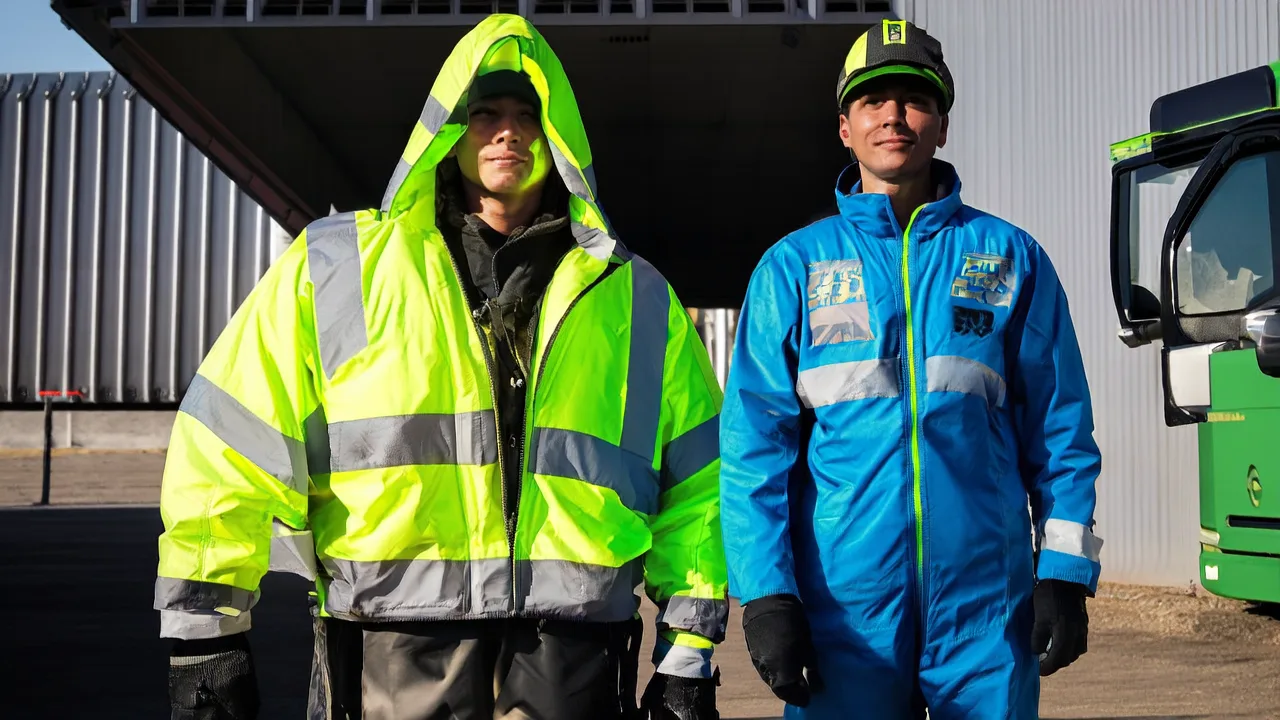
The solution is a waste collection workwear replacement program that combines condition-based criteria, maximum age limits for hygiene reasons, and data tracking that turns replacement decisions into procurement intelligence. **Step 1: Define condition criteria for waste collection workwear** For each garment type in the waste collection workwear program, define specific, checkable condition criteria that indicate end of serviceable life. The criteria must be observable — a storekeeper or supervisor can check them without specialized equipment. For coveralls and general workwear: - **Staining:** stains from waste, oils, or chemicals that will not wash out and compromise professional appearance or hygiene requirements - **Fabric thinning:** fabric at knees, seat, cuffs, forearms, and underarms has visibly thinned to the point where the weave structure is open or the fabric is translucent when held to light - **Seam failure:** seams at stress points (crotch, underarm, knee, forearm) have broken stitches or are fraying - **Closure failure:** zippers that stick, separate, or no longer hold; snaps that no longer fasten; hook-and-loop that no longer grips - **Shrinkage:** garment has shrunk beyond the size chart tolerance, causing fit issues - **Odor retention:** garment retains odor after washing, indicating contamination that cannot be removed For hi-vis garments: - **Retroreflective tape condition:** tape is cracked, peeling, scratched through to the base layer, or has lost reflectivity (check with a flashlight at 3 meters — if the tape does not reflect clearly, it has failed) - **Minimum tape width:** tape has worn below the minimum width required by the visibility standard (e.g., below 50mm for EN ISO 20471 Class 2) - **Background fabric fading:** fluorescent background fabric has faded to the point where it no longer provides the required contrast (check against a new garment of the same type) - **Fabric integrity:** base fabric has holes, tears, or thinning **Step 2: Set maximum age limits for hygiene reasons** Condition-based replacement works for most degradation, but waste collection workwear should have maximum age limits regardless of condition — because contamination builds up in garments even when they appear visually functional: - **Coveralls and general workwear:** set a maximum age limit of 6 months for workers who handle waste directly (loaders, drivers who assist with loading). Set a maximum age limit of 12 months for workers who do not handle waste directly (supervisors, mechanics). - **Hi-vis garments:** set a maximum age limit of 6 months for workers in high-UV conditions (outdoor loading areas, routes with significant sun exposure). Set a maximum age limit of 12 months for workers in low-UV conditions (indoor transfer stations, night shifts). - **FR garments:** set a maximum age limit based on the supplier's recommended wash life or service life, because FR treatment may degrade through washing without visible indication. The maximum age limit is a hygiene backstop — garments are replaced at the age limit even if they pass the condition check. The age limit prevents biological and chemical contamination from building up in garments beyond what washing can remove. **Step 3: Build a condition check into the replacement request process** When a worker requests a replacement garment, the storekeeper or supervisor conducts a condition check against the defined criteria before approving the replacement: - The worker presents the garment for inspection. - The storekeeper checks each condition criterion for the garment type. - The storekeeper checks the garment's age against the maximum age limit. - If the garment meets one or more end-of-life criteria OR has reached the maximum age limit, the replacement is approved and the garment is retired. - If the garment does not meet any end-of-life criteria AND has not reached the maximum age limit, the replacement is not approved. The storekeeper explains to the worker why the garment is still serviceable and offers to re-check at the next scheduled review. - If the worker disagrees with the decision, escalate to the site safety officer or procurement manager for review. The condition check prevents workers from requesting replacements for cosmetic preferences when the current garment is still functional and within the age limit. It also prevents the storekeeper from approving replacements without checking, which leads to premature replacement waste. **Step 4: Track replacement data and use it to improve procurement** Record every replacement: garment type, size, worker, route, role, issue date, replacement date, and reason for replacement (which condition criterion triggered the replacement, or whether the maximum age limit was reached). Use this data to: - **Identify garments that degrade prematurely:** if a specific garment type consistently fails at 3 months across multiple workers on similar routes, the garment quality may not match the work environment. Escalate to the supplier or adjust the specification. - **Identify routes that accelerate degradation:** if workers on organic waste routes consistently replace garments at half the rate of workers on recycling routes, the procurement plan should account for different replacement rates by route type. - **Identify roles that accelerate degradation:** if loaders consistently replace garments at 4 months while drivers replace at 8 months, the procurement plan should account for different replacement rates by role. - **Forecast replacement orders:** use replacement data to forecast future orders by garment type, size, route, and role — replacing guess-based ordering with data-driven forecasting. - **Negotiate with suppliers:** use replacement data to negotiate better value with suppliers — demonstrating that garments that fail at 3 months do not deliver acceptable value, and requesting price adjustments or quality improvements. **Step 5: Communicate the replacement policy to workers** Workers need to understand the replacement policy — why condition checks are conducted, what criteria trigger replacement, why maximum age limits are set, and how to request a replacement. Communicate: - The condition criteria for each garment type (what makes a garment ready for replacement) - The maximum age limit for each garment type and role (why garments are replaced even if they appear functional) - The replacement request process (who to approach, what to bring, what to expect) - The escalation process if a worker disagrees with a condition check decision When workers understand the policy, they are more likely to present garments for inspection when they are genuinely degraded — and less likely to request replacements for cosmetic preferences. **Recommended garments for waste collection workwear replacement programs:** - **Hi-vis safety jacket** — use as the reference garment for defining condition criteria for hi-vis outerwear. The jacket's retroreflective tape, fluorescent background fabric, and visibility compliance create specific check points: tape reflectivity, tape width, background fabric fading, and fabric integrity. The hi-vis jacket is particularly suited to condition-based replacement because its compliance-critical elements (tape and background fabric) degrade visibly and checkably. Specify the hi-vis jacket for waste collection workers who operate near traffic or in low-light conditions. - **Industrial coverall-pro** — use as the reference garment for defining condition criteria for heavy industrial coveralls. The coverall's construction details — double-layer knees, bar-tack at stress points, bound seams, metal zipper — create specific check points for condition assessment: knee reinforcement wear, seam integrity at stress points, zipper function, and fabric thinning at high-abrasion areas. Specify the industrial coverall for waste collection workers who handle waste directly and experience high abrasion at forearms, chest, knees, and cuffs.
Recommended Products
Products that fit this use case
Safety Uniform
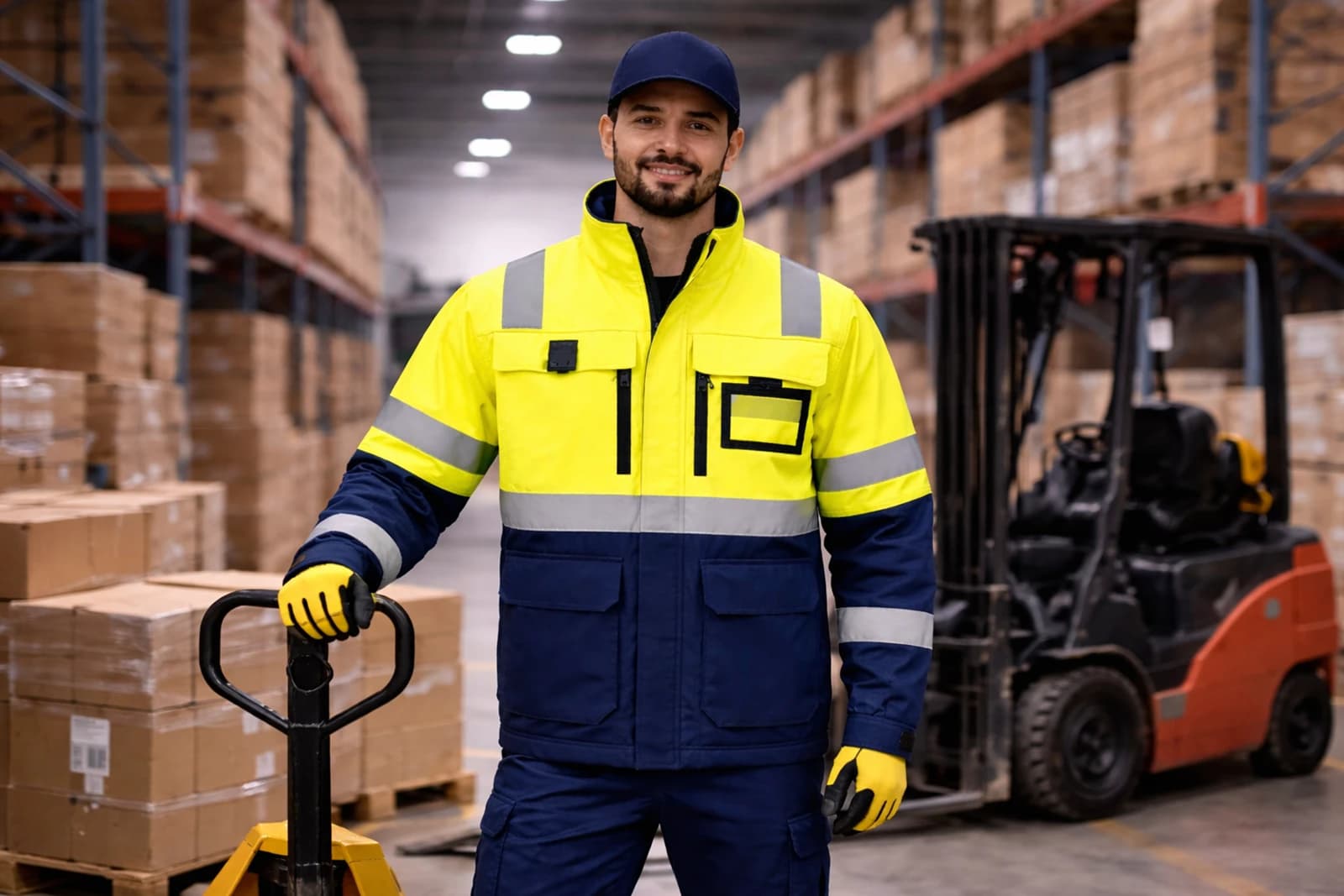
Hi-Vis Safety Jacket
Reflective safety jacket for high-visibility site operations and road work crews.

Industrial Workwear
Industrial Coverall Pro
Hard-wearing one-piece coverall for plant, maintenance, and heavy-duty operations.