Why Standard Workwear Fails on a Steel Fabrication Shop Floor
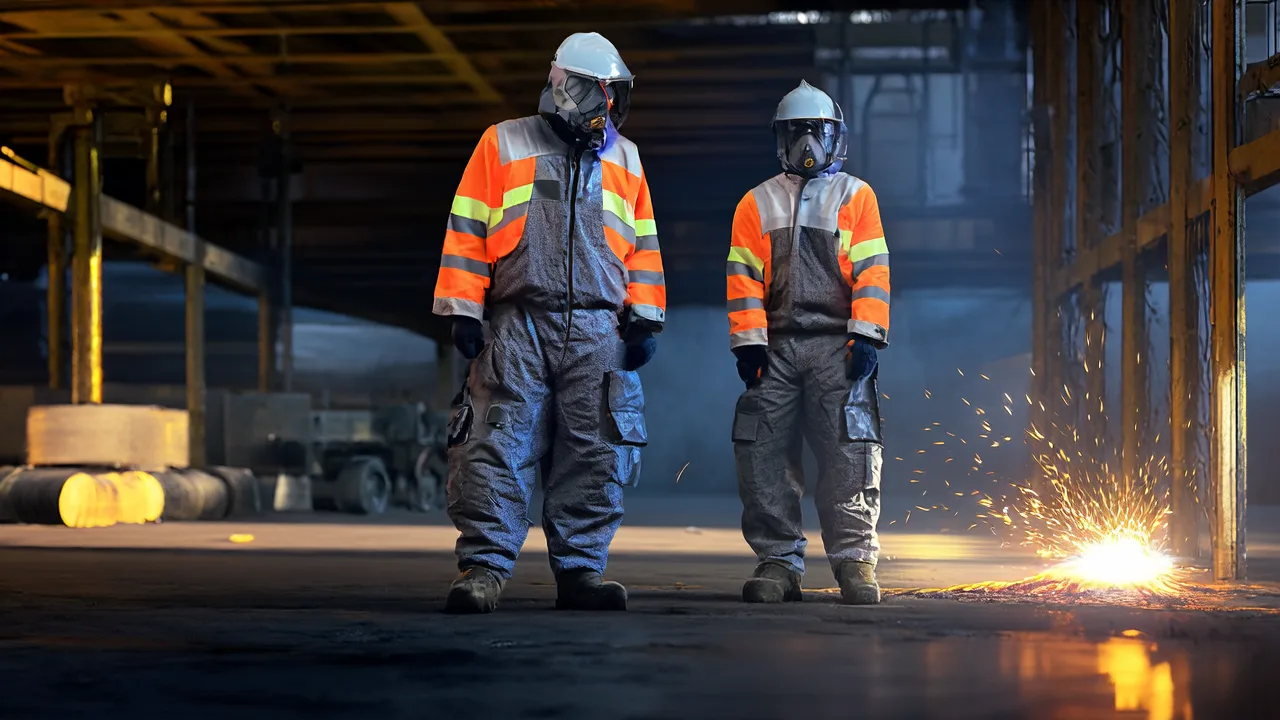
Steel fabrication shops generate sparks, molten metal droplets, and intense localized heat that standard polyester/cotton workwear cannot survive. A TC blend garment exposed to welding sparks melts rather than chars — creating burn injuries, not just garment failure. This article covers why standard workwear fails in steel fabrication, what fabric and construction requirements the environment actually demands, and how to specify garments that protect workers without creating heat stress in a physically demanding job.
Buyer context
What procurement teams run into
Steel fabrication shops present a workwear environment that standard industrial garments cannot survive. Workers cut, weld, grind, and assemble structural steel — processes that generate sparks, molten metal droplets, and intense localized heat. A standard polyester/cotton workwear garment exposed to these conditions will melt, ignite, or burn through within a single shift. The consequences are not just garment failure — they are burn injuries to the worker. **1. Standard polyester/cotton blends melt under spark exposure** Most industrial workwear is made from a 65% polyester / 35% cotton (TC) blend. This fabric is durable, colourfast, and affordable — and it is the default specification for construction, maintenance, and warehouse workwear. But polyester is a thermoplastic fibre. When exposed to temperatures above 250°C (which welding sparks and grinding particles routinely reach), polyester fibres melt rather than char. The molten fibre adheres to skin, causing deep burns that are significantly worse than the burns from the spark itself. In a steel fabrication shop, a worker performing MIG welding generates sparks that travel 2–3 metres from the weld point. These sparks land on the welder's coverall, on nearby workers' garments, and on fabric surfaces within the work zone. A standard TC coverall exposed to these sparks will develop small melted holes within the first hour of welding. After 4–6 hours of exposure, the fabric structure is compromised — the melted areas create weak points that tear under normal movement, and the garment is no longer functional. More critically, if a molten steel droplet (from cutting or welding) lands on a standard TC garment, it can burn through the fabric and reach the worker's skin. The molten droplet retains temperatures of 1,400–1,500°C for several seconds — far above the melting point of polyester. The result is a contact burn that can be severe enough to require medical treatment. **2. Open pockets and cuffs collect sparks and molten droplets** Standard workwear design features — open chest pockets, unclosed cuffs, and loose-fitting legs — become hazards in a steel fabrication environment. Sparks and small molten droplets fall into open pockets and remain trapped against the body. A spark that lands on a bare chest is uncomfortable but brief; a spark trapped in a chest pocket continues to burn against the skin for seconds or minutes, causing a concentrated burn. Similarly, unclosed cuffs allow sparks to enter the sleeve and lodge against the forearm. Loose-fitting legs allow molten droplets to fall inside the trouser leg and rest against the shin or ankle. These are not theoretical risks — they are the most common cause of minor burn injuries in steel fabrication shops. The garment specification must eliminate spark traps: - No open chest pockets above the waistline (pockets should be below the waist or have flap closures) - Closed cuffs with snap or velcro adjustment (no open sleeve ends) - Trouser legs with no turn-ups or cuffs that can collect droplets - No external stitching or pleats on the front of the garment where sparks can lodge **3. FR fabric is necessary but introduces its own challenges** The solution to spark and molten metal exposure is flame-resistant (FR) fabric. FR fabrics are designed to self-extinguish when the ignition source is removed — they char rather than melt, and they do not continue to burn after the spark or droplet has passed. For steel fabrication workwear, FR fabric is not optional; it is the minimum acceptable specification for any worker within 3 metres of welding, cutting, or grinding operations. However, FR fabric introduces challenges: - **Cost:** FR fabric costs 40–80% more than standard TC fabric. A standard TC coverall may cost $18–22 per unit; an FR coverall costs $32–45 per unit. For a 200-worker fabrication shop replacing coveralls every 3–4 months, the annual workwear budget increases significantly. - **Weight and breathability:** FR fabrics are typically heavier (260–300 GSM) and less breathable than standard TC fabrics. In a steel fabrication shop where ambient temperatures can reach 40–45°C (from furnaces, welding, and cutting operations), the additional thermal insulation of FR fabric increases heat stress risk. - **Wash care:** FR fabrics require specific wash chemistry — no bleach, no fabric softener, no starch. Industrial laundries that process standard workwear may not have the wash protocols for FR garments, and mixing FR and non-FR garments in the same wash can compromise the FR treatment. The buyer must weigh the cost and comfort tradeoffs against the burn injury risk — and the answer is that FR fabric is non-negotiable for hot work zones, but the garment design can mitigate the comfort penalty. **4. Role-based allocation: not every fabrication worker needs FR** A steel fabrication shop has distinct work zones with different exposure levels: - **Hot work zone (welding, cutting, grinding):** FR coverall mandatory. Workers in this zone face direct spark and molten metal exposure every shift. - **Assembly and fitting zone (bolting, tack-welding, fitting):** FR coverall recommended. Workers in this zone are within 2–3 metres of hot work and face intermittent spark exposure. - **Painting and surface treatment zone:** Standard workwear acceptable. No spark or molten metal exposure. Workers face chemical exposure (paint solvents, abrasive blasting) which requires different protection (chemical-resistant coverall or disposable suit). - **Administrative and supervisory roles:** Standard workwear acceptable. These workers do not enter the production floor regularly. A single FR coverall specification across all roles is wasteful — painting and administrative workers do not need FR protection, and the cost premium is unjustified. The correct approach is role-based allocation: FR for hot work and assembly zones, standard for painting and admin. **5. Garment construction details that matter in steel fabrication** Beyond fabric selection, the garment construction must address the specific hazards of steel fabrication: - **Concealed zipper front:** Exposed metal zippers can conduct heat from sparks and create burn points. A concealed zipper (with a fabric flap covering the zipper teeth) protects the worker from direct spark contact with the zipper. - **Reinforced knees and seat:** Steel fabricators frequently kneel on steel plates and concrete floors to fit and weld assemblies. Standard fabric wears through at the knees within 4–6 weeks. Reinforced knees (double-layer fabric or external knee pad pockets) extend garment life to 3–4 months. - **No exposed synthetic stitching:** Some garments use synthetic (nylon or polyester) thread for decorative stitching or topstitching. This thread melts under spark exposure and creates weak points. All stitching on an FR coverall should use FR thread (aramid or modacrylic). - **Internal pocket for ID badge:** Steel fabrication workers often need to display an ID badge for site access. An internal pocket (behind the front zip flap) keeps the badge visible without creating an external spark trap. **6. The procurement specification** The buyer should specify: - Fabric: FR-treated cotton or modacrylic/cotton blend, minimum 260 GSM, with self-extinguishing performance confirmed by test report (ISO 15025 or ASTM D6413) - Construction: concealed zip front, closed cuffs with snap adjustment, no open chest pockets, reinforced knees, all-FR stitching - Wash care: industrial washable to 50 cycles at 60°C with ≤5% dimensional change, no bleach or fabric softener - Allocation: FR coveralls for hot work and assembly zones (typically 60–70% of workforce), standard coveralls for painting and admin zones (30–40%)
Sourcing approach
How a factory partner can respond
The solution for steel fabrication workwear is a role-based specification that mandates FR fabric for hot work and assembly zones, eliminates spark-trap garment features, and uses standard workwear for non-exposed roles — balancing burn protection, heat stress, and cost. **Step 1: Map work zones to exposure levels** Conduct a walk-through of the fabrication shop and classify each work zone: - **Hot work zone:** Any area within 3 metres of welding, cutting (oxy-fuel or plasma), or grinding operations. Workers here face direct spark and molten metal exposure every shift. FR coverall mandatory. - **Assembly zone:** Fitting, bolting, and tack-welding areas where workers are within 2–3 metres of hot work but not performing hot work themselves. FR coverall recommended due to intermittent spark exposure. - **Painting/surface treatment zone:** No spark or molten metal exposure. Standard workwear acceptable; chemical-resistant protection if solvents or abrasive blasting are used. - **Admin/supervisory:** Standard workwear acceptable. **Step 2: Specify the FR coverall for hot work and assembly zones** For the industrial-coverall-pro in FR fabric: - Fabric: FR-treated cotton or modacrylic/cotton blend (e.g., 60% modacrylic / 35% cotton / 5% antistatic), minimum 260 GSM - Self-extinguishing performance: confirmed by test report to ISO 15025 (flame spread) and ASTM D6413 (afterflame time ≤2 seconds, afterglow ≤5 seconds) - Construction: concealed zip front with fabric flap, closed cuffs with snap adjustment, no open chest pockets (pockets below waist with flap closure), reinforced knees with double-layer fabric or knee pad pockets - Stitching: all-FR thread (aramid or modacrylic) — no synthetic decorative stitching - Wash care: industrial washable to 50 cycles at 60°C with ≤5% dimensional change; no bleach, no fabric softener, no starch - Colour: dark navy or charcoal (FR fabrics are typically dark-coloured due to fibre chemistry; this also helps hide welding spatter marks) **Step 3: Specify the hi-vis jacket for yard and outdoor areas** For workers who move between the fabrication shop floor and outdoor laydown yards or delivery areas, add a hi-vis safety jacket over the FR coverall: - EN ISO 20471 Class 2 minimum - The hi-vis jacket does not need to be FR-rated if it is worn over an FR base layer — the combined system's protection is determined by the base layer - However, if the hi-vis jacket is the outermost garment and may be exposed to direct spark contact, specify an FR-treated hi-vis jacket or a hi-vis jacket with an FR outer shell - Plastic zipper front (no exposed metal) to avoid heat conduction from sparks **Step 4: Specify standard coveralls for painting and admin zones** For workers in non-exposed zones, specify a standard TC coverall (65% polyester / 35% cotton, 240 GSM) — the same industrial-coverall-pro in standard fabric. This avoids the 40–80% FR cost premium for workers who do not need it. **Step 5: Pilot before full fleet commitment** Before committing to a full fleet order, pilot 20–30 FR coveralls in the hot work zone for 4–6 weeks. Collect feedback on: - Thermal comfort during full shifts (especially in summer or poorly ventilated shops) - Garment durability after 15–20 wash cycles (check for FR treatment retention, fabric integrity at knees and cuffs) - Fit and mobility during welding, cutting, and grinding tasks - Spark resistance: inspect garments after each shift for melted spots, burn-through, or fabric damage Use pilot feedback to adjust fabric weight, construction details, or allocation rules before full fleet commitment. **Recommended garments for steel fabrication workwear:** - **Industrial coverall-pro** — specify the FR-treated version (modacrylic/cotton blend, 260 GSM, concealed zip, closed cuffs, reinforced knees, all-FR stitching) for hot work and assembly zones. Specify the standard TC version (240 GSM) for painting and admin zones. - **Hi-vis safety jacket** — for workers who move between indoor fabrication and outdoor yard areas, specify an EN ISO 20471 Class 2 jacket worn over the FR coverall. If the jacket may be exposed to direct spark contact, specify FR-treated hi-vis fabric.
Recommended Products
Products that fit this use case
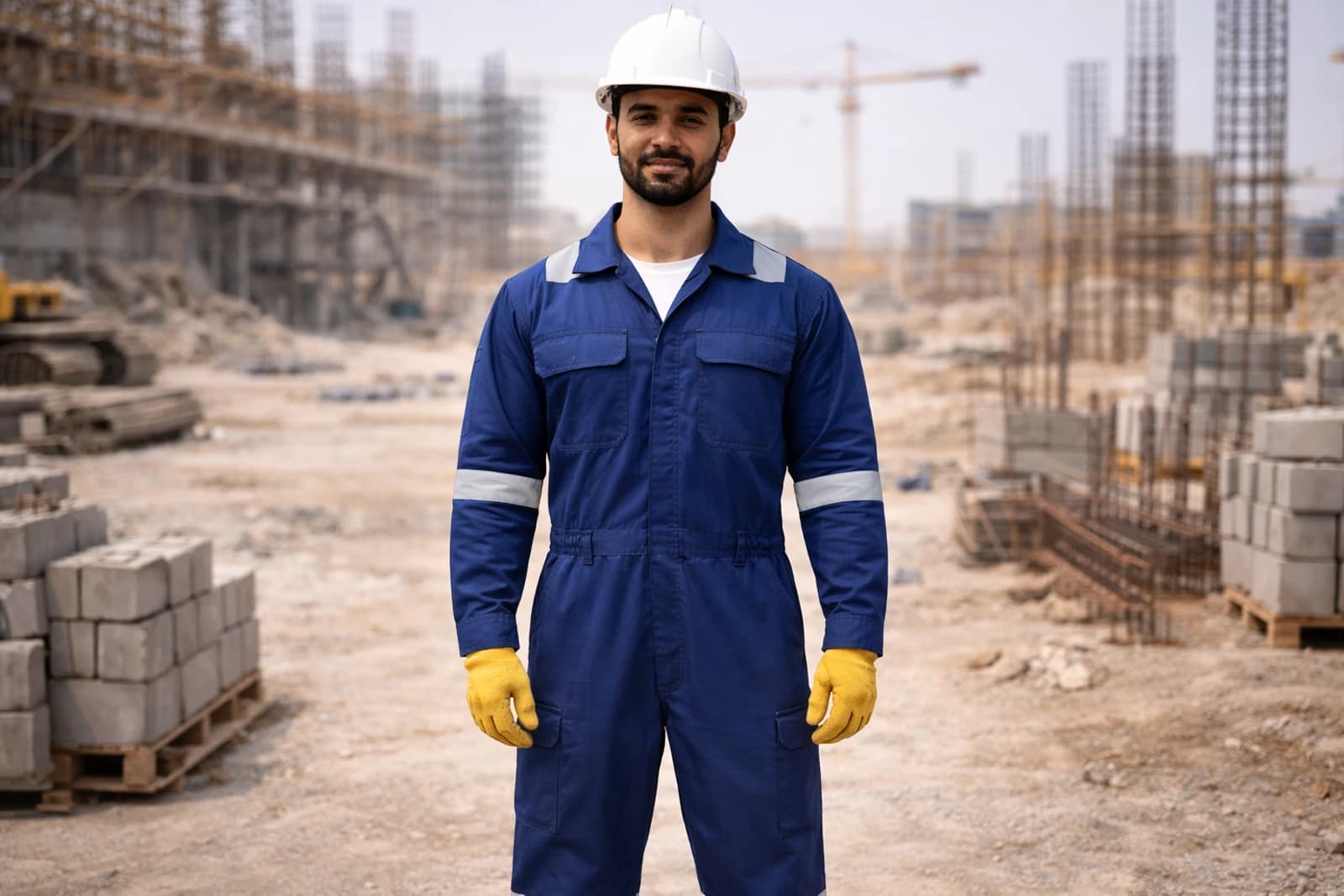
Industrial Workwear
Industrial Coverall Pro
Hard-wearing one-piece coverall for plant, maintenance, and heavy-duty operations.
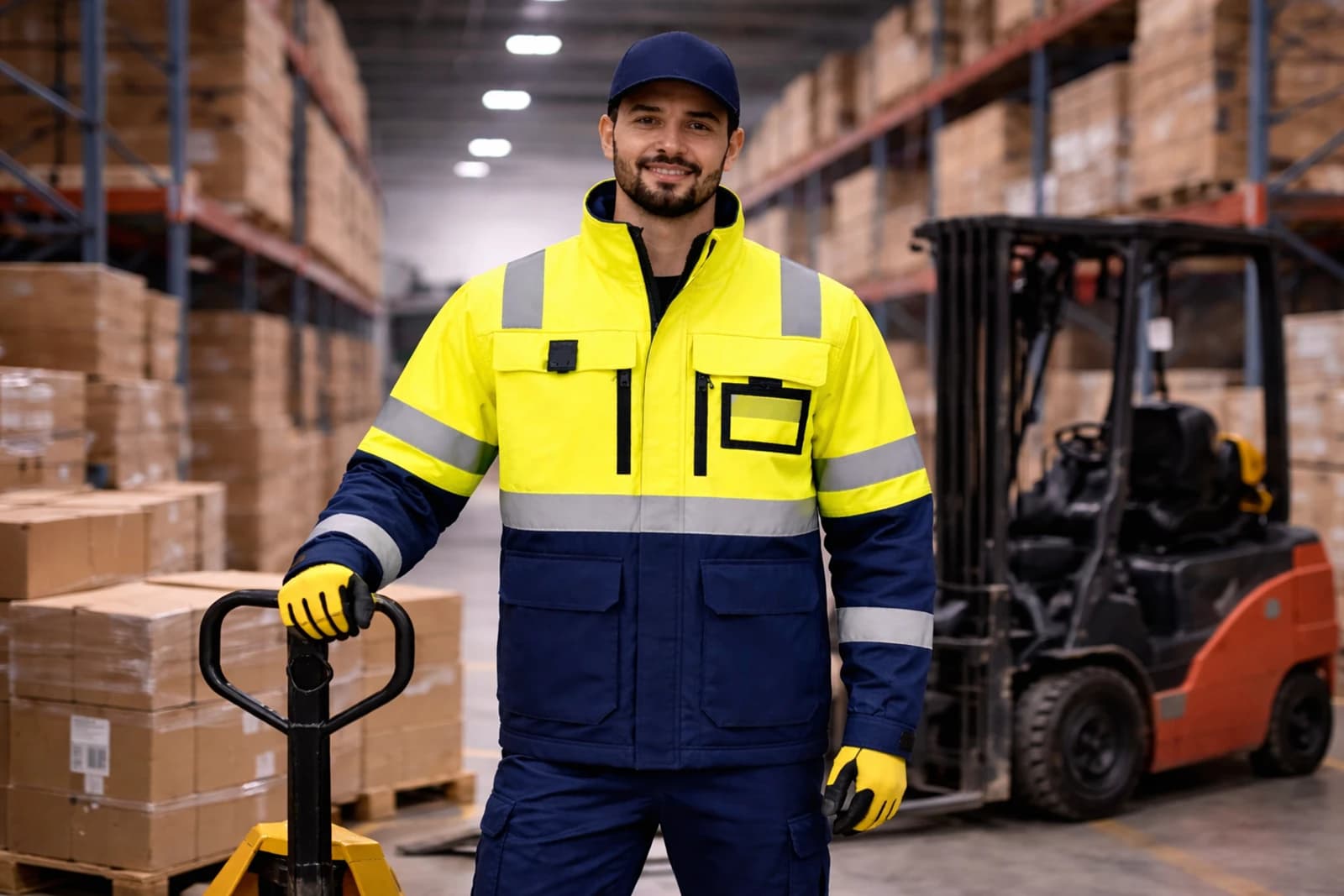
Safety Uniform
Hi-Vis Safety Jacket
Reflective safety jacket for high-visibility site operations and road work crews.