Custom Workwear Branding for GCC Companies: Logos, Colors, and Fleet Identity
GCC companies in construction, logistics, and oil & gas want workwear that carries their brand — logos on the chest, fleet colors across the team, reflective trim that doubles as a design element. This guide covers what is realistic to customize on hi-vis jackets, polo uniforms, coveralls, and softshell sets when ordering from a Chinese manufacturer, and how to manage the process from artwork to production approval.

Buyer context
What procurement teams run into
<p>A Dubai facilities management company orders 1,500 hi-vis safety jackets for its airport maintenance team. The jackets arrive in standard orange with basic reflective tape — no company logo, no team designation, no distinguishing features. The operations manager realizes that subcontractors on the same site wear near-identical jackets. During an evacuation drill, the control room cannot tell which workers belong to the facilities team and which are from the electrical subcontractor. The jackets are technically compliant, but they fail the simplest branding requirement: identifying who is who at a glance.</p> <p>In Qatar, a logistics company commissions 2,500 polo uniforms for its delivery and warehouse staff. The order specification calls for a chest embroidery logo and a small back print. When the shipment arrives, the embroidery is placed 4 cm lower than the approved artwork placement mockup — the logo sits below the pocket line instead of centred above it. The warehouse manager decides to accept the order because returning 2,500 pieces would delay the uniform rollout by eight weeks, but the off-centre branding creates a visibly inconsistent look across the team that lasts for the entire garment lifecycle.</p> <p>These issues are not about the quality of the embroidery or the printing. Both factories delivered exactly what was ordered in terms of garment construction. The breakdown happened in the specification and approval process — the artwork was approved as a digital file without being reviewed on the actual garment, and the placement guide was not clearly marked on the pre-production sample. A few structured steps during the customization process would have ensured that every jacket and polo carried the company identity exactly as intended.</p>
Sourcing approach
How a factory partner can respond
<h2>What Can Be Customized on Workwear from a Chinese Manufacturer</h2> <p>Chinese workwear manufacturers can handle a wide range of customization options, but not all methods suit every garment type. The most common branding techniques for B2B workwear orders are:</p> <p><strong>Embroidery</strong> — works best on polo uniforms and softshell jacket chest areas. The minimum order for digitized embroidery is typically 200 to 300 pieces per logo design, and the stitch count should be kept under 10,000 stitches per logo to avoid puckering on lightweight polo fabric. For coveralls and hi-vis jackets, embroidery is best limited to the chest or upper back panel where fabric is doubled for reinforcement. Avoid embroidery on reflective tape areas, as needle holes can reduce reflective performance.</p> <p><strong>Silicone or PVC heat-transfer labels</strong> — a popular choice for hi-vis jackets and industrial coveralls where the garment sees hard use and frequent washing. The label is bonded to the fabric with heat and pressure, producing a raised 3D effect that survives industrial laundering better than embroidery thread. Silicone labels are preferred for GCC clients because they do not absorb sweat, do not fade under UV exposure, and maintain their shape after repeated washing cycles at 60°C.</p> <p><strong>Screen printing and heat-transfer printing</strong> — best for back-of-jacket prints, company names on sleeve panels, and large-area branding on hi-vis vests. Screen printing offers the lowest per-unit cost for quantities above 500 pieces but requires one screen per colour. Heat-transfer (sublimation) printing allows full-colour logos without screen setup fees but is limited to polyester or high-polyester-blend fabrics. For poly-cotton polo uniforms, screen printing is the more durable option — the ink bonds to the cotton fibres and withstands washing without cracking for 30 to 40 cycles.</p> <p><strong>Custom colours and reflective tape</strong> — GCC companies increasingly request branded hi-vis with reflective tape in company colours rather than standard silver or grey. Some Chinese manufacturers now offer coloured reflective tape in yellow, blue, orange, and green to match fleet or corporate colour schemes. The coloured tape still meets EN ISO 20471 retroreflective requirements, but the buyer should request the test certificate for the specific coloured tape roll before approving production, as not all coloured tapes carry the same certification level.</p> <h2>Managing the Artwork and Sample Process</h2> <p>The single most important step in workwear branding is placing the approved logo or design on the pre-production sample garment — not approving it as a flat digital mockup. A logo that looks well-proportioned on a screen may appear too large or too small when sewn onto a jacket chest panel. The standard approach used by experienced GCC importers is to request a pre-production sample with the actual branding applied, photographed from front, back, and side angles on a fit model or mannequin that matches the target size.</p> <p><strong>Artwork format requirements:</strong> Most Chinese factories accept AI, EPS, CDR, or high-resolution PNG (300 DPI minimum) for digitizing or screen preparation. The buyer should supply the artwork as a vector file with fonts converted to outlines, and include a clear specification of the intended placement — measured in centimetres from the centre front line and from the collar seam or hem. For embroidery, the stitch density and colour thread references (Pantone colour codes for thread matching) should be confirmed before digitizing begins, as thread colours vary between brands and a red thread labelled "PMS 186" may differ from the fabric colour called "PMS 186" on cotton.</p> <p><strong>Colour matching protocol:</strong> For custom-colour garments — such as a navy blue coverall with the company logo in yellow — the colour must be matched against a physical fabric swatch. Pantone codes are a useful reference, but fabric dye lots vary by weave, weight, and fibre content. The buyer should request a 4-inch x 4-inch dyed swatch of the custom colour before committing to full production. The swatch should be viewed under D65 daylight-equivalent lighting and compared against the target colour reference (paint chip, previous garment, or printed colour standard). A tolerance of CIELAB Delta E 3 or less is considered an acceptable commercial match for most workwear orders.</p> <h2>Minimum Order Quantities and Cost Implications</h2> <p>Custom branding adds setup costs and MOQ requirements. A digitized embroidery programme costs USD 30 to 60 per logo design. A screen for screen printing costs USD 20 to 50 per colour per design. Silicone label moulds cost USD 80 to 150 per design. These setup costs are typically amortized across the order quantity. A 2,000-piece order with a two-colour chest embroidery at USD 0.50 per piece is far more cost-effective than a 300-piece order where the embroidery setup adds USD 0.60 per piece.</p> <p>Most Chinese workwear manufacturers apply a branding MOQ of 200 to 500 pieces per design per garment type. This means that a company needing 150 hi-vis jackets and 150 polo uniforms could combine them if both use the same logo design, but the jacket and the polo garment are different production runs so the factory may still apply two separate MOQs. The buyer should clarify this during the quotation stage and ask whether a mixed-order MOQ applies for the same artwork across different garment models.</p> <p>For GCC buyers, the practical recommendation is to plan branding at the order level rather than the garment level — consolidate as many pieces as possible under one branding design per order to maximize the setup cost efficiency. For companies with multiple departments or shift colours, the branding (logo placement) stays the same and the garment colour varies, which keeps the setup cost per logo design consistent while the fabric colour changes between production batches.</p>
Recommended Products
Products that fit this use case
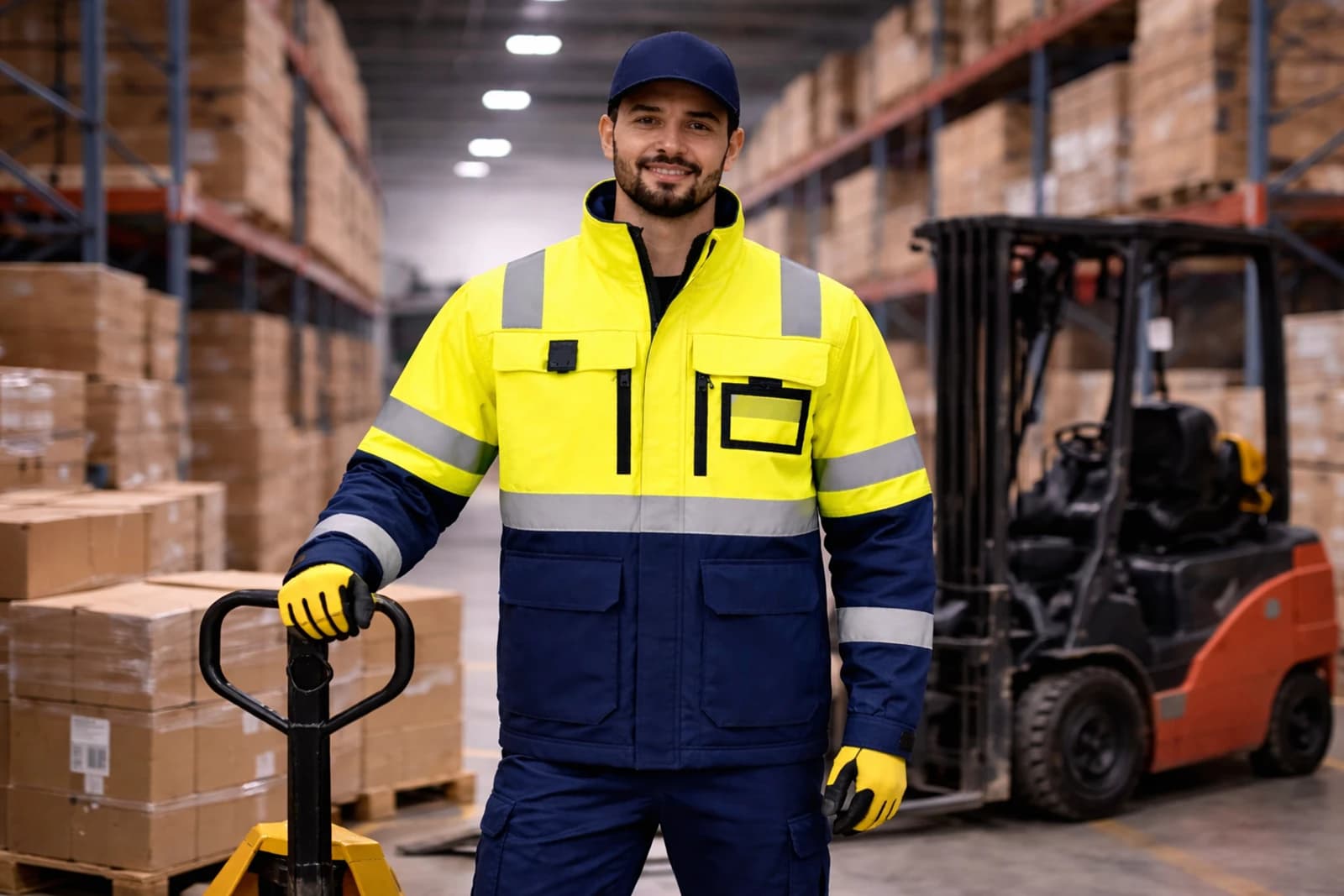
Safety Uniform
Hi-Vis Safety Jacket
Reflective safety jacket for high-visibility site operations and road work crews.

Logistics Uniform
Logistics Polo Uniform
Breathable uniform polo for warehouse, delivery, and last-mile teams.
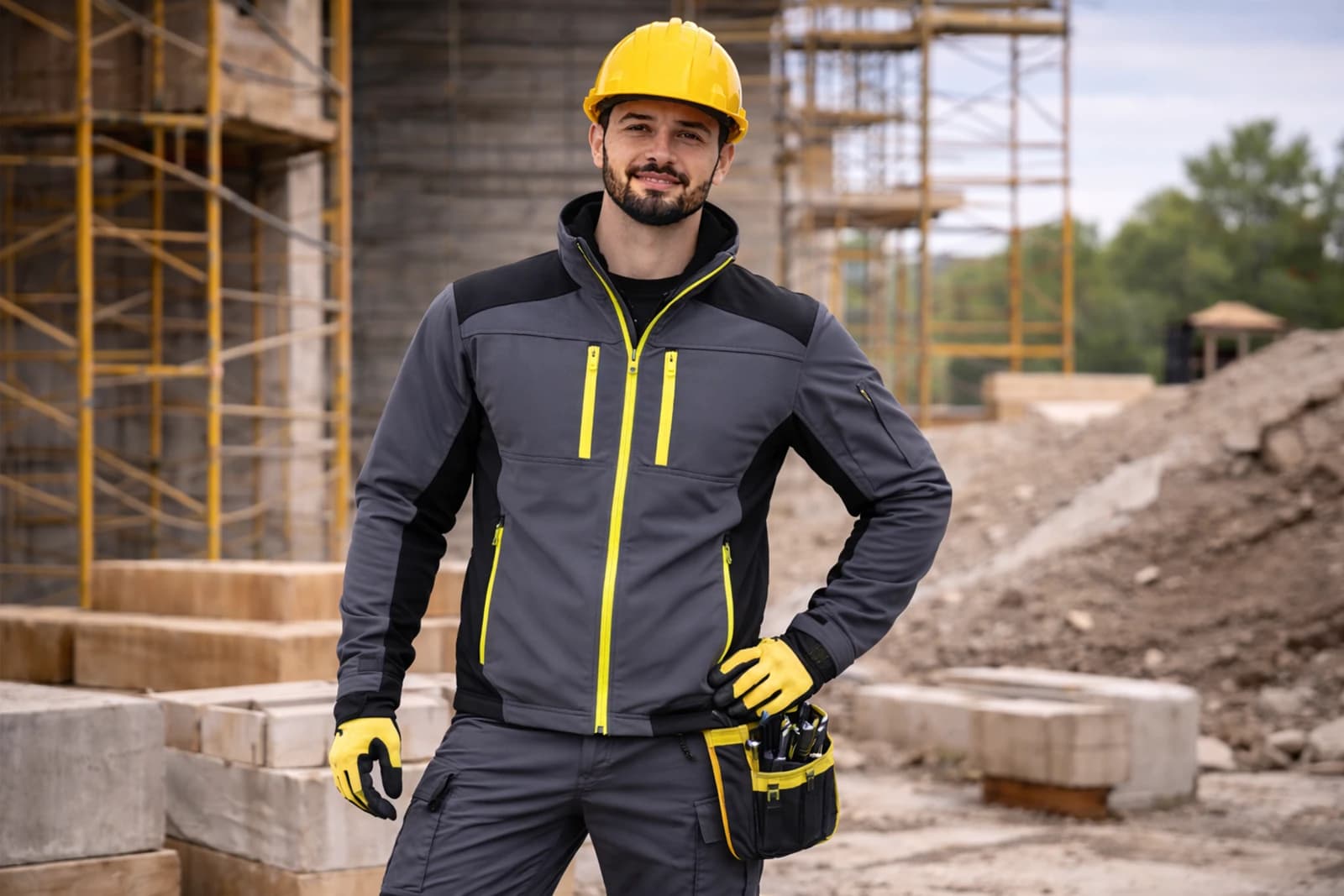
Construction Clothing
Construction Softshell Set
Flexible jacket and trouser set built for crews working across changing weather conditions.
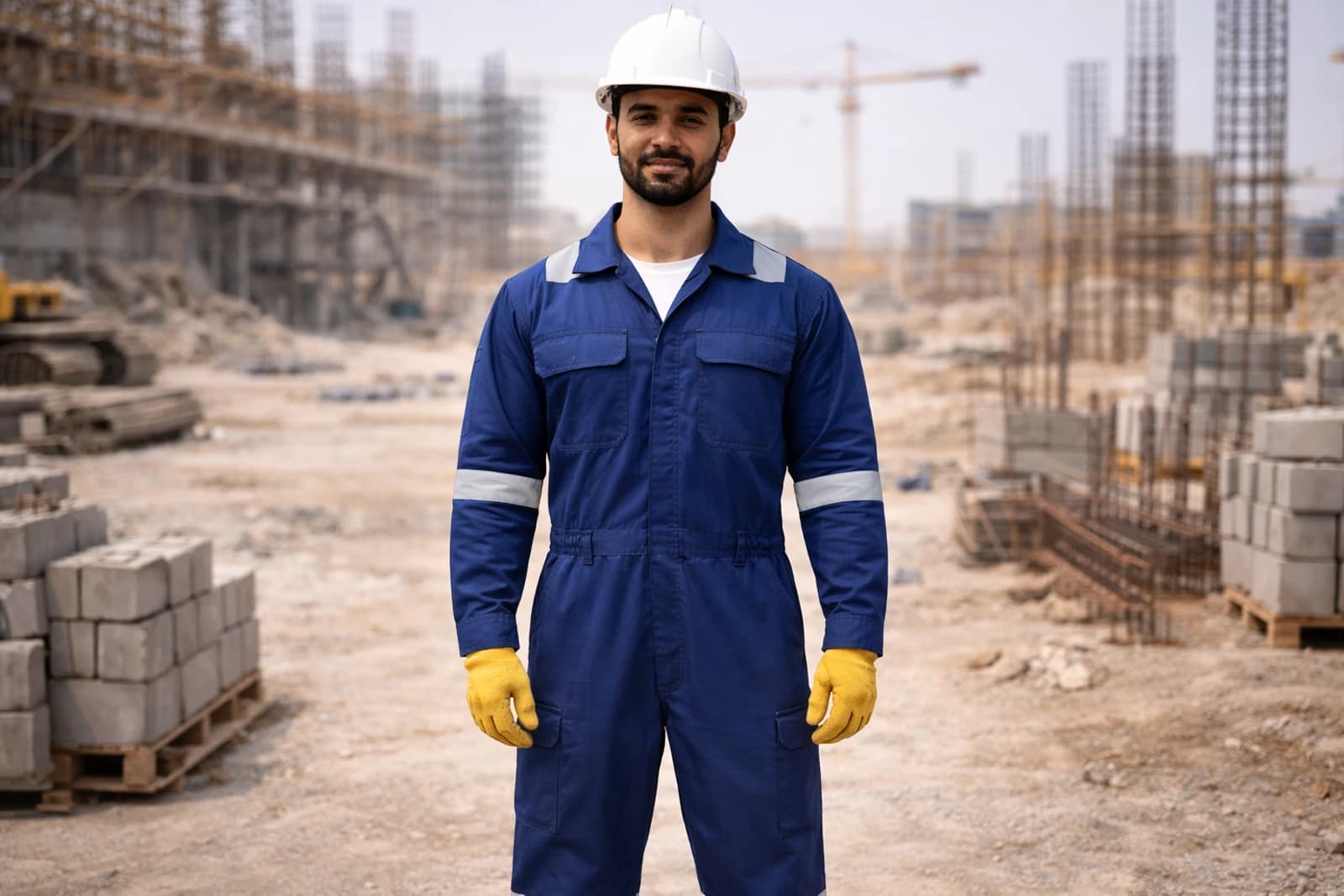
Industrial Workwear
Industrial Coverall Pro
Hard-wearing one-piece coverall for plant, maintenance, and heavy-duty operations.