Customizing Workwear for Middle East Brands: Logo Methods, Color Matching, and Packaging for B2B Buyers Sourcing from China
When Middle East B2B buyers source workwear from China, customization is the difference between a generic uniform and a branded professional look. This guide compares embroidery, heat transfer, silicone patches, screen printing, and full sublimation for hi-vis jackets, polo uniforms, coveralls, and softshell sets — covering durability, cost, minimum order quantity, and how to specify each method in your purchase order so the manufacturer delivers exactly what you need.

Buyer context
What procurement teams run into
<p>A facilities management company in Riyadh orders 800 hi-vis safety jackets from a Chinese manufacturer. They email a company logo file to the sales team and ask for it to be "printed on the front and back." The jackets arrive three months later — and the logo has been screen-printed in a single color (black) instead of the three-color branded logo they expected. The print is cracking after the first industrial wash. The left chest logo is 12 cm wide instead of the 8 cm that matches their existing uniform range. The back print is 20 cm tall and looks oversized for the jacket. The branding team rejects the entire shipment. The company must reorder at airfreight cost to meet a contract start date.</p><p>In Dubai, a logistics company orders 1,500 polo uniforms with their corporate logo embroidered on the left chest and the company name heat-transferred on the back. The embroidery they receive uses a dense fill stitch that makes the logo area stiff and uncomfortable against the skin in 45 °C warehouse conditions. Workers start unbuttoning the top two buttons just to avoid the logo rubbing on their collarbone. The heat-transfer back print peels completely after four wash cycles because the transfer film was not specified for industrial laundry temperatures.</p><p>Both problems are avoidable. Customization methods are not interchangeable — each one has specific durability, temperature, wash-cycle, and visual requirements. When a Middle East buyer specifies the exact method, thread color, placement dimensions, and wash-test standard in the purchase order, the manufacturer has a clear target. When customization is left to "just add the logo," the result is unpredictable.</p>
Sourcing approach
How a factory partner can respond
<h2>Four Common Customization Methods for Workwear</h2><h3>1. Embroidery</h3><p>Embroidery is the most durable customization method for workwear. It uses polyester or rayon thread stitched directly into the fabric. For polo shirts, softshell jackets, and the front panels of hi-vis safety jackets, embroidery withstands hundreds of industrial wash cycles without peeling, cracking, or fading — provided the thread color is specified correctly. Sidaier uses a minimum of 12,000 stitches per 10 cm² for dense logo work to ensure the embroidery lies flat and the design is clearly readable at a distance.</p><p><strong>Best for:</strong> Small logos on the left chest (8–10 cm), company names on back shoulders, and sleeve branding. Polo shirts and softshell jackets handle embroidery well because the fabric is stable and does not stretch excessively. For hi-vis safety jackets, embroidery works on the front panel areas that do not have reflective tape — avoid stitching through reflective tape as it creates holes that allow moisture ingress.</p><p><strong>Specify in your order:</strong> Logo file in vector format (AI, EPS, or CDR) with all colors separated. Thread color reference (Pantone TCX or manufacturer's thread chart). Maximum stitch count per cm² (12,000 is standard for dense logos). Placement dimensions in cm (width × height). Request a digitized stitch-out sample before full production.</p><h3>2. Heat Transfer (Silicone and PU Film)</h3><p>Heat transfer applies a pre-printed design using heat and pressure. Silicone heat transfer is the preferred method for hi-vis workwear in GCC conditions because silicone withstands up to 85 °C wash temperatures without peeling, does not crack under UV exposure, and remains flexible on stretch fabric. PU (polyurethane) heat transfer is less expensive and works for indoor uniforms, polo shirts, and non-industrial roles, but it has lower temperature tolerance — typically 60 °C maximum wash temperature — and can peel after 20–30 washes in industrial laundry.</p><p><strong>Best for:</strong> Large back prints, sleeve stripes, company names across the back of hi-vis jackets, and multi-color designs that would be too expensive to embroider. Sidaier uses silicone heat transfer for all hi-vis standard-class garments because silicone maintains reflectivity-grade appearance alongside reflective tape.</p><p><strong>Specify in your order:</strong> Silicone or PU transfer type. Maximum wash temperature (confirm the transfer matches your laundry specification). Design file in vector format with color separations. Placement guide showing the distance from collar seam, sleeve hem, or zipper line. Request a heat-transfer sample that can be tested through 10 wash cycles before production approval.</p><h3>3. Screen Printing</h3><p>Screen printing pushes ink through a mesh stencil onto the fabric. It is the most cost-effective method for large quantities with simple, single-color or two-color designs. The limitations are significant: screen printing sits on top of the fabric rather than bonding into it, so it cracks and peels under industrial washing — especially on polyester and poly-cotton blends that are standard for workwear. In GCC hi-vis applications, screen printing is generally not recommended for safety jackets or coveralls that require Class 3 or Class 2 certification, because the printed layer can reduce the fabric's breathability and the ink may not meet the EN ISO 20471 retroreflective requirements if applied near tape areas.</p><p><strong>Best for:</strong> Logo placement on inner linings, size labels, care labels, and temporary event uniforms. Not recommended for outer-facing branding on industrial workwear that requires durability through industrial washing.</p><h3>4. Full Sublimation (All-over Print)</h3><p>Sublimation printing uses heat to transfer dye directly into polyester fibers. The result is a permanent, full-color image that will not peel, crack, or fade — because the dye becomes part of the fabric rather than a surface layer. Sublimation works only on 100% polyester fabric and requires white or very light base fabric for the colors to show correctly.</p><p><strong>Best for:</strong> Custom all-over print polo uniforms, sports-team-style workwear, and promotional uniforms where brand visibility is the primary concern. Sidaier offers sublimation on lightweight polyester polo shirts and custom-bespoke hi-vis jackets where the entire outer shell is printed with a company pattern or camouflage design. The minimum order quantity for full sublimation is higher — typically 500+ units per design — because each design requires a custom print setup.</p><p><strong>Specify in your order:</strong> 300 DPI or higher design file. PMS or CMYK color specifications. Base fabric color (must be white or light for color accuracy). Confirm the polyester percentage — at least 95% polyester is recommended for vivid sublimation results. Request a sublimation sample showing the color match front, back, and side seams.</p><h2>Color Matching for Brand Integrity</h2><p>When your workwear carries a corporate logo, the color of the logo must match the brand guidelines — not just "close enough." Color variation between thread (embroidery), silicone film (heat transfer), and dye (sublimation) is inevitable unless the manufacturer references a common standard.</p><p><strong>The approach that works:</strong> Send your brand's Pantone TCX or TPX code with the purchase order. Ask the manufacturer to match the thread, transfer film, or sublimation dye to that Pantone code and send a physical color swatch for approval before production. For embroidery, thread colors are limited compared to print — the manufacturer's standard thread chart may not include your exact Pantone. In that case, accept the closest match from the available thread colors, and approve the actual thread sample against a printed brand color swatch under natural daylight (D65 lighting standard) before approving the full digitized logo.</p><h2>Placement Guidelines for Professional Results</h2><p>Standard placement dimensions for workwear logos are consistent across most manufacturers and are worth specifying in your order:</p><ul><li><strong>Left chest logo:</strong> 8–10 cm wide, centered between the collar seam and the top of the pocket (if present), positioned 2–3 cm below the collar seam</li><li><strong>Full back logo:</strong> 25–30 cm wide, centered horizontally, positioned 8–10 cm below the collar seam — not lower, or it will be covered by a safety harness or tool belt</li><li><strong>Sleeve logo:</strong> 5–7 cm wide, positioned on the upper arm 5–6 cm below the shoulder seam, centered on the sleeve</li><li><strong>Helmet or hat logo (if applicable):</strong> 4–6 cm wide, centered on the front panel</li></ul><p>If workers wear hi-vis vests over their base uniform, consider placing the logo on the vest rather than the garment underneath — the vest is what is visible in the field. For layered workwear systems (softshell jacket + polo shirt), place the logo on the outermost layer (the softshell) for maximum brand visibility.</p><h2>Packaging and Labeling for Middle East Distribution</h2><p>When you purchase customized workwear from China for distribution in the Middle East, packaging matters. Specify in your order:</p><ul><li><strong>Individual polybag packaging:</strong> Each garment sealed in a clear polybag with the size, color, and SKU printed on a label</li><li><strong>Carton labeling:</strong> Outer cartons labeled in English and Arabic if required, showing quantity per carton, size breakdown, and destination port (e.g., Jebel Ali, Dammam, Hamad)</li><li><strong>Hang tags:</strong> Custom hang tags with your brand logo, size, care instructions in English and Arabic, and country of origin</li><li><strong>Size labeling:</strong> Specify whether garments should carry Asian sizing labels, European/US conversion labels, or both — and whether care labels should be bilingual</li></ul><p>Most Chinese manufacturers, including Sidaier, offer standard single-polybag packaging by default. Hang tags, bilingual labeling, and custom carton marking may incur small setup fees. Include these packaging requirements in the request for quotation so they are itemised from the start, not added as a change order after production has begun.</p><h2>Quality Control: What to Inspect Before Shipment</h2><p>Before accepting a customized workwear shipment from China, inspect these customization-specific points:</p><ul><li>Logo size and placement match the approved placement guide on at least 5% of the shipment (random sampling)</li><li>Embroidery stitching is full and even with no gaps, loose threads, or puckering of the base fabric</li><li>Heat transfer edges are fully bonded — no lifted corners or air bubbles</li><li>Thread or transfer color matches the approved sample under D65 lighting</li><li>One sample from the shipment is washed once at the specified maximum temperature — check the logo for peeling, cracking, fading, or shrinkage distortion</li></ul><p>A pre-shipment inspection report that includes these customization-specific checks gives you documented assurance that the manufacturer has followed your specifications. Sidaier provides a pre-shipment inspection report with photographs for all customized orders at no additional charge.</p>
Recommended Products
Products that fit this use case

Logistics Uniform
Logistics Polo Uniform
Breathable uniform polo for warehouse, delivery, and last-mile teams.
Safety Uniform
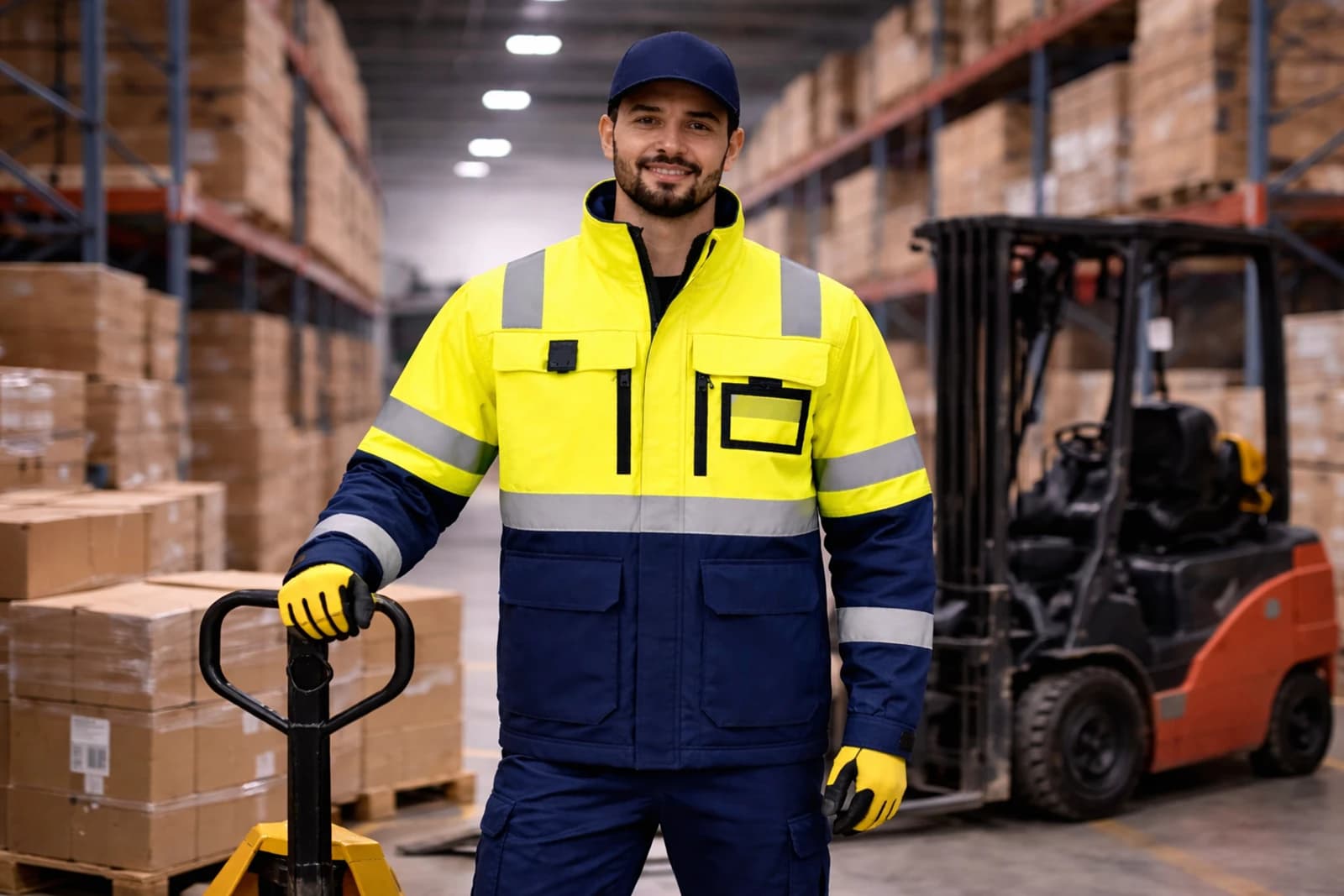
Hi-Vis Safety Jacket
Reflective safety jacket for high-visibility site operations and road work crews.