Workwear Fabric Selection for GCC Buyers: Cotton, Polyester, and Blends Compared for Hot Climates
GCC buyers sourcing workwear from Chinese manufacturers need to choose between cotton, polyester, and blended fabrics — each with different performance in heat, humidity, and industrial laundering. This guide compares fabric options for polo uniforms, coveralls, and safety jackets in Middle East conditions.

Buyer context
What procurement teams run into
<p>A logistics company in Dubai orders 3,000 polo uniforms in 100 % cotton for their warehouse team. Two weeks in, the garments are holding sweat, drying slowly in the coastal humidity, and employees are complaining of skin irritation by mid-afternoon. The cotton fabric pills at the collar after five industrial washes.</p> <p>A construction contractor in Qatar sources industrial coveralls in a standard 65/35 polyester-cotton blend from a Chinese manufacturer. The spec sheet says the fabric weight is 240 gsm — adequate for temperate climates. But in Doha's summer construction sites, where ambient temperature reaches 48 °C and workers are in direct sun for eight-hour shifts, the coveralls trap heat. Workers start rolling up sleeves (against site safety rules) and productivity drops in the afternoon.</p> <p>These are fabric specification failures — not product failures. The buyer chose a fabric weight, composition, and weave that was suited for a European or North American work environment, not the Gulf's combination of extreme heat, coastal humidity, and industrial laundering protocols. For Middle East buyers sourcing workwear from China, choosing the right fabric specification is as important as choosing the right garment type.</p>
Sourcing approach
How a factory partner can respond
<h2>Fabric Types and Their Performance in Gulf Conditions</h2> <h3>100 % Cotton</h3> <p>Cotton is comfortable against the skin and breathes well in dry heat, but it performs poorly in Gulf humidity and industrial laundering. Fabric absorbs moisture and holds it, creating discomfort at 70 %+ humidity levels common in Dubai, Doha, and coastal Saudi cities. Cotton also shrinks more than synthetics in high-temperature industrial washing (75 °C+ cycles), and the fabric degrades faster under UV exposure. Best use case: office-adjacent roles or dry indoor environments where laundering follows commercial (not industrial) temperatures.</p> <h3>100 % Polyester</h3> <p>Polyester wicks moisture, dries quickly, holds colour well under UV exposure, and withstands industrial laundering at high temperatures. The downside: pure polyester can feel hot against the skin in still air because the fabric does not absorb moisture the way natural fibres do. In high-movement environments (warehouse picking, construction), the airflow through the fabric compensates. For stationary roles or low-activity positions, breathability becomes an issue. Modern microfibre and textured polyester weaves improve air circulation significantly compared to standard smooth polyesters.</p> <h3>Cotton-Polyester Blends (65/35 or 50/50)</h3> <p>The most common workwear fabric choice across the GCC. A 65 % polyester / 35 % cotton blend offers a balanced profile: the polyester provides durability, moisture wicking, and wash resistance, while the cotton adds softness, breathability, and static dissipation. For polo uniforms worn all day in air-conditioned warehouses with brief outdoor exposure, a 65/35 blend at 180–200 gsm works well. For industrial coveralls and construction clothing in full outdoor conditions, a 50/50 blend at 240–260 gsm retains more durability without becoming uncomfortable in heat.</p> <h2>Fabric Weight and Climate Matching</h2> <p>GCC buyers should think of fabric weight as a seasonal and role-specific decision rather than a fixed specification:</p> <ul> <li><strong>180–200 gsm</strong>: Lightweight — suited for logistics polo uniforms, office-to-warehouse roles, and air-conditioned facility teams. Breathes well in humidity but less abrasion-resistant.</li> <li><strong>210–240 gsm</strong>: Midweight — the sweet spot for multi-season GCC use. Works for construction softshell sets, coveralls worn in mixed indoor-outdoor conditions, and oil-and-gas support roles.</li> <li><strong>250–280 gsm</strong>: Heavyweight — suitable for industrial coveralls in maintenance, welding, and heavy industrial settings where abrasion resistance matters more than breathability. Layer with moisture-wicking undershirts for summer shifts.</li> </ul> <h2>Finishing Treatments That Matter in the Gulf</h2> <p>Beyond the base fabric, ask your Chinese manufacturer about these finishing options:</p> <ul> <li><strong>Anti-pilling finish</strong>: Reduces the bobbling that appears on polyester blend collars and cuffs after repeated industrial washing — a common complaint across GCC logistics teams.</li> <li><strong>Moisture-wicking finish</strong>: A chemical or mechanical finish that improves how the fabric moves sweat away from the skin. Particularly valuable for polo uniforms and softshell linings worn in humid coastal cities.</li> <li><strong>UV-resistant treatment</strong>: Slows fabric degradation and colour fading for garments worn in direct outdoor sun for extended periods. Hi-vis safety jackets and construction coveralls benefit most.</li> <li><strong>Anti-static finish</strong>: Required by many industrial and oil-and-gas facility policies. Confirm the finish meets your site's specific conductivity standards rather than assuming a generic treatment passes muster.</li> </ul> <h2>Sourcing Recommendation for GCC Buyers</h2> <p>When requesting samples from a Chinese manufacturer, specify the GCC warehouse or site conditions — not just the garment type. A polo uniform for an air-conditioned Dubai logistics hub is a different spec from the same polo style for outdoor Qatar construction site traffic control. Ask for three sample swatches at different gsm weights and blend ratios, then put the finalists through a 20-wash industrial laundering test before approving bulk production. The fabric spec you choose determines not just employee comfort but garment lifespan and replacement cycle — which directly affects your total cost of ownership over a multi-year contract.</p>
Recommended Products
Products that fit this use case

Logistics Uniform
Logistics Polo Uniform
Breathable uniform polo for warehouse, delivery, and last-mile teams.
Industrial Workwear
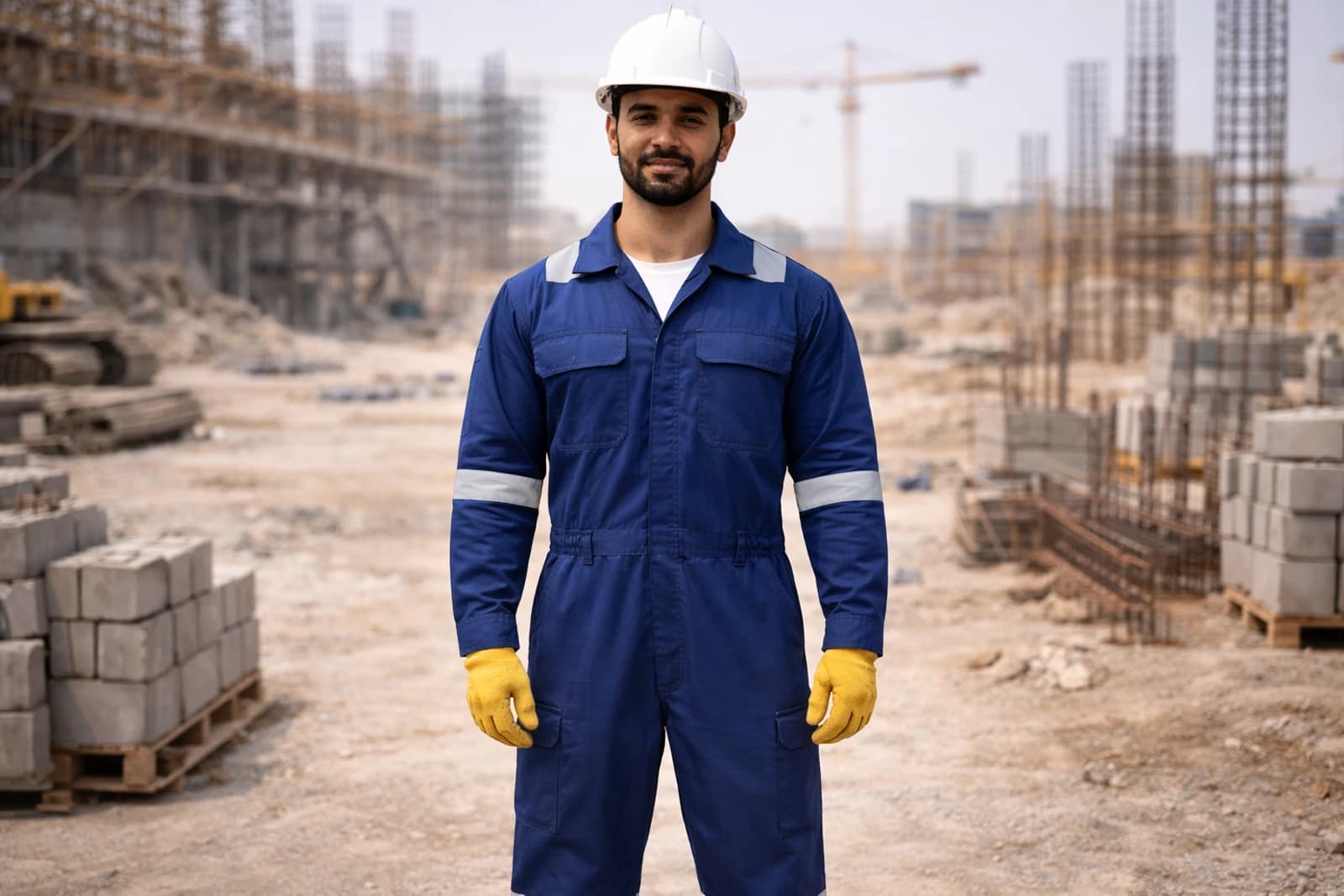
Industrial Coverall Pro
Hard-wearing one-piece coverall for plant, maintenance, and heavy-duty operations.
Construction Clothing
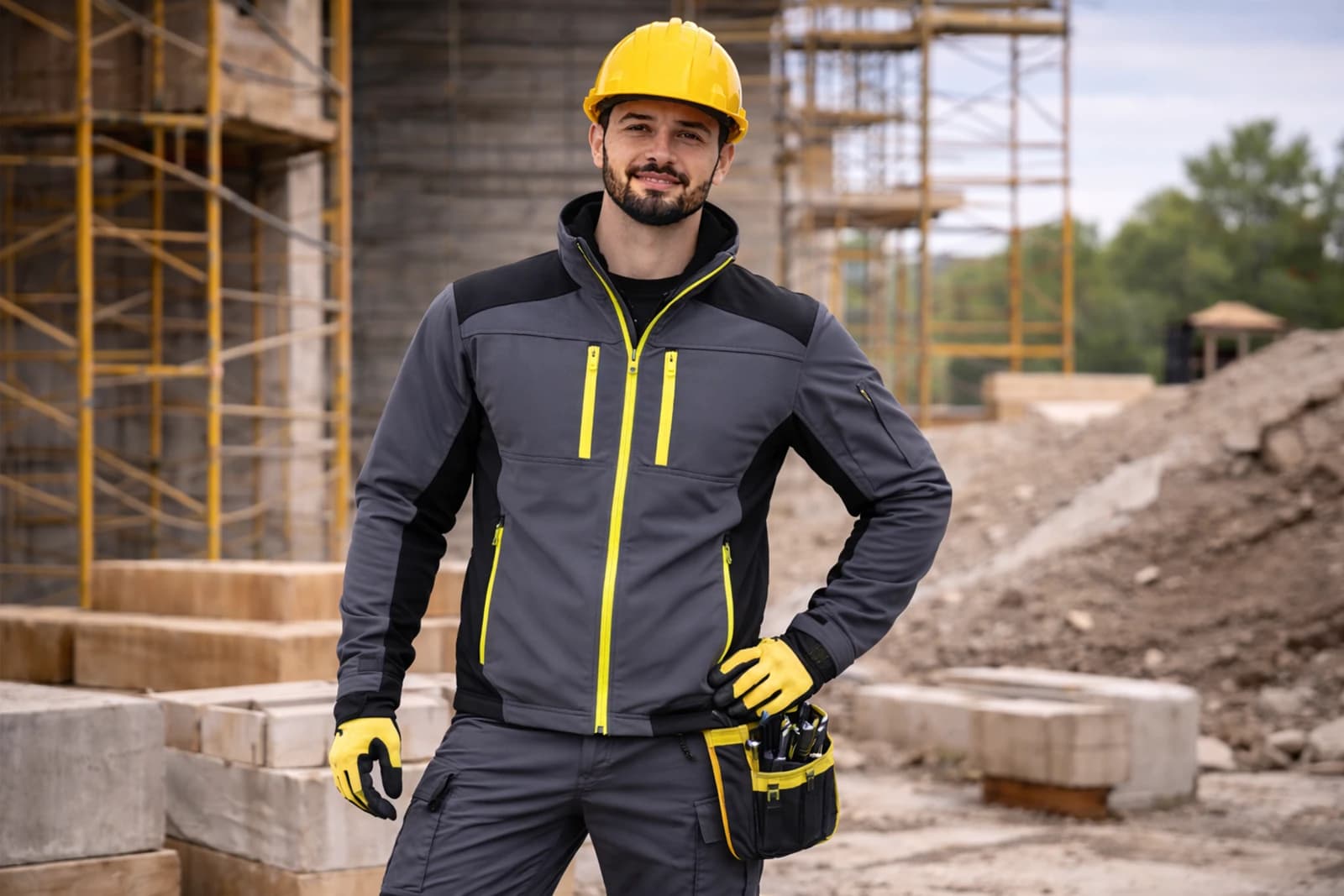
Construction Softshell Set
Flexible jacket and trouser set built for crews working across changing weather conditions.
Safety Uniform
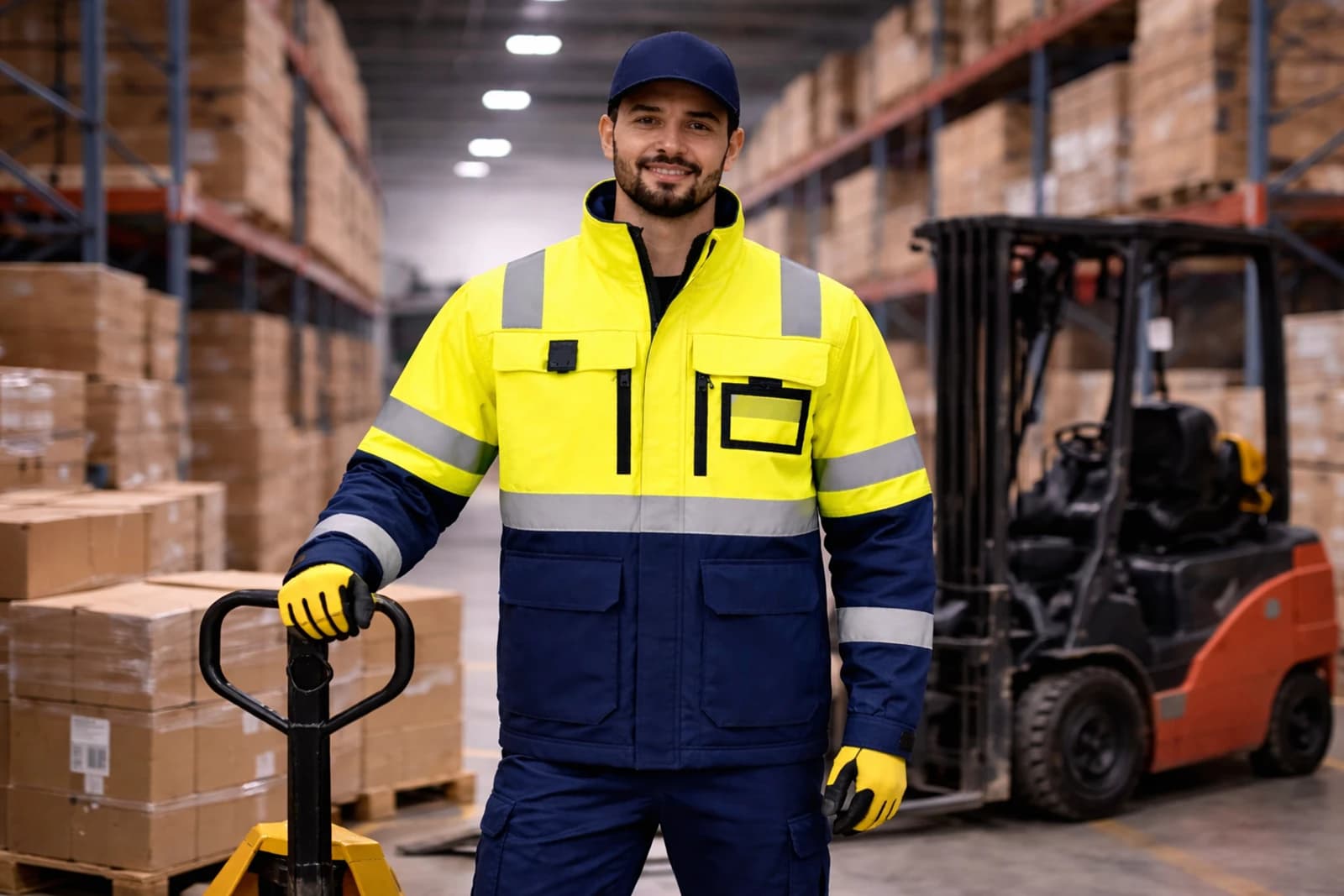
Hi-Vis Safety Jacket
Reflective safety jacket for high-visibility site operations and road work crews.