From Sample to Shipment: How Middle East Buyers Navigate Workwear OEM with Chinese Manufacturers
Middle East buyers moving from retail workwear to custom OEM face a new set of steps: design briefs, sample rounds, fabric approvals, and lead-time planning. This guide walks each stage so importers in Saudi Arabia, UAE, and Qatar can work efficiently with Chinese workwear manufacturers.

Buyer context
What procurement teams run into
Procurement managers and brand owners across the Middle East — from Riyadh safety distributors to Dubai logistics operators launching private-label uniforms — often begin OEM sourcing without a clear picture of the full process. A typical first enquiry might ask for a price on 500 custom coveralls and expect a firm quotation, sample in hand, and delivery within three weeks. In reality, OEM production from a Chinese manufacturer follows a defined sequence, and skipping steps creates costly rework, delayed shipments, and products that miss the mark on fit, fabric, or finish. Not knowing what happens after the initial inquiry leads to frustration on both sides.\n\nMany Middle East buyers also underestimate how much specification work needs to happen before a sample is cut. Fabric composition, garment weight, thread colour, zipper type, pocket configuration, reflective tape placement, label style, and packing format all need decisions. Without a clear tech pack or reference garment, the manufacturer may make assumptions that don't match the buyer's expectations. A polo uniform that fits well in the sample room but shrinks after its first industrial wash, or a construction softshell whose embroidery puckers because the stabiliser was wrong — these problems trace back to gaps in the specification phase.\n\nLead time is another common point of friction. A buyer who needs custom uniforms for a warehouse opening in six weeks may not realise that OEM lead times typically run 40 to 55 days from order confirmation, including fabric sourcing, sample approval at each stage, production, and sea freight to Gulf ports. Rushing the process by asking factories to skip fabric testing or omit pre-shipment inspection may accelerate dispatch, but the cost often shows up in rejected goods, sizing mismatches, or compliance failures at customs clearance.
Sourcing approach
How a factory partner can respond
A well-managed OEM process with a Chinese workwear manufacturer typically follows six stages. First, the buyer provides a detailed specification brief covering intended use, climate conditions, garment type, fabric preference, logo method, sizing range, and target unit price. The more specific the brief, the closer the first quote will be to the final cost. Including reference photos, competitor garments for benchmarking, or a CAD sketch helps the manufacturer respond with relevant fabric options and construction recommendations rather than a generic quotation.\n\nSecond, the manufacturer suggests fabric options and supplies strike-off swatches or small fabric samples for the buyer to evaluate. For Middle East buyers, this is the time to test for shrinkage (AATCC 135 or ISO 6330), colour fastness to light and washing, fabric weight in grams per square metre, and pilling resistance. A fabric that performs well in temperate China may behave differently in a Saudi summer or an Omani laundry cycle. Third, the first sample garment is produced. Most reputable manufacturers ask for a deposit covering sample costs and shipping at this stage, typically 10 to 15 days from fabric and spec approval. Fourth, the buyer reviews the sample against the brief and requests revisions — this is the critical feedback loop. Expect one to three sample rounds before the fit, finish, and details are confirmed.\n\nFifth, once the sample is approved, the manufacturer issues a proforma invoice for the bulk order, with the balance typically split between a 30% deposit at order confirmation and 70% before shipment. Production takes 25 to 40 days depending on order volume and fabric availability. The sixth stage is quality assurance and dispatch. A third-party inspection before loading, checking garment measurements against the approved sample, verifying label details and packing specifications, and reviewing the packing list against the purchase order — these steps prevent shipment-day surprises. Sea freight from Shanghai or Ningbo to Jebel Ali, Dammam, or Hamad port takes 14 to 18 days, so planning the production timeline backwards from the project start date keeps everything on track. OEM buyers who understand this flow avoid the common traps of rushed sampling, incomplete specifications, and unrealistic lead-time expectations.
Recommended Products
Products that fit this use case
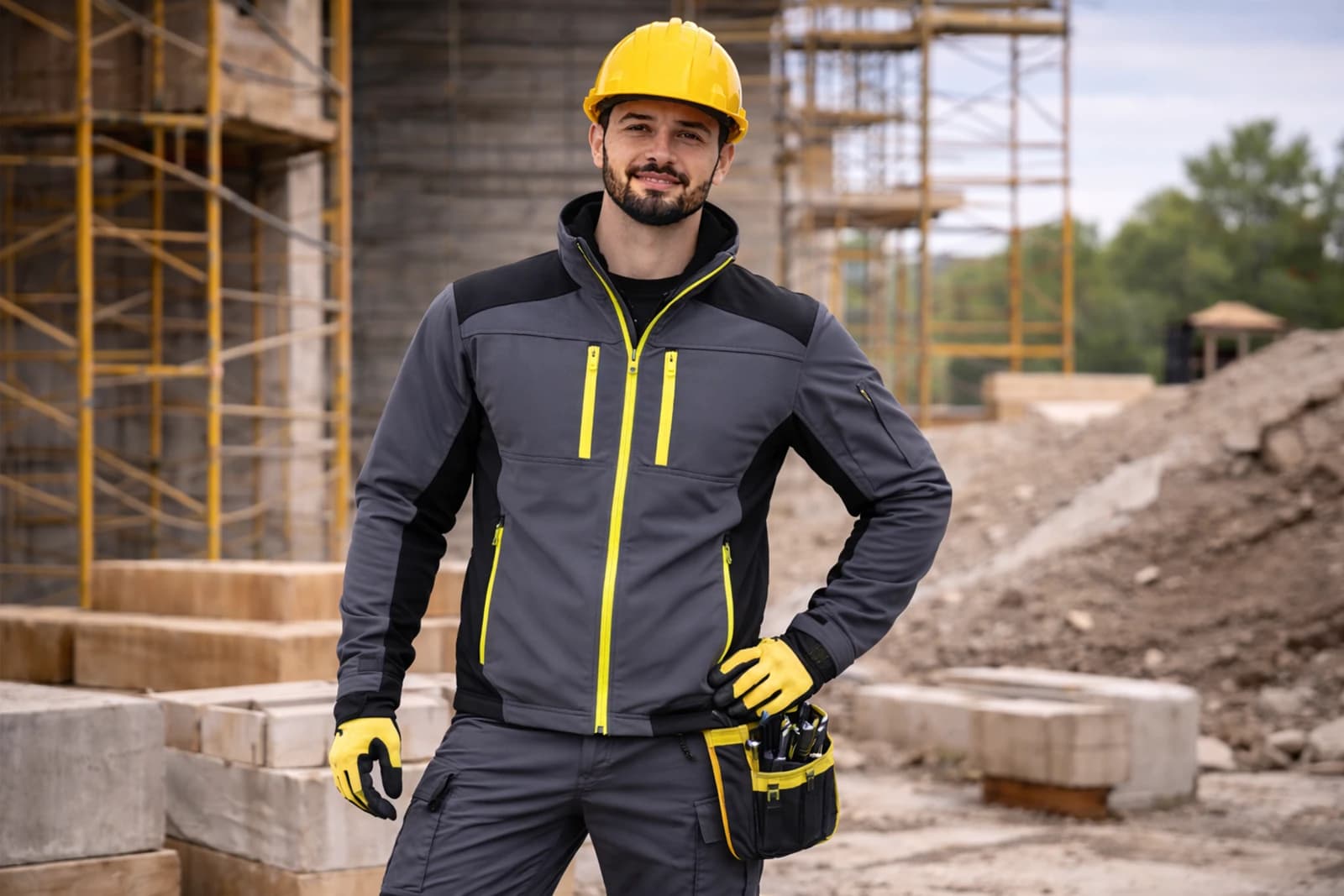
Construction Clothing
Construction Softshell Set
Flexible jacket and trouser set built for crews working across changing weather conditions.

Logistics Uniform
Logistics Polo Uniform
Breathable uniform polo for warehouse, delivery, and last-mile teams.