Workwear Pre-Shipment Inspection Checklist for Middle East B2B Buyers Sourcing from China
A pre-shipment inspection (PSI) is the last checkpoint before your workwear order leaves China — and your best chance to catch defects before they reach your warehouse in Dubai, Riyadh, or Doha. This guide provides a complete inspection checklist for hi-vis jackets, industrial coveralls, construction softshell sets, and logistics polo uniforms, so Middle East B2B buyers can verify quality, sizing, stitching, labels, and packaging before payment and shipment.

Buyer context
What procurement teams run into
<p>A procurement manager in Dammam receives a shipping container of 3,000 industrial coveralls for a Saudi Aramco subcontractor. The factory in China sent photos of the production line and a video of workers packing the cartons. Everything looked fine. But when the container arrives and the cartons are opened on site, problems emerge immediately:</p><ul><li>The sleeve length is 4 cm shorter than the approved pre-production sample — the workers cannot raise their arms fully without the cuffs pulling up past their wrists</li><li>The reflective tape on 200 hi-vis jackets is bubbling at the edges — it was applied at the wrong temperature setting and will peel after two washes</li><li>The embroidery thread colour on 150 polo shirts is navy blue instead of the specified royal blue — the uniforms do not match the company's brand guidelines</li><li>The carton labels show the wrong PO number, so the warehouse team cannot match the goods to the correct purchase order</li></ul><p>The buyer paid 100% T/T before shipment because the factory offered a 3% discount. He has no leverage now. The factory offers to repair 500 coveralls and send replacement fabric for 200 jackets — meanwhile 2,300 garments are not fit for purpose. The subcontractor starts looking for another uniform supplier while this order sits in quarantine.</p><p>This scenario plays out across the Middle East every year. A pre-shipment inspection — done by a qualified inspector at the factory before the container is sealed — would have caught every one of these issues. This guide explains exactly what to check and how to structure your inspection for workwear orders from China.</p>
Sourcing approach
How a factory partner can respond
<h2>Why Pre-Shipment Inspection Matters for Workwear</h2><p>A pre-shipment inspection (PSI) is an independent quality check conducted at the manufacturer's facility after at least 80% of the order is packed and ready to ship. The inspector randomly samples cartons from the production batch and checks the garments against your approved specifications, the pre-production sample, and international quality standards.</p><p>For Middle East buyers sourcing workwear from China, a PSI is the most cost-effective quality control step in the entire procurement process. At a typical cost of USD 300–500 per inspection day, it protects an order that may be worth USD 50,000 or more. The inspection report gives you documented evidence of non-conformance that you can use to negotiate rework, a discount, or a replacement order — before your money is fully transferred.</p><p>Standard practice for Chinese workwear factories: the factory will not object to a third-party inspection if it was specified in the purchase order. If a factory resists or refuses inspection access, that is a red flag that warrants escalation or a review of the supplier.</p> <h2>When to Schedule the Inspection</h2><ul><li><strong>Inspection window:</strong> When at least 80% of the production is finished and at least 80% is packed in cartons. Inspecting too early means many garments are still on the sewing line and cannot be sampled. Inspecting too late means the container is already booked and the factory will pressure you to pass regardless of findings.</li><li><strong>Lead time:</strong> Book the inspection company at least 7 working days before the planned shipment date. For AQL sampling inspections, the inspector typically spends 1 full day at the factory for orders of 1,000–5,000 pieces and 2 days for larger orders.</li><li><strong>Payment milestone:</strong> The ideal timing is before the final payment (balance payment). Most Chinese factories work on a 30% deposit / 70% balance before shipment payment structure. If you move the balance payment to after the inspection report is issued, you retain leverage to demand corrections.</li></ul> <h2>Standards and Sampling — AQL 2.5</h2><p>The industry standard for garment inspection is <strong>ANSI/ASQ Z1.4 (AQL 2.5)</strong>. AQL stands for Acceptable Quality Level — AQL 2.5 means that for the sample size inspected, up to 2.5% defective units are considered acceptable for the lot. Here is how sampling works for typical workwear order sizes:</p> <table><tr><th>Order Size (pieces)</th><th>Sample Size</th><th>Accept (defects found)</th><th>Reject (defects found)</th></tr><tr><td>501–1,200</td><td>80</td><td>5</td><td>6</td></tr><tr><td>1,201–3,200</td><td>125</td><td>7</td><td>8</td></tr><tr><td>3,201–10,000</td><td>200</td><td>10</td><td>11</td></tr><tr><td>10,001–35,000</td><td>315</td><td>14</td><td>15</td></tr></table><p>The inspector randomly selects cartons from across the production run (not just the first or last cartons packed) and inspects each garment in the sample against the following checklist. If the number of defective garments exceeds the Accept limit, the entire lot is rejected and must be sorted and re-inspected before shipment.</p> <h2>The Complete Workwear Pre-Shipment Inspection Checklist</h2> <h3>1. Product Specifications Verification</h3><p>Before touching a single garment, the inspector must verify that the production batch matches the approved specifications:</p><ul><li><strong>Fabric composition:</strong> Request a fabric swatch test on the spot — the GSM (grams per square metre) must match the specification within a ±5% tolerance. Polyester-cotton blend ratios should be verified by burn test or quick fibre analysis.</li><li><strong>Colour:</strong> Compare against the approved colour standard (Pantone code or physical colour chip) under D65 daylight-equivalent lighting. Check main body fabric, contrast panels, reflective tape, zipper tape, and thread colour separately — each can vary independently.</li><li><strong>Thread count and stitch density:</strong> Minimum 8–12 stitches per inch for seam stitches and 4–6 stitches per inch for topstitching. Loose stitching is the most common defect found in Chinese workwear inspections.</li><li><strong>Hardware:</strong> Zippers (brand and model), buttons, snaps, hooks, and hook-and-loop (Velcro) closures should match the approved sample. Test each zipper for smooth operation and each snap for retention force.</li></ul> <h3>2. Sizing and Fit Verification</h3><p>Size inconsistency is the number one complaint from Middle East buyers receiving workwear from China:</p><ul><li><strong>Measure 5 garments per size per colour</strong> against the approved measurement spec sheet. Critical points: chest width (half, flat), waist width, hip width, shoulder width, sleeve length (from centre back), body length (back, from HPS), inseam (for coveralls and pants).</li><li><strong>Tolerance:</strong> ±1 cm for body measurements, ±0.5 cm for sleeve length. Many Chinese factories default to ±2 cm tolerance — specify ±1 cm in your purchase order and verify during inspection.</li><li><strong>Grade rule check:</strong> If you ordered sizes S–3XL, check that the difference between each consecutive size is consistent. A common issue is that the L-to-XL jump is +4 cm while the XL-to-2XL jump is only +2 cm, creating inconsistent fit across the size range.</li><li><strong>Fit test:</strong> If possible, have a person in the size range try on one sample per size. Check armhole depth (can the wearer raise their arms overhead without the garment pulling up excessively?), crotch depth (for coveralls), and waistband height.</li></ul><p><strong>For Middle East buyers specifically:</strong> Standard Chinese sizing charts are cut for East Asian body proportions — shorter torso, narrower shoulders, shorter arms relative to height for a given chest size. If your end users are Middle Eastern workers with broader shoulders and longer torsos, you should have provided custom measurement specs at the order stage. The inspection confirms whether those custom specs were followed. Measure carefully — a 3 cm error in body length means the garment will not cover the lower back when the worker bends forward.</p> <h3>3. Stitching and Construction Quality</h3><ul><li><strong>Seam strength:</strong> Check that all major seams (side seams, shoulder seams, inseam, crotch seam) have the specified number of needle threads (e.g., 4-thread overlock for side seams, double-needle lap seam for inseams). Pull test by hand — seams should not gap open under moderate tension.</li><li><strong>Stitch defects:</strong> Look for skipped stitches, broken stitches, run-off stitches (stitching that runs off the edge of the fabric), placket distortion, and puckered seams. More than 2 skipped stitches in any 10 cm length is a defect.</li><li><strong>Bar tack reinforcement:</strong> Check for bar tacks at stress points: pocket corners, belt loop attachments, zipper bottom stops, fly ends, and the crotch point of coveralls. Each bar tack should be 10–16 stitches with no loose ends.</li><li><strong>Hem quality:</strong> Hems (sleeve hems, bottom hem, leg hems) should be even — no more than 0.5 cm variation across the garment. The hem stitch should catch the full fold of the fabric without tunnelling.</li></ul> <h3>4. Reflective Tape Inspection (For Hi-Vis Garments)</h3><p>Reflective tape defects are a safety-critical issue — not just a cosmetic problem:</p><ul><li><strong>Adhesion:</strong> Gently pull one edge of the reflective tape. It should not peel away from the fabric without significant force. Check especially at corners and curved sections where peeling is most common.</li><li><strong>Placement:</strong> Measure the tape position against the approved tech pack. Tape should form closed loops around the torso and sleeves. The two vertical edges of each tape strip should be parallel to each other and to the adjacent seam.</li><li><strong>Width:</strong> Minimum 50 mm for EN ISO 20471 compliance. Measure in 3 places on each garment — the tape must not taper below 50 mm at any point.</li><li><strong>Bubbling and delamination:</strong> Inspect the entire tape surface under good light. Any bubbles, blisters, or areas where the tape has not fully bonded to the fabric is a rejectable defect.</li><li><strong>Wash test simulation:</strong> If you have time, ask the inspector to perform a single wash cycle on one garment per colour and re-check tape adhesion. Factories that apply reflective tape at the wrong temperature or pressure will show peeling after just one wash.</li></ul> <h3>5. Label and Marking Verification</h3><ul><li><strong>Care label:</strong> Check that all required symbols are present (wash, bleach, iron, dry clean, tumble dry instructions) in the correct order per ISO 3758. For Middle East export, English-only is usually acceptable, but Arabic translation adds value for end users.</li><li><strong>Fabric content label:</strong> Verify the stated composition matches the actual fabric. For FR coveralls, the araldite (flame-resistant treatment) label must include the standard reference (EN ISO 11612, NFPA 2112, etc.).</li><li><strong>Size label:</strong> Should match the physical garment. For orders going to the Middle East, size labels often use both European (48, 50, 52) and international (M, L, XL) designations. Verify these are correct per your size spec.</li><li><strong>Brand label and logo:</strong> Position, size, colour, and attachment method should match the approved sample. For embroidered logos, check for loose threads, uneven tension (puckering around embroidery), and colour accuracy.</li><li><strong>Compliance/certification label (hi-vis and FR):</strong> EN ISO 20471 class, certificate number, manufacturer name, and care / wash cycle info must be present and legible. No other label should cover or overlap the compliance label.</li></ul> <h3>6. Packaging and Carton Inspection</h3><ul><li><strong>Individual packaging:</strong> Each garment should be folded consistently and packed in a polybag. Check that polybags are not sealed too tightly (causing permanent creases) and have the correct size label and barcode sticker affixed.</li><li><strong>Carton quality:</strong> Cartons should be double-walled corrugated for international shipping, with no structural damage or crushing. For orders to high-humidity destinations (Dubai, Dammam in summer), request moisture barrier liners inside cartons.</li><li><strong>Carton markings:</strong> Verify the carton label matches the packing list — PO number, style number, colour, size ratio, quantity, net weight, gross weight, and carton dimensions. A mismatch in carton markings will cause delays at customs clearance.</li><li><strong>Quantity verification:</strong> Count the number of cartons and the number of pieces per carton (open at least 20% of cartons for piece count verification). The total should match the packing list ±2%.</li></ul> <h2>Selecting an Inspection Company</h2><p>For workwear orders from Chinese manufacturers, use one of these established third-party inspection companies with offices in China's major manufacturing hubs (Guangzhou, Shenzhen, Shanghai, Qingdao, Ningbo):</p><ul><li><strong>QIMA (formerly Asia Inception):</strong> Widely used in the garment sector, offers online portal for booking and report access. Inspections from USD 350 per man-day for standard AQL 2.5 garment inspection.</li><li><strong>SGS:</strong> The most recognized name globally. More expensive (USD 500+ per man-day) but their reports carry more weight in disputes. Essential if the contract specifies "SGS inspection" as the acceptance criteria.</li><li><strong>Intertek / Bureau Veritas:</strong> Comparable to SGS in reputation and cost. Good option if your client specifically requires Intertek inspection.</li><li><strong>Local independent inspectors:</strong> Many experienced garment quality inspectors work independently in Guangzhou and Shenzhen. Cost: USD 200–300 per day. Verify their credentials (previous work with SGS/QIMA, experience with workwear and PPE) before booking.</li></ul><p>Regardless of which company you choose, provide the inspector with: the approved pre-production sample, the approved tech pack / measurement spec sheet, the colour standard (chip or Pantone number), and a copy of the purchase order with all specifications. Most inspection failures happen because the inspector was not given the right reference materials.</p> <h2>What to Do When the Inspection Finds Defects</h2><p>An AQL 2.5 inspection may result in "Pass", "Conditional Pass", or "Fail":</p><ul><li><strong>Pass:</strong> Shipment can proceed. Request the full inspection report with photos and measurements for your records.</li><li><strong>Conditional Pass:</strong> Minor defects found that can be corrected before shipment (e.g., loose threads on 10% of garments, incorrect polybag labels). Agree with the factory on a correction plan and timeline, and request photos of completed corrections before the container is sealed.</li><li><strong>Fail:</strong> The defect rate exceeds AQL 2.5 limits. Do not accept shipment. Negotiate with the factory: (a) full sorting and re-inspection with costs borne by the factory, (b) partial shipment of acceptable goods with remaining balance renegotiated, or (c) order cancellation with deposit refund. The inspection report is your formal evidence — document everything in writing.</li></ul><p><strong>Important:</strong> Do not let the factory pressure you to accept a failed lot with promises to "fix it at destination." Corrections made in China before shipment are cheaper, faster, and more reliable than any remedial work done in the Middle East, where replacement fabric and skilled garment workers may not be readily available for the specific construction requirements.</p> <h2>Putting It All Together — Your Pre-Shipment Checklist</h2><p>Print this as a one-page checklist and include it as an appendix to your purchase order:</p> <ul><li>☐ AQL 2.5 sampling plan applied — sample size matches order quantity</li><li>☐ Fabric GSM and composition tested — within ±5% of specification</li><li>☐ Colour checked against approved standard under D65 lighting</li><li>☐ 5 garments per size per colour measured — all critical points within ±1 cm</li><li>☐ Stitch density minimum 8–12 SPI on main seams</li><li>☐ No skipped stitches, puckered seams, or loose threads on inspected garments</li><li>☐ Reflective tape width min 50 mm (hi-vis), fully adhered with no bubbles</li><li>☐ All zippers, snaps, and closures tested — functional and matching approved sample</li><li>☐ Bar tacks present at all stress points</li><li>☐ Care labels, content labels, size labels, and compliance labels correct and legible</li><li>☐ Logo/embroidery colour, position, and quality meets approval sample</li><li>☐ Carton markings match packing list — PO number, style, colour, size ratio, quantity</li><li>☐ Quantity count matches packing list within ±2%</li><li>☐ Polybags and cartons in good condition — no damage or moisture exposure</li></ul><p>Sidaier welcomes third-party pre-shipment inspections on all bulk orders. Our factories in Guangzhou and Jiangxi have dedicated inspection areas and can accommodate QIMA, SGS, or Intertek inspectors with 7 days' notice. We provide the approved pre-production sample, measurement spec sheet, and colour standard to the inspector upon arrival. Every bulk order for workwear — from hi-vis safety jackets to logistics polo uniforms — is inspected against the buyer's specification before the container is sealed.</p>
Recommended Products
Products that fit this use case

Industrial Workwear
Industrial Coverall Pro
Hard-wearing one-piece coverall for plant, maintenance, and heavy-duty operations.
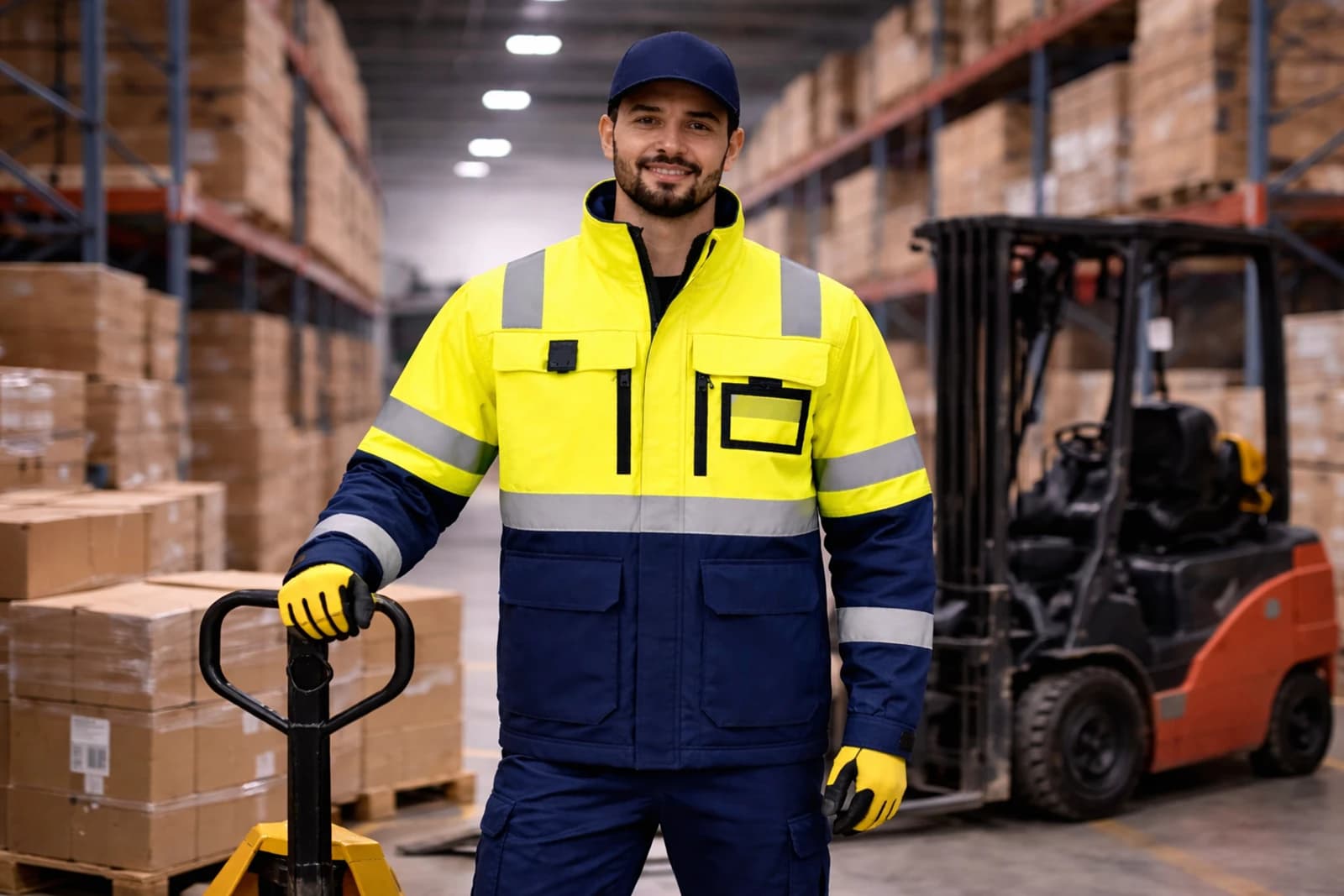
Safety Uniform
Hi-Vis Safety Jacket
Reflective safety jacket for high-visibility site operations and road work crews.
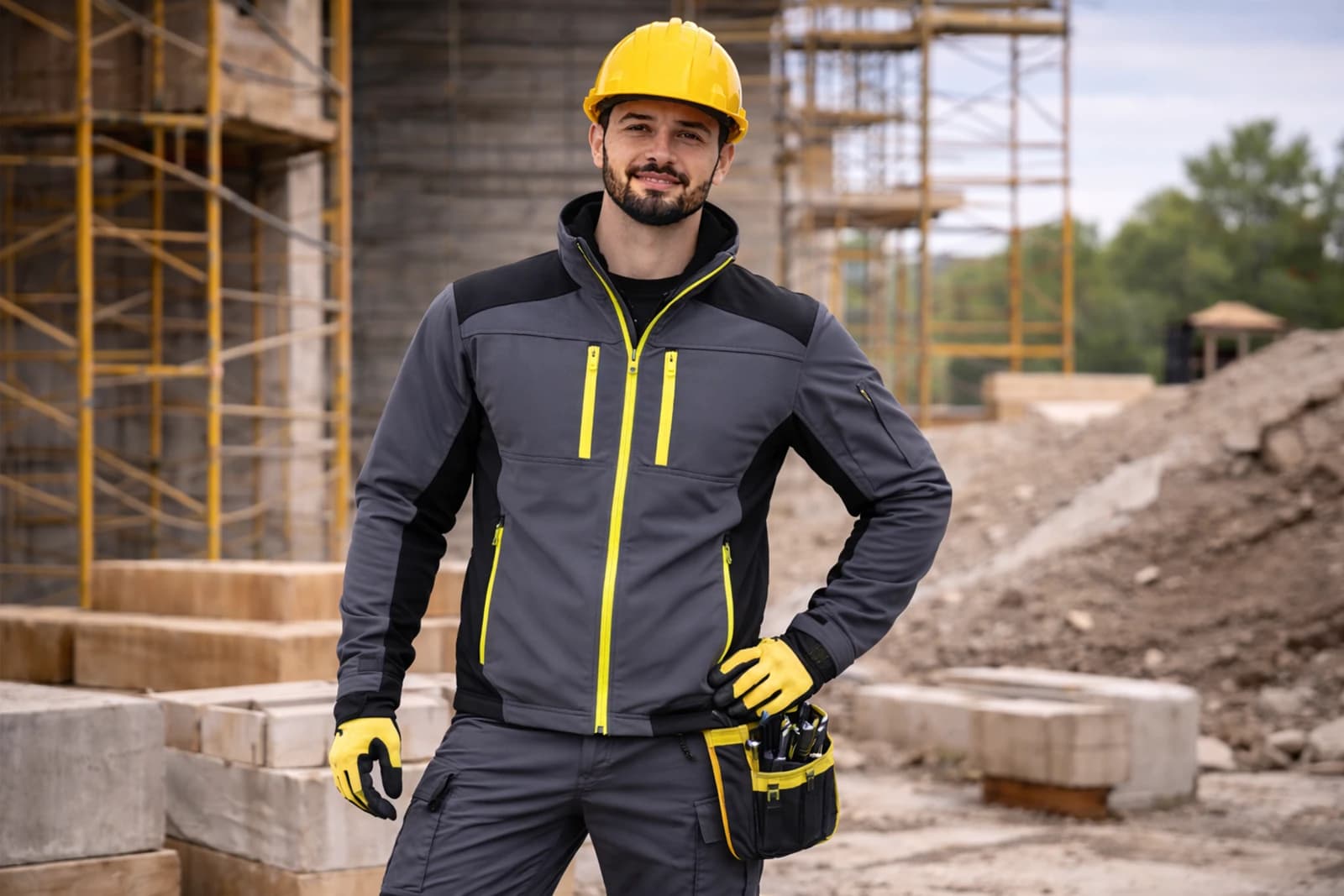
Construction Clothing
Construction Softshell Set
Flexible jacket and trouser set built for crews working across changing weather conditions.

Logistics Uniform
Logistics Polo Uniform
Breathable uniform polo for warehouse, delivery, and last-mile teams.